When I first saw the term “home compost” on the packaging, I wasn’t quite sure what it meant. Is it the same as “compostable”? Can I just put it in my backyard compost bin? Or is it just another “eco-friendly” marketing gimmick with a label that doesn’t actually apply?
If you have the same questions, don’t worry, you’re not alone.
In this guide, I’ll explain what “home compost” really means, the difference between it and “compostable” and “biodegradable” materials, and what you should be aware of when buying or disposing of “home compost” packaging.
What Does Home Compostable Mean?
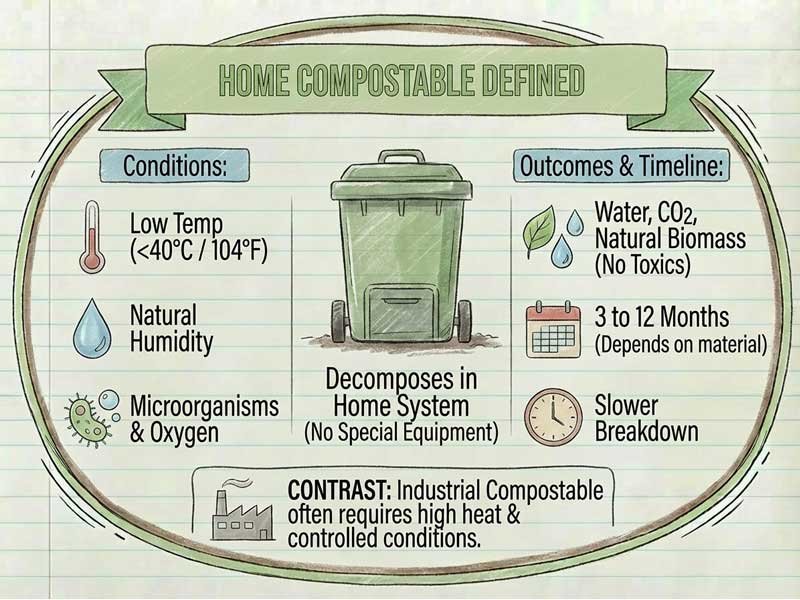
Home compostable means the material can decompose in a home composting system without special equipment, breaking down into water, carbon dioxide, and natural biomass, and should not leave any toxic chemicals.
This decomposition must occur under normal home composting conditions:
- Low temperature (typically below 40°C / 104°F)
- Natural humidity
- Presence of microorganisms and oxygen
In most cases, home compostable packaging will decompose within 3 to 12 months, depending on temperature, thickness, and material.
The term “compostable” often refers to industrial composting, which requires high temperatures and controlled conditions that are not available in many homes.

Home Compostable vs Industrial Compostable vs Biodegradable
Many people think these terms mean the same thing, but they don’t. Here is a clear, simple way to understand the difference.
Home Compostable vs. Compostable
A compostable product might only break down in an industrial composting facility, where temperatures reach 55°C–60°C. These conditions speed up decomposition, but they are not found in most backyard compost bins.
| Feature | Home Compostable | Industrial Compostable |
|---|---|---|
| Temperature | Low (20–40°C) | High (55–60°C) |
| Time | 3–12 months | ~12 weeks |
| Standard | AS 5810 / OK Compost HOME | AS 4736 / BPI certified |
| Works in backyard? | Yes | Usually no |
So, when you see a package labeled only as “compostable,” it may not break down in a backyard compost bin.
Home Compostable vs. Biodegradable
Biodegradable is even more confusing. A biodegradable material can break down someday, under some conditions, but:
- there is no set time frame,
- no guaranteed breakdown in home compost,
- and sometimes it creates microplastics.
This means a biodegradable product might sit in landfill for years. Because of this, I try not to rely on “biodegradable” as a sign of sustainability.
What Materials Are Truly Home Compostable?
Some materials are naturally suited for home composting. Others are not,even if they look “eco-friendly.”
Materials that can be home composted:
- Paper pulp (e.g., molded fiber trays)
- Bagasse (sugarcane fiber)
- Bamboo fiber
Starch-based materials
- PHA (a type of bioplastic that breaks down at low heat)
- Certain blends of PLA + PBAT when properly certified
Materials that cannot be home composted:
- Pure PLA (needs high heat)
- Most biodegradable plastics
- Thick food containers
- Many coffee pods labeled “compostable”
- Materials with coatings that resist moisture
This is why certification matters — without it, it’s hard to know what will break down at home.
How Does Home Composting Work?
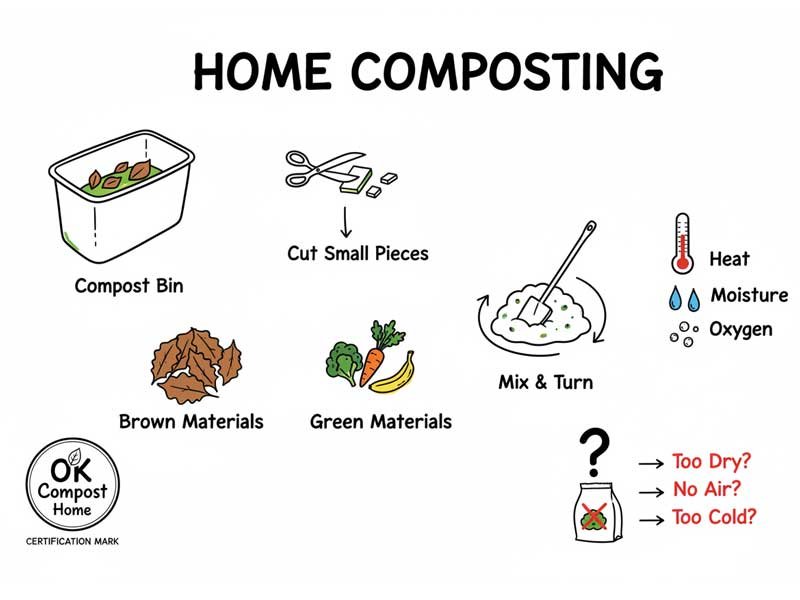
Home composting relies on:
- microorganisms that break down organic matter
- a mix of green waste (food scraps) and brown waste (leaves, paper)
- oxygen
- low to moderate levels of heat
Home compost is slower than industrial composting. That’s why some home compostable packaging may take several months to disappear.
If you want faster results, you can:
- cut items into smaller pieces
- bury them deeper in the compost pile
- turn the pile more often to add oxygen
These simple steps help microbes do their job.
How to Identify a Real Home Compostable Product?
This is one of the biggest questions I see from shoppers online.
When a product claims to be sustainable, I look for official home compostable logos. These are trusted certifications:
- AS 5810 Home Compostable(Australia)
- TÜV Austria OK Compost HOME
- DIN-Geprüft Home Compostable
If you see one of these, you can be confident it works in a home compost bin.
Be careful with greenwashing
Some packaging uses phrases like:
- “eco-friendly”
- “plant-based”
- “biodegradable”
- “compostable”
…but these words do not guarantee home compostability.
Regulators have also pointed out misleading claims. For example, the UK advertising authority banned ads for “compostable coffee pods” when consumers believed they were home compostable but they were not. This shows how common confusion is.
How Long Does It Take for Home Compostable Materials to Break Down?
| Material | Typical Breakdown Time |
|---|---|
| Paper-based items | 4–8 weeks |
| Thin compostable bags | 3–6 months |
| Thick compostable packaging | 6–12 months |
What If You Don’t Have a Home Compost System?
This is where many people get stuck. I’ve seen Reddit users ask what to do with home compostable packaging if they live in an apartment or don’t have a backyard. Here are real options:
1. Community Composting
Many cities now offer:
- community gardens
- drop-off compost bins
- council FOGO programs (Food Organics & Garden Organics)
This is often the easiest choice if you don’t have space at home.
2. Industrial Composting (If Accepted)
Some local councils accept certified compostable packaging in green bins, but rules vary.
I always check my council’s website before using this option.
3. If Your Only Option Is Landfill
Home compostable items won’t break down well in landfill due to low oxygen.
This is why knowing your disposal options matters. Sometimes, choosing recyclable packaging is better if composting isn’t possible.
4. Small-Space Options
If you live in an apartment, you can try:
- a small electric kitchen composter
- a worm bin
- a Bokashi system
These do not need a yard and are popular among zero-waste users.

Benefits of Choosing Home Compostable Packaging
Home compostable packaging offers clear environmental advantages compared with traditional biodegradable materials. It breaks down naturally in a backyard compost bin, without requiring high heat or special industrial facilities. Certified home compostable materials also leave no toxic residues or microplastics, ensuring the resulting compost is safe for plants.
Because it can be composted together with food scraps, this type of packaging helps reduce household waste volume and lowers the amount of trash sent to landfills. It also supports a closed-loop system, turning packaging into nutrient-rich compost that returns to the soil.
Most home compostable packaging is made from renewable, plant-based resources, giving it a significantly lower carbon footprint than fossil-plastic alternatives. For brands, using home compostable packaging enhances sustainability credibility and increases consumer trust.
In short, home compostable packaging is practical, eco-friendly, and helps move both consumers and businesses toward a more circular and responsible packaging system.
Why Products Labeled Home Compostable Sometimes Don’t Break Down
If you’ve ever found a compostable bag still sitting in your bin after months, you’re not alone. Here are real reasons this happens:
- Your compost doesn’t get warm enough
- Lack of oxygen or moisture
- The item is too thick
- You added too much brown waste
- The bag wasn’t certified as home compostable
I sometimes cut bags into strips, which helps them break down more quickly.
Should Small Brands Choose Home Compostable Packaging?
If you run a small business, choosing the right packaging can be confusing.
Home compostable mailers look appealing, but they’re not always the best choice.
Home compostable packaging may be good when:
- your customers care about sustainability
- your shipping routes are short
- your packaging isn’t exposed to long-term moisture
Recyclable packaging may be better when:
- your customers don’t have compost bins
- you ship long distances
- your items need stronger moisture protection
I also recommend avoiding exaggerated marketing claims. Being clear and honest helps both consumers and the environment.
How to Dispose of Home Compostable Packaging Properly
- Certified?
Put it in your home compost bin. - No home compost?
Check for community composting. - Green bin?
Only if your council accepts packaging. - Never put compostable items in recycling bins
They contaminate the recycling stream.
Real Examples of Home Compostable Products
Today, many everyday items come in home compostable versions, such as:
- produce bags
- mailer bags
- food wrappers
- molded fiber trays
- dog waste bags
As long as they are certified, they should break down at home.
FAQ
Is home compostable better than biodegradable?
Yes. Biodegradable has no timeline or standards. Home compostable follows strict rules and does not leave harmful residue.
Does home compostable mean plastic-free?
Not always. Some bioplastics like PHA can be home compostable.
Can PLA be home composted?
Pure PLA usually needs high heat, so it is not considered home compostable unless certified.
Can I put home compostable packaging in my green bin?
Only if your local council accepts it. Many do not accept packaging at all.
Why isn’t my compostable bag breaking down?
The compost may be too cold, too dry, or lacking oxygen. Cutting the bag into pieces can help.
Conclusion
“Home compostable” means it can decompose safely and naturally in a home composting system. While this is a strong environmental claim, it requires authoritative certification and proper disposal methods.
Understanding the meaning behind this label will help you make choices based on your family’s circumstances, lifestyle, and local waste management practices.
If you choose a home compostable product, look for certifications that meet authoritative standards such as AS 5810, OK Compost HOME, or DIN-Geprüft, and be sure to understand the correct waste management methods for your area.
Related articles: