Compostable Garment Packaging Bags for Australia
Custom compostable garment packaging bags for Australian apparel brands, garment factories, distributors, fulfilment programs, and private-label packaging projects.
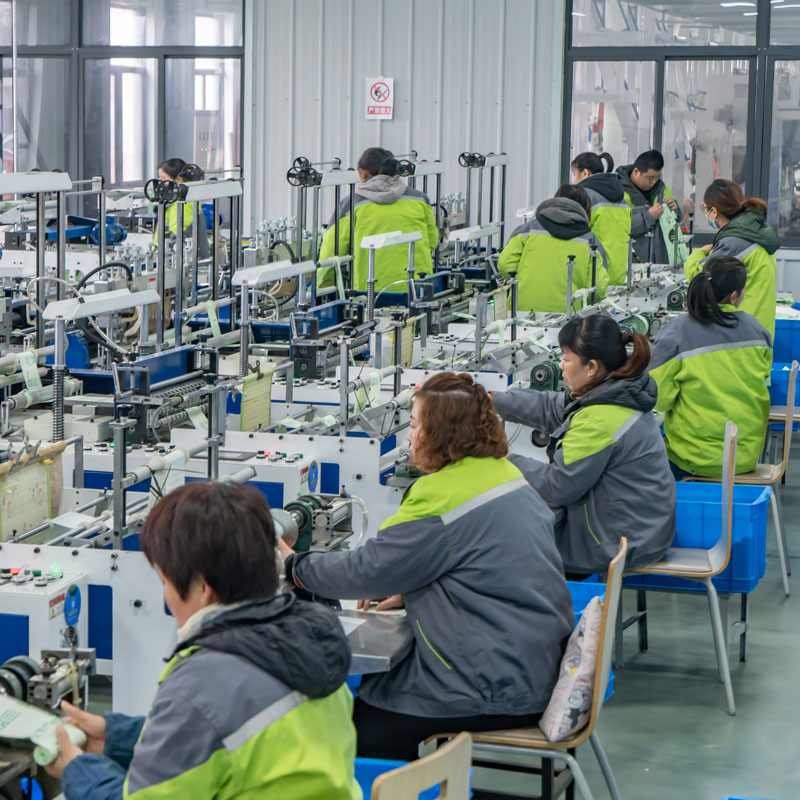
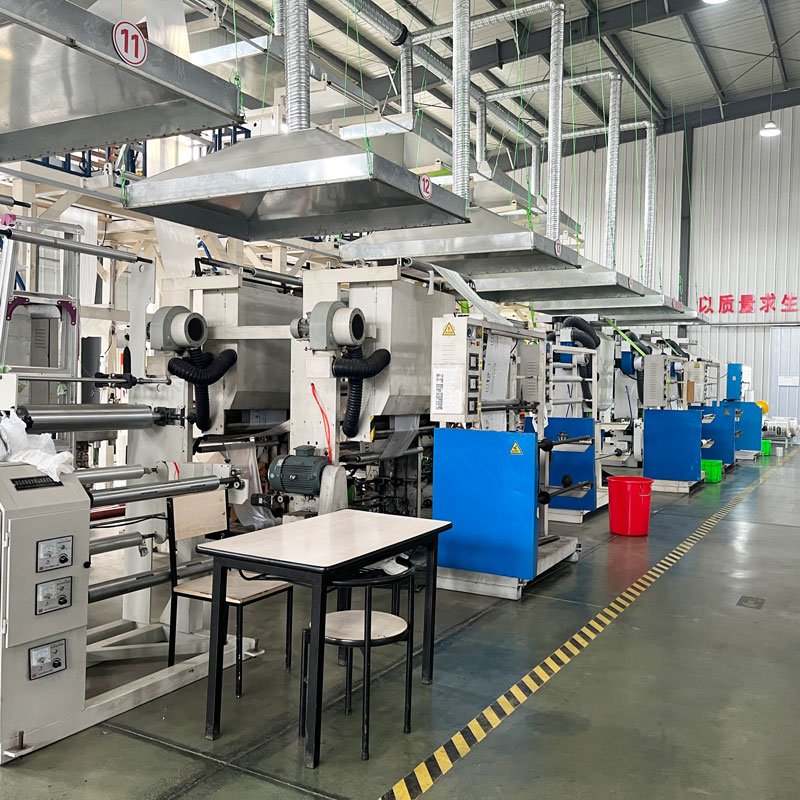
We manufacture open-top, self-adhesive, and specialty garment bag formats with custom dimensions, thickness, printing, closure options, and bulk packaging.
Standard custom production typically starts from approximately 500 kg per specification or design.
Certification applicability depends on the finished-product specification and current certification scope.
Garment Packaging Bags for Australian Apparel Programs
Garment packaging bags are used to protect folded clothing during factory packing, warehousing, export, distribution, retail handling, and e-commerce fulfilment.
For many apparel businesses, the bag has to do several jobs at once.
It needs to:
- protect the garment;
- keep products organised by SKU;
- remain easy to pack;
- work with barcode or label systems;
- fit efficiently into cartons;
- support the brand’s packaging requirements.
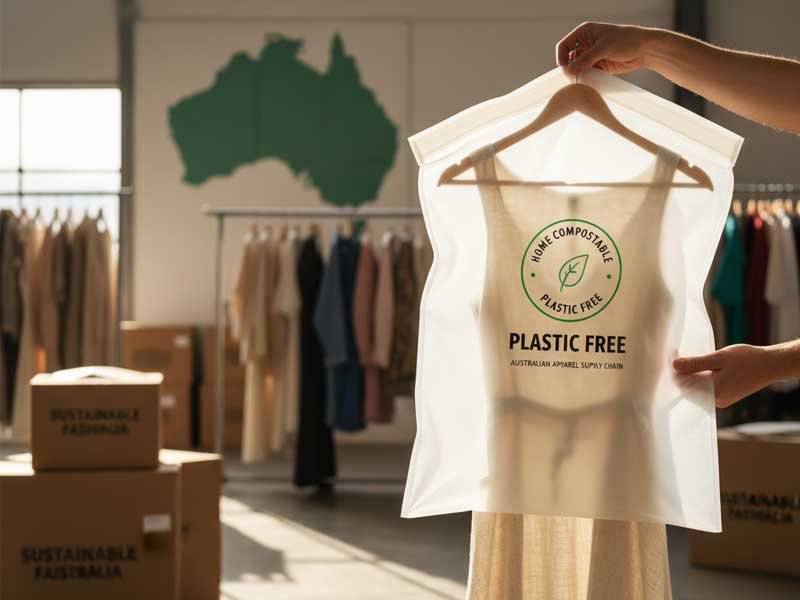
ORIZON manufactures compostable garment bags for Australian apparel buyers that want an alternative to conventional garment poly bags.
If you already use PE garment bags, your current dimensions and thickness can often be used as the starting point for sample development.
That usually makes the transition easier than designing a completely new bag from scratch.
Compostable Garment Bag Options
Different apparel workflows need different bag structures.
We recommend selecting the bag type according to how the garment is packed, stored, scanned, shipped, and opened.
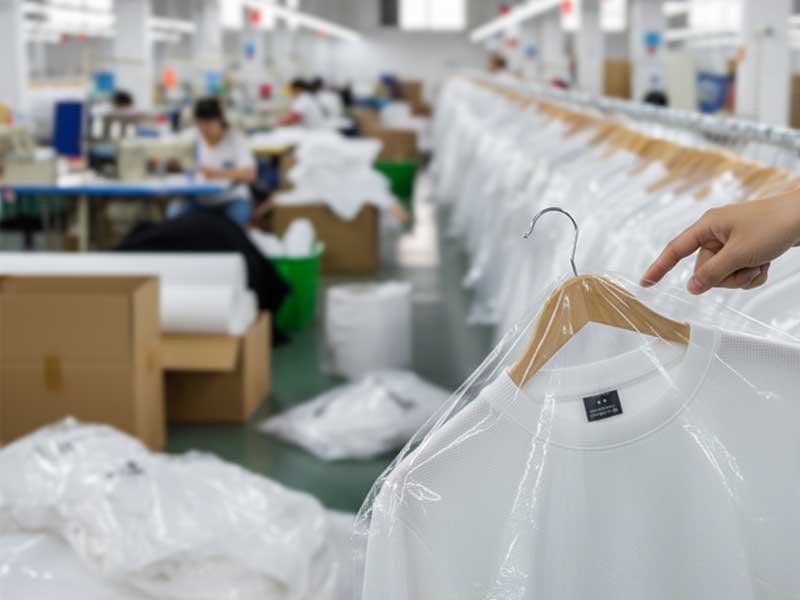
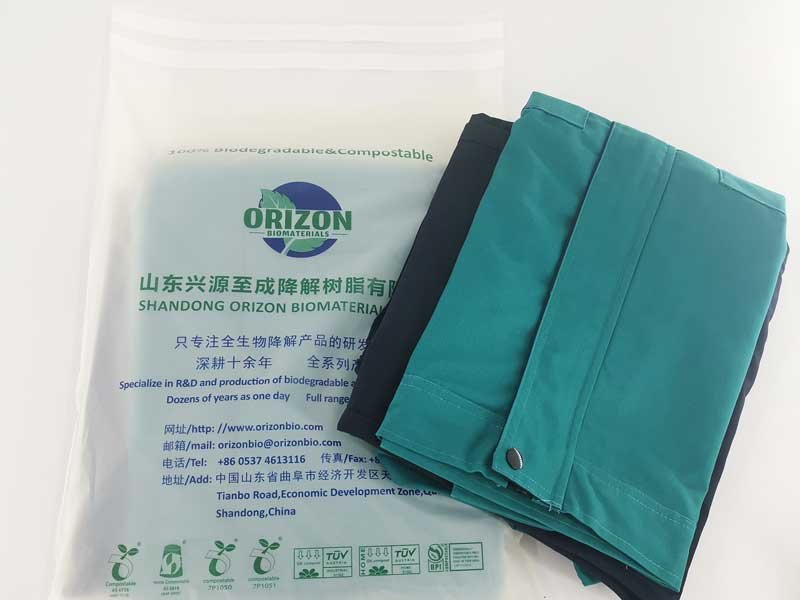
Self-adhesive garment bags are commonly used for folded apparel that needs a closed inner package.
They can be suitable for:
- T-shirts;
- shirts;
- dresses;
- knitwear;
- underwear;
- e-commerce apparel;
- retail fulfilment.
Closure options can include permanent or resealable adhesive, depending on the project.
Use a self-adhesive bag when the product needs a neat closed package during storage or fulfilment.
Flat Garment Bags
Open-top garment bags are useful when fast packing is more important than adhesive closure.
They are often used in:
- garment factories;
- warehouses;
- sorting areas;
- distribution centres;
- bulk apparel packing.
The simpler construction can make them practical for high-volume packing lines.
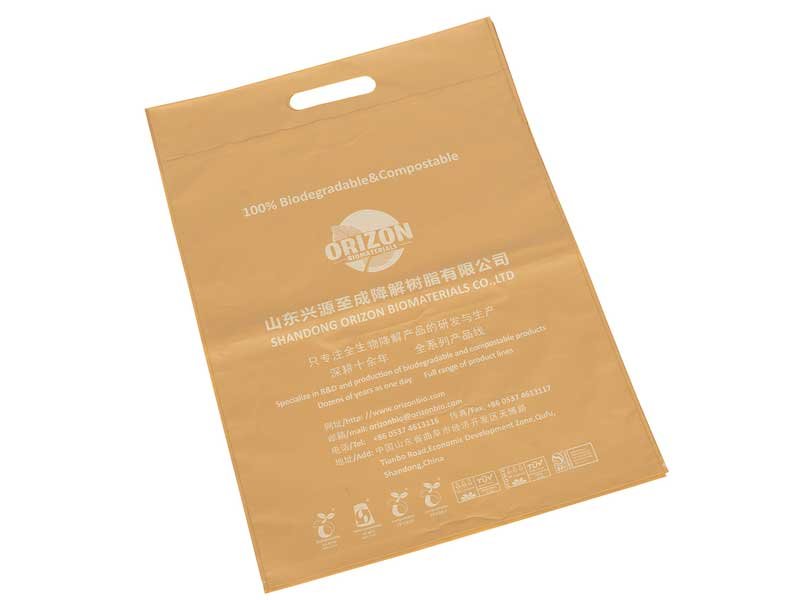
Specialty garment packaging can be developed for projects that need a different opening, handle, fold, or packing method.
These formats may be useful for selected retail, display, or handling applications.

Custom Options
- High-tack self-adhesive strip
- Resealable adhesive strip
- Open-top design for hanging garments

Optional Add-Ons
- Vent holes
- Punch-hole for hangers
- Warning text (compostable ink)
- Size marking / branding / QR code
Each style is designed to directly replace PE garment bags with no change to packing workflow.
Wholesale Garment Bags for Australian Apparel Buyers
ORIZON supplies garment bags wholesale for Australian apparel brands, garment factories, packaging distributors, and fulfilment businesses.
Orders can be developed around an existing garment polybag specification or a new packaging program.
| Specification | Custom Options |
|---|---|
| Bag style | Open-top, self-adhesive, four-finger, custom |
| Dimensions | Custom width, length and flap |
| Thickness | Based on garment weight and workflow |
| Film appearance | Clear, semi-clear, frosted or tinted |
| Printing | Logo, SKU, barcode and permitted compliance text |
| Closure | Open top, permanent or resealable adhesive |
| Vent holes | Optional |
| Hanger opening | Optional |
| Packing | Bulk stack, inner pack or export carton |
| Supply | OEM / Wholesale / Private Label |
| MOQ | Approx. 500 kg per specification or design |
For wholesale garment bags, the most useful starting information is usually:
- bag dimensions;
- thickness;
- closure type;
- printing;
- quantity;
- garment type;
- destination.
Choosing Garment Bag Size and Thickness
There is no single standard garment bag size for every apparel SKU.
A folded T-shirt, pair of jeans, shirt, and hoodie can all need different dimensions even if they use the same type of bag.
The bag should be large enough for the folded garment without leaving excessive unused film.
Practical Size Considerations
| Garment Type | What to Check |
|---|---|
| T-Shirts / Underwear | Folded width, length, packing speed |
| Shirts / Dresses | Folded size, presentation, closure |
| Hoodies / Knitwear | Garment thickness, bag depth, film strength |
| Denim | Product weight, handling, seam resistance |
| Multi-Pack Apparel | Total packed thickness and closure allowance |
If you already use conventional poly garment bags, send us the existing bag size and thickness.
We can use those specifications as a reference when developing a compostable version.
Thickness
Thickness should be selected according to:
- garment weight;
- bag dimensions;
- handling method;
- packing speed;
- warehouse conditions;
- expected strength.
A thicker film is not automatically better.
For a light T-shirt, excessive thickness may add unnecessary material and cost.
For heavier denim or knitwear, additional film strength may be useful.
Garment Packaging Across the Apparel Supply Chain
The same garment packaging bag may pass through several stages before the final customer sees the product.
| Buyer / Workflow | Common Requirement |
|---|---|
| Apparel Brands | Branding, appearance, sustainability requirements |
| Garment Factories | Packing speed, consistent size, carton efficiency |
| Distribution Centres | SKU visibility, scanning, handling |
| E-Commerce Fulfilment | Sealed inner packaging, barcode compatibility |
| Retail | Presentation, branding, garment protection |
This is why garment packaging should be evaluated as part of the full apparel supply chain, not only as a bag.
Custom Printing, Barcode and Packaging Options
Custom garment bags can be printed for private-label and apparel programs.
Options may include:
- brand logo;
- one-color or multi-color artwork;
- handling instructions;
- recycling or composting guidance where appropriate;
- SKU information;
- barcode area;
- QR code;
- permitted certification marks.
For barcode use, we recommend testing the final printed bag with the actual scanning system.
Film transparency, print position, label size, and warehouse lighting can all affect scanning.
Custom Packaging
Bulk garment bags may be packed as:
- loose stacks;
- inner packs;
- master cartons;
- custom-count bundles.
For export projects, carton quantities can be adjusted around warehouse handling and shipment efficiency.
Compostability Certification for Australia
Australian buyers may need different compostability standards depending on the product and end-of-life system.
Common standards include:
- AS 5810 for home-compostable applications;
- AS 4736 for industrial or commercial compostability.
Certification should be checked against the finished garment bag specification, not only the raw material.
The final scope may depend on:
- film formulation;
- thickness;
- printing;
- adhesive;
- colorants;
- additives;
- bag construction.
Certification marks should only be printed when the applicable authorization allows their use.
For certificate and factory information, see our Manufacturer & Certification Verification Center.
Are Biodegradable Garment Bags the Same as Compostable Garment Bags?
Not always.
“Biodegradable” is a broad term.
It does not by itself tell the buyer:
- how quickly the material breaks down;
- under what conditions;
- whether it has been tested to a recognised compostability standard.
For Australian B2B procurement, a defined compostability standard and finished-product certification scope are more useful than a general biodegradable claim.
This distinction is especially important when comparing biodegradable apparel bags, eco garment bags, and certified compostable garment packaging.
Replacing PE Poly Garment Bags With Compostable Packaging
Many apparel companies already use conventional PE garment poly bags.
If you want to develop a compostable alternative, the current PE bag can be used as a technical reference.
We normally compare:
- width;
- length;
- thickness;
- closure;
- adhesive flap;
- vent holes;
- print position;
- barcode area;
- packing quantity.
The compostable version does not need to copy every detail exactly.
Film behaviour, clarity, stiffness, and sealing characteristics may differ from conventional polyethylene.
For this reason, we recommend sample testing before mass production.
For a deeper comparison, see our guide to compostable vs plastic packaging for clothing brands.
What to Check in a Garment Bag Supplier
When comparing garment bag suppliers, price is only one part of the decision.
A supplier should also be able to control the specification from order to order.
Important points include:
Bag Structure
Can the supplier produce the required open-top, adhesive, or specialty structure?
Size and Thickness Control
Garment bags need consistent dimensions for packing lines and carton planning.
Printing Capability
Check whether the supplier can manage logo placement, barcode areas, and repeat print registration.
Adhesive Consistency
For self-seal bags, adhesive performance should remain consistent across production.
Certification Scope
Ask whether certification applies to the finished bag specification rather than only the resin.
Sampling
A reliable supplier should be able to provide samples or prototypes before mass production where required.
Repeat Orders
The approved specification should be recorded so future production can follow the same standard.
For apparel brands with many SKUs, specification control can matter more than finding the lowest unit price.
OEM and Custom Garment Bag Production
ORIZON manufactures custom garment packaging for B2B buyers.
Typical customization includes:
- width and length;
- film thickness;
- bag color;
- transparency level;
- printing;
- adhesive flap;
- vent holes;
- hanger opening;
- inner packing;
- carton packing.
We can work from:
- an existing garment bag;
- a technical drawing;
- a current supplier specification;
- garment dimensions;
- a packaging concept.
For private-label projects, packaging artwork and print requirements should be confirmed before mass production.
MOQ for Wholesale Garment Bags
Standard customized production typically starts from approximately 500 kg per specification or design.
The equivalent number of bags depends on:
- size;
- thickness;
- film formulation;
- closure;
- printing.
A smaller T-shirt bag will produce more pieces from 500 kg than a large hoodie or dress bag.
This is why we normally quote garment bags by the actual specification instead of publishing one fixed piece MOQ.
Samples and Pre-Production Testing
Samples are useful when changing from PE to compostable apparel packaging.
A sample can help you check:
- bag size;
- film feel;
- transparency;
- garment fit;
- adhesive;
- print position;
- barcode scanning;
- packing speed.
Where possible, test the bag with the actual garment and warehouse process.
A bag that looks correct on a specification sheet may behave differently once it reaches a real packing line.
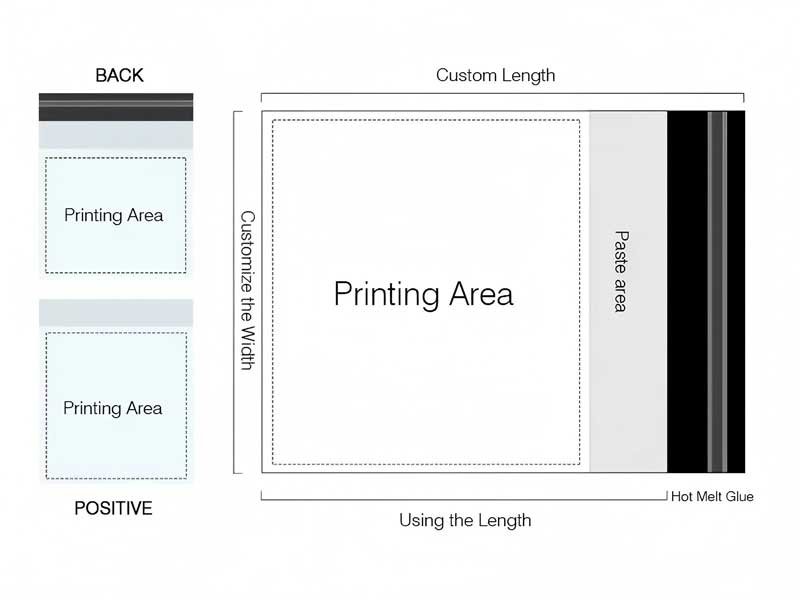
Wholesale Garment Bags With Logo
Custom branding is available for qualified wholesale projects.
Logo printing can help apparel brands keep the inner packaging consistent with the rest of the retail or e-commerce experience.
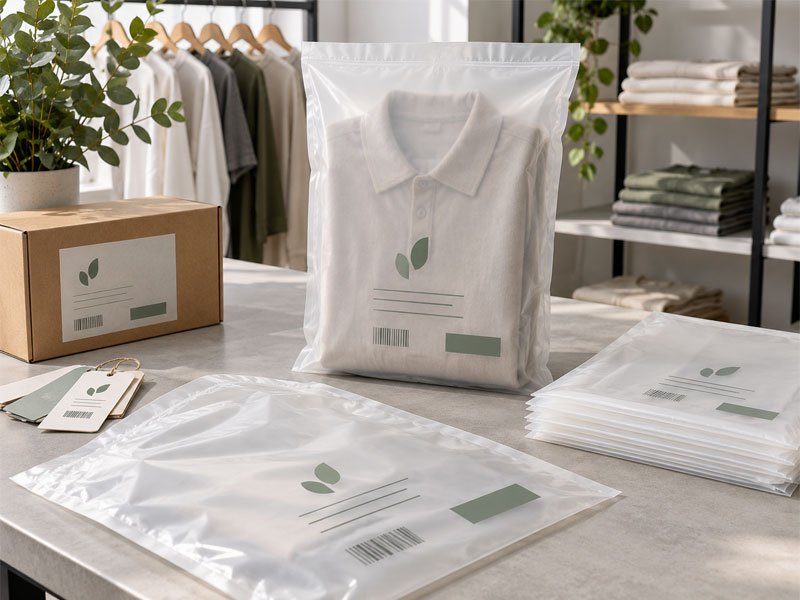
Typical printed elements include:
- brand logo;
- website;
- SKU field;
- barcode area;
- handling instructions;
- approved compostability information.
Artwork should be reviewed before plate production.
For regulated certification marks, approval should be confirmed before printing.
Why Work With ORIZON for Garment Packaging?
We focus on custom compostable bag manufacturing for B2B programs.
For garment packaging projects, our role is to help convert the buyer’s packaging requirement into a repeatable production specification.
This includes:
- bag sizing;
- thickness selection;
- print setup;
- closure configuration;
- sampling;
- bulk production;
- export packing.
The goal is simple:
Make the bag fit the garment, the workflow, and the target market.
FAQ
They are used to protect folded garments during factory packing, warehousing, distribution, e-commerce fulfilment, and retail handling.
Common applications include T-shirts, shirts, dresses, underwear, denim, and knitwear.
Standard customized production typically starts from approximately 500 kg per specification or design.
The equivalent number of bags depends on size, thickness, and construction.
Yes. Custom logo printing, artwork, barcode areas, and private-label specifications can be developed for wholesale orders.
Yes. Your existing PE garment bag can be used as the starting reference for dimensions, thickness, closure, printing, and packing.
We recommend sample testing before mass production because compostable film may behave differently from PE.
The correct thickness depends on garment weight, bag size, handling, and packing method.
Light garments such as T-shirts may use a lighter structure than denim, hoodies, or multi-pack apparel.
AS 5810-related options may be available depending on the finished bag specification and applicable certification scope.
Film formulation, thickness, printing, adhesive, and bag structure should be reviewed before certification applicability is confirmed.
Yes. Stock samples or custom prototypes may be available depending on the required specification.
Testing samples with your actual garments is recommended before mass production.
Custom Compostable Garment Bags for Australia
We manufacture compostable garment packaging bags for Australian apparel brands, factories, distributors, and private-label programs.
Customise the size, thickness, closure, printing, and packing to match your garments and workflow.
Send us your current garment bag specification or target apparel size, and we can recommend a practical production configuration.