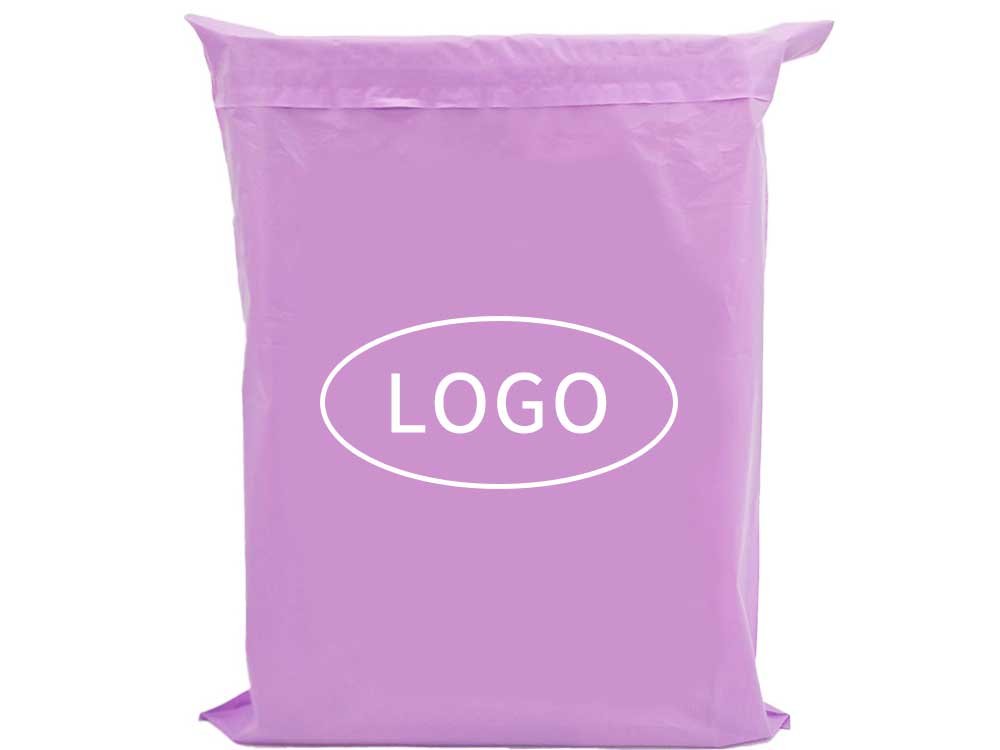
Compostable Courier Bags for Logistics & Fulfillment
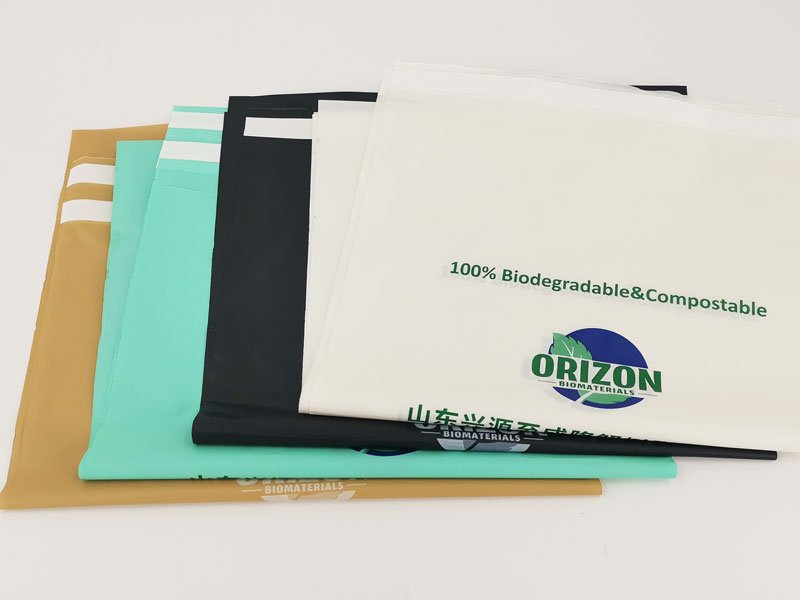
ORIZON manufactures compostable courier bags for B2B e-commerce, logistics, fulfillment and distribution programs.
These flexible outer shipping bags are designed for professional parcel workflows including warehouse packing, label application, courier handling, direct-to-customer delivery and return logistics.
- custom bag size and thickness;
- single self-seal closure;
- dual-seal return configuration;
- open-top formats for controlled sealing;
- side-gusset structures for bulkier parcels;
- open-top formats for controlled sealing;
- custom logo printing;
- wholesale carton packing;
- private-label / OEM production.
Standard customized production typically starts from approximately 500 kg per specification or design.
Certification applicability should be confirmed against the applicable current certificate or product listing and the final finished-product specification.

Compostable Courier Bags for B2B Shipping
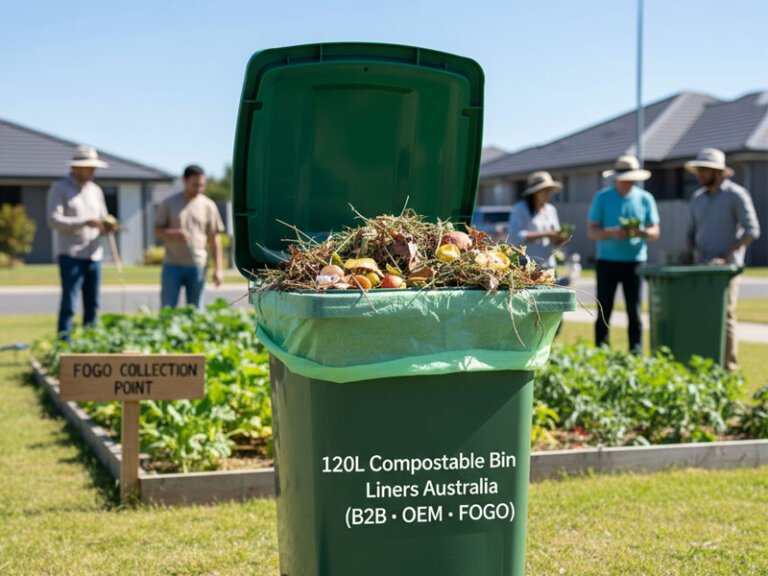
Compostable courier bags are lightweight flexible shipping bags used as outer packaging for suitable e-commerce and logistics parcels.
They may also be searched for as:
- biodegradable courier bags;
- biodegradable courier mail bags;
- compostable shipping bags;
- compostable mailers;
- courier mailing bags;
- compostable postage bags.
For product and environmental claims, compostable is the more specific term when the finished product is evaluated against applicable compostability requirements.
Typical users include:
- e-commerce brands;
- third-party logistics providers;
- fulfillment centers;
- apparel and soft-goods brands;
- subscription businesses;
- packaging distributors;
- importers;
- private-label packaging programs.
These bags are supplied for commercial B2B use, not individual consumer retail packs.
Built Around the Fulfillment Workflow
Courier packaging should be selected according to the complete parcel workflow rather than only by bag dimensions.
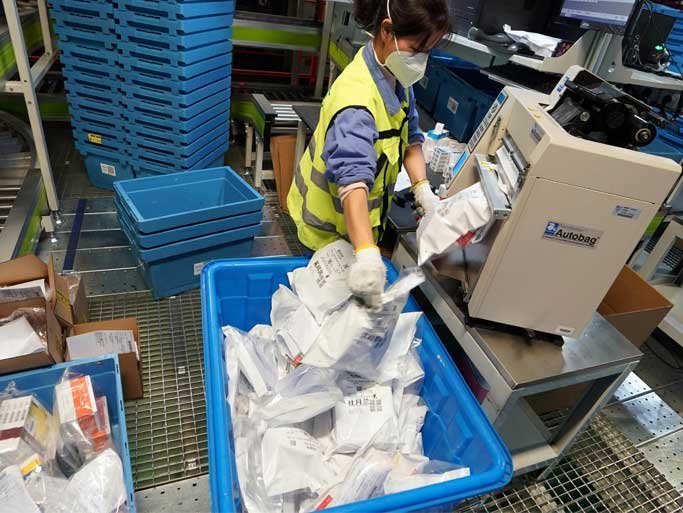
A typical shipping process may include:
order picking → product packing → bag sealing → shipping-label application → barcode scanning → sortation → courier handling → delivery → return where applicable
The courier bag should remain practical throughout this process.
| Fulfillment Stage | What the Courier Bag Should Support |
|---|---|
| Picking & packing | Practical opening and efficient product insertion |
| Sealing | Consistent closure and suitable flap contact |
| Label application | Sufficient flat area for shipping labels |
| Barcode scanning | Label remains visible and readable |
| Sortation | Normal parcel and conveyor handling |
| Courier transport | Resistance to tearing, puncture and accidental opening |
| Delivery | Packaging remains intact around the parcel |
| Returns | Dual-seal formats can support reverse logistics |
For buyers operating high-volume packing lines, the bag should also be evaluated for packing speed and operator consistency, not only material properties.
Available Styles of Compostable Courier Bags
Different fulfillment workflows require different closure structures.
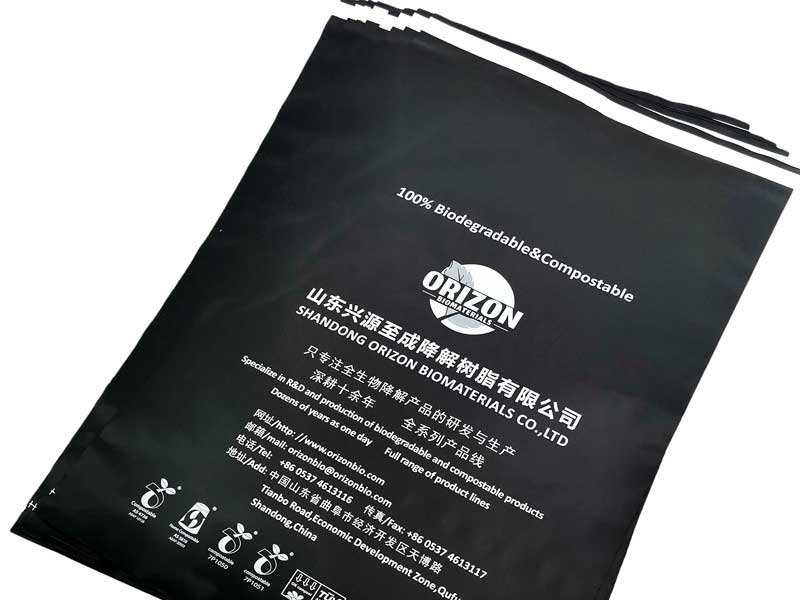
Self-Adhesive Courier Bags
Single self-seal courier bags use a peel-and-seal adhesive strip for standard outbound shipment.
They are commonly selected for:
- apparel;
- textiles;
- soft goods;
- accessories;
- non-fragile e-commerce products;
- standard direct-to-customer fulfillment.
For detailed product information, see our Self-Adhesive Compostable Mailer Bags.
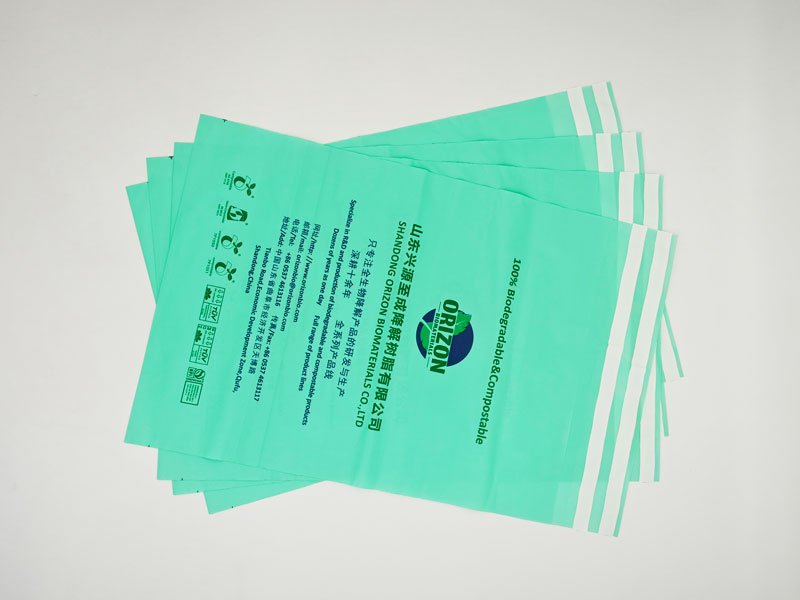
Dual-Seal Courier Bags for Returns
Dual-seal bags include:
- one adhesive strip for outbound shipment;
- one additional strip reserved for customer returns.
They can be useful for apparel brands, subscription programs and other e-commerce businesses where reverse logistics form part of the normal customer journey.
See our Dual-Seal Compostable Mailer Bags.

Open-Top Courier Bags
Open-top bags are supplied without a self-adhesive closure.
They may be suitable for:
- in-house heat sealing;
- tape sealing;
- controlled packing lines;
- specialized B2B packaging systems.
See our Open-Top Compostable Mailer Bags.
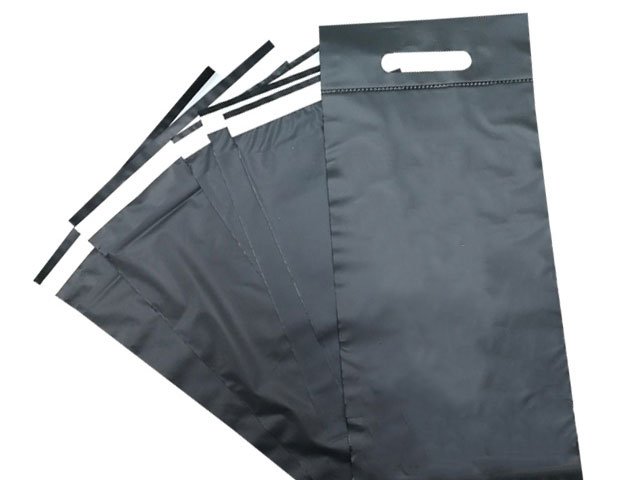
Side-Gusset Courier Bags
A side gusset can create additional internal volume for:
- thicker apparel;
- multi-item orders;
- soft but bulky goods;
- irregular flexible parcels.
The gusset should be selected together with bag width, length, thickness and packed-product dimensions.
Courier Bag Style Comparison
| Bag Format | Closure | Return Use | Typical Fulfillment Application |
|---|---|---|---|
| Single self-seal | One adhesive strip | No dedicated return strip | Standard e-commerce shipping |
| Dual seal | Two adhesive strips | Yes | Apparel and return-enabled e-commerce |
| Open top | Heat seal / tape / custom closure | Depends on workflow | Controlled or automated packing |
| Side gusset | Usually adhesive closure | Depends on structure | Bulkier or multi-item parcels |
For the wider mailer product range, see our Compostable Mailer Bags Wholesale.
Choose the Size From the Packed Parcel
Courier bag size should be based on the product in its actual fulfillment condition.
Do not measure only the flat garment or unpacked product.
Before confirming the bag size, record:
- packed width;
- packed length;
- packed depth;
- packed weight;
- any rigid corners;
- zippers, buckles or other protruding components; and
- whether inner packaging remains inside the courier bag.
An oversized courier bag can increase material use and leave excessive loose film around the parcel.
An undersized bag may create unnecessary film tension around:
- seams;
- corners;
- the adhesive flap;
- the packed product.
For technically sensitive projects, test more than one bag size before approving mass production.
Thickness Should Match the Shipping Risk
There is no single correct courier bag thickness for every shipment.
The required film gauge depends on factors including:
- parcel dimensions;
- packed weight;
- product shape;
- fill ratio;
- sharp or rigid components;
- shipping distance;
- handling intensity;
- seam construction;
- required puncture resistance.
A thicker film is not automatically the best specification.
The objective is to select a thickness that provides sufficient performance without unnecessary material use or excessive parcel weight.
For more detail, see our Compostable Mailer Thickness Guide.
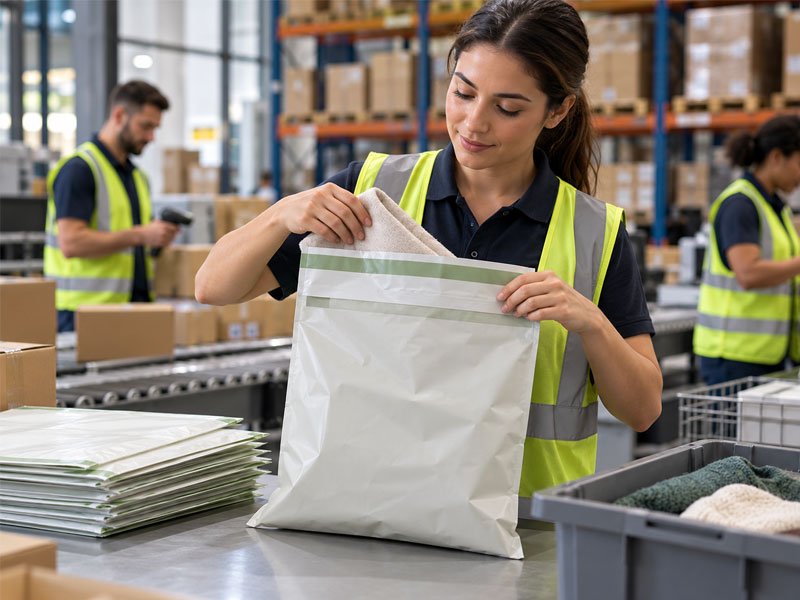
Packing Speed & Fulfillment Efficiency
For large e-commerce programs, courier bag performance includes how efficiently warehouse staff can use the packaging.

A sample trial should consider:
- how quickly the bag opens;
- how easily the parcel is inserted;
- whether the release liner removes cleanly;
- whether the flap aligns naturally;
- how much pressure is required to seal the bag;
- where the shipping label is applied;
- whether the barcode remains easy to scan;
- whether the process can be repeated consistently.
A bag that works well during a small office test may create unnecessary handling time when hundreds or thousands of parcels are packed during a shift.
Fulfillment teams should therefore participate in sample evaluation where practical.
Shipping Label & Barcode Performance
Our compostable courier bags are supplied in standard wholesale configurations to support global logistics and distribution operations.
Shipping labels are part of the finished courier package.
Before approving a courier bag, buyers should evaluate:
- label adhesion to the finished film;
- available flat label area;
- barcode readability;
- label position after the parcel is filled;
- edge lifting during handling;
- film wrinkling beneath the label;
- expected warehouse and transport conditions.
Do not evaluate the shipping label only on an empty flat sample.
The finished packed parcel should be used for final confirmation.
Adhesive Seal Performance
For self-seal courier bags, adhesive performance depends on more than initial tack.

The finished closure may be affected by:
- film surface;
- adhesive system;
- flap design;
- application pressure;
- parcel fill level;
- storage;
- temperature;
- contamination;
- time between sealing and shipment.
A highly filled parcel can place continuous tension on the flap and seal area.
For this reason, seal performance should be tested with the actual packed product.
For detailed technical guidance, see our Mailer Adhesive & Seal Performance Guide.
Returns & Reverse Logistics
If customer returns are part of the fulfillment model, the return workflow should be considered before the bag specification is finalized.
For a dual-seal courier bag, evaluate:
- how the customer opens the original parcel;
- whether the second adhesive strip remains protected;
- whether the original product still fits after opening;
- whether the bag can be closed easily for return;
- return-label positioning;
- whether the second closure performs after the outbound shipping cycle.
A dual-seal bag is therefore more than a bag with an extra adhesive strip. It is part of the reverse-logistics workflow.
Custom Printing & Branding
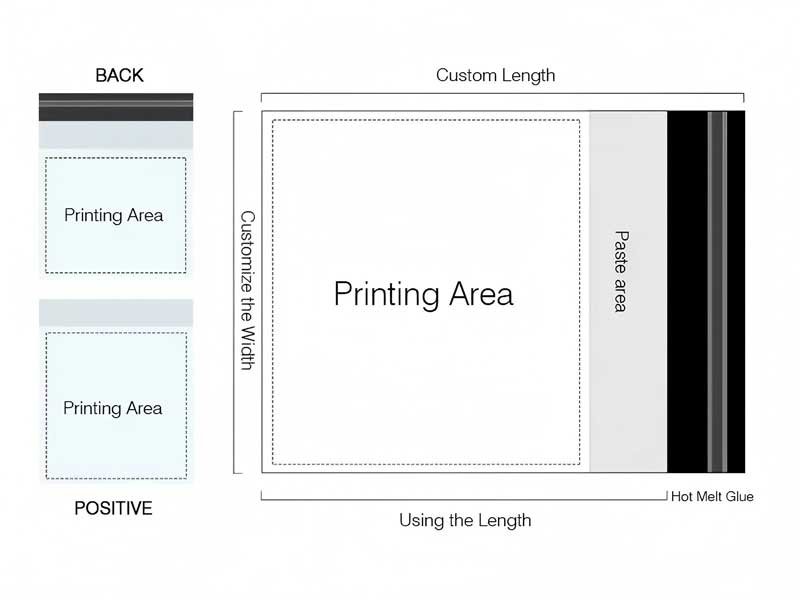
Compostable courier bags can be produced for private-label and branded B2B programs.
Project options may include:
- one- or multi-color printing;
- logo printing;
- brand messaging;
- shipping or handling information;
- custom film color;
- print position;
- print repeat;
- carton markings;
- private-label packing.
Printing should be reviewed together with the final film specification and any intended environmental or certification claim.
Artwork approval should confirm:
- final artwork version;
- Pantone or color reference;
- number of print colors;
- print side;
- print position;
- required regulatory wording;
- any certification-mark conditions.
For more detailed printing and private-label options, see our Custom Printed Compostable Mailers.
Typical Custom Specification
A courier bag RFQ should normally define more than only width and length.
| Specification Item | Project Options |
|---|---|
| Bag format | Self-seal, dual seal, open top, side gusset |
| Size | Custom according to packed parcel |
| Thickness | Confirmed according to application and testing |
| Film color | Natural, opaque or project-specific color |
| Printing | Custom logo / brand printing |
| Closure | Single adhesive, dual adhesive or open top |
| Packing | Bulk stack / carton / project-specific configuration |
| MOQ | Normally based on production weight and specification |
| Target market | Confirm before environmental or certification claims |
Specifications shown on this page are general project options.
Final dimensions, thickness, printing, packing and MOQ are confirmed according to the individual order.
B2B MOQ & Production
For customized courier bags, ORIZON’s standard production MOQ typically starts from approximately:
500 kg per specification or design
The number of bags represented by 500 kg depends on:
- bag dimensions;
- film thickness;
- material density;
- bag construction;
- closure configuration.
Different:
- sizes;
- thicknesses;
- film colors;
- artwork designs;
- bag structures
may require separate production quantities.
If you provide the required bag size and thickness, we can convert the production quantity into an estimated number of bags and cartons for quotation.
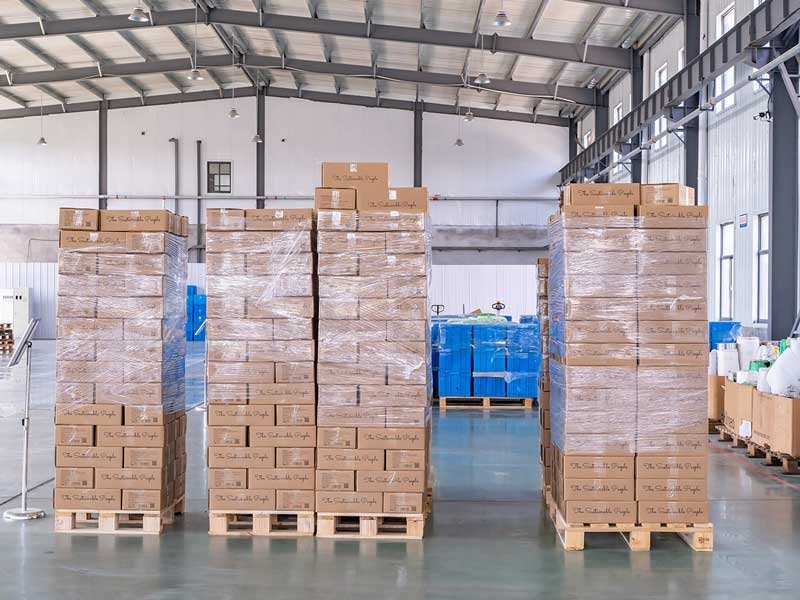
Bulk Packing for Logistics Programs
Courier bags can be packed for warehouse, distribution and importer programs.
Typical considerations include:
- bags per stack;
- stacks per carton;
- carton dimensions;
- carton gross weight;
- carton markings;
- barcode labels;
- palletization;
- total CBM;
- container or freight efficiency.
Packing should be confirmed together with the bag specification because changes in bag size, thickness or quantity per carton can affect shipping volume and landed cost.
Test the Finished Courier Parcel
Do not approve a courier bag only by stretching or pulling an empty bag sample.
Use the actual parcel.
A practical evaluation may include:
| Test | What to Confirm |
|---|---|
| Product fit | Parcel fits without excessive film tension |
| Packing | Operators can load the product efficiently |
| Seal | Closure remains secure after application |
| Label | Shipping label remains attached |
| Barcode | Code remains readable after packing |
| Handling | Film withstands normal logistics handling |
| Puncture | Corners or hardware do not damage the bag |
| Seam | No abnormal seam opening or tearing |
| Delivery trial | Package arrives with the outer bag intact |
| Return seal | Second closure remains usable where applicable |
For important programs, a real courier shipment can provide more useful information than an office-only sample evaluation.
When a Flexible Courier Bag May Not Be the Right Format
A flexible courier bag is not suitable for every shipment.
Additional protection or a different packaging format may be required for:
- fragile goods requiring cushioning;
- heavy rigid products;
- sharp-edged goods;
- products that can puncture flexible film;
- items requiring structural crush protection;
- long-term outdoor exposure; or
- goods better suited to a corrugated box.
The correct packaging should be selected according to the actual parcel and shipping environment.
For a broader B2B selection process, see our Compostable Mailer Sourcing Guide.
Certification & Market Requirements
Compostability claims for courier bags should be reviewed against the final finished-product specification rather than inferred from the raw material or from certification covering another product category.
When certification or environmental claims are required, buyers should confirm factors such as:
- finished-product category;
- material formulation;
- film thickness;
- printing;
- color;
- adhesive and other components;
- intended composting route;
- destination market; and
- conditions for certification-mark use.
Certification applicability should be confirmed against the applicable current certificate or product listing and the final finished-product specification.
For available company documentation and current certification information, see our Certification & Verification Center.
Compostable Courier Bag Manufacturer & Supplier in China
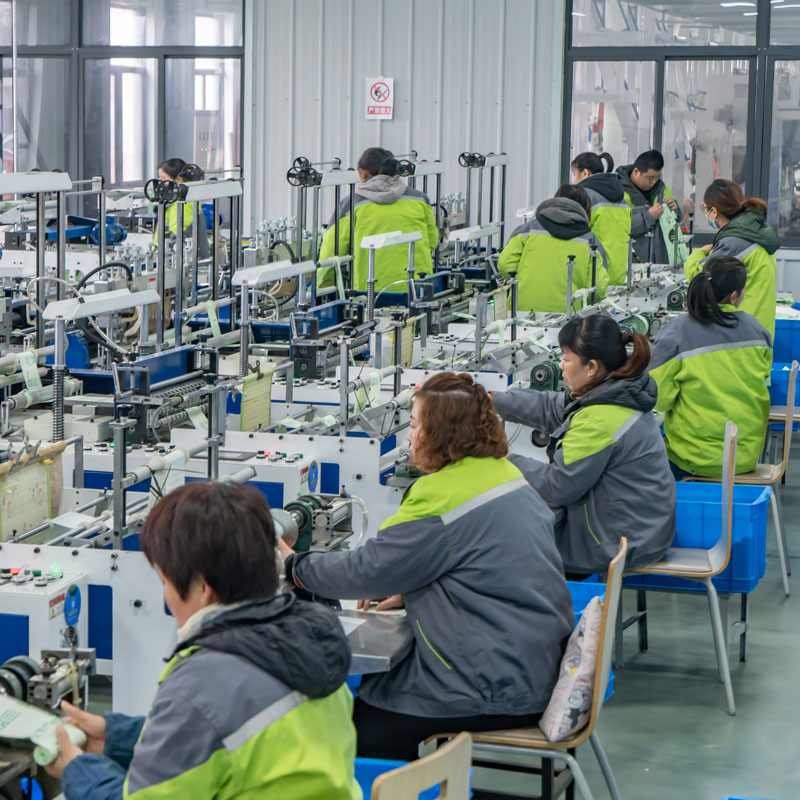
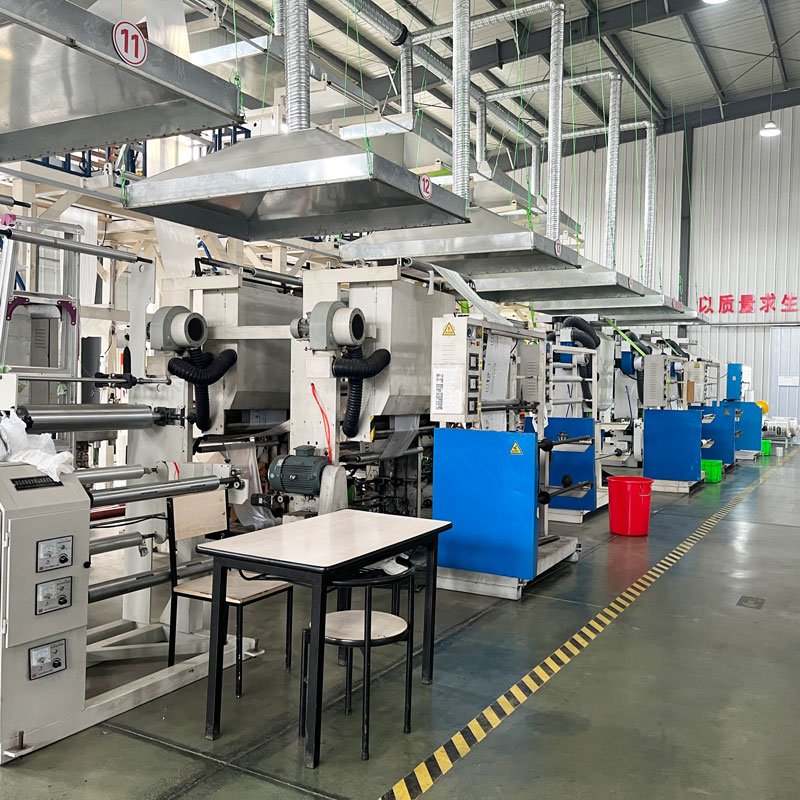
ORIZON manufactures flexible compostable bags in Qufu, Shandong, China for international B2B customers.
Courier bag projects can be developed for:
- e-commerce brands;
- fulfillment operators;
- logistics suppliers;
- packaging distributors;
- importers; and
- private-label programs.
Production can include:
- film extrusion;
- bag conversion;
- custom dimensions;
- thickness control;
- adhesive closure configurations;
- printing;
- carton packing; and
- repeat-order specification control.
For buyers searching for a China biodegradable courier mail bag factory or supplier, we recommend comparing the complete finished specification rather than only the price per bag.
The same nominal size can differ in:
- film thickness;
- bag weight;
- seal construction;
- adhesive performance;
- printing;
- packing;
- and finished-product documentation.
A comparable RFQ produces a more meaningful supplier comparison.
What to Send for a Courier Bag Quotation
To prepare a more accurate quotation, send:
- bag width × length;
- packed-product dimensions if available;
- thickness;
- film color;
- single or dual adhesive seal;
- printing artwork or number of colors;
- order quantity;
- packing requirement;
- destination country;
- target market;
- required certification or documentation;
- delivery destination.
If you are replacing an existing courier or mailer bag, you can also provide:
- current physical sample;
- photos;
- current size;
- current thickness;
- current bag weight; and
- current packing configuration.
This allows the new project to be compared against the actual packaging being replaced.
FAQ
Compostable courier bags are flexible outer shipping bags used for suitable e-commerce, fulfillment and logistics parcels while being intended for an applicable composting route.
Finished-product claims should be checked against the applicable specification and supporting documentation.
Typical applications include apparel, textiles, soft goods, accessories and other non-fragile products that are suitable for flexible outer packaging.
Rigid, fragile, sharp-edged or heavy items may require additional protection or a different packaging format.
There is no universal thickness.
The correct film gauge depends on packed weight, parcel dimensions, fill ratio, product shape, puncture risk and expected shipping conditions.
Testing the actual packed parcel is recommended before final approval.
Yes. Dual-seal courier bags can be produced with one adhesive strip for outbound shipment and a second strip reserved for customer returns.
The return closure, customer opening method and parcel fit should be tested before mass production.
Yes. Custom printing can include logos, brand artwork, handling information and project-specific designs.
Printing should be reviewed together with the film specification and any intended environmental or certification claims.
Standard customized production typically starts from approximately 500 kg per specification or design.
The corresponding number of bags depends on bag size, thickness, material weight and closure structure.
No. Certification applicability depends on the scope and conditions of the relevant certificate or product listing and the final finished-product specification.
Certification covering a raw material or another bag category should not automatically be assumed to cover the final courier bag.
Request Wholesale Specifications
If you are sourcing compostable courier bags for an e-commerce, logistics, fulfillment or distribution program, send us:
bag size + thickness + closure + printing + quantity + target market + delivery destination
If the specification is not yet finalized, send the current courier bag or packed-product dimensions and we can identify the technical details that still need to be confirmed.