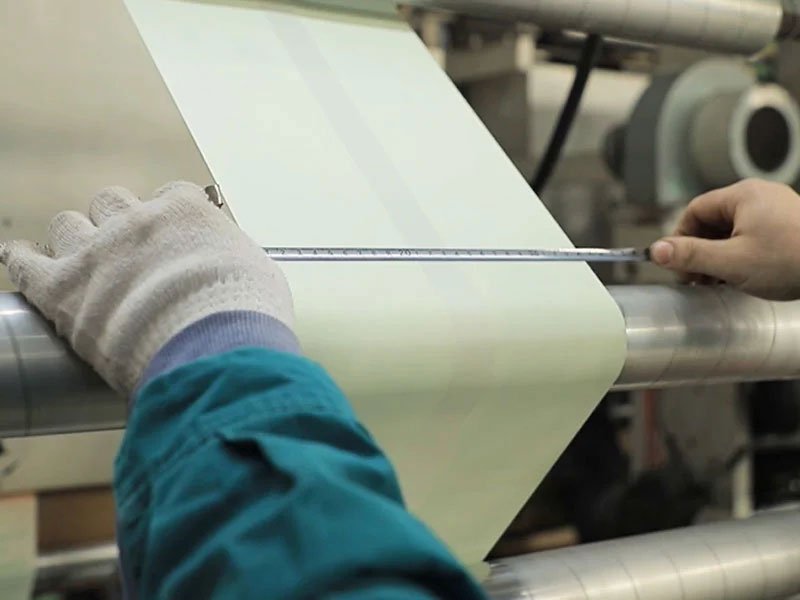
Flat Open-Top Compostable Produce Bags Wholesale
ORIZON manufactures flat open-top produce bags for supermarkets, distributors, and private-label brands. Custom specifications and packaging are available for B2B orders.
- Custom size, thickness, roll count, and core size
- Optional printing and private-label packaging
- Typical MOQ from 500 kg per specification

What Are Flat Compostable Produce Bags?
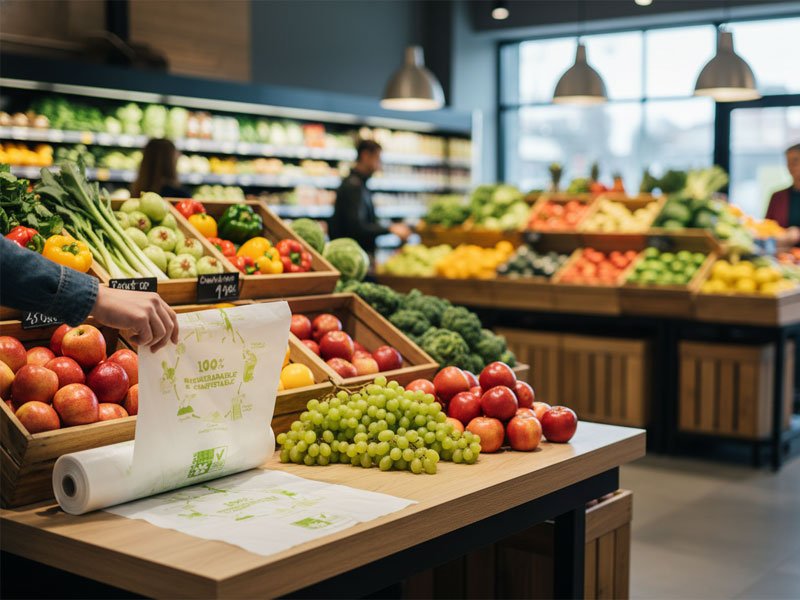
Flat compostable produce bags are open-top bags without built-in handles. They are commonly used to pack fruit and vegetables in supermarkets, grocery stores, fresh markets, and produce distribution centers.
Flat describes the structure of the bag.
Roll describes how the bags are packed and dispensed.
A flat open-top produce bag may be supplied on a roll, folded, or in another approved packing format.
Some buyers search for biodegradable produce bags wholesale. However, “biodegradable” alone does not define a test standard, breakdown period, or disposal environment.
For a verified compostability claim, buyers should check the standard, certificate holder, finished-product scope, permitted thickness, printing coverage, and certificate validity.
Product Overview
Flat compostable produce bags are open-top bags without handles, commonly used in supermarkets and grocery stores for fresh produce selection.
Compared with vest / T-shirt style produce bags, flat open-top bags are:
- Lighter in structure
- Easier to dispense
- Less likely to be classified as shopping bags
They are widely accepted as produce packaging in regulated markets.
This page focuses on flat open-top produce bags. If you need other produce bag styles, such as T-shirt produce bags or pre-open produce bags, see our main compostable produce bags wholesale category.

Flat Produce Bags vs. Other Formats
Different produce packing systems require different bag structures.
| Product Format | Main Structure | Typical Application |
|---|---|---|
| Flat open-top bags | Straight opening without handles | Supermarket fruit and vegetable packaging |
| Produce bags on a roll | Connected bags with perforations | Self-service produce dispensers |
| T-shirt produce bags | Built-in handles | Heavier produce and tied carrying |
| Pre-open produce bags | Opening prepared for faster packing | Produce packing stations and selected automated systems |

For projects where roll diameter, core size, perforation, and dispenser fit are the main requirements, view our Produce Bags on a Roll Wholesale.
For bags with built-in handles, view our Compostable T-Shirt Produce Bags.
Typical Applications
Flat open-top compostable produce bags can be developed for:
- Supermarket fruit and vegetable sections
- Grocery stores and fresh markets
- Organic food retailers
- Produce packing counters
- Fruit and vegetable distributors
- Private-label packaging programs
- Food distribution and repacking operations
The correct bag specification depends on the produce type, expected weight, moisture level, storage period, handling method, and packing system.
These bags are not represented as extending produce shelf life unless project-specific testing supports that claim.
Reference Specifications
The specifications below are reference configurations. They are not universal sizes.
Final dimensions and thickness should be confirmed according to the produce type, required load, packing method, dispenser, and approved sample.
| Size (W × L) | Reference Thickness | Reference Packing | Typical MOQ |
|---|---|---|---|
| 230 × 400 mm | 15 microns | 200 bags per roll | 500 kg |
| 250 × 450 mm | 18 microns | 200 bags per roll | 500 kg |
| 300 × 500 mm | 20 microns | 150 bags per roll | 500 kg |
Custom dimensions are available after specification review.
The number of bags per roll may change when the bag dimensions, thickness, core size, or maximum roll diameter changes.
Customization Options
Each wholesale or OEM project should begin with a clear product specification.
| Item | Available Options |
|---|---|
| Bag size | Standard or custom width and length |
| Thickness | Selected according to load and performance requirements |
| Film color | Natural, green, or custom Pantone color |
| Film formulation | Selected according to performance, target market, and document scope |
| Supply format | Roll-packed, folded, or another approved format |
| Bags per roll | Standard or custom roll count |
| Core | Paper core, coreless, or another approved format |
| Perforation | Custom spacing and tear performance |
| Printing | Unprinted, one-side, or two-side printing |
| Print colors | Up to 8 colors, subject to artwork review |
| Printing inks | Water-based inks, subject to the artwork and certification scope |
| Outer packaging | Carton, outer bag, retail box, or paper sleeve |
| Labels | Barcode, batch label, carton mark, and shipping label |
| Certification marks | Subject to certificate scope and licensing requirements |
Final options depend on the material, dimensions, order quantity, artwork, packing structure, target market, and required documents.
Roll and Dispenser Compatibility
A standard bag width does not confirm that a roll will fit an existing supermarket dispenser.
For roll-packed flat produce bags, buyers should provide:
- Bag width and length
- Core inner diameter
- Maximum roll outer diameter
- Number of bags per roll
- Perforation direction and spacing
- Dispenser dimensions or photographs
- Existing bag or roll sample
- Required carton quantity and weight
A fitting sample should be approved before mass production when dispenser compatibility is important.
More roll specifications are available on our Produce Bags on a Roll Wholesale page.
Product Performance
Film thickness should be selected according to the produce type and expected bag load.
Performance requirements may include:
- Consistent film width and thickness
- Easy bag opening
- Controlled blocking between film layers
- Tensile and tear performance
- Puncture resistance
- Bottom-seal strength
- Perforation consistency
- Roll winding and alignment
- Film clarity or produce visibility
- Load testing against the approved specification
Testing conditions and acceptance limits should be agreed during sample approval.
A compostability certificate does not replace physical performance testing.
Material and Compostability Options
Film formulations may include:
- PLA, which means polylactic acid
- PBAT, which means polybutylene adipate terephthalate
- Plant-based starch components
- Approved additives and processing aids
The formulation is selected according to the required strength, flexibility, opening performance, target market, and intended product claim.
A raw-material certificate does not automatically certify every finished produce bag.
The finished bag thickness, color, printing ink, additives, sealing structure, and product format must fall within the relevant certificate or test scope.
Industrial composting and home composting are different claims. A bag certified for industrial composting should not be described as home compostable without separate supporting certification.
Certification also does not guarantee acceptance by every collection program or composting facility. Local infrastructure, processing technology, contamination rules, and council requirements may affect acceptance. The Australasian Bioplastics Association also advises that certification does not guarantee acceptance in every composting system.
Food-Contact Requirements
Compostability and food-contact suitability are separate assessments.
A compostability certificate does not prove that a finished bag is suitable for direct food contact. Food-contact documents also do not prove compostability.
For direct fruit and vegetable contact, buyers should define:
- Destination country or region
- Type of fruit or vegetables
- Contact time
- Contact temperature
- Storage conditions
- Printed or unprinted format
- Single-use application
- Required migration tests
- Required supporting documents
For the European Union, food-contact review may involve Regulation (EC) No 1935/2004 and applicable specific measures such as Commission Regulation (EU) No 10/2011.
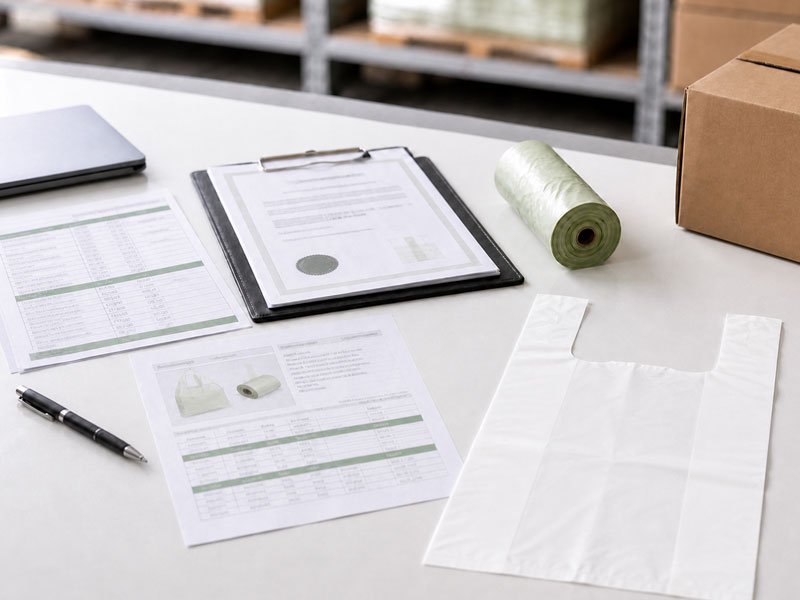
For the United States, the regulatory status of each food-contact component must be reviewed for its intended use. Buyers can refer to the FDA guidance for food-contact materials.
Document availability must be confirmed for the selected finished formulation and intended use.
Standards and Certification Options
Possible compostability references may include:
- EN 13432
- ASTM D6400
- BPI certification
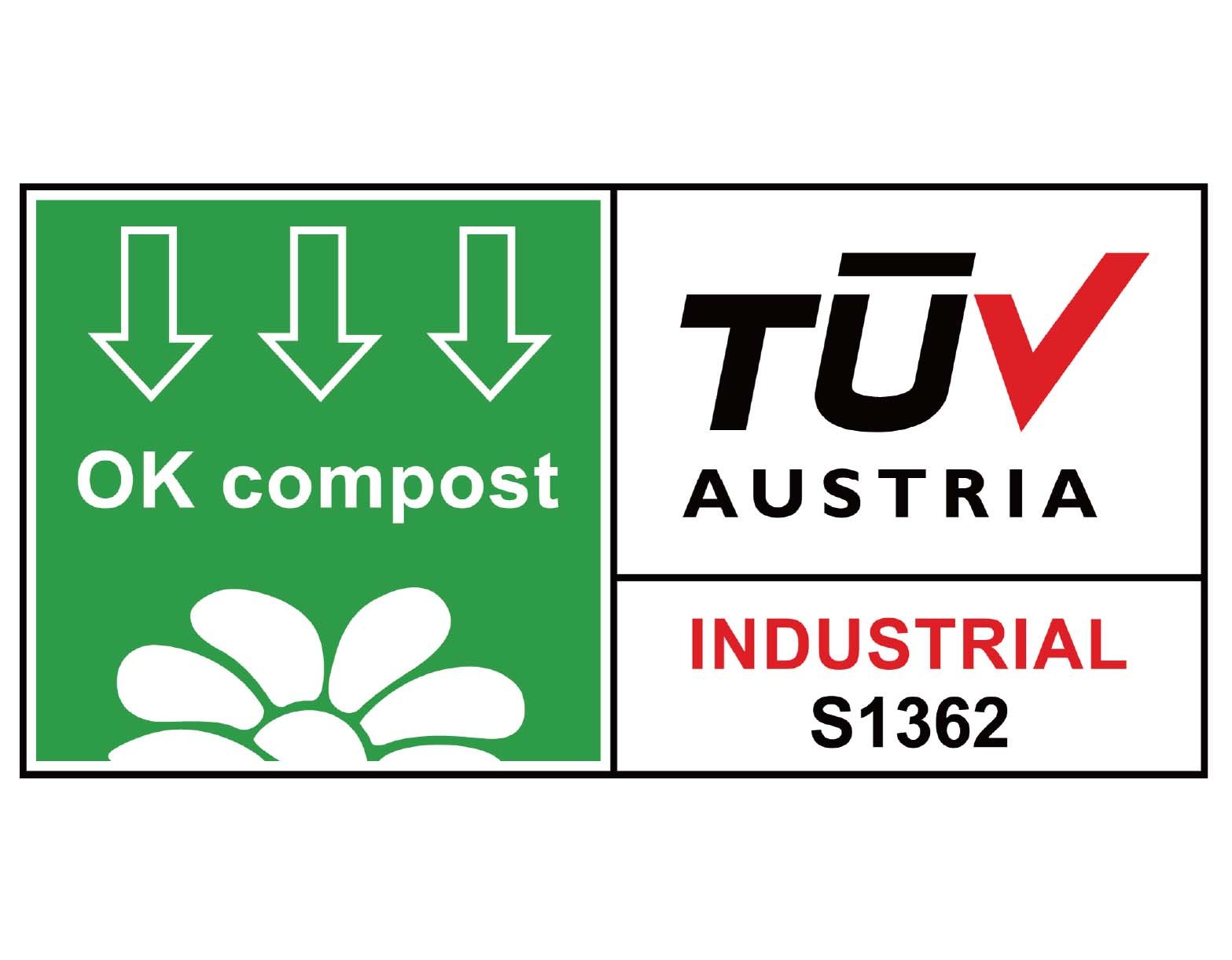
- OK compost INDUSTRIAL
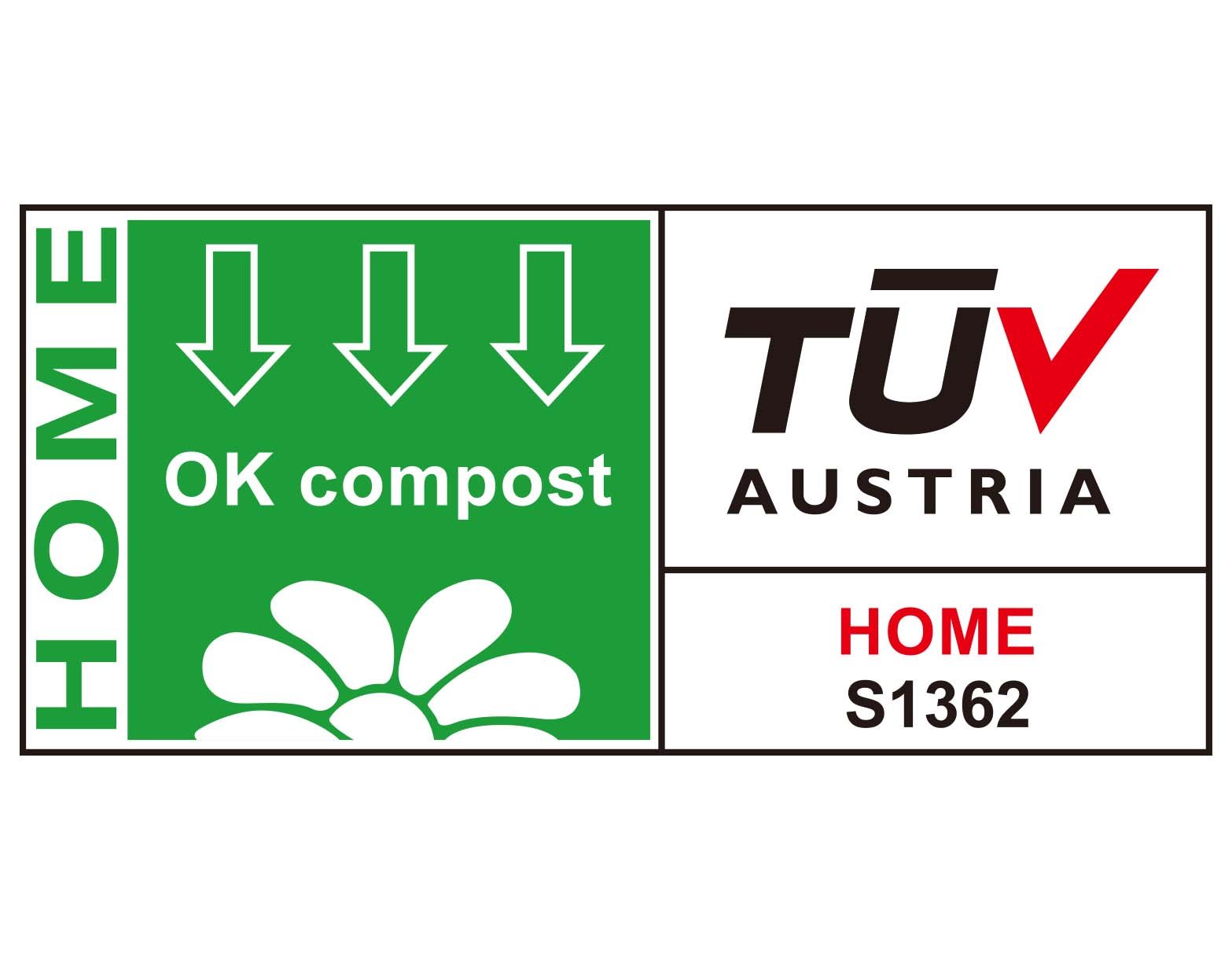
- OK compost HOME
- AS 4736
- AS 5810
Not every standard or certification is available for every product configuration.
Buyers should check:
- Certificate holder
- Product name and category
- Finished product or raw material scope
- Certified thickness range
- Printed or unprinted scope
- Approved colors and additives
- Certification mark licensing
- Certificate validity
- Intended market
The BPI certified product directory can be used to search for products listed under the BPI certification program.
For an overview of major standards, visit our Compostable Certification Guide.
Project Documents
Different documents serve different purposes.
| Document | What It Shows |
|---|---|
| Raw-material certificate | Certification or assessment of a specified material |
| Finished-product certificate | Certification covering a defined finished product |
| Test report | Laboratory results for the tested sample and conditions |
| Technical data sheet | Technical properties provided for a material or product |
| Supplier declaration | A supplier statement within a defined scope |
| Declaration of Conformity | A formal compliance declaration where applicable |
| Food-contact migration report | Migration results for the tested product and conditions |
These documents are not interchangeable.
The required document package should be confirmed before the material, printing, packaging claims, and certification marks are approved.
OEM and Private-Label Process
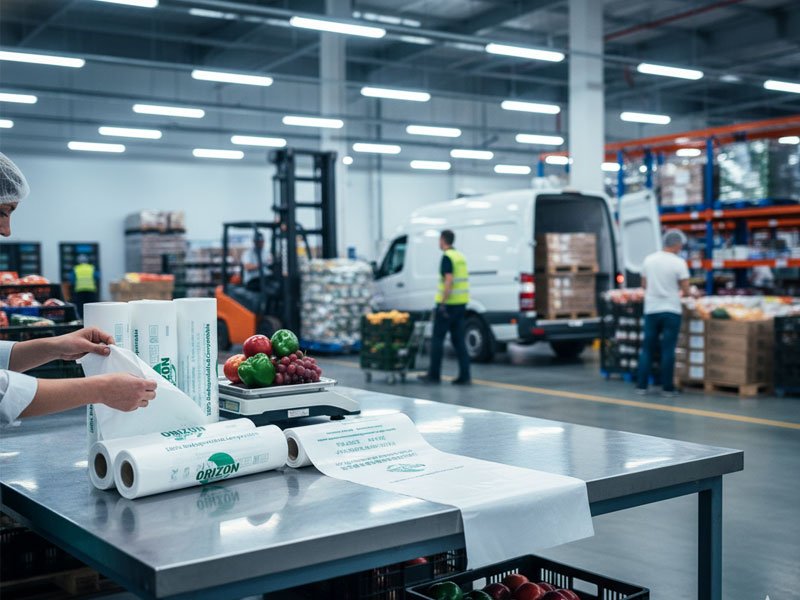
ORIZON supports flat compostable produce bag projects for importers, distributors, grocery chains, and private-label brands.
A typical project follows these steps:
- Submit the target market and product requirements.
- Confirm the bag dimensions, thickness, and packing format.
- Review the formulation and document requirements.
- Confirm artwork, labels, certification marks, and cartons.
- Produce and approve fitting or performance samples.
- Begin mass production after written approval.
- Inspect, pack, and prepare the order for shipment.
Production should begin only after the specification, artwork, claims, packaging, and required documents have been approved.
For product development projects, view our Custom Compostable Produce Bags.
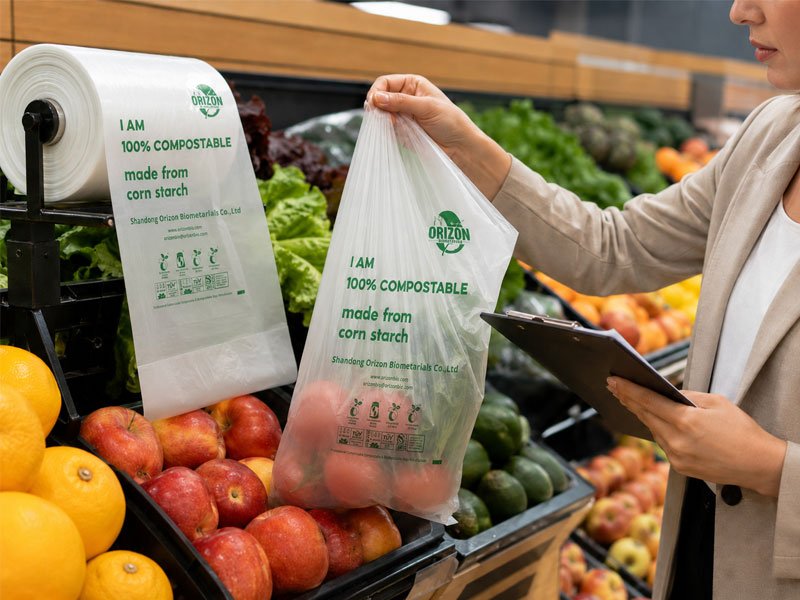
Manufacturing and Quality Control
ORIZON has more than 16 years of compostable bag manufacturing experience.
Our manufacturing capabilities include:
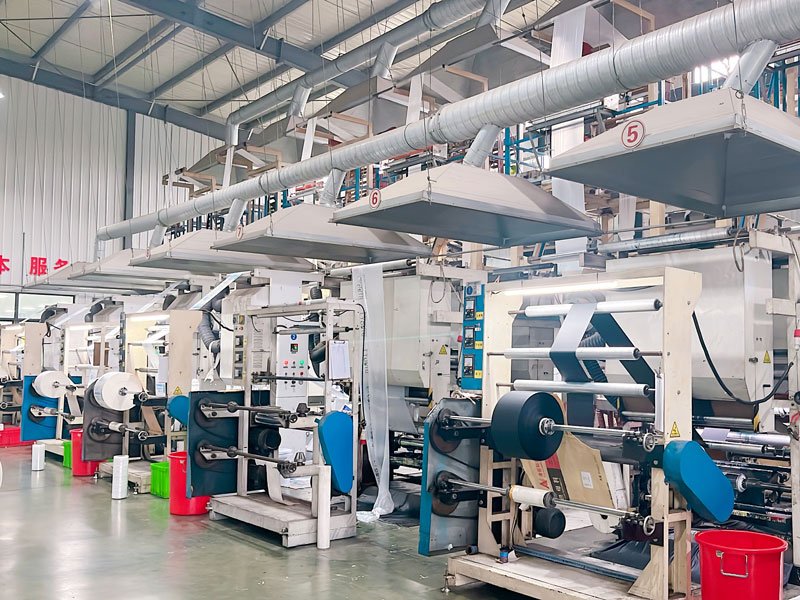
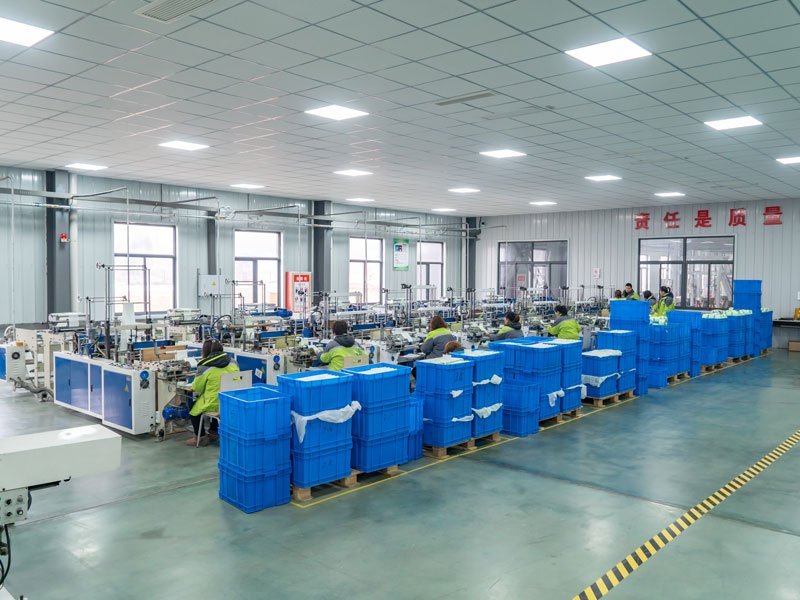
- 20,000 square meter production facility
- 16 automated production lines
- Monthly capacity of up to 500 tons
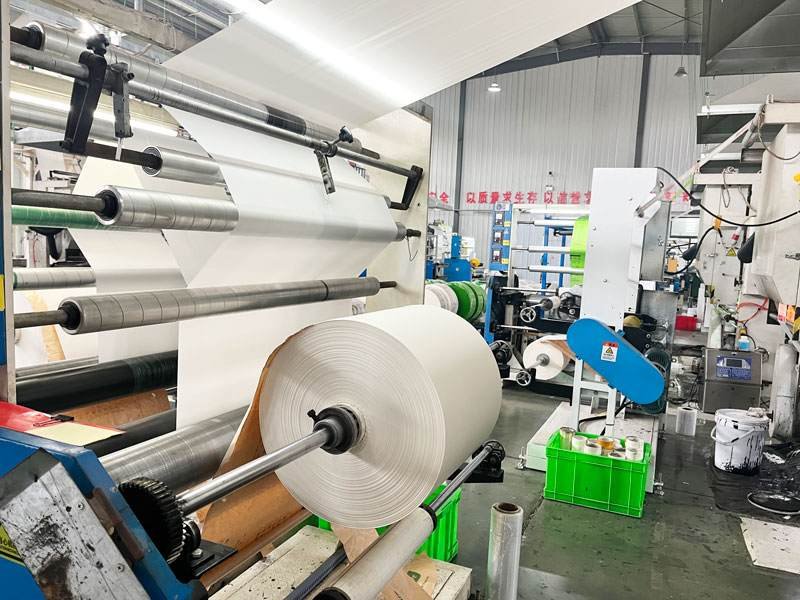
- Blown-film production
- Printing and bag conversion
- Roll perforation and counting
- Flat-seal and star-seal bag production
- Export carton packing
Quality checks may include:
- Material and formulation verification
- Film width and thickness measurement
- Bag length and seal-position checks
- Tensile, tear, and puncture testing
- Seal-strength testing
- Roll count and perforation inspection
- Printing position and color review
- Core and roll-diameter inspection
- Carton quantity and labeling checks
- Batch identification and production records
Inspection requirements are confirmed according to the approved product specification.
Learn more about our Compostable Bag Factory.
MOQ and Lead Time
The typical MOQ starts from 500 kg per size and specification.
The final MOQ depends on:
- Bag dimensions
- Film thickness
- Material formulation
- Film color
- Printing
- Roll or folded format
- Retail packaging
- Certification and document requirements
Indicative production lead time is often 15 to 25 days after the specification, artwork, packaging, and samples have been approved.
The final schedule depends on material availability, order configuration, production planning, and inspection requirements.
Retail and individual consumer orders are not accepted.

Information Needed for a Wholesale Quote
Please provide the following information for an initial quotation.
| Information | Details to Provide |
|---|---|
| Market and use | Destination market, sales channel, and produce type |
| Bag specification | Width, length, thickness or required load |
| Supply format | Rolled, folded, or loose; include core and roll details if required |
| Printing and packaging | Artwork, print colors, and packaging format |
| Order volume | Estimated first order and annual demand |
| Claims and documents | Required compostability, food-contact claims, and supporting documents |
| Delivery | Destination country, port, or warehouse |
For replacement projects, you can also provide an existing bag, roll sample, dispenser drawing, or photograph.
FAQ
Flat compostable produce bags are open-top bags without built-in handles. They are commonly used to pack fruit and vegetables in supermarkets, grocery stores, fresh markets, and produce distribution programs.
Not exactly. Flat describes the bag structure. Roll describes the packing and dispensing format. A flat open-top bag can be supplied on a roll, folded, or in another approved format.
The typical MOQ starts from 500 kg per size and specification. Final requirements depend on the bag dimensions, thickness, film color, printing, packaging, and material configuration.
Yes. Width, length, thickness, bags per roll, core size, perforation, and carton configuration can be customized after specification review.
They can be developed for an existing dispenser. Buyers should provide the core size, maximum roll diameter, roll width, dispenser dimensions, photographs, drawings, or an existing sample.
Certified configurations may be available. Certification depends on the finished bag formulation, thickness, color, printing, additives, and product format.
Not automatically. A raw-material certificate covers the material stated in that certificate. The finished bag must remain within the relevant product, thickness, color, printing, and additive scope.
Food-contact suitability must be reviewed for the finished formulation, intended food type, contact time, temperature, printing, and target market. Compostability certification alone does not prove food-contact suitability.
Certification marks may only be printed when the finished product is covered by the certificate and the licensing conditions permit their use.
Indicative production lead time is often 15 to 25 days after the specification, artwork, packaging, and samples have been approved. Final timing is confirmed by project.
Indicative production lead time is often 15 to 25 days after the specification, artwork, packaging, and samples have been approved. Final timing is confirmed by project.
Request a Wholesale Quote
Send us your target market, bag dimensions, thickness, roll count, core size, artwork, packaging plan, estimated quantity, required documents, and delivery country.
We will review the specification, identify any missing details, and prepare a project-based quotation.