Certified Compostable Bags for Global B2B Buyers
Certified compostable bags for wholesale, OEM and private-label projects, with certification options including BPI / ASTM D6400, EN 13432, OK Compost, AS 4736 and AS 5810.
Custom specifications available for global B2B markets.

What Makes a Compostable Bag Certified?
A certified compostable bag is more than a bag made from a compostable raw material.
Third-party certification applies to a defined finished product or approved product configuration evaluated against specific compostability requirements.
Depending on the certification program, the approved scope may include factors such as:
- material formulation
- product type
- film thickness
- color
- printing
- ink system
- additives
- finished-bag structure
This means a certified raw material does not automatically make every finished bag produced from it certified.
Likewise, changing the thickness, color, printing or structure of an existing bag may affect whether the new configuration remains within the approved certification scope.
For an overview of the major standards and certification systems, see our compostable certifications guide.
For B2B procurement, the safest approach is to confirm the required certification first and then develop the bag specification within the applicable scope.
Certified Compostable Bag Products
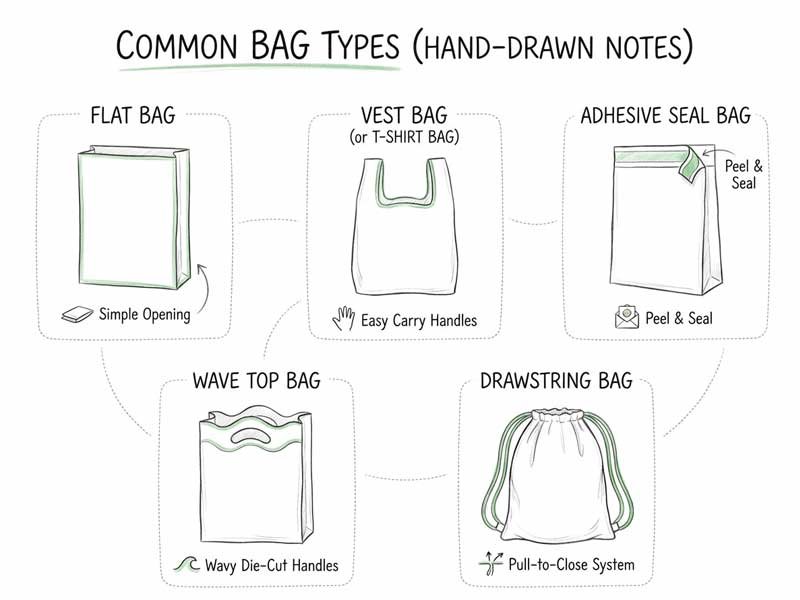
ORIZON manufactures multiple compostable bag categories for B2B wholesale, OEM and private-label programs.
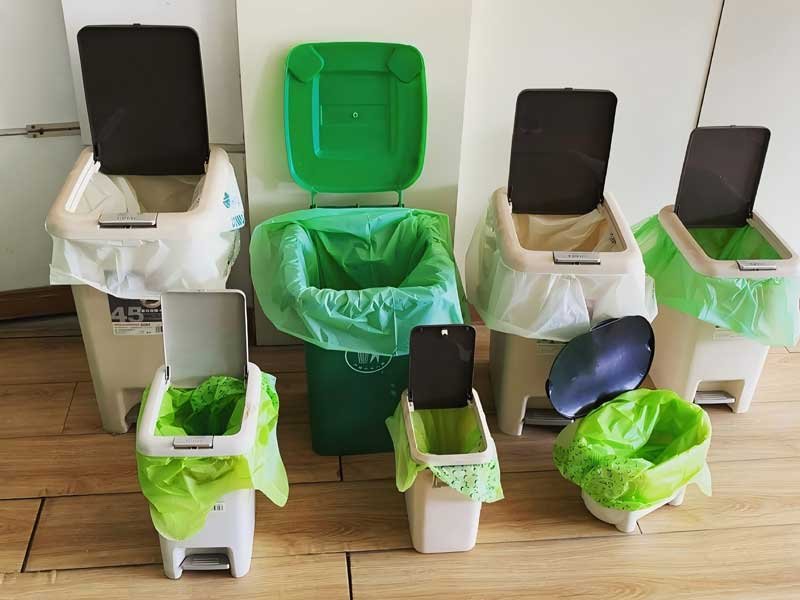
Available for household food waste, commercial kitchens, facilities, hospitality, municipal programs and other organic-waste applications.
Custom options can include:
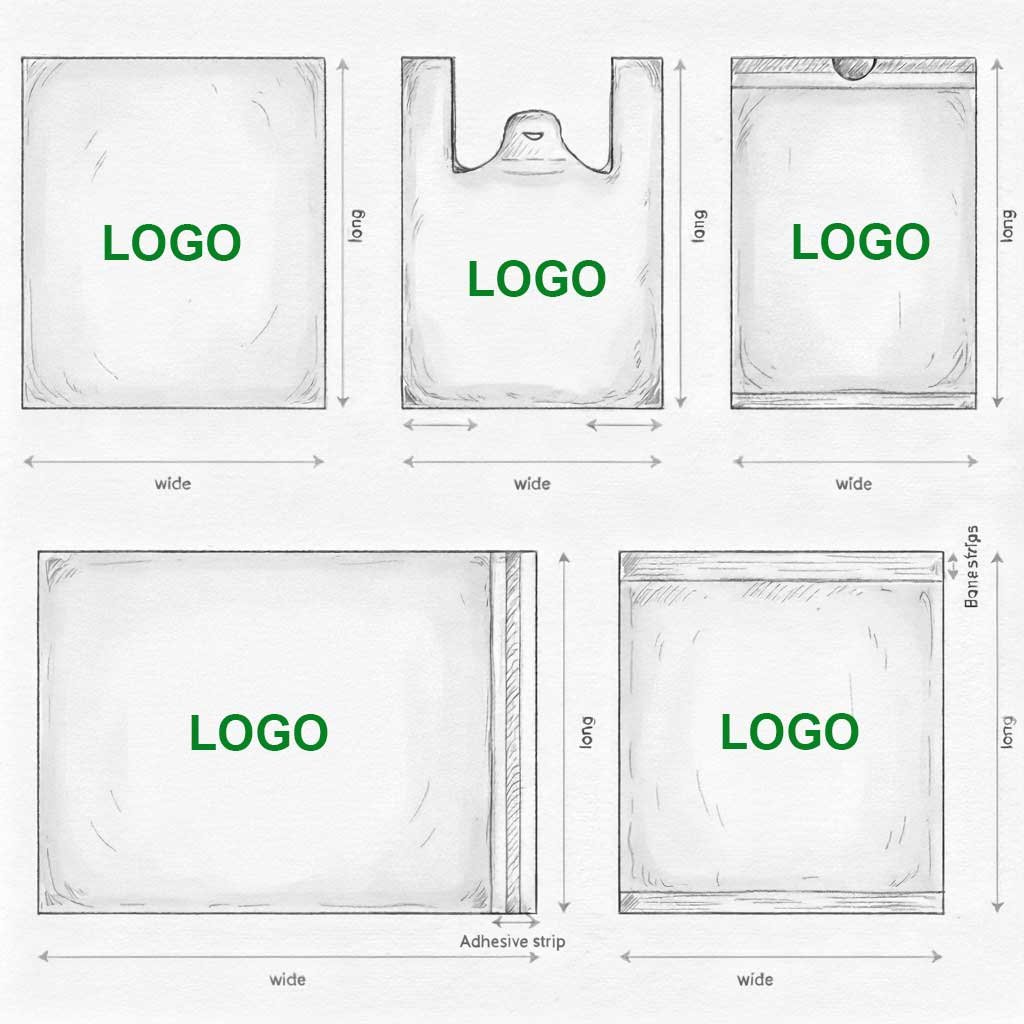
- bag dimensions
- film thickness
- flat or star-sealed bottoms
- bags per roll
- core or coreless rolls
- bag color
- printing
- carton configuration
Certification requirements depend on the destination market and composting system.

T-shirt bags and other shopping-bag formats can be developed for supermarkets, retailers, distributors and branded packaging programs.
Custom size, gusset, thickness, color and printing can be reviewed according to the project specification and applicable certification requirements.
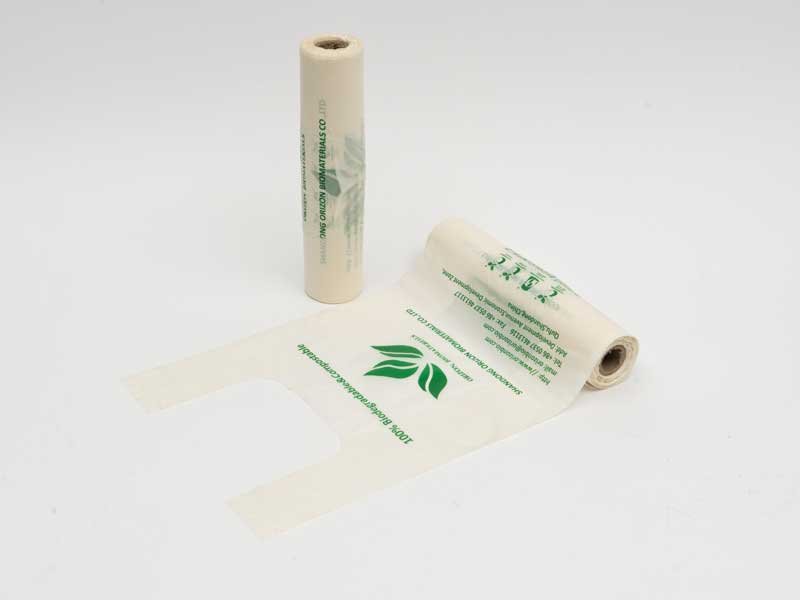
Produce bags can be manufactured in roll, flat and other formats for supermarkets, fresh-produce distributors and packaging programs.
Options may include transparent or tinted film, custom thickness, roll count, core dimensions, perforation and printing.
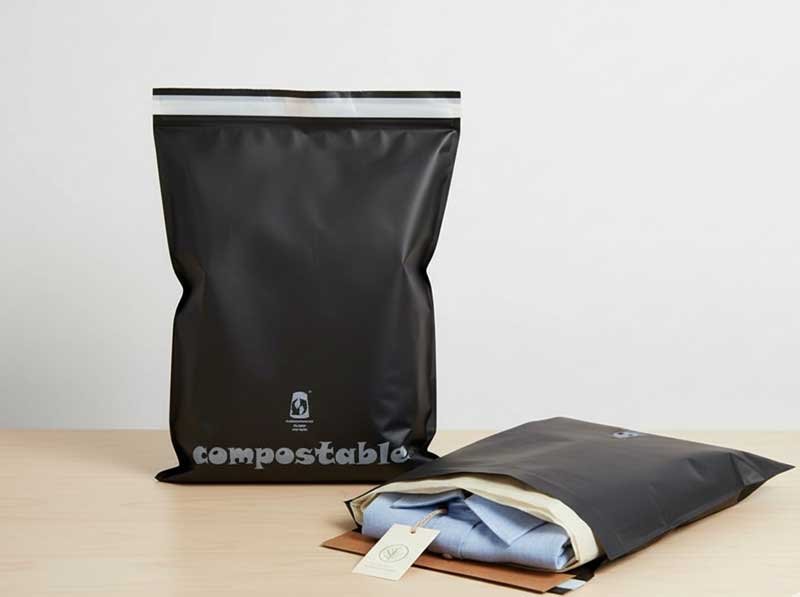
Mailer and courier-bag formats can be developed for e-commerce, fulfillment and branded shipping applications.
Customization may include dimensions, film thickness, printing, closure structure and outer packaging.

Garment bags can be customized for apparel, fashion and textile supply chains.
Available project variables include width, length, flap structure, film thickness, printing and packaging.
Certification availability should always be confirmed against the final product configuration rather than assumed from the product category alone.
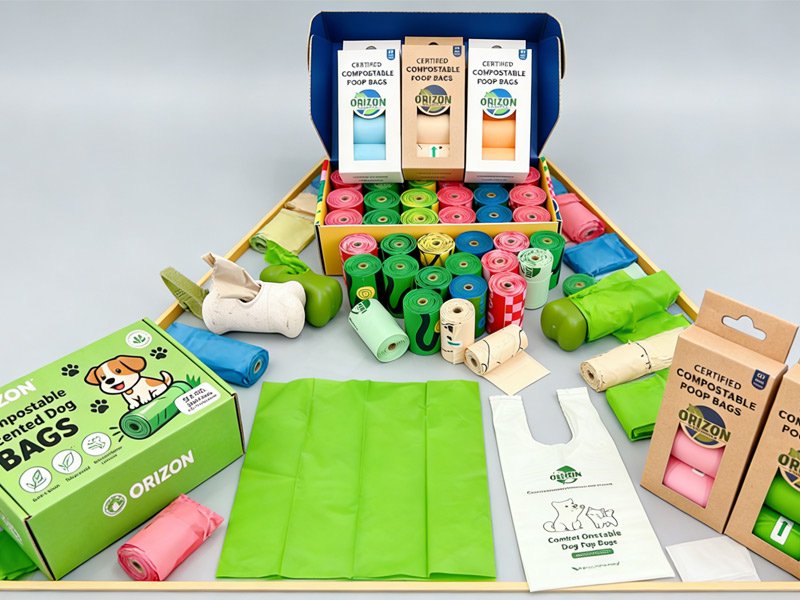
Compostable dog waste bags are available for pet brands, distributors and private-label programs.
Projects can be customized by bag size, thickness, color, roll count, printing and retail packaging.
Choose Certification by Market & Composting System
There is no single compostability certification that automatically applies to every market or disposal system.
The required certification depends on where the product will be sold, how it will be used and where it is expected to be composted.
| Certification / Standard | Main Composting Environment | Typical Market / Application |
|---|---|---|
| BPI / ASTM D6400 | Commercial / industrial composting | United States |
| EN 13432 | Industrial composting for packaging | European market |
| OK Compost INDUSTRIAL | Industrial composting | Multiple international markets |
| OK Compost HOME | Home composting | Home-compost applications |
| AS 4736 | Commercial / industrial composting | Australia |
| AS 5810 | Home composting | Australia |
BPI Certified Compostable Bags
For projects targeting commercial composting systems in North America, BPI certified compostable bags may be relevant.
BPI certification is commonly associated with compostable products evaluated against standards such as ASTM D6400.
The exact product and certification scope should be verified before certification claims or marks are used.
ASTM D6400 Compostable Bags
ASTM D6400 compostable bags are intended for managed municipal or industrial composting applications.
For US projects, buyers should confirm not only the material but also the finished-product certification requirements and any applicable labeling rules.
EN 13432 Compostable Bags
For the European market, EN 13432 compostable bags are commonly used for packaging intended for industrial composting.
Product design, thickness, printing and other components should remain consistent with the applicable certification scope.
OK Compost HOME
OK Compost HOME certification applies to defined products evaluated for home-composting conditions.
Home composting typically operates at lower and less controlled temperatures than industrial composting.
A commercially compostable product should therefore not automatically be described as home compostable.
OK Compost INDUSTRIAL
OK Compost INDUSTRIAL certification applies to products intended for controlled industrial composting environments.
OK Compost HOME and OK Compost INDUSTRIAL represent different composting conditions and should not be treated as interchangeable claims.
AS 4736 Compostable Bags
For Australian commercial composting and many FOGO-related applications, AS 4736 compostable bags may be required.
Actual acceptance can also depend on council, composting facility, procurement and program requirements.
AS 5810 Compostable Bags
For Australian home-composting applications, AS 5810 compostable bags are designed around home-compostability requirements.
AS 5810 should not be confused with AS 4736, which addresses commercial composting conditions.
Important Market Note
Certification is only one part of product compliance.
Depending on the destination market, buyers may also need to consider:
- local plastic-bag regulations
- composting-facility acceptance
- product labeling
- certification-logo usage
- retail packaging requirements
- food-contact requirements where applicable
- council or municipal program specifications
For this reason, we recommend confirming both the target market and intended disposal system before approving a bag specification.
Certification Scope for Custom & Private-Label Bags
Customization is one of the most important areas where certification misunderstandings occur.
A standard certified bag and a customized private-label version may not always have exactly the same certification status.
The following product changes should be reviewed before production:
| Customization | Why It Matters |
| Film thickness | May need to remain within an approved certification range |
| Bag structure | Finished-product type may be part of the approved scope |
| Color | Approved color or masterbatch conditions may apply |
| Printing | Ink type and print coverage may affect certification scope |
| Additives | Must remain compatible with the approved formulation |
| Logo / certification mark | Mark usage may require authorization |
| New brand or SKU | Sublicense, extension or additional approval may be required depending on the program |
| Retail packaging | Additional packaging components may have separate compliance requirements |
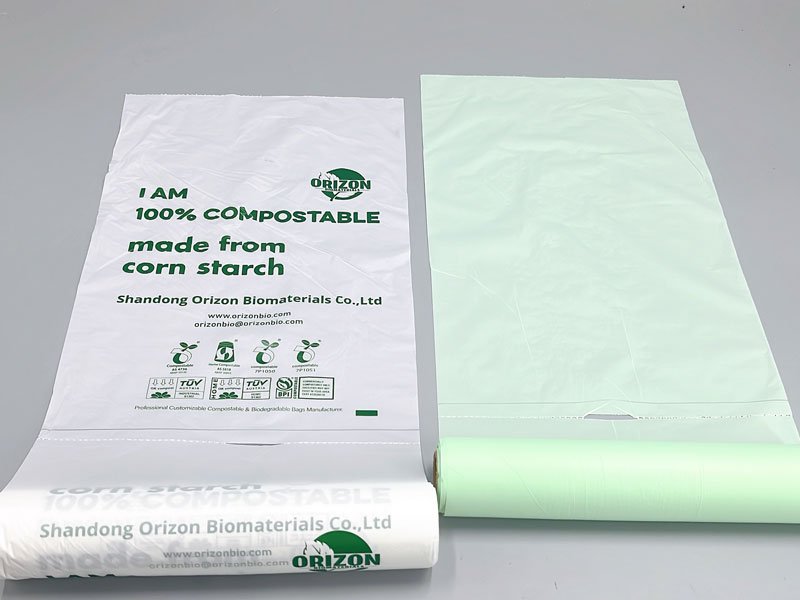
Custom Printing
Adding a logo does not mean a certification logo can automatically be printed beside it.
For certified products, artwork should be reviewed before mass production.
This is particularly important when the buyer wants to display:
- BPI marks
- OK Compost marks
- Seedling marks
- Australian compostability marks
- certification numbers
- compostability claims
The right to manufacture a certified product and the right for another brand to use a certification mark are not always the same thing.
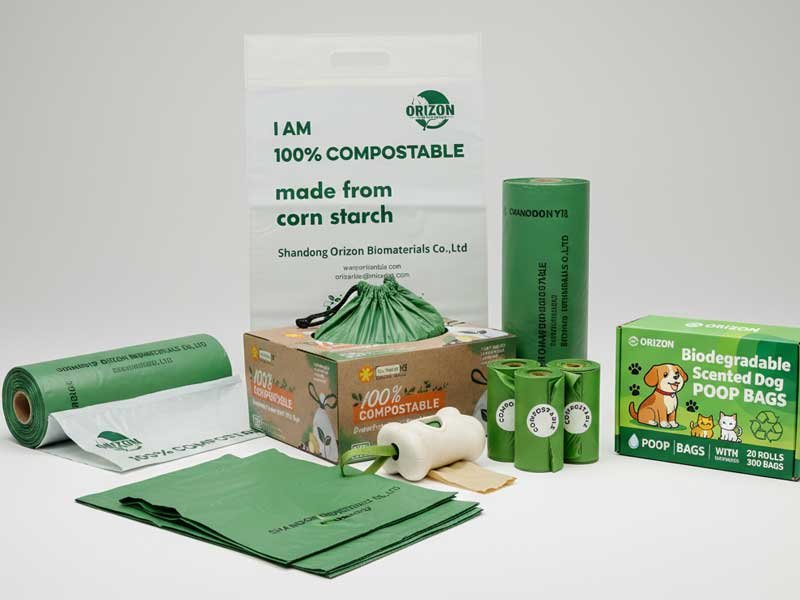
Private-Label Certification
For a private-label project, the buyer may sell the finished bag under its own brand.
Depending on the certification program and proposed packaging, additional authorization, sublicensing, certificate extension or related certification procedures may be required.
Our private label compostable packaging program supports branded B2B projects, but certification and logo requirements should be confirmed before the final artwork is approved.
Custom Product Development
If your project requires a new size, thickness, color, print design or packing format, review our custom compostable bags manufacturing capabilities.
The recommended workflow is:
Target Market
- Required Certification
- Product Specification
- Certification Scope Review
- Artwork Review
- Sample
- Approval
- Production
This sequence reduces the risk of completing the product design first and discovering later that the proposed configuration does not match the required certification.
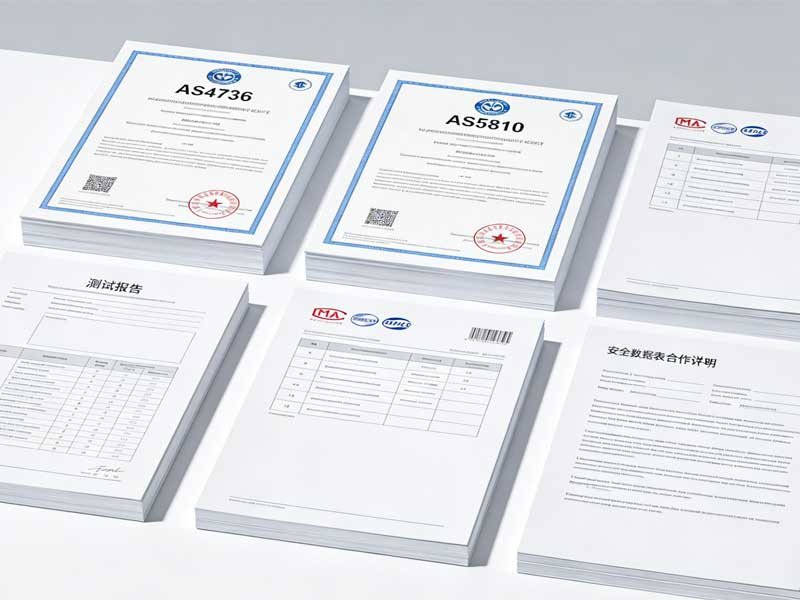
Certificate Verification & Documentation
Professional buyers should verify certification rather than relying only on a certification logo shown on a website, sample or product package.
Depending on the project, the following information may be relevant:
| Document / Check | Purpose |
| Certificate | Confirm certificate holder and certification type |
| Certificate number | Support independent verification |
| Product / SKU information | Confirm which finished products are covered |
| Certification scope | Review applicable product limitations |
| Validity information | Confirm current certification status |
| Technical specification | Confirm size, thickness and product configuration |
| Artwork approval | Confirm claims and certification-mark use |
| Batch information | Support production traceability |
OEM & Private Label Certification Workflow
Certification should be considered at the beginning of an OEM project, not added as an afterthought before shipment.
For certified compostable bag projects, our typical workflow is:
1. Confirm the Target Market
Tell us where the product will be sold or used.
Different markets may require different standards, certification marks or labeling.
2. Confirm the Intended Composting System
The bag may be intended for:
- industrial composting
- municipal food-waste collection
- commercial organics programs
- home composting
- specific council or institutional programs
This determines which certification pathway is relevant.
3. Define the Product Specification
Important information normally includes:
- bag type
- width and length
- gusset if required
- thickness
- color
- printing
- bags per roll or pack
- core requirements
- packaging format
4. Review Certification Scope
Before sampling or mass production, the proposed product is reviewed against the relevant certification requirements.
If the specification falls outside an existing approved scope, additional certification work may be required.
5. Review Artwork and Certification Marks
Private-label artwork should be checked before printing, particularly when certification marks, standards or environmental claims are included.
6. Sampling and Approval
Samples can be used to confirm dimensions, film, printing, bag structure and packaging before mass production.
7. Mass Production and Documentation
After approval, production follows the confirmed specification and applicable project requirements.
For larger private-label and repeat-volume programs, our OEM compostable bags page explains the broader manufacturing and cooperation process.
Why Source Certified Compostable Bags from ORIZON?
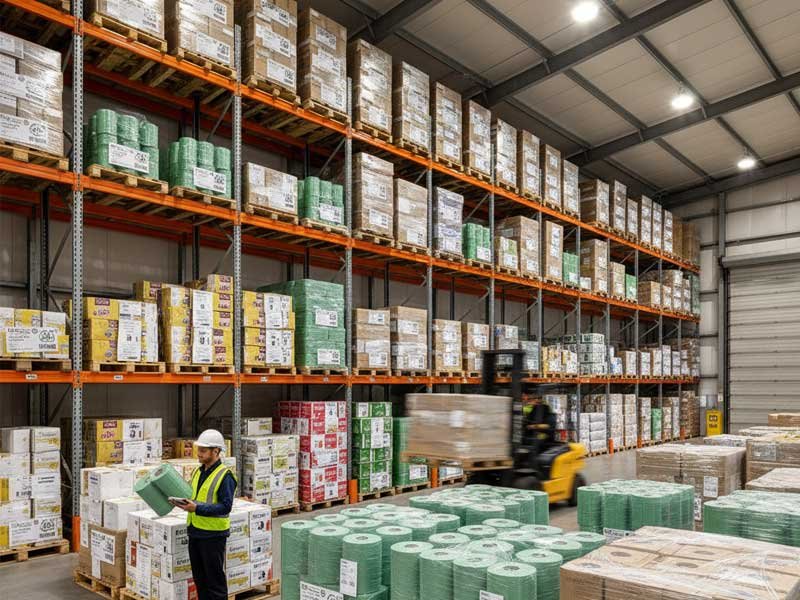
ORIZON focuses exclusively on B2B compostable bag manufacturing.
Our manufacturing infrastructure includes:
- 16 years of compostable bag manufacturing experience
- 20,000 m² manufacturing facility in Qufu, Shandong, China
- 16 automated production lines
- approximately 500 tons of monthly production capacity
- OEM and private-label manufacturing
- custom printing and packaging
- global B2B export supply
Buyers that want to verify our production facility can also review our compostable bag factory in China.
Our goal is not to recommend one certification for every buyer.
Instead, we help B2B customers define the target market, required certification and finished-bag specification before production.
This is especially important for distributors and private-label brands that need stable specifications across repeat orders.
FAQ About Certified Compostable Bags
Certified compostable bags are finished products or approved product configurations that have been evaluated under a recognized compostability certification program or standard.
Certification applies within a defined scope and should be verified against the exact product being purchased.
Not automatically.
Finished-bag certification can depend on product type, formulation, thickness, color, printing, additives and other components.
A raw-material certificate should not automatically be treated as a finished-product certificate.
For commercial and industrial composting applications in the United States, BPI certification and ASTM D6400 are commonly relevant.
Specific state, local, labeling and composting-facility requirements should also be checked.
EN 13432 is widely used for compostable packaging intended for industrial composting in Europe.
Additional national or application-specific requirements may also apply.
AS 4736 applies to commercial or industrial composting conditions in Australia.
AS 5810 applies to home composting conditions.
They address different composting environments and should not be treated as interchangeable.
Potentially, yes.
Multiple certifications may be possible when the product formulation and finished specification meet the requirements and approved scope of each certification program.
This should be confirmed before sampling and production.
Private-label printing is possible for qualified projects, but certification-mark usage must be reviewed separately.
Depending on the certification program, authorization, sublicensing, certificate extension or another approval process may be required before a private-label brand can display the certification mark.
Yes, within manufacturing and applicable certification limitations.
Changing thickness, color, masterbatch, printing or other product components may affect whether the new product remains within an existing certification scope.
No.
“Biodegradable” is a broad term and does not automatically demonstrate compliance with a recognized compostability standard.
For regulated B2B procurement, third-party certification provides clearer evidence of the conditions and standards against which the product has been evaluated.
Discuss Your Certified Compostable Bag Project
Tell us your bag type, size, thickness, quantity, destination market and required certification.
We can review the product specification and certification scope before sampling or quotation.
OEM, private-label and bulk B2B supply are available for qualified projects.