Small Compostable Trash Bags for 10L–20L Bins
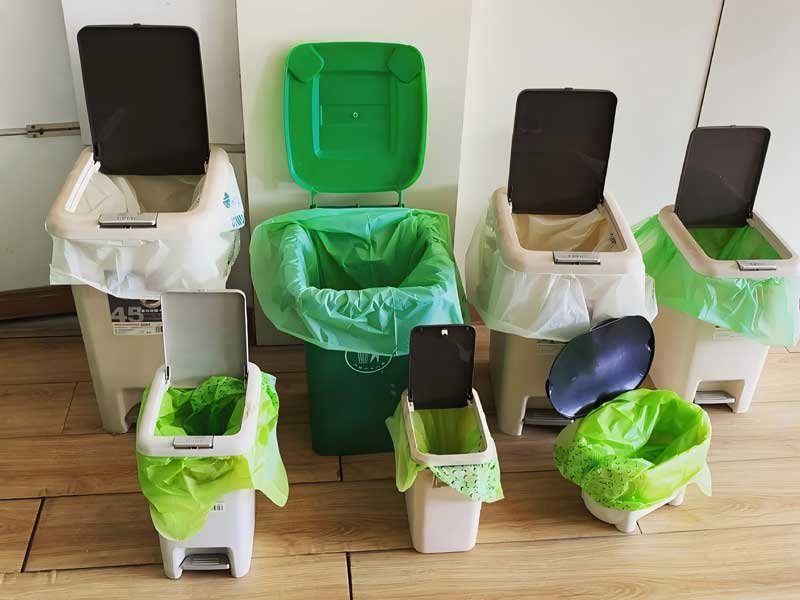
ORIZON manufactures small compostable trash bags for office, bathroom, desk-side, and facility bins from 10L to 20L.
Buyers can specify the bag dimensions, thickness, bottom seal, roll count, film color, printing, and outer packaging.
Certification applicability can be reviewed for selected finished-bag configurations. Certificate scope and local disposal requirements must be confirmed before certification claims or environmental messaging are approved. Certificate scope and local disposal requirements must be confirmed before environmental claims are approved.
B2B supply only. Standard customized production typically starts from approximately 500 kg per specification or design.
- 10L, 12L, 15L, and 20L capacities
- Custom dimensions and film thickness
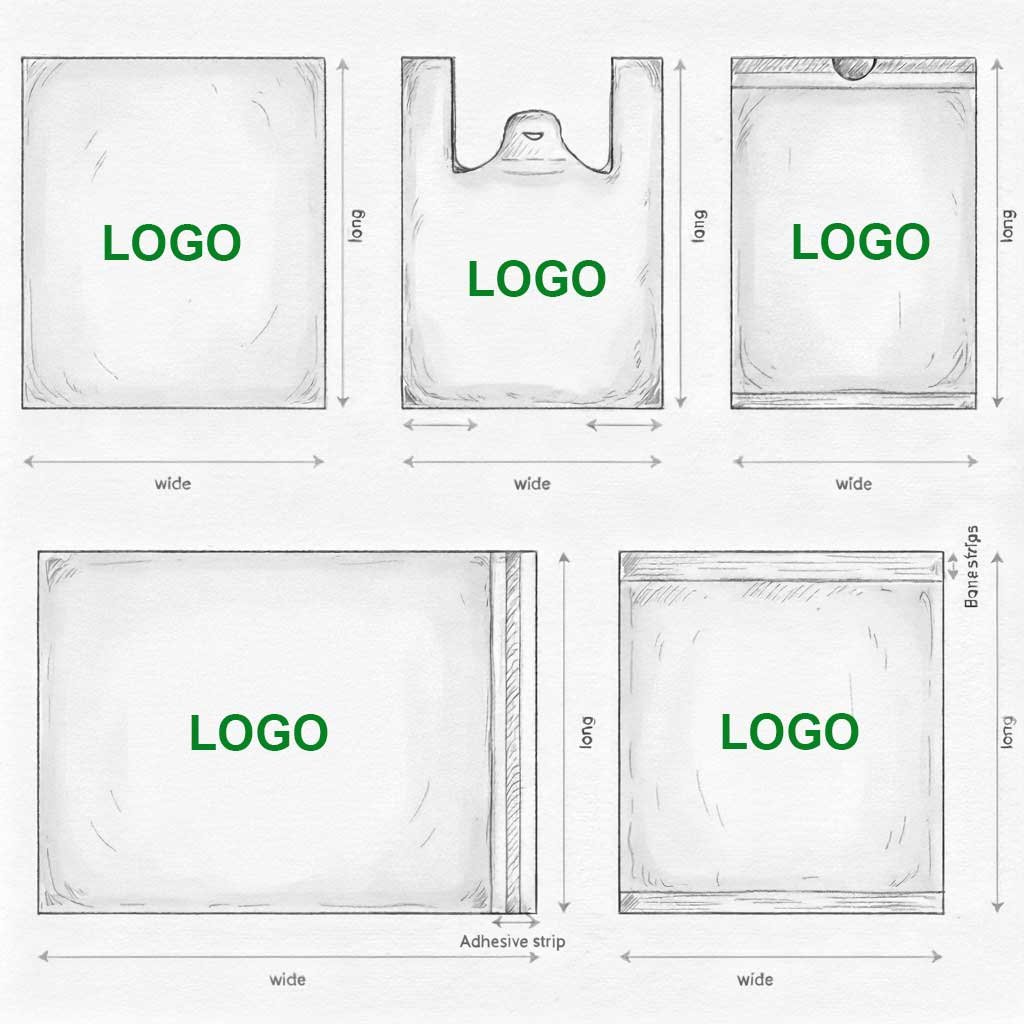
- Flat-seal, star-seal, and handle-tie options
- Custom roll counts and private-label packaging
- Finished-product documents by configuration
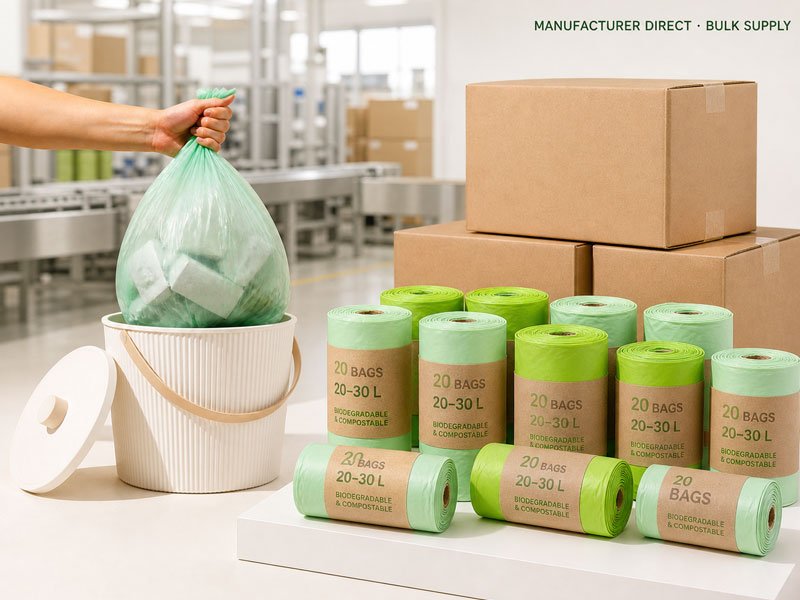
What Are Small Compostable Trash Bags?
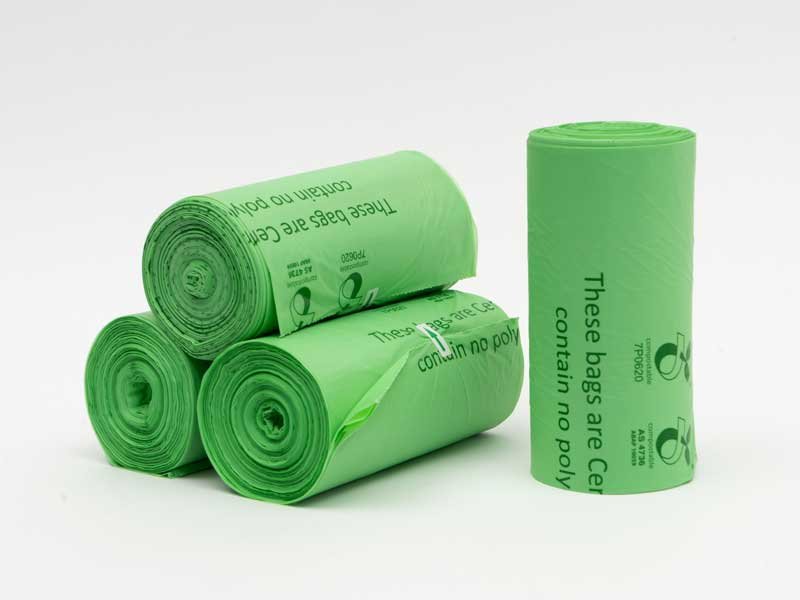

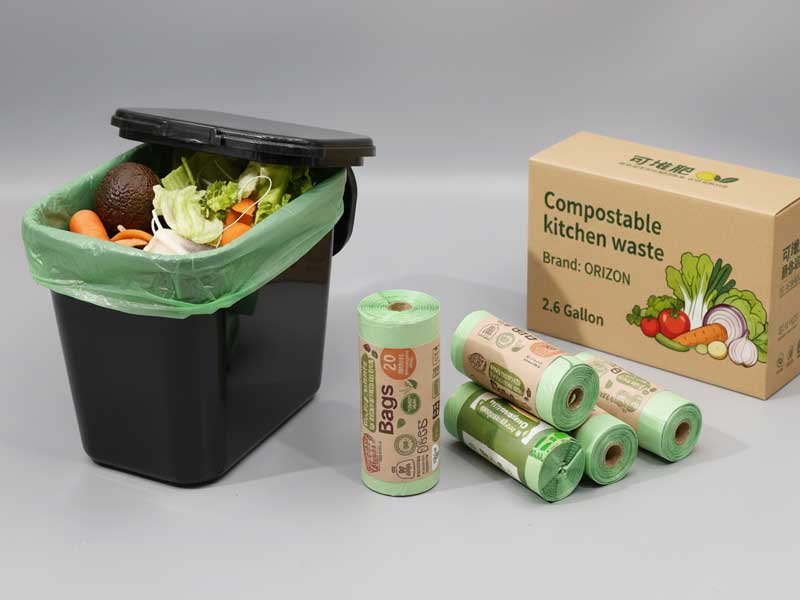

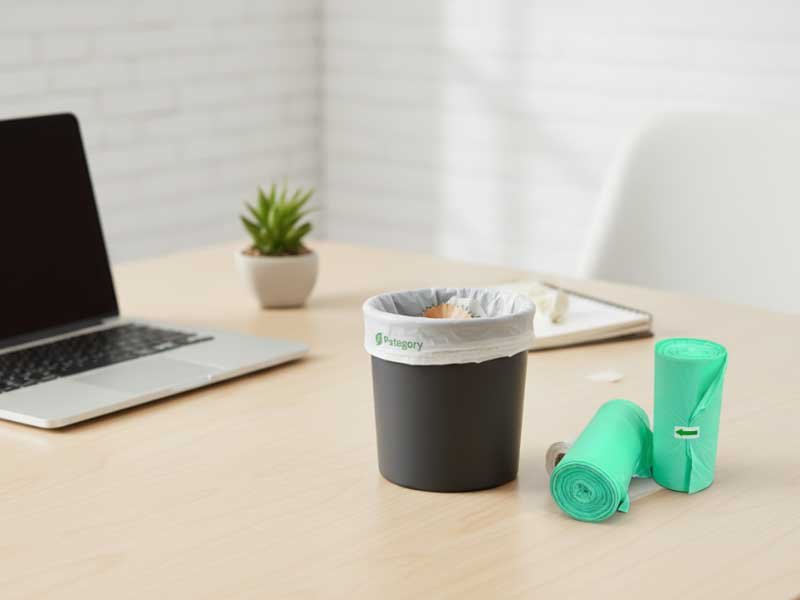
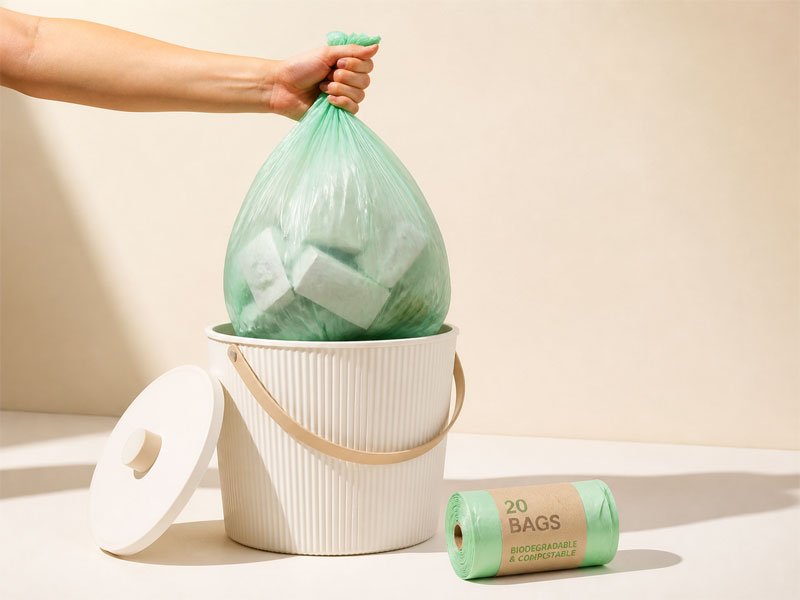
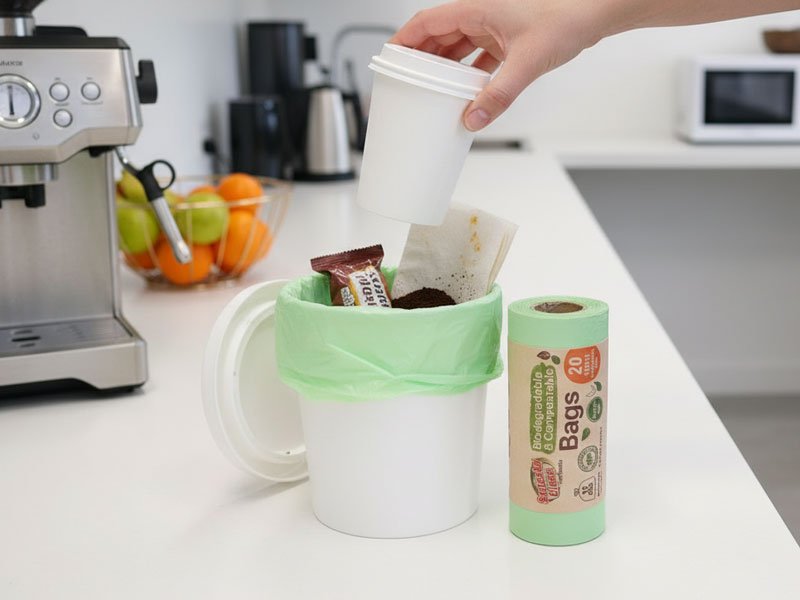
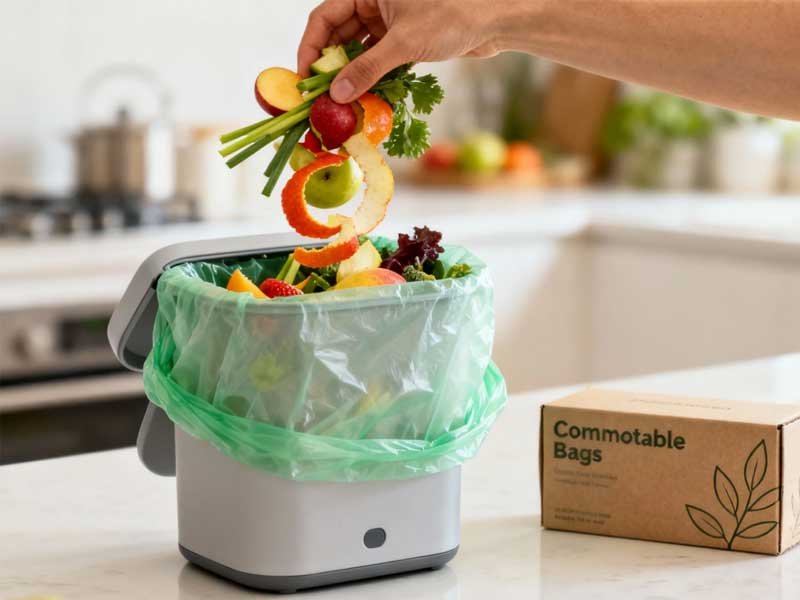
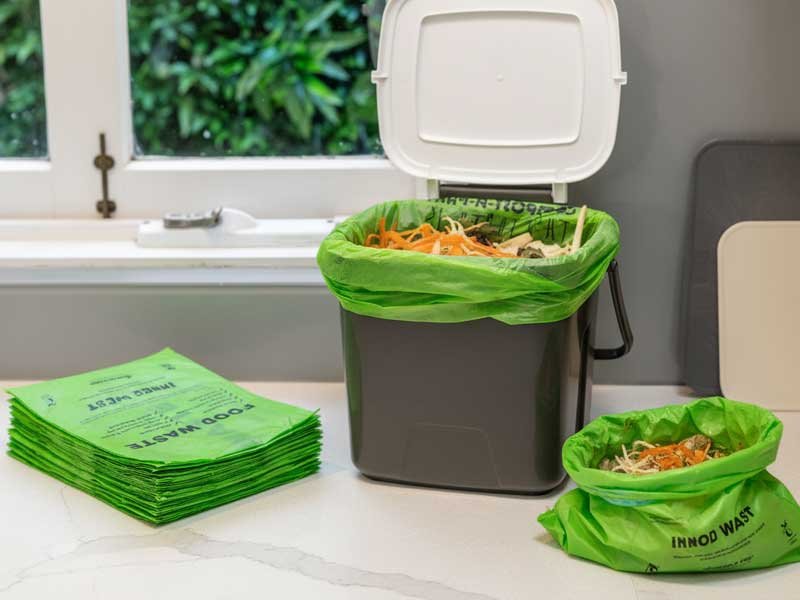
Small compostable trash bags are liners made for compact bins used in offices, bathrooms, hotel rooms, staff areas, and other managed facilities.
This page covers bags from 10L to 20L, equal to about 2.6 to 5.3 US gallons.
These liners are designed for light or moderate waste. The correct thickness and seal structure depend on the waste type, collection frequency, and required load.
For 5L–10L food waste caddies, view our Kitchen Caddy Liners. For bins above 20L, view our Medium Compostable Bin Liners.
Typical B2B Applications
Small compostable waste bags can be developed for:
- Office desk-side wastebaskets
- Guest and staff bathroom bins
- Hotel room wastebaskets
- Small pantry and breakroom bins
- Facility management and cleaning programs
- Institutional and commercial buildings
- Retail and private-label product ranges
For larger hotel and housekeeping programs, view our Office and Hotel Bin Liners.
The intended contents should be confirmed during specification review. Liners used for tissues, packaging, sanitary waste, or mixed office waste may require general waste disposal.
Sizes and Bin Fit
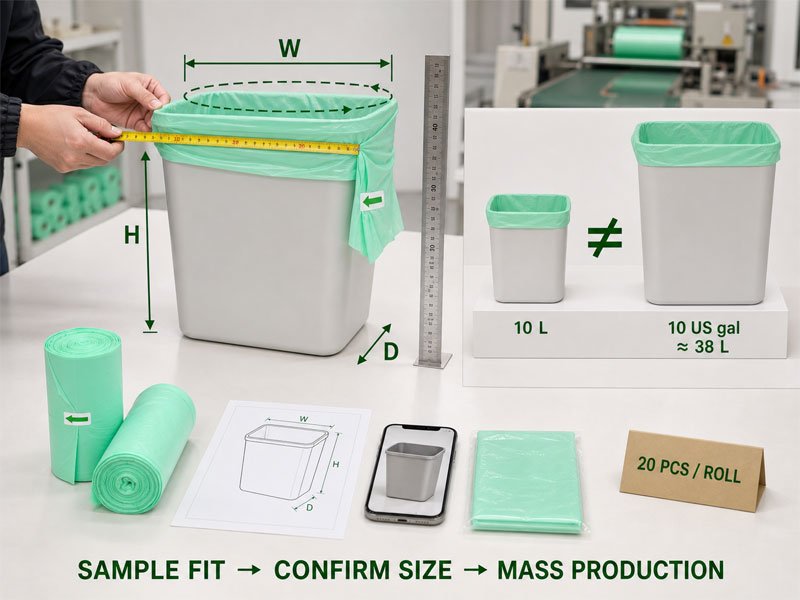
Bin capacity alone does not confirm the correct bag dimensions. Two bins with the same stated capacity may have different shapes, rim sizes, and heights.
| Capacity | Typical Application | Reference Thickness | Packaging Options |
|---|---|---|---|
| 10L | Desk-side and compact bathroom bins | 0.018–0.022 mm | Roll or retail box |
| 12L | Office, bathroom, and small facility bins | 0.020–0.025 mm | Roll or retail pack |
| 15L | Larger desk-side and shared-area bins | 0.020–0.025 mm | Roll or retail pack |
| 20L | Facility, office, and larger bathroom bins | Confirmed by specification | Roll, retail pack, or bulk carton |
Final thickness depends on the bag dimensions, material formulation, intended contents, load target, and testing requirements.
For an accurate fit, buyers should provide:
- Bin width, depth, and height
- Rim dimensions or circumference
- Required bag overhang
- Preferred tie-off space
- Bags per roll
- A drawing, photograph, or physical bin sample
Final dimensions should be approved through fitting samples before mass production.
A 10L bag is not the same as a 10-gallon bag. Ten US gallons is about 38L and normally requires a medium bin liner.
Bottom Seal & Bag Structure Options
Product Performance Considerations
Film thickness and bag structure should be selected according to the intended contents, expected load, storage conditions and collection process.
Relevant finished-bag checks may include:
- film thickness and dimensional consistency;
- seal integrity;
- puncture and tensile performance where required;
- roll perforation and separation;
- bag-to-bin fit; and
- packing configuration.
Performance requirements should be confirmed against the approved specification and, where appropriate, evaluated through samples before mass production.
Compostability certification does not replace physical performance evaluation.

Material and Compostability Options
Small compostable trash bags can be manufactured using PBAT / PLA- and starch-based compostable formulations.

Material selection depends on the required bag specification, storage conditions, target market, disposal route and intended compostability claim.
Film formulations may include:
- PLA: a polymer used in many compostable formulations
- PBAT: a flexible polymer used to improve film handling and strength
- Plant-based starch components: materials used in selected compostable blends
A raw-material certificate does not automatically certify every finished small trash bag. Thickness, color, printing ink, additives, and seal structure must fall within the relevant certificate or test scope.
Industrial composting and home composting are different claims. A bag certified for industrial composting should not be described as home compostable without separate supporting certification.
Disposal Depends on the Contents
Compostability describes the bag under defined certification and composting conditions. It does not mean that every used bag can enter an organics collection program.
Small bags containing tissues, packaging, sanitary waste, or mixed office waste may need to enter the general waste stream. Buyers should confirm the accepted contents, collection route, and facility requirements in the target market.
BPI eligibility requirements link compostable products to suitable organic feedstocks such as food scraps and yard trimmings. Buyers developing products for North America should review the intended use and finished-product listing before making a BPI claim. See the official BPI eligibility requirements.
For 20L food waste collection in Australian FOGO programs, view our 20L Compostable Bin Liners.
Compostable vs. Biodegradable Small Trash Bags
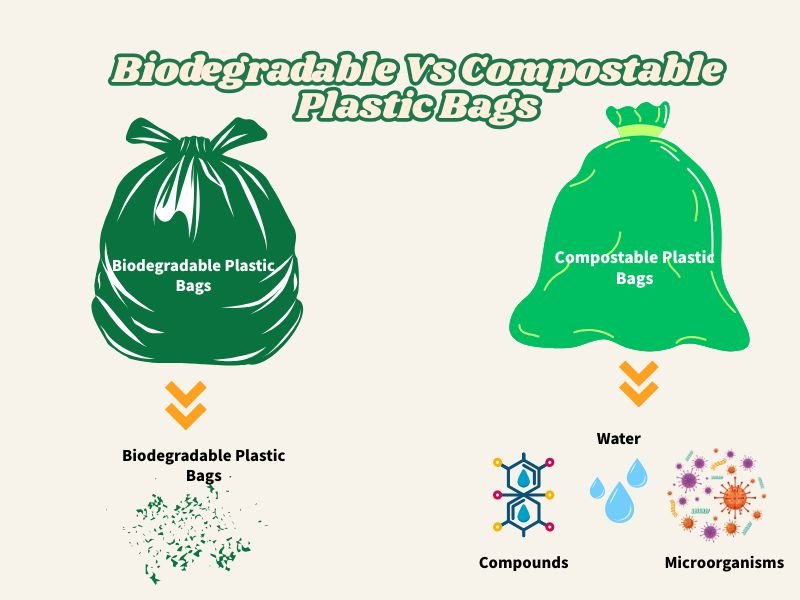
The terms compostable and biodegradable should not be treated as interchangeable.
A compostable bag must meet defined requirements under a relevant standard and under specified composting conditions.
Biodegradable is a broader term.
By itself, it does not identify the breakdown period, test conditions, disposal environment, or certification program.
For B2B projects, buyers should review third-party certificates and test reports instead of relying only on words such as biodegradable, green, or eco-friendly.
Certification & Project Documentation
Compostability certification should be reviewed against the actual finished-bag specification.
TÜV AUSTRIA Scope
ORIZON’s current OK compost INDUSTRIAL and OK compost HOME certificates by TÜV AUSTRIA state the Product Types:
“Bags for collection of biodegradable refuse”
“Shopping bags (check-out bags)”
The current OK compost INDUSTRIAL certificate has a maximum nominal thickness of 78 μm, while the current OK compost HOME certificate has a maximum nominal thickness of 63 μm.
A specific small trash bag must still be reviewed against the applicable certificate conditions, product classification and final finished-product specification.
Relevant variables may include:
- dimensions;
- thickness;
- material formulation;
- film colour;
- printing and ink;
- additives;
- seal structure; and
- other finished-product components.
Certification or conformity marks should only be used where the applicable finished-product scope and mark-use authorization requirements have been confirmed.
Available project documentation may vary by configuration and may include applicable certificates, technical data, test reports, declarations or inspection records.
These documents are not interchangeable. Buyers should confirm the certificate holder, product scope, specification, validity and mark-use requirements.
OEM and Private-Label Options
OEM means the bags are manufactured to the buyer’s approved specification.
Customization options include:
- Custom width, length, and thickness
- Natural, green, black, or custom Pantone colors
- Flat-seal, star-seal, or handle-tie structures
- Paper-core or coreless rolls
- Custom bags per roll
- Water-based inks, subject to artwork and certification scope
- Flexographic printing with water-based inks; print colours and coverage subject to artwork and production feasibility
- Retail boxes, paper sleeves, outer bags, or bulk cartons
- EAN, UPC, barcode, and carton-label support
Certification marks may only be printed when the finished product, certificate scope, and licensing conditions permit their use.
Manufacturing & Quality Control
ORIZON manufactures compostable flexible-film bags for international B2B buyers.
- Manufacturing compostable bags since 2009
- Approx. 20,000 m² total manufacturing site
- 16 production lines
- Approx. 500 metric tons/month production capacity
- OEM and private-label manufacturing
- Custom printing and packaging
Production checks may include film dimensions and thickness, sealing, perforation, printing, packing and other requirements defined in the approved specification.
Production timing is confirmed according to the final specification, order quantity, printing, packaging and current production schedule.
B2B Bulk Supply
ORIZON supplies small compostable trash bags to:
- Distributors and importers
- Private-label brands
- Facility management suppliers
- Cleaning and janitorial product companies
- Hotel and institutional suppliers
- Commercial procurement programs
Our support includes specification review, sample approval, artwork review, retail packaging development, repeat-order control, export packing, and shipping coordination.
Standard customized production typically starts from approximately 500 kg per specification or design. Product-specific trial quantities may differ. Retail and individual consumer orders are not supported.
Product Categories
FAQ
We manufacture small compostable trash bags in 10L, 12L, 15L, and 20L capacities. Custom dimensions are available for approved B2B projects.
Provide the bin width, depth, height, rim dimensions, and required overhang. Final dimensions should be confirmed through a drawing or fitting sample.
No. A 10L bag holds about 2.6 US gallons. A 10-gallon bin holds about 38L and normally requires a medium bin liner.
It depends on the certification, contents, collection rules, and receiving facility. Bags containing mixed office, bathroom, or sanitary waste may require general waste disposal.
No. Compostable bags must meet defined requirements under a relevant standard. Biodegradable alone does not identify a specific timeframe or disposal environment.
A suitable film thickness and seal structure can be developed for occasional wet waste. Performance must be confirmed against the approved specification and sample.
Certification is product- and market-specific.
Relevant technical standards may include ASTM D6400, EN 13432, AS 4736 and AS 5810, while third-party certification programs may include BPI, TÜV AUSTRIA, ABA and DIN CERTCO.
The applicable current certificate or product listing should be checked against the final bag dimensions, thickness, colour, printing, seal structure and intended use before certification claims or marks are used.
Standard customized production typically starts from approximately 500 kg per specification or design. The equivalent bag quantity depends on dimensions, thickness, bag structure, colour, printing and packaging configuration.