Last reviewed: October 9, 2026
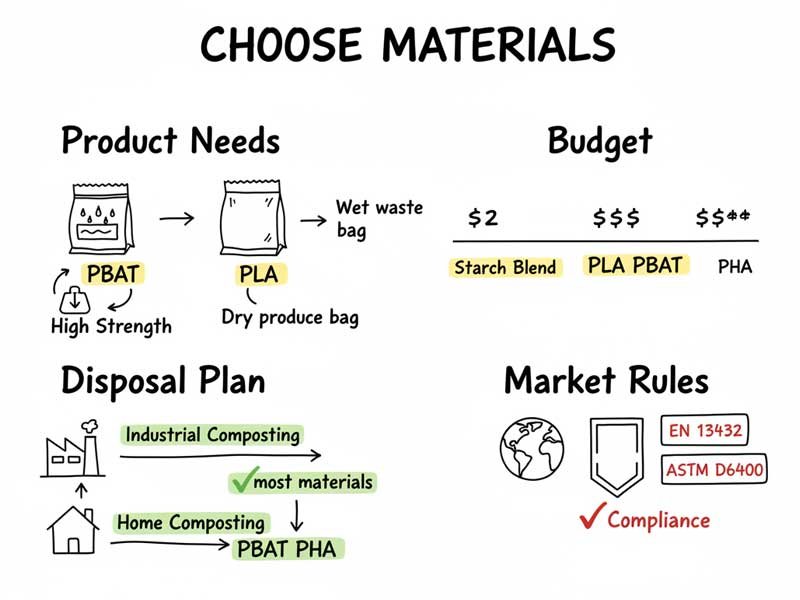
Sustainable clothing packaging is not one single material or packaging format.
Apparel brands may use compostable garment bags, recyclable plastic packaging, paper-based packaging, reusable systems or reduced-packaging strategies, depending on the product, supply chain and available end-of-life infrastructure.
The right option must still protect garments during factory packing, storage, transport, fulfillment and delivery while supporting the brand’s packaging and compliance goals.
This guide compares the main sustainable apparel packaging options, explains their advantages and limitations, and shows how clothing brands can choose packaging for real operational use.
Last reviewed: October 4, 2026
Quick Answer: What Is the Best Sustainable Packaging for Clothing?
There is no single packaging material that is best for every clothing brand.
The most suitable option depends on the garment, required protection, distribution model, target market and available recycling, composting or reuse system.
As a starting point:
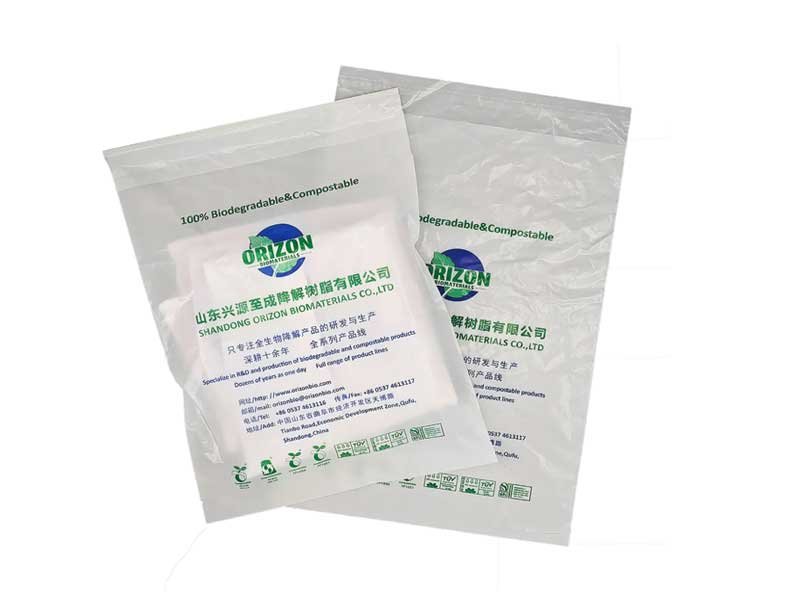
- Compostable garment bags can suit projects that require a defined compostability specification and an appropriate composting route.
- Recyclable PE packaging can be practical where suitable flexible-film collection and recycling systems exist.
- Paper packaging can work well for outer packaging, presentation and selected shipping applications.
- Reusable packaging can be effective where a realistic return and reuse system is available.
- Packaging reduction can reduce material use where additional protective packaging is not necessary.
Sustainable packaging decisions should consider both environmental claims and real apparel-packaging performance.
Best Packaging Options for Clothing Brands
The best packaging for a clothing brand depends on the garment, supply chain, customer experience and available end-of-life infrastructure.
There is no single material that is best for every apparel business.
| Packaging Option | Best For | Main Limitation |
|---|---|---|
| Compostable garment bags | Apparel inner packaging with defined compostability requirements | Requires an appropriate composting route |
| Recyclable plastic packaging | Efficient garment protection in established packing workflows | Collection and recycling availability varies |
| Paper-based packaging | Retail presentation, wraps, envelopes and selected outer packaging | May provide less moisture protection |
| Reusable packaging | Closed-loop or returnable programs | Requires an effective return system |
| Packaging reduction | Workflows where fewer packaging layers are practical | Not suitable where additional garment protection is required |
The best option should be selected using the same criteria: product protection, material efficiency, cost, logistics, certification, storage and end-of-life route.
Types of Sustainable Clothing Packaging
Different apparel packaging materials serve different operational and end-of-life requirements. The sections below explain where each option can fit, and where buyers should be cautious about environmental claims.
Compostable Clothing Packaging
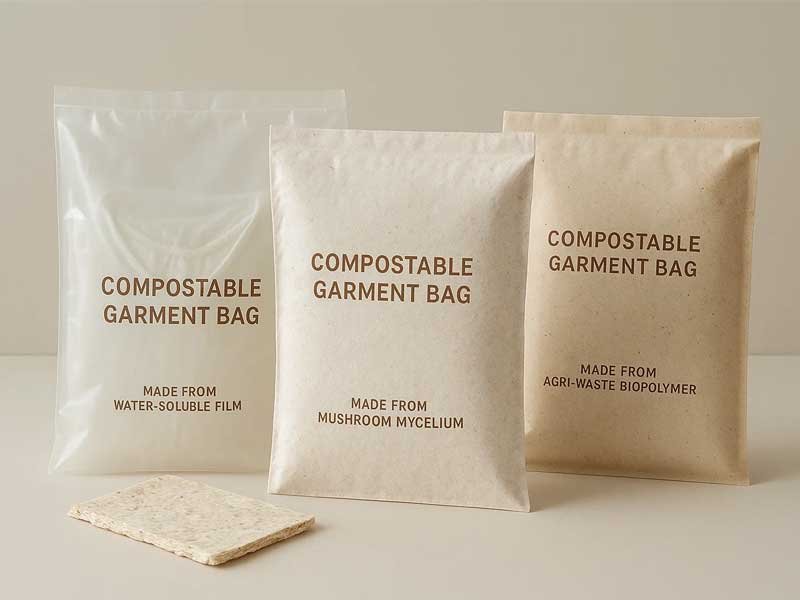
Compostable garment bags and other flexible-film packaging can be considered where an apparel brand has a defined compostability requirement and an appropriate end-of-life route.
Typical compostable film formulations may include PBAT, PLA and starch-based components, depending on the required finished-product performance.
Common apparel applications may include:
- compostable garment bags;
- compostable mailer bags; and
- selected flexible-film packaging formats.
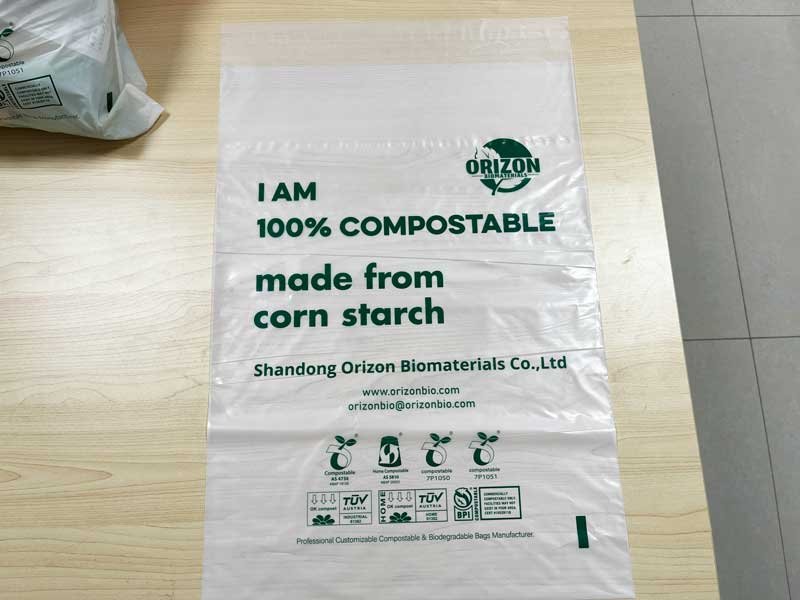
For certification-sensitive projects, buyers should verify whether the actual finished packaging configuration is covered by the applicable certification or supporting documentation.
Factors such as film formulation, thickness, colour, printing, adhesives and finished-product structure may affect certification applicability.
Manufacturing a compostable apparel-packaging product does not automatically mean that it is covered by ORIZON’s existing compostability certificates.
For an overview of certification selection and scope: How to Choose the Right Compostable Packaging Certification
Recyclable Clothing Packaging
Conventional PE garment bags and poly mailers can provide lightweight, durable and familiar protection for apparel supply chains.
Their practical recyclability depends on the specific material, local collection system and downstream recycling infrastructure.
Flexible plastic film should therefore not be described as universally recyclable simply because the polymer itself can technically be recycled.
For brands already operating within an effective film-collection system, recyclable plastic packaging may remain a practical option.
Paper-Based Clothing Packaging
Paper-based packaging is commonly used for:
- retail boxes;
- envelopes;
- wraps;
- tissue paper;
- hangtags; and
- selected shipping formats.
Paper can be suitable for presentation and outer packaging, but it may not provide the same moisture resistance or transparent garment protection as a film bag.
Brands should also evaluate material weight, coatings, adhesives and the actual recycling route rather than assuming every paper package has the same environmental profile.
What About “Biodegradable” Clothing Packaging?
“Biodegradable” is a broad claim and does not by itself define a specific disposal environment, timeframe or certification route.
For apparel brands evaluating packaging claims, the more useful questions are:
- Is the packaging recyclable in the target waste system?
- Is it covered by an applicable compostability certification?
- Is there a realistic reuse system?
- Can the environmental claim be independently verified?
Buyers should therefore evaluate the specific end-of-life claim and supporting evidence, rather than treating “biodegradable” as a standalone packaging category.
Reusable Packaging Solutions
Reusable packaging can be effective where a brand has a realistic collection, return and reuse system.
Common examples include:
- reusable garment shipping bags;
- returnable delivery packaging; and
- durable mailers used in reverse-logistics programs.
The environmental benefit depends on how many times the packaging is actually reused, how it is returned and the resources required for cleaning, transport and redistribution.
Reusable packaging should therefore be evaluated as a system, not only as a durable material.
Choose Sustainable Packaging by Apparel Workflow
Apparel packaging requirements change at different points in the supply chain.
| Apparel Workflow | Packaging Priorities | Common Options |
|---|---|---|
| Factory packing | Dust protection, folding, size consistency, packing speed | Garment bags, reduced-material inner packaging |
| Export / warehousing | Moisture protection, handling durability, identification | Protective garment bags, cartons |
| E-commerce fulfillment | Product protection, branding, shipping efficiency | Inner garment bag + mailer / box |
| Retail display | Presentation, product visibility, branding | Printed garment bags, paper packaging, retail boxes |
| Returns / circular programs | Reuse and reverse logistics | Reusable shipping packaging |
Packaging should be selected for the entire apparel workflow, not only for the moment when the customer opens the parcel.
How Apparel Brands Are Using Compostable Garment Bags
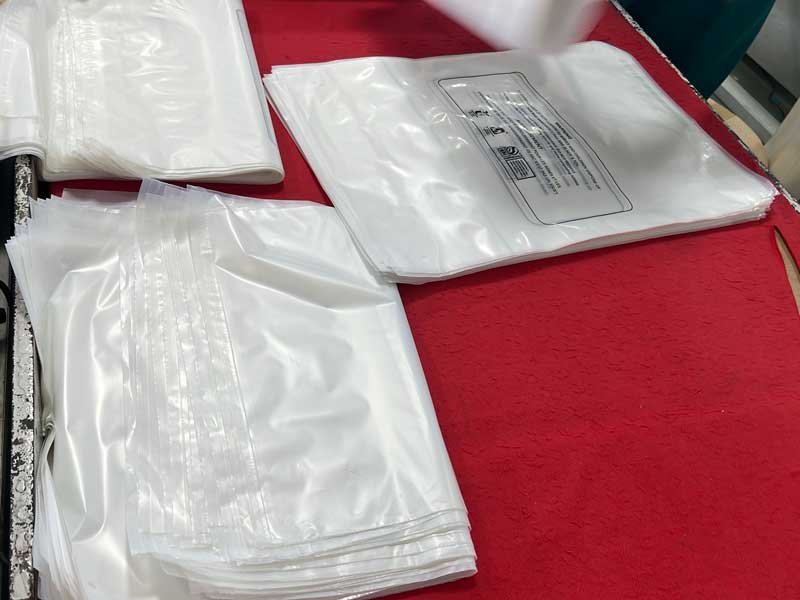
Apparel brands use compostable garment bags primarily as protective inner packaging during factory packing, warehousing, distribution and e-commerce fulfillment.
Common applications include:
- open-top garment bags for factory packing;
- self-seal bags for warehouse and e-commerce fulfillment;
- printed or private-label bags for branded apparel packaging;
- garment bags for T-shirts, knitwear, underwear and accessories; and
- custom sizes designed around folding method and product dimensions.
Compostable garment bags are most relevant when the project has a defined compostability requirement and an appropriate end-of-life route.
For bag dimensions, thickness, closure styles, printing and OEM options, see our Compostable Garment Bags range.
Sustainable Packaging Ideas for Clothing Brands
Practical packaging improvements can include:
- Reduce unnecessary packaging layers.
- Optimize garment-bag dimensions to reduce excess material.
- Use recyclable mono-material packaging where suitable collection systems exist.
- Consider compostable garment bags where an applicable certification and composting route are available.
- Use paper-based outer packaging where its protection and transport performance are suitable.
- Evaluate reusable packaging for closed-loop or returnable systems.
- Use verified environmental claims and clear disposal instructions.
- Standardize packaging specifications across SKUs where practical.
How Should Apparel Brands Choose Sustainable Packaging?
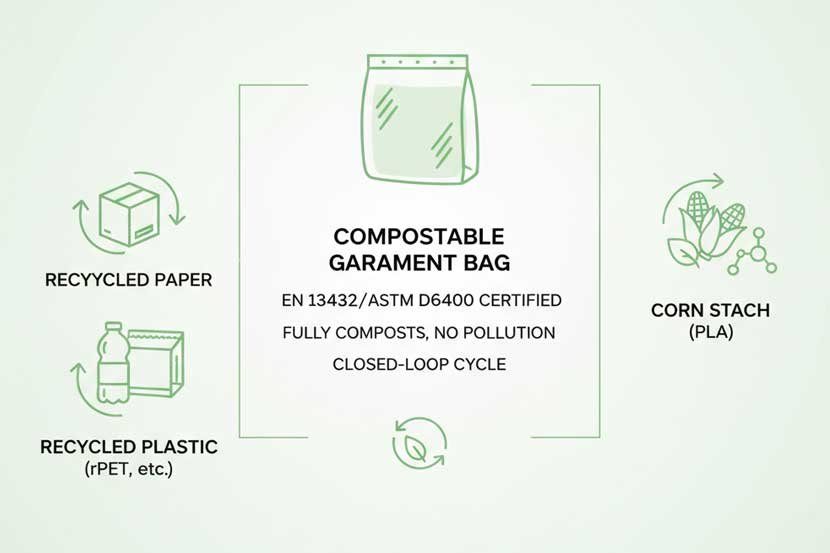
Evaluate packaging across six areas:
1. Product Protection
Can the packaging protect the garment from dust, moisture, abrasion and handling damage?
2. Material Efficiency
Can dimensions, thickness or packaging layers be reduced without increasing product damage?
3. End-of-Life System
Is the packaging intended for recycling, composting, reuse or another defined disposal route?
4. Certification & Claims
Are compostability, recyclability, recycled-content or forestry claims supported by appropriate evidence?
5. Supply-Chain Compatibility
Will the packaging work with factory packing, scanning, warehousing, fulfillment and shipping?
6. Cost & Scalability
Can the chosen packaging be sourced consistently at the required quantity and specification?
A material should not be selected solely because it is described as “eco-friendly.” The complete packaging system should be evaluated.

Compostable Garment Bags: Where They Fit
Compostable garment bags are one packaging option for apparel brands requiring protective inner packaging and a defined compostable-material specification.
Typical film formulations may include PBAT, PLA and starch-based components.
Finished-bag performance depends on:
- dimensions;
- film thickness;
- material formulation;
- seal structure;
- closure type;
- printing;
- adhesives; and
- storage conditions.
Brands should evaluate both the required packaging performance and the intended end-of-life route before selecting a compostable garment bag.
Certification applicability should be reviewed separately against the actual finished-product specification.
ORIZON’s current TÜV AUSTRIA OK compost certificates should not be interpreted as certification of the garment bags or other apparel-packaging formats described on this page.
For product specifications and OEM options:
Explore Compostable Garment Bags
For current ORIZON certificate scopes and validity information:
ORIZON Evidence & Verification Center
Certifications & Environmental Claims in Apparel Packaging
Environmental claims for apparel packaging should be based on the actual finished product and applicable supporting documentation.
For compostable packaging projects, buyers should review:
- target market;
- intended composting environment;
- finished-product specification;
- applicable standard or certification;
- material formulation;
- film thickness;
- colour and printing;
- adhesive components;
- certification-mark requirements; and
- intended disposal route.
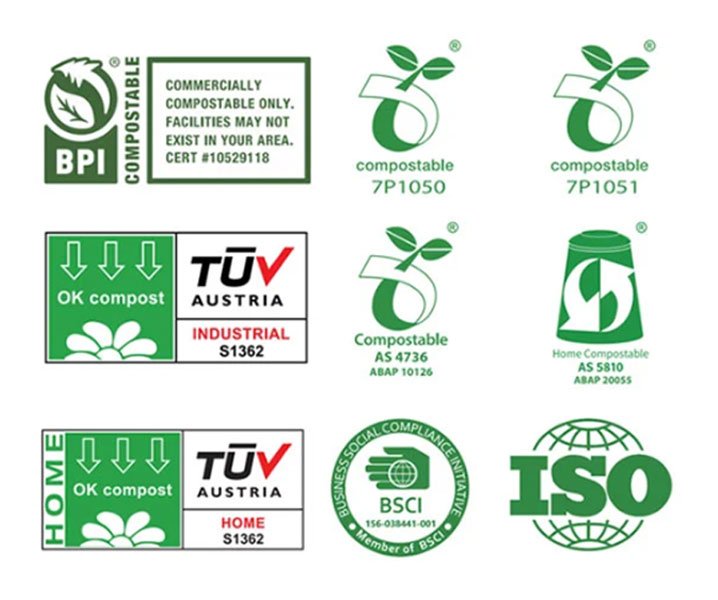
Important TÜV AUSTRIA Scope Notice
ORIZON’s current OK compost INDUSTRIAL and OK compost HOME certificates by TÜV AUSTRIA identify the certified product type as “Bags for collection of biodegradable refuse.”
Compostable garment bags, apparel polybags, mailers and other apparel-packaging products discussed on this page are not presented as TÜV AUSTRIA-certified products and must not be inferred to fall within ORIZON’s current OK compost certification scope.
Where an apparel project requires EN 13432, ASTM D6400 / BPI, AS 4736, AS 5810 or another compostability certification, applicability should be reviewed separately against the proposed finished-product specification.
Certification marks should only be used where the finished product and applicable mark-use requirements have been confirmed.
View ORIZON Certification & Verification Information
For general certification-selection guidance:
How to Choose the Right Compostable Packaging Certification
Cost vs Performance: What Brands Should Compare
Sustainable packaging should not be compared only by unit price.
Apparel brands should compare:
- bag dimensions and thickness;
- material specification;
- product protection;
- packaging weight;
- printing and branding;
- packing efficiency;
- storage requirements;
- order quantity;
- certification requirements; and
- the intended end-of-life system.
A lower-cost package is not always the lowest-cost option if it increases garment damage, packing time or material use. Likewise, a more expensive material is not automatically more sustainable.
Compare complete packaging systems using the same functional requirements.
Challenges When Switching to Sustainable Apparel Packaging
The transition is not without challenges:
- Higher perceived material costs
- Uncertainty about strength or durability
- Difficulty identifying reliable suppliers
- Consumer confusion around disposal
These challenges are real, but they are manageable with the right planning and supplier transparency.
Future Trends in Sustainable Fashion Packaging
Apparel packaging requirements continue to evolve as brands respond to packaging regulation, EPR programs, retailer requirements and waste-system changes.
Buyers should review current rules in each target market rather than relying on a single global packaging strategy.
Packaging specifications should be revisited when market, material or disposal requirements change.stainable packaging will become a standard requirement for many clothing brands rather than an optional initiative.
FAQ
What is sustainable clothing packaging?
Sustainable clothing packaging refers to packaging materials used in the fashion industry that reduce environmental impact. These materials may include recyclable paper, compostable packaging films, or reusable shipping bags.
What materials are used in sustainable fashion packaging?
Common materials include recyclable paper, compostable bioplastics, biodegradable films, and reusable packaging materials.
How do clothing brands use compostable garment bags?
Many brands use compostable garment bags as inner packaging to protect apparel while reducing plastic waste and supporting sustainability commitments.
Are compostable garment bags really compostable?
They can be manufactured using compostable material formulations, but material selection alone does not establish finished-product certification.
Where a certification claim is required, buyers should verify whether the actual finished garment-bag specification is covered by the relevant certification or supporting documentation.
Are all ORIZON compostable apparel-packaging products TÜV AUSTRIA certified?
No.
ORIZON’s current TÜV AUSTRIA OK compost certificates identify the certified product type as “Bags for collection of biodegradable refuse.”
Garment bags, apparel polybags, mailers and other apparel-packaging formats shown on this page should not be interpreted as covered by ORIZON’s current TÜV AUSTRIA certification scope.
Current certificate information can be checked here:
ORIZON Evidence & Verification Center
Are all compostable bags suitable for home composting?
No.
Industrial compostability and home compostability are different claims.
Home-compostability should only be claimed where the applicable finished product has appropriate supporting certification or evidence for that composting environment.
What should apparel brands check when choosing a packaging supplier?
Check manufacturing capability, finished-product specifications, quality-control procedures, MOQ, printing and packaging options, and the supporting documentation for any environmental or certification claim.
A supplier’s certification portfolio should not automatically be assumed to cover every product it manufactures.
Need a Sustainable Apparel Packaging Specification?
ORIZON supports B2B apparel brands, importers and packaging distributors developing compostable garment bags and other custom compostable packaging formats.
For a project review, send:
- garment type;
- bag dimensions;
- required thickness;
- closure style;
- printing requirements;
- packaging format;
- target market; and
- estimated order quantity.
Standard custom production typically starts from approximately 500 kg per specification or design.