As clothing brands adopt compostable materials, certification has become one of the most confusing — and most critical — topics in apparel packaging.
Terms like EN 13432, BPI, OK Compost, and ASTM D6400 are often mentioned, but not always clearly understood.
Using the wrong certification or incorrect claims can expose brands to regulatory risk and greenwashing accusations.
This article explains the key certifications for compostable apparel packaging, how they differ, and how clothing brands should apply them across global markets.
Why Certifications Matter for Compostable Apparel Packaging
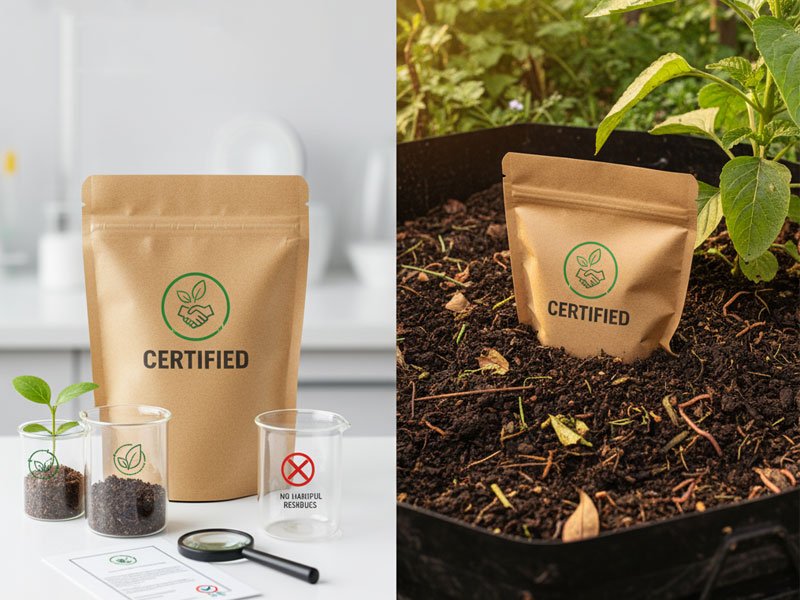
Compostable packaging is only considered compliant when it meets recognized third-party standards.
Certifications ensure that:
- Materials break down under defined composting conditions
- No harmful residues or microplastics remain
- Environmental claims are verifiable
- Packaging complies with market regulations
Certified solutions are a core part of responsible compostable apparel packaging strategies used by global clothing brands.
EN 13432: European Compostable Packaging Standard
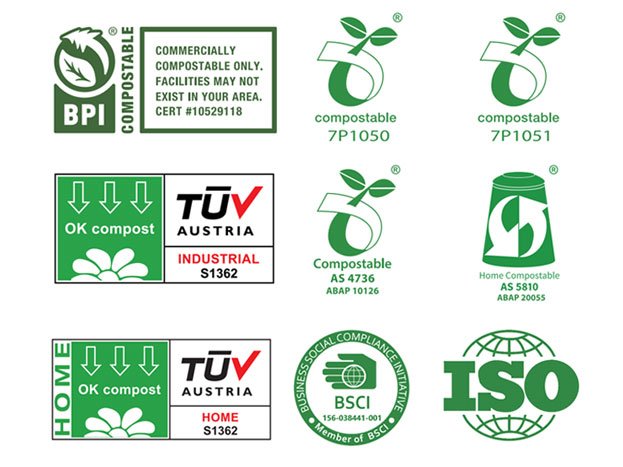
EN 13432 is the primary compostability standard used across the European Union.
It evaluates:
- Biodegradation rate
- Disintegration during composting
- Ecotoxicity
- Heavy metal content
For apparel packaging sold in the EU, EN 13432 certification is often essential to meet regulatory and EPR expectations.
Best for:
- Clothing brands selling in the EU
- Retail and e-commerce apparel packaging
BPI Certification & ASTM D6400 (United States)
In the United States, compostability is typically evaluated under ASTM D6400, with BPI certification serving as the recognized third-party verification.
BPI-certified packaging:
- Meets industrial composting requirements
- Aligns with US composting infrastructure
- Supports compliance with state-level compostability rules
Important note: ASTM D6400 is a test standard, while BPI is the certification body.
Best for:
- Apparel brands selling in the US
- E-commerce apparel shipping domestically
OK Compost (HOME & INDUSTRIAL)
TÜV Austria OK Compost certification covers both:
- OK Compost INDUSTRIAL
- OK Compost HOME
HOME certification indicates compostability at lower temperatures, while INDUSTRIAL applies to commercial composting facilities.
For apparel packaging, OK Compost certification is often used alongside EN 13432 or ASTM standards depending on the market.
Best for:
- Brands targeting sustainability-focused markets
- Packaging requiring clear end-of-life communication
Australian Standards: AS 4736 & AS 5810
Australia applies two key compostability standards:
- AS 4736 – Industrial composting
- AS 5810 – Home composting
Clothing brands selling in Australia must ensure compostable apparel packaging aligns with the correct standard based on disposal claims.
Incorrect labeling can lead to compliance issues and market restrictions.
While these certifications apply broadly to apparel packaging systems, specific packaging formats such as garment bags have additional compliance considerations.
For a detailed breakdown of applicable standards, market-specific requirements, and common compliance pitfalls, see our guide on certifications for compostable garment bags.
In European retail and municipal composting programs, OK Compost is a common certification mark used to support compostability claims. If you want a clear explanation of HOME vs INDUSTRIAL, typical buyer misunderstandings, and how to verify certificates, see our OK Compost certification guide.
Common Certification Mistakes Clothing Brands Make
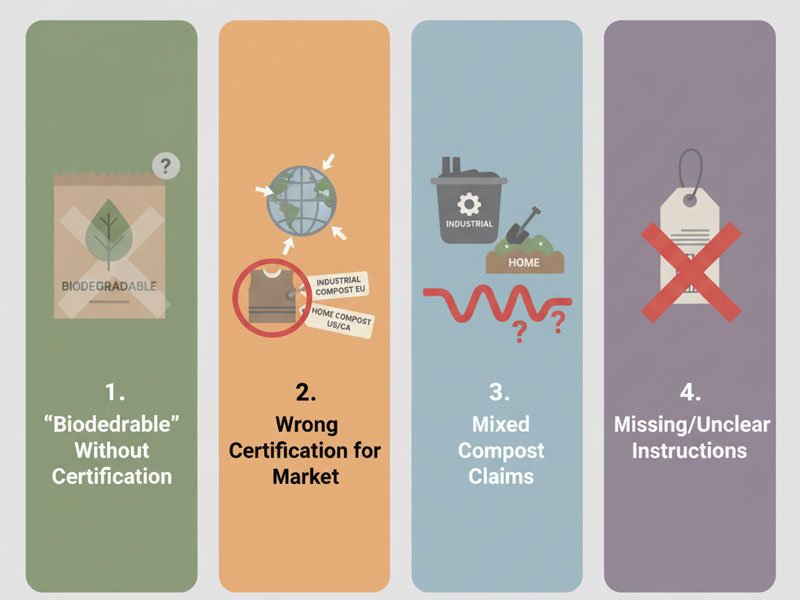
Despite good intentions, brands often make avoidable errors:
- Using “biodegradable” without certification
- Applying the wrong certification to a target market
- Mixing industrial and home compost claims
- Missing or unclear disposal instructions
These mistakes increase regulatory risk and undermine sustainability credibility.
How to Choose the Right Compostable Apparel Packaging Certifications
Selecting the right certification depends on:
- Target market (EU, US, AU, etc.)
- Packaging application (garment bag, mailer, retail bag)
- Available composting infrastructure
- Regulatory and EPR requirements
Experienced manufacturers help brands align material selection, certification, and labeling correctly from the start.
Certified compostable apparel packaging solutions simplify global compliance planning for clothing brands.
Conclusion
Certifications are not optional details — they are the foundation of credible compostable apparel packaging.
By understanding the differences between EN 13432, BPI, ASTM D6400, OK Compost, and regional standards, clothing brands can avoid greenwashing risks, meet regulatory expectations, and implement compostable packaging with confidence.
Working with experienced manufacturers ensures that certification, performance, and compliance move forward together.