With growing awareness of sustainable development, compostable trash bags are becoming part of our daily lives. As we all know, compostable trash bags are designed to degrade within a year of production. So, how should we store the compostable bags we buy from supermarkets?
If they’re left unused for a year, they’ll likely crumble by the time we need them. Many people don’t understand the underlying principles behind this. As a biodegradable bag manufacturer with 16 years of experience, we’ll explain how to store compostable bags, hoping to help you.
How to Store Compostable Bags Correctly
Store compostable bags in a cool, dry, and dark place. The ideal storage temperature is 15–25°C (59–77°F), with humidity below 55%. Avoid direct sunlight, heat sources, and moisture. When stored correctly, most compostable bags last about 12 months.
Do Compostable Bags Expire?
Yes. Compostable bags have a shelf life of about 12 months if stored correctly—cool, dry, and out of sunlight. After that, the material may start to weaken, becoming brittle or sticky. Always check the manufacturing date on the box and use older stock first.

Why Do Compostable Bags Need Special Storage?
Compostable bags may look similar to ordinary plastic bags, but their properties are quite different. The materials that make them environmentally friendly, such as polylactic acid (PLA), polybutylene succinate (PBAT), and cornstarch, make them highly sensitive to heat, light, and moisture. Therefore, proper storage is not just a good idea, it’s crucial.
I’ve witnessed this firsthand in warehouses and retail store pantries. If the lining of compostable bags is placed near a window in direct sunlight or in a damp corner, they begin to stick together and even soften over time. Some bags that could have lasted a year lost half their strength in just six months.
This isn’t a quality issue; it’s a chemical reaction.
Why They Degrade
- Compostable resins begin to decompose when exposed to certain environmental conditions.
- High temperatures accelerate molecular degradation.
- Light, especially ultraviolet light, weakens the film’s strength.
- Humidity triggers partial hydrolysis, causing the material to soften or become sticky.
So when you hear someone say, “These compostable garbage bags melted in my drawer,” it’s usually because they weren’t stored in a stable environment.
What Temperature Should Compostable Bags Be Stored At?
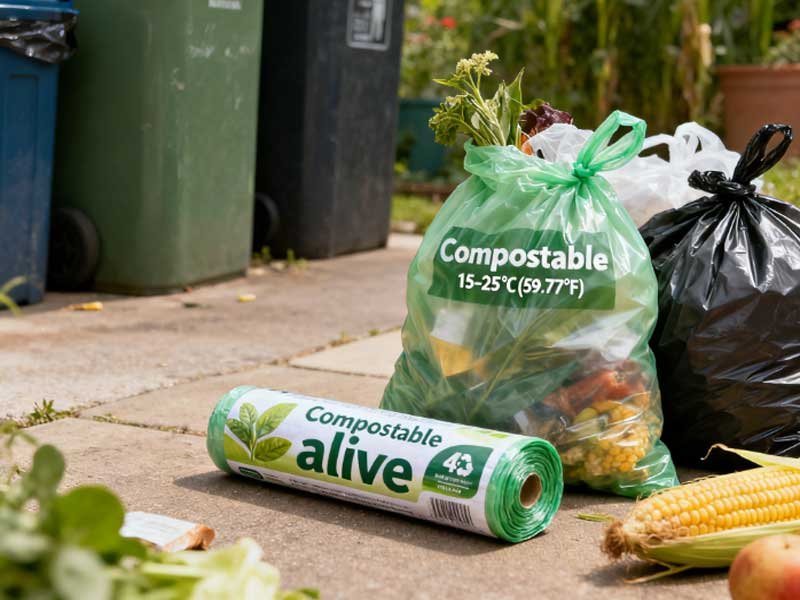
When it comes to compostable bags, temperature matters more than most people think. These bags may look and feel like plastic, but they’re made from plant-based materials such as corn starch and PLA—materials that start breaking down when exposed to heat, light, and moisture.
The ideal storage temperature is between 15–25°C (59–77°F). This range keeps the bag’s structure stable while slowing the natural degradation process. I like to think of it this way: compostable bags are “alive” in a sense—they react to their surroundings. Give them a cool, dry environment, and they’ll last longer. Store them in heat, and they’ll age fast.
Why High Heat Speeds Up Premature Degradation
High temperatures are the enemy of compostable bags. Once the air around them gets above 30°C (86°F), the molecular structure of the plant-based polymer starts to soften. Over time, that leads to:
- Sticky rolls that are hard to separate.
- Brittle film that tears instead of stretches.
- Reduced shelf life, sometimes cutting it in half.
I’ve seen this happen in real warehouses during summer—pallets stored near tin roofs or in containers under the sun often come out warped and tacky. Even short-term exposure to heat can trigger early degradation, especially if humidity joins in.
That’s why I always recommend keeping compostable bags away from direct sunlight, heating vents, or any storage area that can trap heat.
What About Cold Temperatures?
Some people assume colder is always better, but that’s not quite true. Compostable bags don’t need refrigeration or freezing.
Cold temperatures (below 10°C or 50°F) won’t damage the material, but they can make the film stiffer and harder to open or unroll. Once the bags return to room temperature, their flexibility comes back—but freezing doesn’t extend their life in any meaningful way.
In fact, storing them in a freezer can cause condensation when they’re brought out, introducing moisture—another factor that accelerates breakdown once they warm up.
So, the goal isn’t “as cold as possible,” but steady, moderate temperatures.
Good Storage Locations
If you’re wondering where to store your compostable bags, here are some reliable spots I’ve found effective:
- Pantry or utility room: Cool, dark, and dry—ideal for home users.
- Warehouse shelving: As long as the area is ventilated and not near loading docks or heat sources.
- Interior cabinets or closets: Perfect for keeping rolls out of sunlight and away from temperature swings.
Avoid garages, attics, or outdoor sheds—those areas can fluctuate between hot days and cold nights, which stresses the material over time.
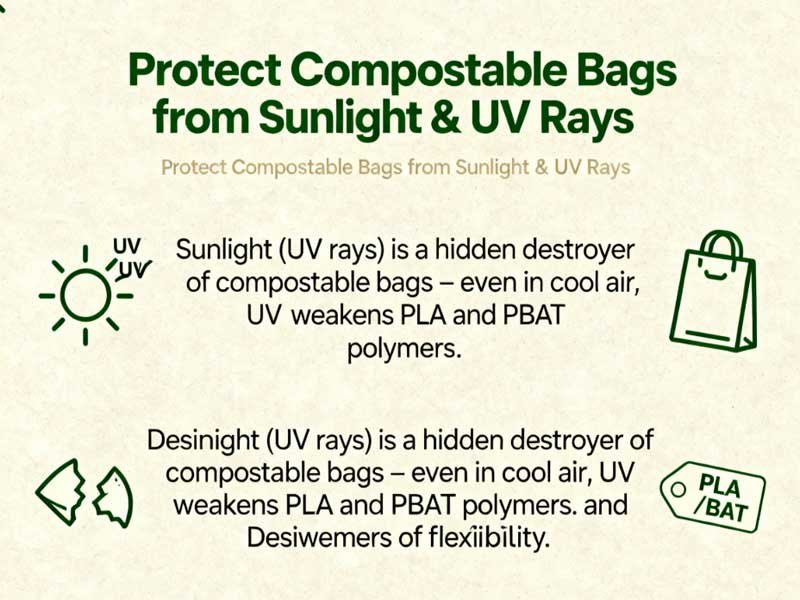
Can Compostable Bags Melt or Break Down in the Sun?
Sunlight is one of the quietest destroyers of compostable bags. Even when the air feels cool, UV rays weaken compostable polymers like polylactic acid (PLA) and PBAT. These materials are designed to decompose in light and heat—perfect for composting, but not for storage. Prolonged exposure to UV rays can make the film brittle, fade, and lose its flexibility.
That’s why I always store bags in dark, low-light places—places where they don’t get direct sunlight during the day. Think pantry, warehouse shelves, or enclosed cupboards.
If natural light is unavoidable, use opaque containers or sealed boxes. I often store rolls in cardboard boxes or wrapped in dark cardboard sleeves. It doesn’t have to be fancy—just something to block out the light.
Avoid storing compostable bags near windows, in car trunks, or in outdoor areas. I once left several rolls in my car for a week during the summer—they became soft, sticky, and unusable. Direct sunlight, even for just a few hours a day, can shorten their shelf life by several months.

How to Control Moisture and Humidity When Storing Compostable Bags
Moisture is another hidden enemy. Compost bags, especially those made of starch-based materials, absorb moisture from the air. When humidity rises, starch molecules swell, making the film soft and sticky. Eventually, the bags lose their strength.
To maintain the stability of the bags, keep the humidity below 55%. If you live in a humid area, a small dehumidifier can help. In warehouses, sealed storage boxes or moisture-absorbing bags can be very effective.
Some personal tips:
- Store rolls of bags in sealed boxes filled with silica gel desiccant.
- If you store a large number of bags, check the humidity regularly.
- Avoid storing them in places where steam or moisture can easily accumulate, such as laundry rooms, kitchens, or garages.
- Temperature and humidity fluctuations are often significant in these places. Over time, this constant change weakens the molecular bonds of the film—you’ll notice the bags starting to stick together or tear easily.
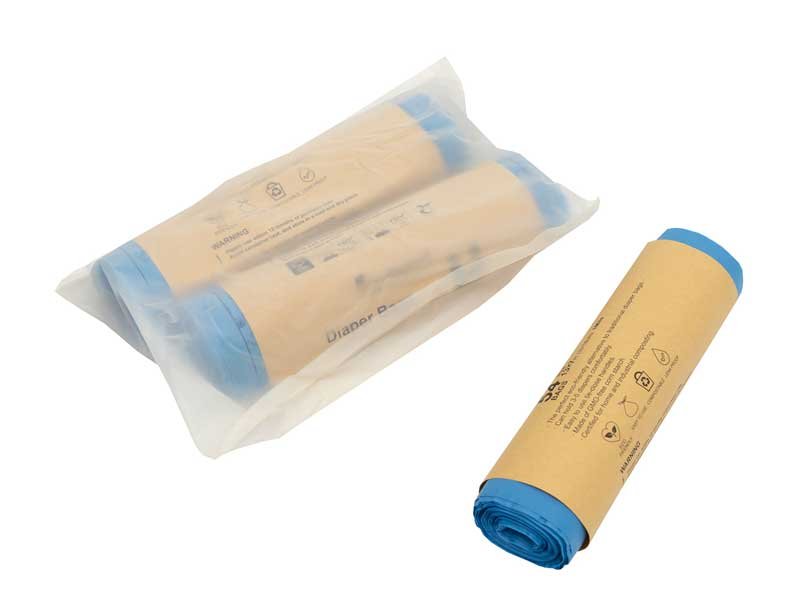
Should Compostable Bags Be Kept in Their Original Packaging?
Removing rolls from their packaging may seem convenient, but the original packaging itself is part of the protection. Manufacturers use moisture-proof or UV-resistant materials to keep out air, light, and dust. Once the packaging is opened, this protection is lost.
I recommend sealing unused rolls in resealable bags or airtight containers. This simple practice can extend the product’s lifespan, especially in humid climates.
Labels, certification marks, and production dates are also important. They help you rotate inventory correctly according to a “first-in, first-out” (FIFO) principle. Compostable material isn’t permanently effective; knowing which rolls are new helps avoid waste.
On the other hand, storing in bulk exposes the film to oxygen, light, and moisture in the air. I’ve seen open boxes in storage rooms where the top rolls have become brittle, while the others are perfectly fine. A simple lid can prevent this.
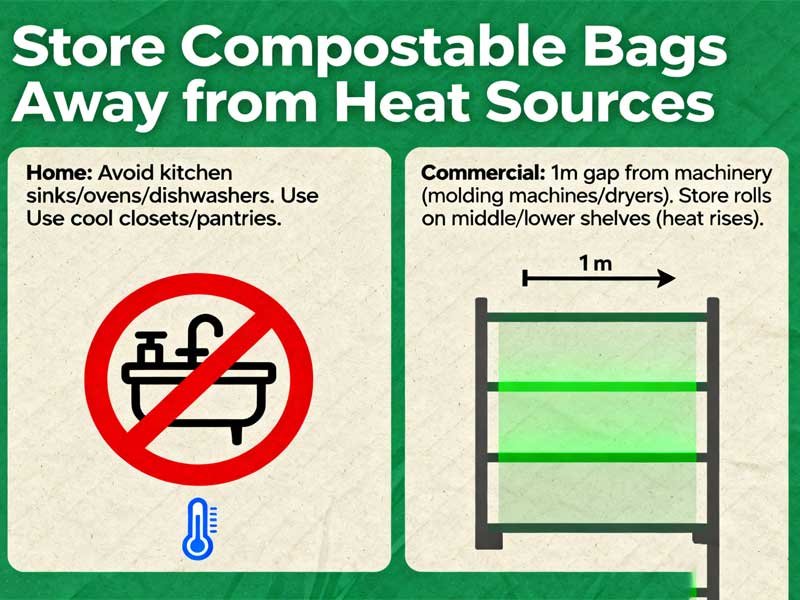
Why Should Compostable Bags Be Stored Away from Heat Sources?
Heat is where most storage mistakes happen. Many people unknowingly keep compostable bags under kitchen sinks or near ovens, where temperatures often exceed safe levels. Even dishwashers and radiators give off enough heat to start softening the film.
At home, choose cooler spots—hallway closets, pantry shelves, or utility cabinets away from appliances.
In commercial settings, I suggest leaving at least one meter (about three feet) of space between stored pallets and machinery. Industrial heat sources such as molding machines, dryers, or compressors can easily push ambient temperatures beyond 30°C (86°F).
And remember: heat rises. Store rolls on middle or lower shelves, not near the ceiling. I’ve measured warehouse rafters at 10°C warmer than the floor—enough to make a difference over a few months.
By managing light, moisture, and heat together, you give your compostable bags the longest possible life. They may be designed to disappear—but only when you want them to.
How Long Do Compostable Bags Last? Storage Time and Stock Rotation
For long-term storage of compostable bags, time is just as important as temperature and humidity. Compostable materials—especially starch blends, PLA, and PBAT—age naturally, so using them in the correct order helps maintain their strength and performance.
This is the First-In, First-Out (FIFO) principle. Use the earliest stock first. I always label each box with the production date or batch number when it arrives. This way, I can track which rolls should be used next.
Most compostable bags have a shelf life of about 12 months under ideal conditions (cool, dry, and away from light). After that, they may begin to lose their flexibility. Tracking production dates and expiration dates prevents you from finding rolls that have become semi-soft after six months of storage.
If you are buying for home use, do not overstock. Only buy enough to last 6-10 months. For example, if you use two rolls per month, a 12-roll pack will be sufficient.
However, different businesses have different needs. For wholesalers or retailers, an inventory turnover system is crucial. Tagging inventory monthly or quarterly and storing the newest cartons behind the older ones ensures a stable flow of inventory and avoids waste.

How to Store Compostable Bags in Commercial Settings
Commercial and warehouse compostable bag storage comes with its own challenges. Large volumes create more heat and pressure, which can shorten compostable bag shelf life if not handled correctly.
Keep warehouse temperatures between 15–25°C (59–77°F) and humidity under 55%. I’ve seen pallets stored near loading docks degrade faster due to temperature swings. Always choose interior zones for long-term or bulk compostable bag storage.bulk compostable bag stora
Pallet stacking matters too. Never stack too high; heavy weight compresses the rolls at the bottom and can deform the film. Two to three layers of cartons per pallet is usually safe. Leave ventilation gaps—about 10–15 cm (4–6 inches)—between pallets and walls to let air circulate.
Bulk cartons should be stored in cool, shaded, dry areas. Avoid direct contact with concrete floors; raise pallets on wood or plastic skids to prevent moisture absorption.
For retail stores and supermarkets, keep display stock limited. Refill from a shaded storage area rather than exposing full boxes to bright store lighting. Restaurants and food services should keep spare rolls in sealed bins away from dishwashers or cooking equipment. Steam and radiant heat can quickly shorten the lifespan of biodegradable and compostable liners.
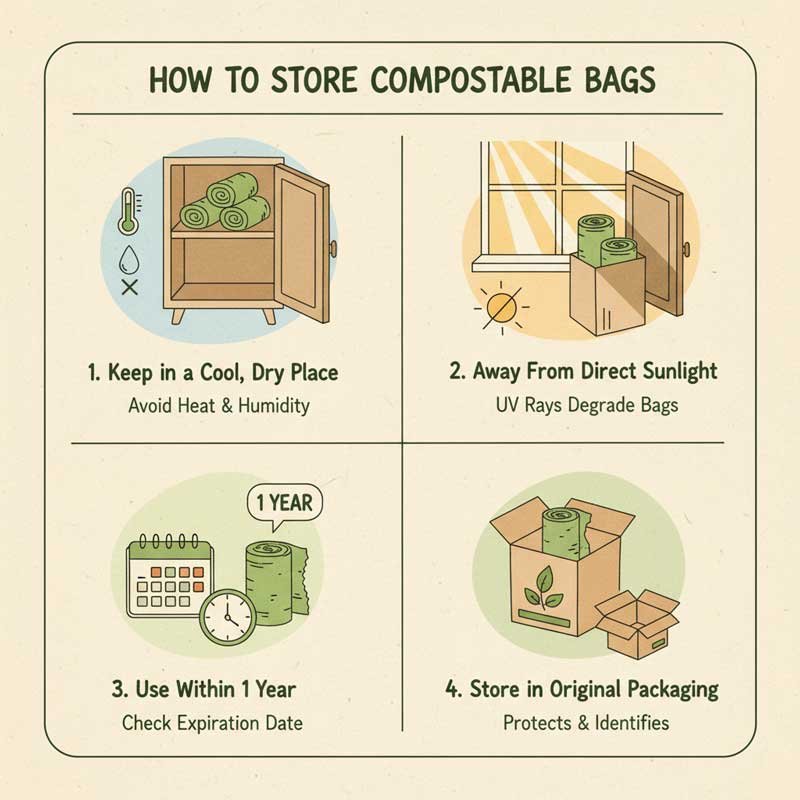
How to Store Compostable Bags: Step-by-Step Guide
Storing compostable trash bags at home doesn’t require any special setup; just keep the following in mind:
Suitable Environment:
Store in a cool, dry place with a temperature below 25°C and humidity below 50%. Store in a kitchen pantry, cupboard, or drawer, away from windows, stovetops, or sinks. Avoid areas with large temperature fluctuations, such as garages, attics, or basements, as high temperatures can accelerate degradation by 30-50%.
Keep Them Sealed:
Store the bags in their original packaging or transfer them to airtight containers, such as Ziploc bags or plastic bins, to isolate them from moisture and air. Prevent moisture from triggering premature degradation, especially for cornstarch bags, which absorb water easily.
Avoid Light and Heat:
Direct sunlight or proximity to heat sources (such as radiators and ovens) can cause UV degradation or melting. Store the bags in a cool, dark place; if storing in a transparent container, cover with a cloth or place them in a drawer.
Handle with Care and Observation:
Open the packaging as needed to minimize exposure. Regularly inspect the bags for signs of deterioration, such as stickiness or brittleness. Most bags have a shelf life of 6-12 months under optimal conditions, so be sure to mark the packaging with the purchase date.
For specialized uses, such as food storage, choose thicker bags certified for contact use (such as FDA-approved bags). If storing moist items, refrigerate them, but be sure to dry the bag before sealing to prevent mold.

Common Mistakes When Storing Compostable Bags
Despite the above storage guidelines, some minor missteps are inevitable. Have you made any of these mistakes?
Storing in Hot Areas:
Leaving bags in car trunks or near heaters (temperatures over 40°C) can cause them to melt or soften.
Solution: Always choose an indoor storage location with a constant temperature and humidity; use a thermometer to test the temperature of the storage area.
Exposure to Moisture:
Leaving bags in humid environments, such as bathrooms or under sinks, can cause them to absorb moisture, accelerating their degradation by up to 50%.
Solution: Use silica gel packets in the container to keep it dry.
Opening the Package too Early:
Excessive exposure to air can cause bags to decompose prematurely.
Solution: Buy in small quantities or reseal immediately after use.
Ignoring Certification:
Using uncertified bags may result in inconsistent performance.
Solution: Check ASTM D6400 or the BPI label to ensure they are truly compostable.
Avoiding these issues can prevent waste and ensure your bags compost effectively, which typically takes 90-180 days in industrial environments.

How to Tell If Compostable Bags Have Been Stored Incorrectly
Even if you follow the best practices for storing compostable bags, mistakes can still happen—especially in warm or humid environments. Understanding what to watch out for can help you spot signs of degradation in compostable bag rolls before they completely fail. I’ve found that most problems manifest in texture, color, or odor long before the bags are completely ruined.
- Stickiness and Clumping
If the bag roll feels sticky, this is the first warning sign. Compostable films—especially PLA and PBAT blends—begin to soften in hot or humid conditions. When the bags start to stick together or leave residue on your fingers, it usually means they were stored at temperatures above 25°C (77°F) or in humid environments.
Once the film sticks together, it’s difficult to separate them without tearing. At this point, it’s better to compost the affected sections rather than forcibly separating them.
- Brittleness or Cracking
On the other hand, excessive exposure to UV light or dry air can cause the bags to become brittle. If a compostable liner bag breaks or crumbles when you pull it off the roll, it indicates that the polymer chains have broken due to light exposure or oxidation.
A properly stored bag should stretch slightly before tearing. If it tears with a gentle pull, it has likely lost its integrity.
- Color Change
Compostable bags stored in sunlight or near a window often develop a slight yellowing or fading, especially at the edges or folds. This is due to ultraviolet light penetrating the packaging.
I’ve even seen unevenly colored patches—one side darker than the other—indicating that some part of the roll absorbed more light. Color change doesn’t always mean the bag is unusable, but it indicates that the material has begun to degrade. Use these older bags before opening a new roll.
- Odor Difference
Compostable garbage bags made from plant starch or PBAT typically have little to no odor. If they start to smell sweet, slightly sour, or a plastic-like odor, it’s usually due to a chemical change in the resin. Moisture and high temperatures accelerate this process.
I once opened a box of garbage bags and it smelled faintly of vinegar—it had been stored near the dishwasher. Those garbage bags tore easily. Even before unfolding the product, the smell can tell you a lot.
- Garbage Bags Tearing When Pulled from the Roll
If your compostable garbage bags tear or separate unevenly when pulled, this is definitely a sign of aging. The film may have absorbed moisture or become too dry, both of which can make the edges brittle. Try checking where the tear is—if it always starts from the seam or fold, it’s likely due to storage rather than a manufacturing defect.
- When to Dispose of or Compost Early
Instead of risking problems during use, discard or compost garbage bags as early as possible. If a garbage bag roll feels sticky, brittle, or has an odor, don’t keep it with intact garbage bags. Compostable material is meant to return to nature—it’s perfectly fine to put it in a green bin or industrial composting system.
For commercial users, clearly label all affected boxes and rotate new garbage bags. For households, the safest practice is to test a garbage bag before using it again. If the garbage bag tears under slight pressure, it’s time to replace it with a new one.
Storing Compostable Bags FAQ
Do compostable bags get moldy?
They can, especially in humid or damp areas. Because the film is made from plant starch, moisture encourages mold growth on the surface. If you notice white or fuzzy spots, it means the environment was too wet. Keep bags below 55% humidity and store them in airtight containers to prevent this.
Are they safe for food storage?
Yes, if FDA-certified, but prioritize dry foods. For wet items, use in refrigerators and consume quickly to avoid moisture buildup.
What if bags get wet during storage?
Dry them immediately or discard if compromised, as water can cut shelf life in half by promoting microbial activity.
Can compostable bags be stored outside?
No. Outdoor storage exposes them to sunlight, temperature swings, and moisture—all of which speed up degradation. Even shaded patios or sheds can get too hot during the day. Keep them indoors in a cool, dry, shaded space instead.
Why are my compostable bags sticking together?
That usually means they’ve been stored in a warm or humid place. Heat softens the plant-based polymer, causing layers to fuse. Try moving them to a cooler, drier area, and use silica gel packs or sealed bins to absorb moisture.
How to spot fake compostable bags?
Verify labels like ASTM D6400 or BPI (You can find our company identification number: 10529118 on the BPI official website: https://products.bpiworld.org/?type=company&keyword=10529118;
TUV: https://m.dincertco.tuv.com/registrations/60152087?locale=en);
uncertified products may not degrade properly.
Conclusion
Now you know how to store compostable bags—in cool, dry, and airtight conditions—to ensure they fulfill their sustainable promise and help combat the 400 million tons of plastic produced annually. By avoiding common mistakes and following these tips, you’ll reduce waste and support a greener planet.
Start today: arrange storage properly and choose certified products. These small actions can make a big difference in the fight against plastic pollution.
Proper storage ensures compostable bags perform as intended—strong when used, and biodegradable when disposed. By controlling temperature, light, and humidity, you can reduce waste and maximize shelf life.
Orizon Bio – Compostable Bag Manufacturer with 16+ Years of Experience
Orizon Bio manufactures certified compostable and biodegradable bags for households, retailers, and industrial use, exporting to over 80+ countries.