On our journey to environmental protection, we often encounter many questions about how to dispose of compostable bags. After purchasing them, how to realize their true value and how to dispose of them is a key issue.
As a manufacturer with 16 years of experience producing biodegradable compostable bags, this article presents a comprehensive and authoritative guide on “How to Dispose of Compostable Bags,” which we hope will be helpful to you.
Compostable Bags: More Than Just “Eco-Friendly”
Do you think buying compostable plastic bags means you’re environmentally friendly? It’s much more than that. Compostable bags are typically made from renewable resources like plant starch and can completely decompose under specific composting conditions, ultimately forming organic matter and returning to nature.
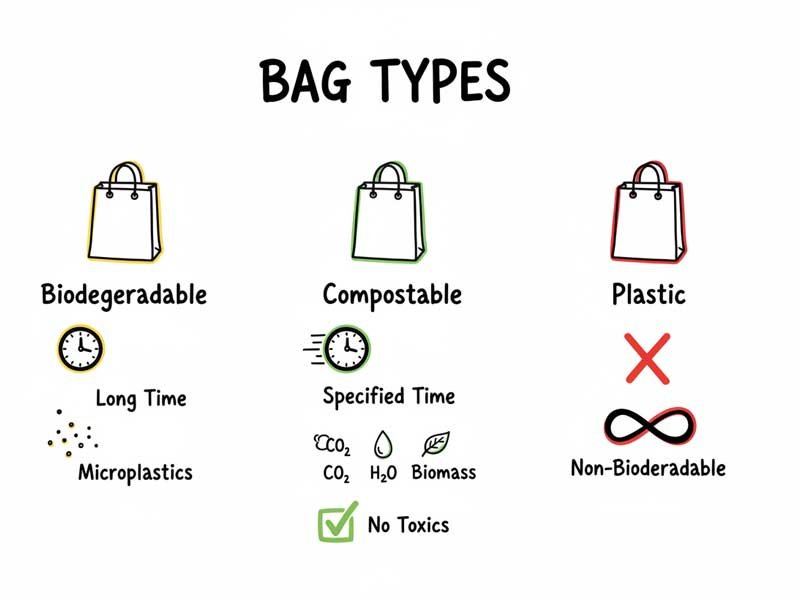
To help you understand compostable bags more clearly, we need to delve into: compostable vs. biodegradable vs. traditional plastic bags. The term “biodegradable” is often used in the market, but this is fundamentally different from “compostable.”
Biodegradable bags can also decompose, but it can take a long time and may leave microplastics, posing a potential environmental impact.
Compostable bags, on the other hand, must completely decompose into carbon dioxide, water, and biomass within a specified time under specific composting conditions, leaving no toxic residues.
Traditional plastic bags are completely non-biodegradable.
- Biodegradable Bags Vs Plastic Bags: Ultimate Eco-Guide for 2025
- What are Biodegradable Plastic Bags ?2025 Comprehensive Guide
How do we identify genuine compostable bags?
The answer lies in certification standards. Internationally, certifications such as BPI (Biodegradable Products Institute), the EU standard EN 13432, and OK Compost Home/Industrial are key indicators of compostable bag quality. You will clearly see these certifications when you purchase our compostable bags. I strongly recommend carefully checking the product packaging; this is the most important part of the consumer selection guide and will help you avoid buying counterfeit eco-friendly products.
Step-by-Step How to Dispose of Compostable Bags: Home vs. Commercial
Now, let’s move on to the part everyone’s most interested in: how to dispose of compost bags. We’ll divide it into two main methods.
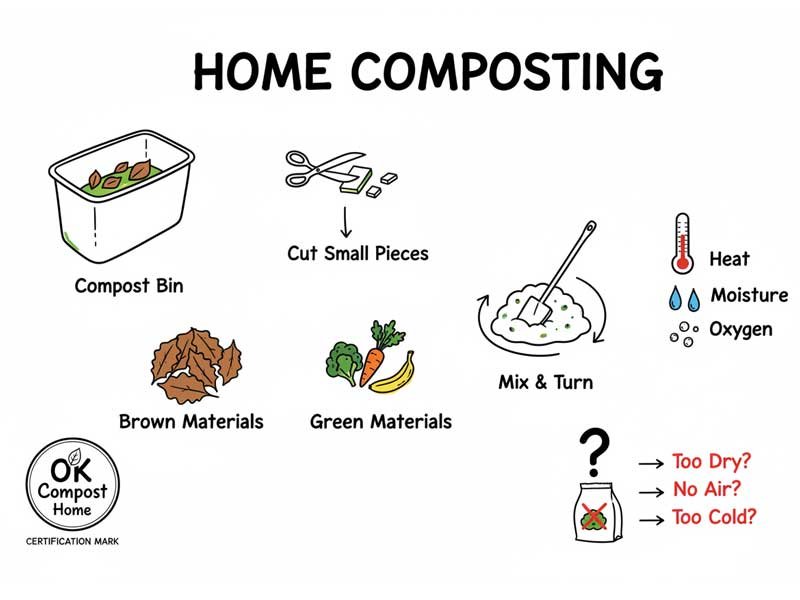
1.Home Composting Bags
The most direct and environmentally friendly way to use composting bags: Home compost bins or compost heaps.
- Cut our composting bags into small pieces to accelerate decomposition.
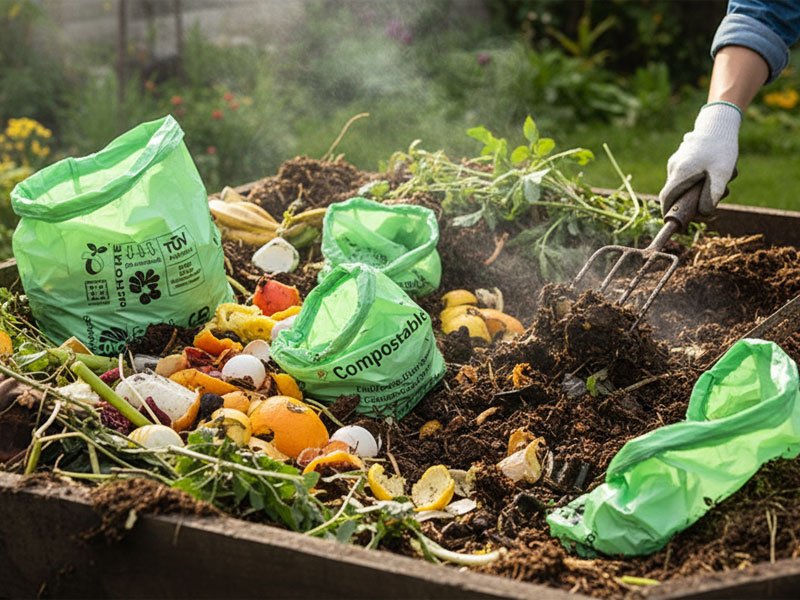
- Mix these pieces thoroughly with “brown” and “green” materials such as kitchen waste, garden waste (like fallen leaves and grass clippings). Maintaining a suitable temperature and humidity in the compost heap and turning it regularly to ensure sufficient oxygen is crucial for effective decomposition.
You may encounter some problems during home composting. For example, you might ask, “Why isn’t my composting bag decomposing?” This could be because the compost heap is too dry, lacks oxygen, or the temperature isn’t high enough.
Not all composting bags are suitable for home composting. Be sure to choose bags with “OK Compost Home” certification.
Our composting bags include types suitable for home composting. Through these common failure case analyses and solutions, we hope you can have a smoother home composting experience.
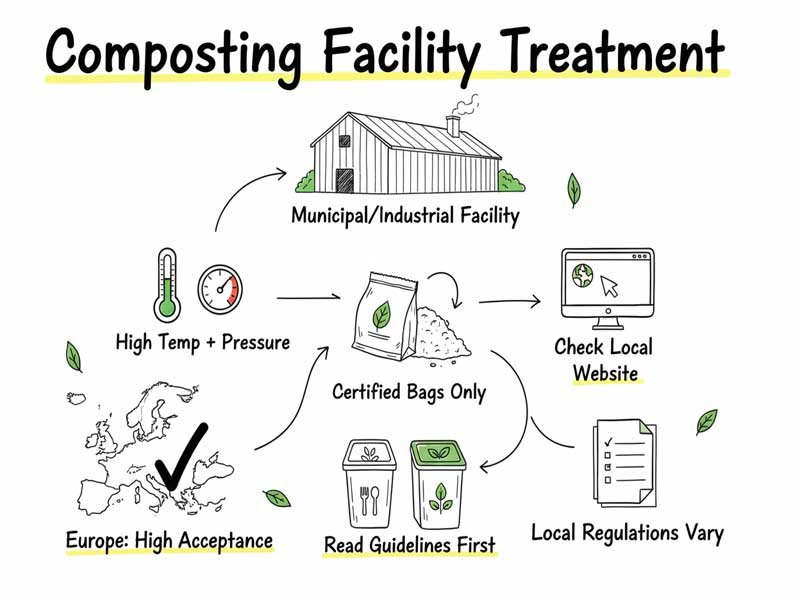
2.Municipal/Industrial Composting Facility Treatment
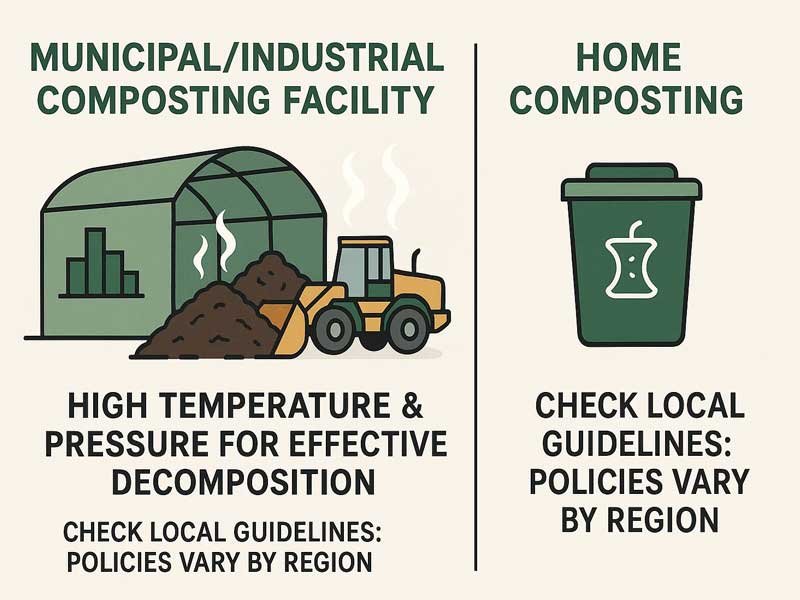
Many cities have dedicated municipal or industrial composting facilities capable of processing industrially certified compostable bags. These facilities utilize more specialized conditions, such as high temperature and pressure, to effectively decompose compostable bags.
To find composting facilities in your area, I recommend visiting your local government’s waste management website or environmental agency. Composting facilities and policies vary significantly across different countries and regions. For example, many European cities have a high acceptance rate for compostable bags, while some areas have specific disposal requirements.
Please carefully review your local food waste bin or green bin acceptance guidelines before disposing of your waste to understand whether compostable bags are permitted and the specific regulations.
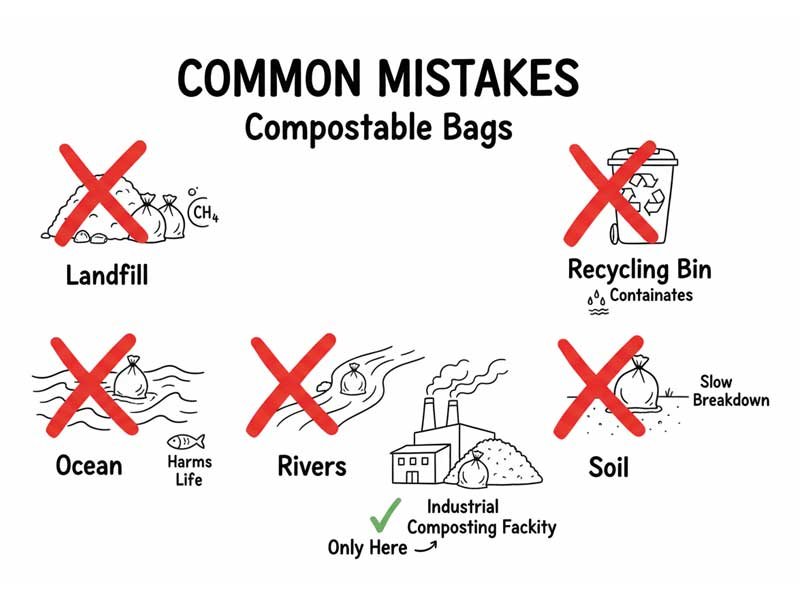
Common Mistakes in Disposing of Compostable Plastic Bags
Understanding the correct way to dispose of compostable bags is important, but avoiding the wrong methods is equally crucial. These mistakes not only waste the environmental potential of compostable bags but can also create new environmental problems.
Do not discard compostable bags in regular landfills.
In the oxygen-deficient environment of a landfill, the decomposition process of compostable bags is extremely slow and can produce methane, a more potent greenhouse gas than carbon dioxide. Throwing compostable bags into regular trash cans fails to realize their environmental benefits and is a misconception.
Compostable bags should not be placed in recycling bins.
Although they look like plastic, their material is different from recyclable plastics. Mixing compostable bags with the plastic recycling stream will contaminate recycling materials, increase recycling costs, and even render the entire batch of recyclables unusable.
Never carelessly discard compostable bags into natural environments such as oceans, rivers, or soil.
Although they are “compostable,” they decompose very slowly in uncontrolled natural environments and can still harm wildlife and ecosystems.
Compostable bags behave very differently in marine environments than in terrestrial composting environments; they do not degrade completely in a short time and still pose a threat to marine life. Therefore, they should not be considered “harmless” items that can be discarded anywhere.

Our Compostable Solutions
As a manufacturer of biodegradable compostable bags, we understand that product quality and proper disposal guidelines are equally important. Our compostable bags strictly adhere to the highest international certification standards, such as BPI and EN 13432, ensuring complete decomposition under suitable composting conditions. Whether for everyday shopping, food waste disposal, or pet waste, our products offer a durable, leak-proof design.
Buy our certified compostable bags today! Let’s work together to make a positive difference for the planet through informed choices and proper disposal.
FAQ
How long does it take for compostable bags to completely decompose?
This depends on composting conditions and bag type, typically ranging from weeks to months.
Can I put all my food waste in compostable bags?
Yes, any food waste suitable for composting can be placed in compostable bags.
Do different brands of compostable bags decompose at the same rate?
Due to differences in material formulation and thickness, decomposition rates can vary. We recommend choosing products with clear certifications and instructions.
What if there are no composting facilities in my city?
You can consider home composting or explore other solutions to reduce single-use plastic use.
Do compostable bags attract pests?
If your compost pile is managed properly, it usually won’t.
Conclusion
I hope this guide will help you better understand and properly dispose of compost bags. How you dispose of compost bags is a crucial part of eco-friendly living. Let’s start today, taking the right actions to contribute to building a more sustainable future.