Extended Producer Responsibility (EPR) regulations are reshaping how clothing brands manage packaging across global markets.
For apparel businesses, packaging choices now directly affect compliance costs, reporting obligations, and brand risk exposure.
This article explains how compostable apparel packaging helps clothing brands align with EPR requirements while maintaining operational efficiency.
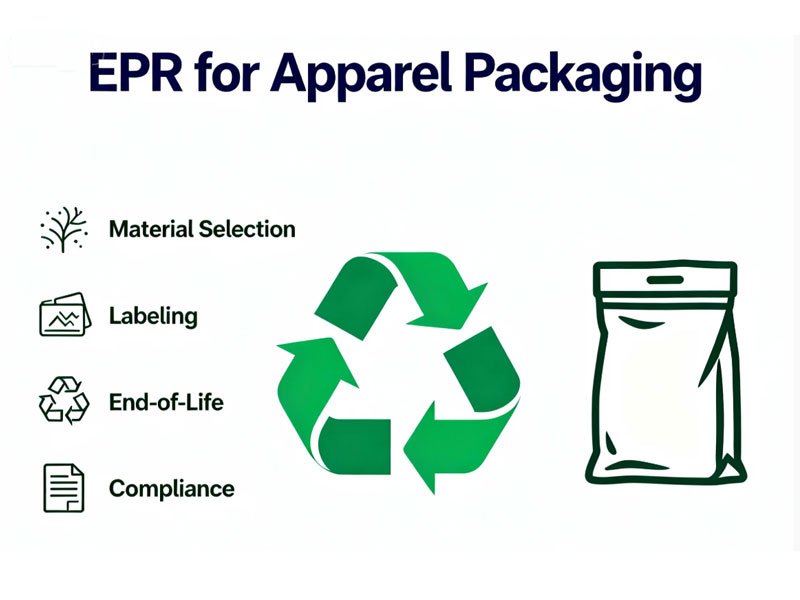
What Is EPR and Why It Matters for Apparel Packaging
EPR regulations require producers and brand owners to take responsibility for the environmental impact of packaging materials placed on the market.
For apparel brands, this includes:
- Packaging material selection
- Labeling accuracy
- End-of-life responsibility
- Reporting and compliance documentation
How Compostable Apparel Packaging Supports EPR Compliance
Certified compostable packaging can reduce EPR-related risk by:
- Using materials aligned with waste reduction goals
- Supporting composting systems where available
- Avoiding misleading environmental claims
Certified compostable apparel packaging helps clothing brands simplify EPR compliance planning across markets.
Under EPR regulations, environmental claims must be supported by verifiable, third-party standards, not generic sustainability statements.
This is why apparel brands rely on recognized compostable packaging certifications to demonstrate compliance, ensure correct labeling, and reduce regulatory risk across different markets.
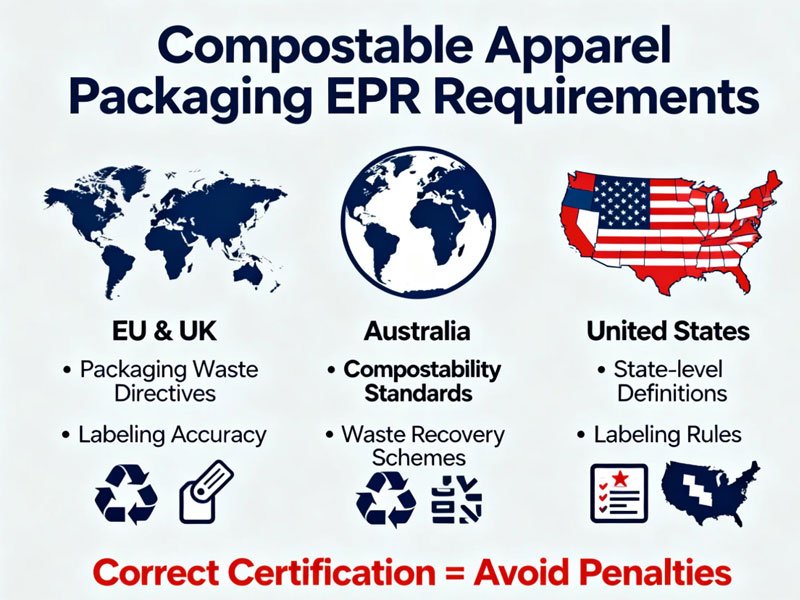
Compostable Apparel Packaging EPR Requirements Across Key Markets
- EU & UK: Packaging waste directives and labeling accuracy
- Australia: Compostability standards and waste recovery schemes
- United States: State-level compostability definitions and labeling rules
Correct certification selection is critical to avoid penalties.
Common EPR Mistakes Apparel Brands Make
- Using “biodegradable” without certification
- Mixing compostable materials with incorrect claims
- Lack of disposal guidance on packaging
- Working with suppliers unfamiliar with export regulations
Why Certification Matters Under EPR Rules
Recognized certifications such as EN 13432, ASTM D6400, and BPI provide:
- Third-party validation
- Clear compostability definitions
- Regulatory credibility
- Reduced greenwashing risk
Choosing an EPR-Ready Packaging Manufacturer
Apparel brands should work with manufacturers who understand:
- International compostability standards
- Market-specific labeling requirements
- Export documentation and compliance
- Long-term B2B supply stability
Partnering with an experienced compostable apparel packaging manufacturer helps brands navigate EPR obligations with confidence.
Conclusion
EPR compliance is no longer optional for clothing brands. By adopting certified compostable apparel packaging and working with experienced manufacturers, brands can reduce regulatory risk while strengthening sustainability positioning.