Hello everyone! If you’re like me, a dog lover who also cares about the environment, then choosing the right pet poop bags is especially important. You’ve probably seen labels like “biodegradable” and “compostable” in the pet supplies section, and then spent a fortune buying a bunch of bags, thinking you’re contributing to the environment, right? Are these bags really environmentally friendly?
This can be confusing. Many dog owners, including myself, wonder if what we’re doing really makes sense? Which is better? And how should we use them correctly?
In this guide, as someone who has used biodegradable and compostable bags for years, I’ll explain the real differences between biodegradable and compostable pet poop bags, debunking the marketing gimmicks. My goal is to help you make informed choices and give you peace of mind when dealing with your dog’s “poop.”
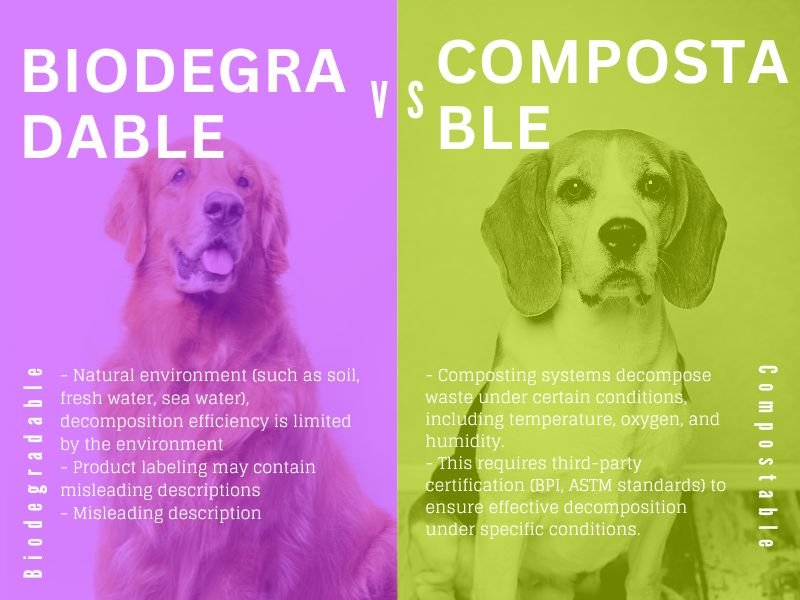
What Are Biodegradable Poop Bags?
When you see the term “biodegradable,” it sounds great, right? It makes you think the bag will disappear.
Biodegradable is a broad term, simply indicating that it can decompose naturally, but it doesn’t specify strict requirements for environmental conditions (moisture, oxygen, temperature) and time; it could take hundreds of years to decompose.
Sounds simple. But here’s a big problem: “Biodegradable” doesn’t say how long the process takes, where it happens, or what it leaves behind.
You throw a “biodegradable” dog poop bag into a regular trash can. It will most likely end up in a large landfill. In a landfill, there’s little air and no sunlight. Microorganisms work very slowly, or not at all.
The bag may remain there for decades, or even longer. It may break down into tiny plastic fragments, which we call microplastics. These microplastics will still pollute the soil and water.
That’s why simply saying “biodegradable” isn’t enough. It’s too vague.
What Are Compostable Poop Bags?
“Compostable” is more specific and stricter than “biodegradable.”
Compostable bags: Under specific conditions, they completely decompose into soil (which we call humus), water, and carbon dioxide, which are beneficial to plants. Most importantly, they leave no harmful residues, such as microplastics.
Compostable bags decompose completely in two ways:
- Industrial Composting: High temperatures, high humidity, and a large number of specialized microorganisms. Most compostable poop bags are designed for this purpose. They decompose within weeks to months.
- Home Composting: Your backyard compost bin. Not as hot as industrial facilities. Compostable bags decompose much more slowly here, and may not completely. A very important point: Pet feces may contain bacteria and parasites. You should not use compost containing dog feces to grow vegetables or fruits for your own consumption. For safety, dog feces from home compost should only be used for ornamental plants or landscaping. The Importance of Authoritative Certification: BPI Certification (Key to Genuine Compostable Products)
BPI stands for Biodegradable Products Institute. They are a third-party organization that rigorously tests products to ensure they meet specific decomposition standards, such as the US ASTM D6400 standard.
If a dog poop bag has BPI certification, it is proven to decompose effectively in industrial composting facilities. Without this certification, it’s difficult to ascertain its authenticity. In Europe, you might see the EN 13432 standard. These are reliable indicators.
If you see a product that only says “compostable” without these certifications, I suggest you be cautious.
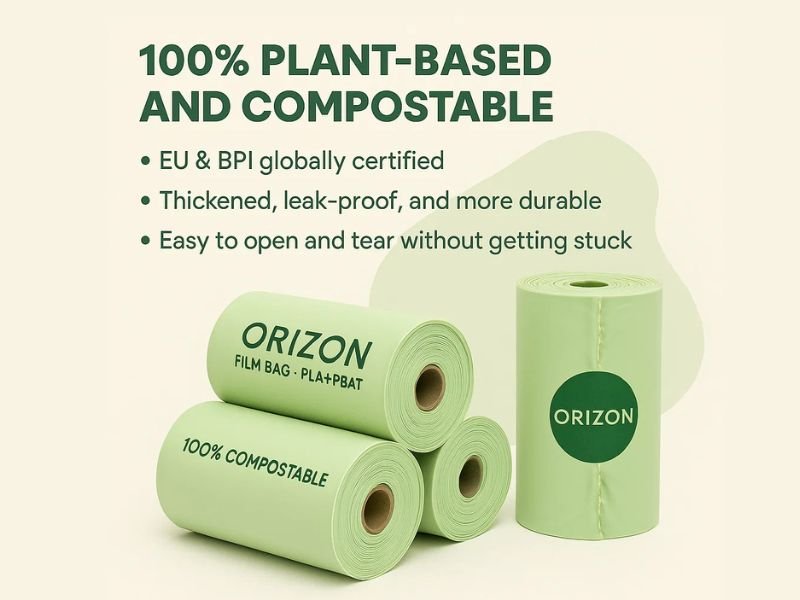
Biodegradable Vs Compostable Poop Bags
| Characteristics | Biodegradable | Compostable |
|---|---|---|
| Definition | Breaks down into natural substances through microbial action | Fully decomposes into humus, water, and carbon dioxide under specific conditions. No harmful residues. |
| Decomposition Products | May leave microplastics or other fragments | Completely transforms into organic matter. Beneficial to soil. |
| Required Environment | Vague. Usually ineffective in landfills. | Specific conditions required: Industrial composting (optimal) or dedicated home composting. |
| Certification Standards | Typically no strict third-party certification | Strict third-party certifications available: e.g., BPI Certification (ASTM D6400), EN 13432 |
| Actual Environmental Friendliness | More promotional than practical. May still burden the environment. | More eco-friendly when properly disposed of. |
| Timeframe | Months to years (or even longer) | Weeks to months (under correct conditions) |
If you really want to do something for the planet and there are industrial composting facilities available locally, or you can safely compost at home, then compostable, certified dog poop bags are a better option. They are designed to truly return to nature.
How to Identify Greenwashing
Greenwashing is when businesses use environmental protection concepts to confuse consumers and get them to pay more.
1.See These Terms
“Eco-friendly,” “Earth-friendly,” “Green,” “Pure Natural”…
Remember, any claim to be environmentally friendly without the backing of authoritative certification is just empty talk.
2.Find Professional Certification
Don’t trust advertising slogans; look for the logo on the back of the packaging! Truly reliable compostable bags will have these internationally recognized “certifications”:
- US BPI Certification (ASTM D6400): A trusted name in the North American market. ( Orizon Biomaterials BPI Certificate https://products.bpiworld.org/companies/shandong-orizon-biomaterials-co-ltd)
- European TÜV AUSTRIA (OK compost INDUSTRIAL / EN 13432): A passport to the European market.
- TÜV AUSTRIA (OK compost HOME): This is even more impressive, meaning it can be decomposed in a low-temperature composting environment like your own backyard.
3.Greenwashing Mirror
| Warning (Avoid!) | Approved (Safe to Buy!) |
|---|---|
| Big green leaf on the packaging but no certification logo | Clear official certification marks like BPI or OK Compost |
| Vague terms like “eco-friendly” or “biodegradable” | Clearly labeled as “Compostable” |
| Suspiciously cheap price (think about it — real eco-tech isn’t free) | Reasonable pricing with clear certification details |
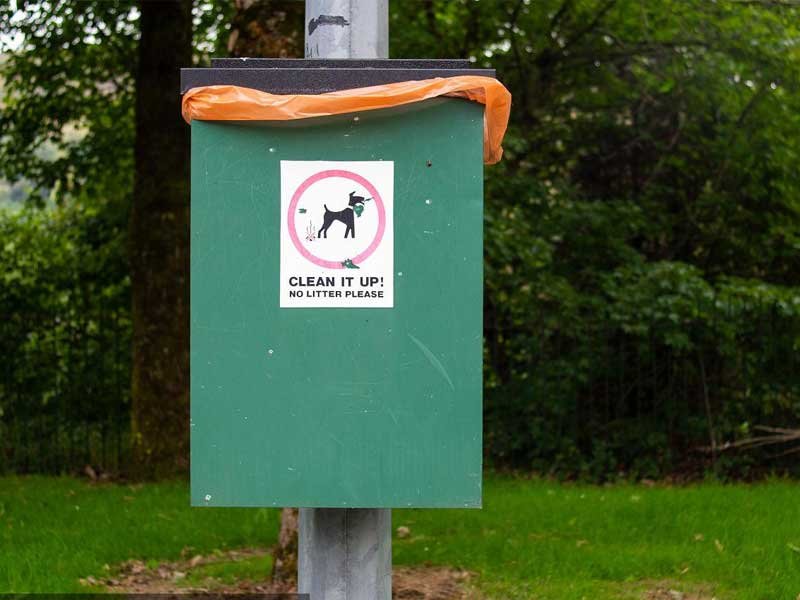
What to Do with a Compostable Dog Poop Bag
If you chose compostable dog poop bags (with BPI or other certification):
Industrial composting:
This is the best option. You’ll need to check with your city’s waste disposal or recycling center. Some industrial composting facilities accept pet feces. My advice is to call and ask.
Home composting:
If you have a home compost bin and are determined to use it, remember what I said before: don’t use it for edible plants. You need a dedicated compost bin to handle dog feces. Also, the composting process needs to be hot enough to kill any potential pathogens. It’s more complicated than it sounds.
Don’t flush it down the toilet! Even compostable ones can clog your plumbing. And many city wastewater treatment plants aren’t capable of handling parasites or drug residues in dog feces.
If you chose biodegradable dog poop bags (without compost certification):
Treat them as regular garbage.
This might sound a little disappointing, but that’s the reality. Due to the lack of specific degradation conditions, they won’t disappear in landfills as quickly or completely as you might imagine. Throw them in a regular trash can to ensure they end up in a landfill, not just lying around.
Tip: It’s important to know your community’s waste and recycling regulations. They vary from place to place.
What Happens to Compostable Bags in Landfills?
Even certified compostable bags don’t break down effectively in typical landfills.
Although compostable bags certified by BPI or TÜV AUSTRIA are designed to decompose into water and carbon dioxide within 90–180 days in industrial composting facilities, they behave similarly to traditional plastic bags in typical landfills. According to the EPA (2020), landfill bulk densities of 600–800 kg/m³ are significantly higher than the 200–300 kg/m³ found in composting facilities, resulting in insufficient oxygen and hindering microbial decomposition (Journal of Environmental Management, 2021). Research indicates that compostable bags can take 75–400 years to decompose in these anaerobic environments, releasing methane—a gas with a global warming potential 25 times that of carbon dioxide (EPA, 2023).
Additionally, BPI (2023) has stopped certifying dog waste bags because most industrial composting facilities in the United States (142/200, BioCycle) do not accept pet waste. Therefore, when choosing compostable bags, it is important to confirm whether there is an industrial composting facility in your area, otherwise they may end up in landfills like plastic bags.
So, are they still worth it? Yes.
The environmental advantage of compostable bags lies not only in their disposal but also in their production from the source.
- Made from plants, not petroleum: Our bags are made from renewable resources like corn starch. Traditional plastic bags are made from finite fossil fuels (petroleum). By choosing compostable bags, you’re helping to reduce global dependence on oil.
- Lower carbon footprint: The production of plant-based plastics generally produces lower carbon emissions than traditional plastics.
No microplastics: Traditional “degradable” plastics produce large amounts of harmful microplastics when they decompose. Certified compostable plastic bags are designed to be reduced to organic matter, not to break down into tiny, toxic particles.
While sending compostable plastic bags to landfill isn’t ideal, you’re still making a better choice at the source. You’re voting with your wallet for a more sustainable production cycle.
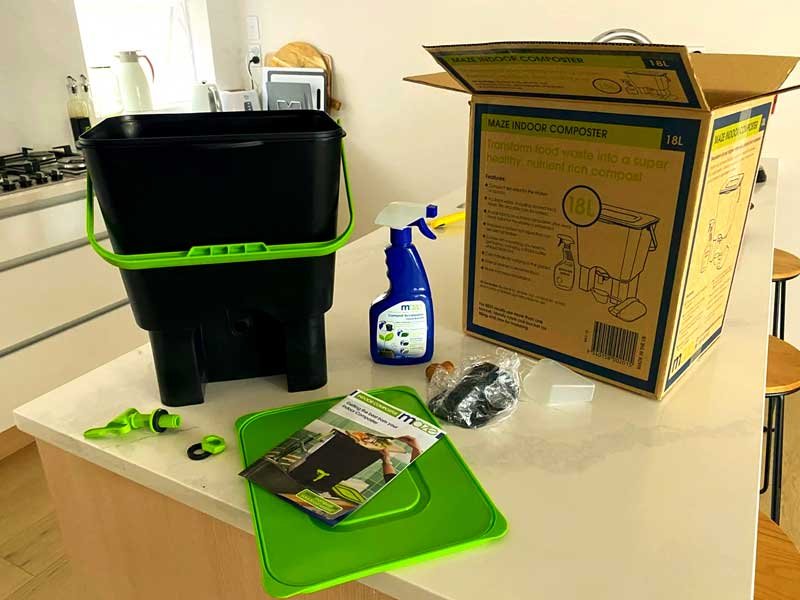
So what should you do?! A Realistic Decision Guide:
1. clarify these questions:
Are there any private composting services in your area that specifically accept pet waste?
How can you find out? Search online for “[your city name] + pet waste composting” or “Pet Waste Composting [Your City].” This is more common abroad, but still in its infancy in China, but it’s worth a try.
If there are: Congratulations! This is the best option! Buy bags that are BPI or EN 13432 certified and have them handled by professionals.
If not: Proceed to the next question.
Do you have a “standalone” dog waste compost bin at home?
Note! I’m talking about a standalone, dedicated composting system that doesn’t touch your garden (safety issues will be discussed below).
If you do: This is a second-best option. Buy bags that are certified “OK compost HOME,” which require more stringent decomposition conditions.
If you don’t want to/don’t have the resources: See the last point. Final choice: If all else fails, I’ll just have to throw it in the landfill.
So is there still a point in buying compostable bags?
Yes, but the point has changed. While they won’t break down effectively in landfills, their biggest advantage is that they’re made from plant-based, renewable resources like cornstarch, not petroleum! This means they’re already better for the planet right from the start than traditional plastic bags. So, it’s still an “imperfect, but better” option.
Don’ts in Home Composting
If you choose to compost dog poop at home, please read the following three times!
⚠️ Serious warning: Absolutely! Absolutely! Never throw bags of dog poop into your compost bin where you grow vegetables or fruit!
Why? Because dog feces may contain dangerous bacteria like roundworm eggs, E. coli, and salmonella. Regular home composting temperatures simply aren’t high enough to completely kill them! Using this contaminated fertilizer for food can have disastrous consequences!
Safety Instructions:
If you choose to compost dog feces at home, you must use a separate, dedicated composting system and ensure that the finished compost is only used for non-edible ornamental plants, such as flowers or shrubs.
- Isolation is essential: Create a separate compost bin for dog poop, away from your garden.
- Ensure a high temperature: Learn professional composting knowledge to ensure the core temperature of your compost reaches sterilization standards.
- Specialized for specific uses: The final compost should only be used on ornamental plants and trees that you only want to look at, not eat!
FAQ
Are compostable dog poop bags really more environmentally friendly than biodegradable ones?
Yes, generally speaking, compostable dog poop bags are a more environmentally friendly option if used with proper composting. They are designed to return completely to nature, leaving no harmful residue. Many “biodegradable” bags, on the other hand, are difficult to truly decompose in real-world environments.
Can I throw compostable dog poop bags into my backyard compost bin?
Caution! Pet feces can contain bacteria and parasites harmful to humans. Unless your home composting system can reach very high temperatures and maintain them for extended periods, I recommend using them only for composting non-edible plants or landscaping materials. Never use them for your vegetable garden.
How long does it take for compostable dog poop bags to decompose?
Under ideal industrial composting conditions, they typically decompose within weeks to months (e.g., 90-180 days). In home composting, this time will be longer, and the results may be less thorough.
Do all biodegradable dog poop bags contain plastic?
Many “biodegradable” products are still based on plastic polymers, such as PLA or PBAT. While they may decompose more easily than traditional plastics, they can still break down into microplastics without explicit certification. Truly compostable products are typically made from materials like plant starches designed for complete decomposition.
What certifications should I look for to ensure I’m buying truly eco-friendly dog poop bags?
Look for certifications like BPI (compliant with ASTM D6400) or the European standard EN 13432. These are authoritative certifications for industrial composting. If you see certifications for home composting, that’s even better, but carefully read the specific requirements.
Conclusion
As pet owners, we all have a responsibility to dispose of our dogs’ waste properly.
Choosing compostable, clearly certified dog poop bags and ensuring you understand how to dispose of them correctly is one of the most responsible choices you can make right now. It requires a little effort to learn and practice.
But it’s worth it. Because when we make better choices for our pets, we are also making better choices for the planet. Hopefully, this article will help you make an informed decision.
References
- BPI
- Federal Trade Commission. “Guides for the Use of Environmental Marketing Claims (Green Guides).” FTC.gov.
- BPI certification and ASTM D6400 standard: Biodegradable Products Institute (BPI). “Certification.” BPIWorld.org.
- ASTM International. “ASTM D6400 – Standard Specification for Labeling of Plastics Designed to be Aerobically Composted in Municipal or Industrial Facilities.” ASTM.org.
- U.S. Environmental Protection Agency (EPA). “Composting At Home.” EPA.gov.