Plastic, ubiquitous in our daily lives—shopping bags, water bottles, takeout containers…where does it all end up? Will it really “disappear”? Today, let’s talk about a serious yet perplexing topic: How long does it take for plastic to biodegrade?
Do you think that throwing plastic into the trash is all it takes, or that seeing a “biodegradable” label means a product is absolutely environmentally friendly? But the reality is not as we imagine.
This article will unveil the mystery of plastic degradation, revealing the truth and showing you what we can do.
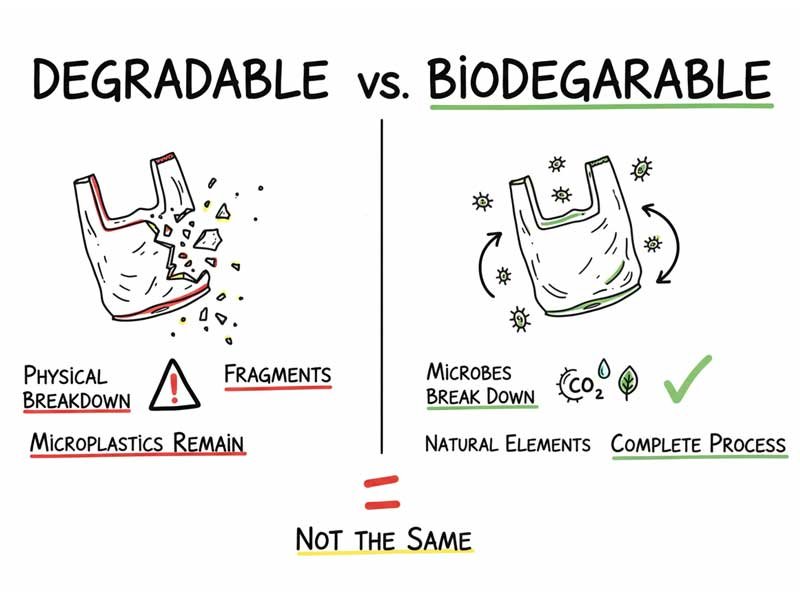
Degradable vs Biodegradable:
In our daily lives, there is another concept called degradable. Let’s look at the differences between the two.
Decompose (Decomposition/Rotation)
A broad term referring to the breakdown of matter (organic or inorganic) into smaller components through physical, chemical, or biological processes.
- Physical Decomposition: Examples include weathering, wear, and sun exposure causing objects to break down.
- Chemical Decomposition: Examples include acid rain corroding metals, or chemical reactions altering the structure of matter.
- Biological Decomposition: This is the process by which microorganisms (bacteria, fungi, etc.) break down organic matter through metabolism.
Results: The final products of decomposition may still be harmful, or they may simply be broken down into smaller fragments (such as microplastics), and may not necessarily return completely to the natural cycle.
Biodegrade (Biodegradation)
A specific type of decomposition, specifically referring to the breakdown of organic matter into harmless substances found in nature, such as carbon dioxide, water, methane, and biomass, by microorganisms (bacteria, fungi, etc.).
- Process: Must be an enzymatic reaction involving microorganisms.
Results: Emphasizes complete and harmless decomposition, where the products can be absorbed and reused by nature, leaving no pollution.
For most of the plastics we use every day, they are more likely to “break down” in the environment—breaking into microplastics—than to truly “biodegrade”—disappearing completely harmlessly.
| Feature | Decompose | Biodegrade |
|---|---|---|
| Definition Scope | Broad term; includes physical, chemical, and biological processes. | Narrower term; specifically refers to biological processes carried out by microorganisms. |
| Agents Involved | Physical forces, chemical reactions, and microorganisms. | Must involve microorganisms. |
| Applicable Materials | Can refer to both organic and inorganic materials. | Mainly refers to organic materials. |
| End Result | May produce harmful fragments (e.g., microplastics); not always harmless. | Emphasizes complete and harmless breakdown; end products are CO₂, water, and biomass that return to the natural cycle. |
For example:
A plastic bottle decomposes in sunlight, becoming brittle and breaking into countless tiny plastic particles. This process is primarily physical decomposition, but these microplastics do not biodegrade into harmless substances.
A leaf falls to the ground and gradually decomposes under the action of microorganisms, eventually disappearing and becoming part of the soil. This is both decomposition and biodegradation.
Why is this distinction important?
This distinction is especially crucial when discussing plastics. Many plastic products “decompose” in the environment, but they are not “biodegradable.” They simply break down into microplastics that are almost invisible to the naked eye. These microplastics remain environmental pollutants, posing a threat to ecosystems and human health.
Therefore, when we hope that plastics will “disappear,” what we really hope for is that they will biodegrade, not just break down into smaller, harmful fragments. This is why, in the context of environmental protection, we emphasize the concept of “biodegradability.”
Two terms related to biodegradation
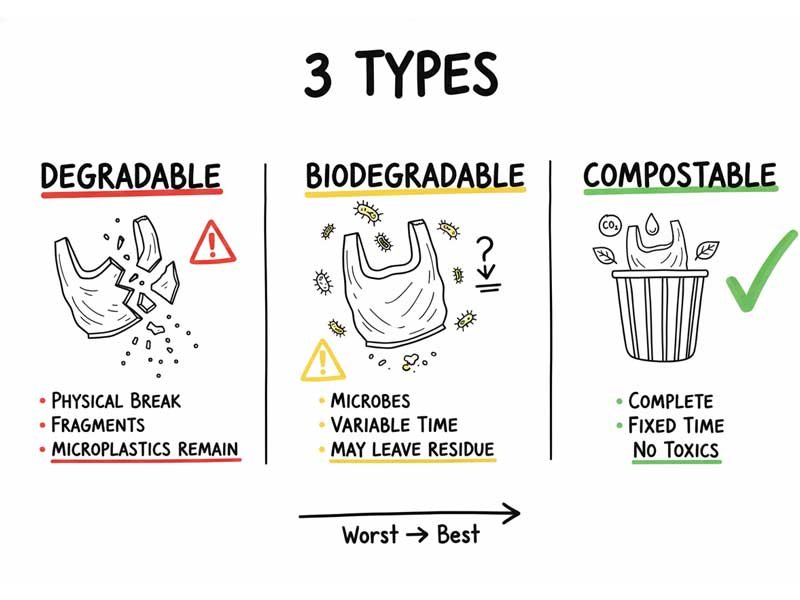
Before we delve into how long it takes for plastics to biodegrade, let’s clarify a few technical terms:
- Degradable: Plastic decomposes into invisible fragments, or “microplastics,” rather than disappearing completely. These fragments may be more difficult to process than larger pieces of plastic and pose a greater threat to the environment.
- Compostable: A special type of biodegradation! It requires specific composting conditions (such as the high temperature and humidity of an industrial composting plant) to decompose into stable, non-toxic humus within a relatively short time (usually 3-6 months), which is beneficial to plant growth.
If you see a product labeled “compostable,” it usually refers to “industrial compost”! Your backyard compost bins or ordinary landfills often lack the high temperature, high humidity, and microbial-rich conditions required for biodegradation. Simply toss “compostable” plastic into your home compost bin, and it will magically disappear!
Faced with the overwhelming advertising for “eco-friendly plastics” and “green packaging” from businesses, consumers really need to be discerning. Often, the so-called “greenwashing” uses vague environmental terms to mislead consumers. The most reliable method is to look for authoritative third-party certification marks, such as the compostability certification from the BPI (Biodegradable Products Institute).Our company’s identification number can be found on the BPI website: 10529118
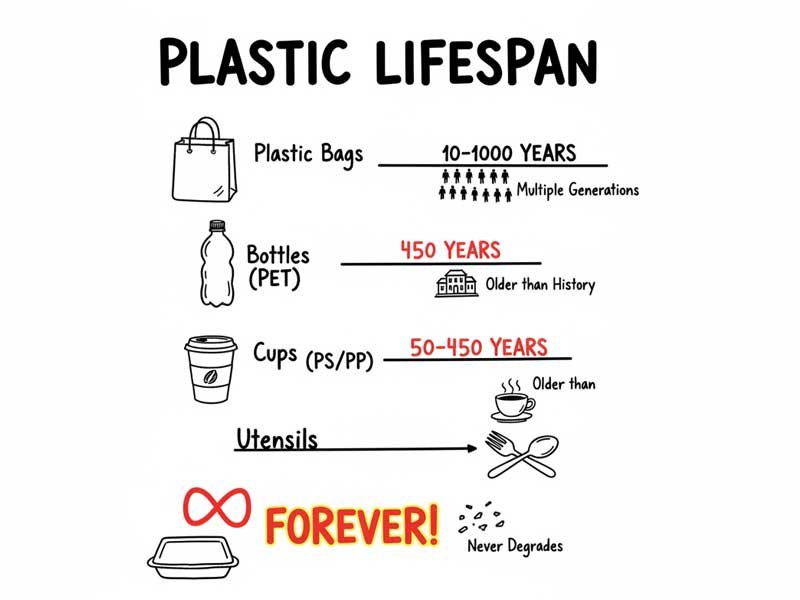
How Long Does It Take For Plastic To Biodegrade
Here’s a breakdown of the time to decompose plastic products:
- Plastic Bags (HDPE/LDPE): Approximately 10-1000 years. Yes, you read that right—a lightweight shopping bag might outlive several generations of us!
- Plastic Bottles (PET): Approximately 450 years. An empty mineral water bottle might be older than the Forbidden City.
- Disposable Cups (PS/PP): Approximately 50-450 years. The cup you carelessly throw away after drinking coffee will remain on Earth for a very, very long time.
- Plastic Utensils (PP/PS): Degradation time is similar, 50-450 years.
- Styrofoam (PS): Almost eternal! Because it’s very difficult to biodegrade and can only break into small pieces.
Does the timeline seem a bit exaggerated? That’s right, this is the “secret to plastic’s longevity,” and also the reason it’s become an environmental killer.
Many people think that plastic degradation means it “disappears,” but the truth is, most ordinary plastics don’t completely “biodegrade” in the natural environment. They are more likely to break down into smaller and smaller fragments under the influence of sunlight, wind, and water, eventually becoming microplastics that we can’t see! These microplastics don’t completely turn into harmless carbon dioxide and water; they persist in soil, oceans, and even our food chain for a long time. For example, PET bottles become brittle and crack under sunlight, but their chemical structure still exists in the form of microplastics and doesn’t completely “disappear.”
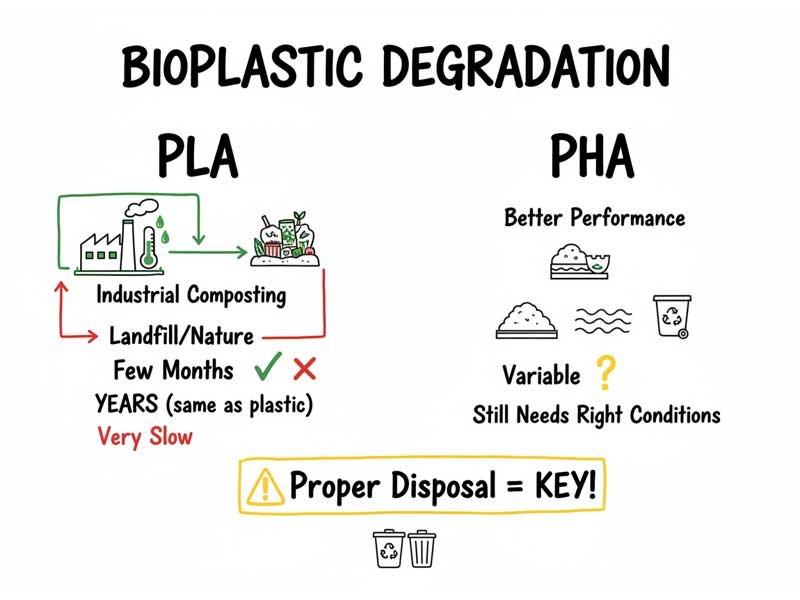
How long does it take for bioplastic bags to degrade?
Common examples include PLA (polylactic acid) and PHA (polyhydroxyalkanoates). They are indeed more environmentally friendly than traditional plastics, but there are conditions:
- PLA: It usually requires the high temperature and humidity environment of industrial composting facilities to degrade effectively, generally completing the process within a few months. If disposed of in conventional landfills or the natural environment, biodegradation will take a very long time, almost as long as that of traditional plastics.
- PHA: PHA degrades even better and can biodegrade in soil and water, but the rate is still affected by environmental factors.
Therefore, even so-called “bioplastics” are not a simple matter of throwing them away; proper disposal is crucial!
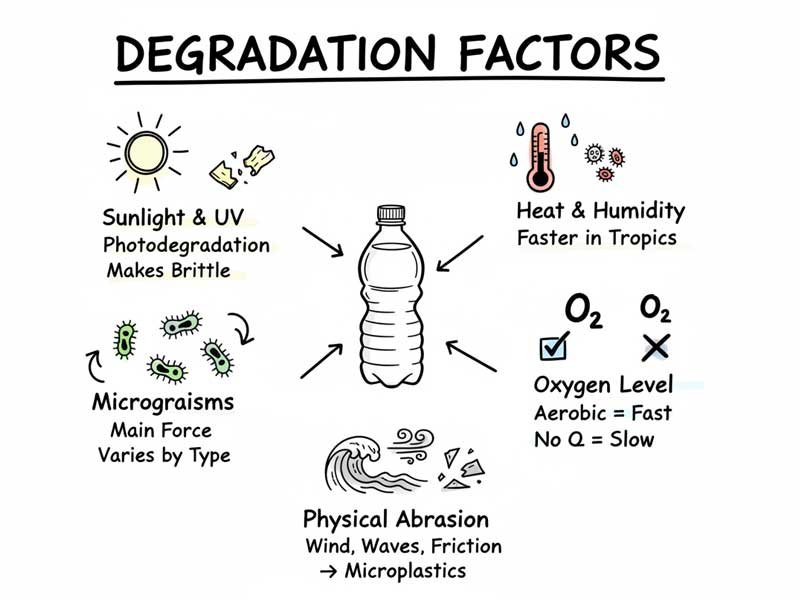
Factors Affecting Plastic Degradation
The rate of plastic biodegradation is affected by many factors:
- Sunlight and Ultraviolet Radiation (Photodegradation): Ultraviolet radiation from sunlight is one of the “natural enemies” of plastics. It can damage the molecular structure of plastics, making them brittle and more prone to breakage. Plastics exposed to sunlight decompose into fragments faster than those buried in the soil.
- Temperature and Humidity: High temperature and humidity environments are conducive to the growth and reproduction of microorganisms, which are the main force in degrading plastics. In tropical regions or industrial composting plants, plastics degrade much faster.
- Microbial Community: Different types of microorganisms have different “digestive abilities” for different types of plastics. Some plastics have too stable a molecular structure for microorganisms to “break down.”
- Oxygen Content: Most plastics require oxygen (an aerobic environment) for biodegradation. In the oxygen-deficient deep sea or deep in landfills, the degradation rate slows down significantly or even stops.
- Physical Abrasion: Wind, waves, and friction from sand and gravel can also accelerate the breakage of plastics, turning them into microplastics more quickly.
The properties of the plastic itself are also crucial, such as its chemical structure (is it PET or PP?), density, and stabilizers, all of which affect its biodegradation cycle.
What are the impacts of plastic pollution on me?
- Threats to marine ecosystems: Millions of tons of plastic flow into the ocean every year, creating the alarming “Pacific Garbage Patch.” Sea turtles, seabirds, and whales ingest plastic or become entangled and die. These plastic fragments also absorb toxins from seawater, entering the food chain.
- Erosion of terrestrial soil: Plastic fragments in the soil affect soil permeability and fertility, negatively impacting crop growth.
Microplastics are ubiquitous, detected in everything from the water we drink to the seafood we eat, and even in the air. Research indicates that microplastics may carry pollutants, and whether they will have long-term health effects after entering the human body is a pressing question that needs to be answered. Scientists are still conducting in-depth research, but the potential risks cannot be ignored.
How Can Technology Address the Plastic Challenge?
Faced with such a severe challenge, humanity has not given up. Scientists and engineers are working hard to find ways to make plastics biodegrade faster:
Enzymatic Degradation Technology: This is an exciting breakthrough! Scientists have discovered bacteria and enzymes (such as PETase) that can “eat” plastic, efficiently breaking down plastics like PET. Although currently in the laboratory stage, it holds promise for future industrial-scale plastic recycling and degradation.
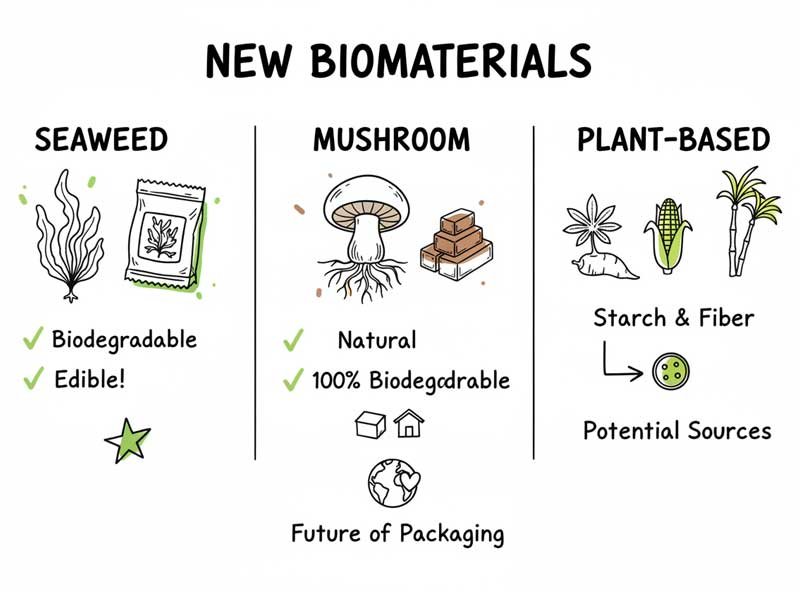
Exploration of New Biomaterials:
- Seaweed Plastics: Packaging materials made from seaweed extracts are not only biodegradable but even edible!
- Mushroom Materials: Packaging and building materials made from mushroom mycelium are natural, environmentally friendly, and completely biodegradable.
- Other Plant-Based Alternatives: Cassava, corn, sugarcane, and other plant starches and fibers are also potential sources for developing bioplastics.
These new materials sound cool, but we are also concerned about their practical performance. Are they strong enough? Are they expensive? Can they be mass-produced? These are questions that scientists and companies are working hard to answer.
- Upcycling: More than just simple recycling, it transforms waste plastics into high-value, high-performance new products, turning waste into treasure.
- Global Clean-Up Initiatives and Policies: Organizations like the Ocean Cleanup Project are working to remove plastic debris from the oceans. Meanwhile, governments worldwide are enacting stricter plastic bans to reduce plastic production and use at the source.
Scientists are also exploring the use of genetic engineering to modify microorganisms to more efficiently biodegrade plastics. However, accurately monitoring the actual degradation of plastics in different environments (soil, ocean) and assessing the long-term impacts of microplastics remain significant challenges.
What Can We Do for the Environment?
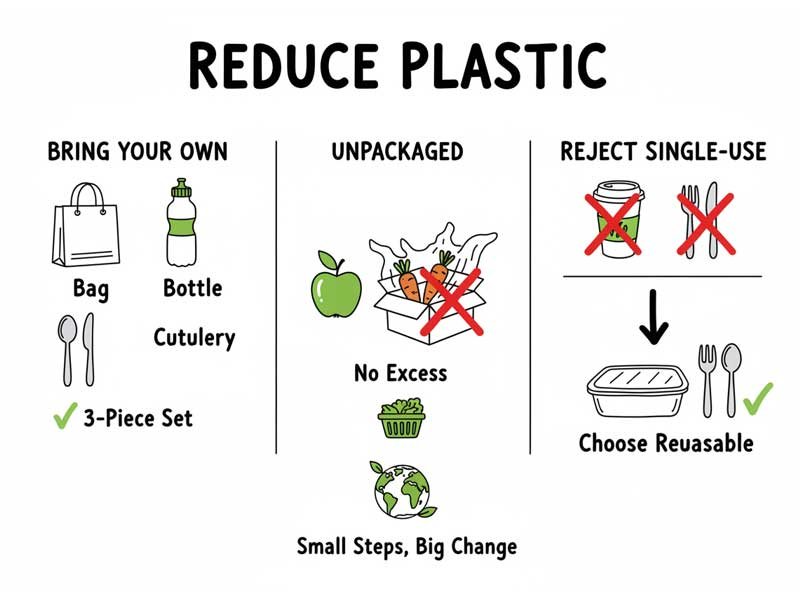
Practical Plastic Reduction Tips:
- Bring Your Own Three-Piece Set: Shopping bag, water bottle, and cutlery; take them with you when you go out.
- Choose Unpackaged Products: Try to buy fruits, vegetables, and goods without excessive packaging.
- Reject Single-Use: Try using reusable containers instead of single-use plastic products.
Proper Recycling Habits:
Not all plastics are recyclable! Recycling rules vary by region; please consult local guidelines. Generally, PET (No. 1) and HDPE (No. 2) plastic bottles are relatively easy to recycle. However, PP (No. 5) food containers and PS (No. 6) polystyrene foam are difficult to recycle in many places, inefficient, or even impossible. The best approach is to reduce usage at the source. Recycling is not a magic bullet.
Smart Consumer Choices:
Support brands that are truly committed to environmental protection and use sustainable packaging.
Choose durable, reusable products instead of cheap, single-use plastics.
Support Initiatives and Research:
Pay attention to and support environmental organizations and research projects that are driving plastic solutions.
Become an Information Disseminator:
Share what you’ve learned today with your friends and family, letting more people know the truth about the biodegradability of plastics.
Properly Handle “Compostable” Plastics:
While we can’t accelerate the degradation of ordinary plastics at home, if your city has industrial composting facilities, be sure to take compostable products there. Don’t litter, otherwise they will continue to exist in the environment for a long time.
Garbage Islands:
We may feel powerless in the face of alarming amounts of marine debris. But remember, every plastic bottle you pick up, every action to refuse single-use plastics, is helping to reduce the burden on the ocean. You can also participate in local beach cleanups or support large-scale cleanup projects like “The Ocean Cleanup,” which are using technology to clean up marine debris. Don’t underestimate the power of your small efforts; together, they can create a powerful force that changes the world!
Conclusion:
How long does it actually take for plastics to biodegrade? The answer is: much longer than we imagine, and much plastic may never truly “disappear,” instead transforming into even smaller microplastics that continue to pollute our planet.
Understanding the complexity of plastic degradation and its profound environmental impact, we should be more clearly aware that reducing plastic use at the source, choosing sustainable alternatives, and responsibly disposing of waste are the fundamental solutions to the plastic crisis.
Technology is advancing, but ultimate change must begin with each of our lifestyles. Let’s act together so that the “legacy” of plastic is no longer pollution, but rather our determination to change our planet!
Related Articles