FOGO Compostable Bags for Australia
Certified compostable caddy and organics liners for councils, distributors, waste contractors and commercial FOGO programs.
Bulk supply, custom sizes, printing and project-specific packaging are available for approved FOGO applications.
What Are FOGO Bags?
FOGO stands for Food Organics and Garden Organics.
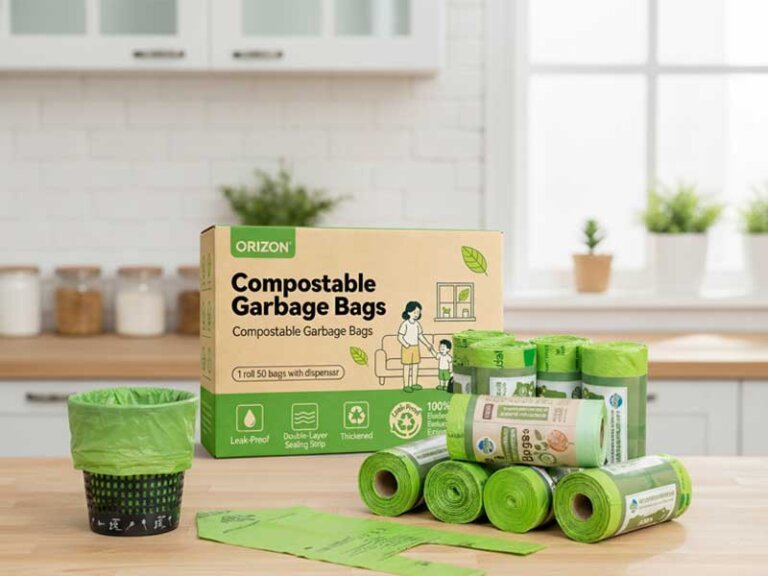
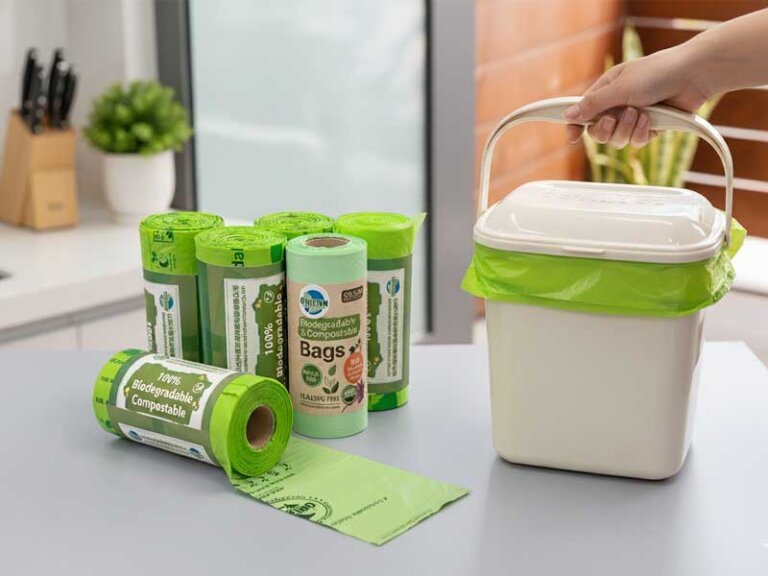
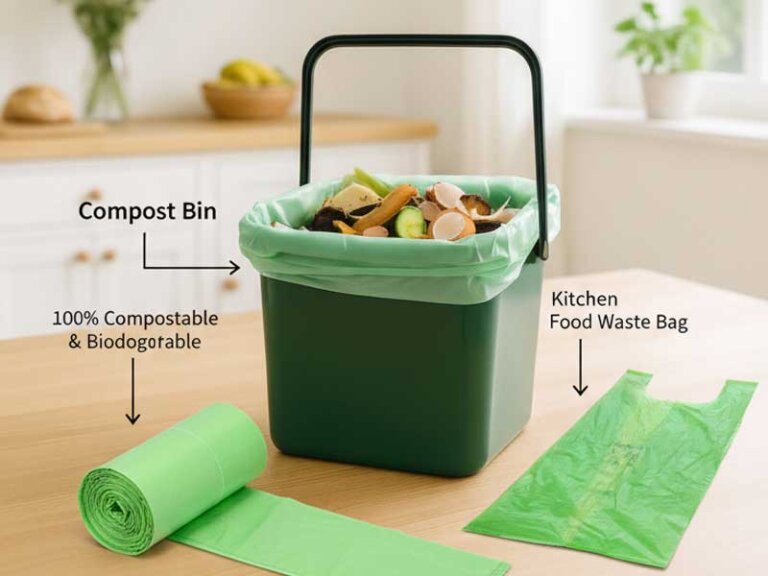
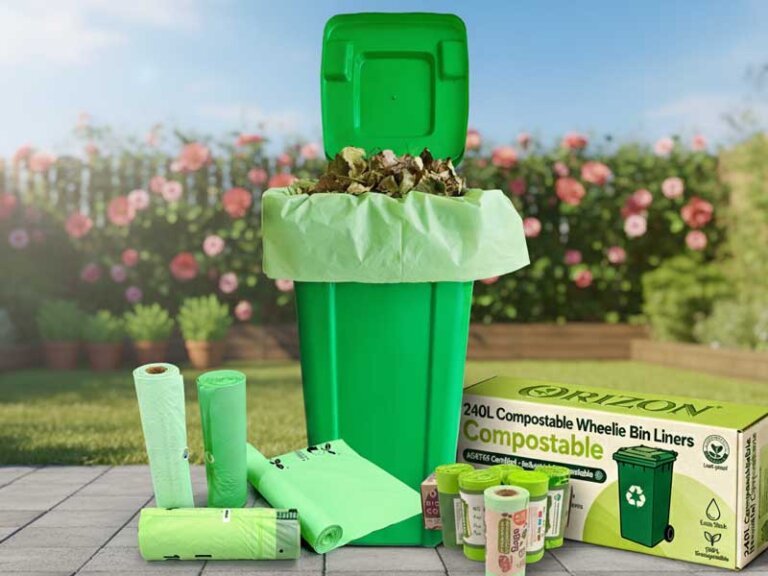
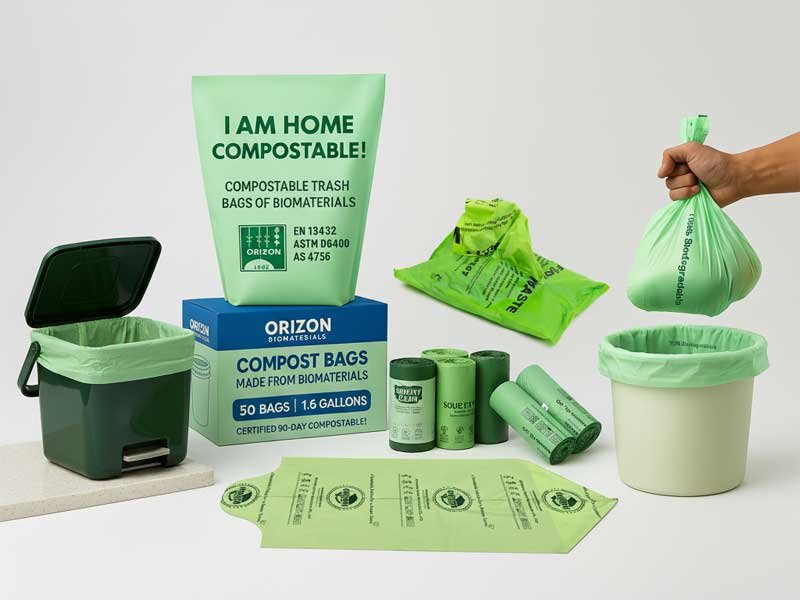
FOGO bags are compostable liners used in some organics collection programs to help households and businesses collect food scraps before transferring them into an approved FOGO or food-organics system.
Typical applications include:
- kitchen caddy liners
- household food-waste liners
- commercial organics liners
- council FOGO rollout programs
- waste-contractor supply
- distributor and private-label programs
However, there is no single FOGO liner specification that applies across every Australian council or composting program.
The correct bag should be selected according to the local program, required certification, liner size, color, printing and receiving composting facility.
Check Local FOGO Program Acceptance First
Certification is important, but certification alone does not guarantee that a liner will be accepted by every FOGO program.
Before sourcing FOGO bags, confirm:
- Local Council / Processor
- Accepted Liner Type
- Required Certification
- Caddy or Bin Size
- Color Requirement
- Certification Mark
Printing - Packing Format
- Final Specification
Different councils can apply different rules.
For example:
- some programs specify commercially compostable kitchen caddy liners
- some require lime-green liners
- some specify an approved certification mark
- some accept more than one compostability certification
- some prefer unlined caddies or paper liners
- some only accept liners supplied or approved by the local council
For council, distributor or waste-contractor projects, local program requirements should therefore be confirmed before artwork or mass production.
Certification & FOGO Program Acceptance
AS4736 and AS5810 are different Australian compostability standards and should not be treated as interchangeable.
| Standard / Requirement | What It Means | FOGO Relevance |
|---|---|---|
| AS4736 | Commercial compostability | Commonly specified for commercial FOGO applications and kitchen caddy liners |
| AS5810 | Home compostability | May be accepted by some programs, but does not automatically mean FOGO acceptance |
| Council / Processor Rules | Local end-of-life requirements | Final acceptance must be confirmed for the target program |
A certificate of conformance does not automatically mean that every council or organics processor will accept the product.
Likewise, home-compostable certification should not automatically be interpreted as approval for a commercial FOGO stream.
For commercial-compostable bag specifications, see our AS4736 compostable bags page.
For home-compostable product information, see our AS5810 compostable bags page.
FOGO Bag Types & Typical Applications
FOGO programs can require different liner sizes depending on how food waste is collected.
| Product Type | Typical Application | Key Procurement Check |
|---|---|---|
| 7L–10L caddy liners | Household kitchen caddies | Caddy fit, certification, color |
| 18L–36L organics liners | Offices, kitchens, small food-waste bins | Contractor / processor acceptance |
| 60L–80L liners | Commercial kitchens and food-waste stations | Thickness and receiving-program acceptance |
| 120L–240L liners | Larger commercial organics systems | Confirm local program before specification |
| Council rollout liners | Household FOGO programs | Bags per roll, annual quantity, artwork |
| Custom FOGO liners | Council tenders, contractors, distributors | Full project specification and certification |
Large commercial liners should only be specified where the receiving organics program or processor allows liners of that type.
Do not assume that approval of a small kitchen caddy liner means the same program accepts larger bin liners.
FOGO Caddy Liners for Council Programs
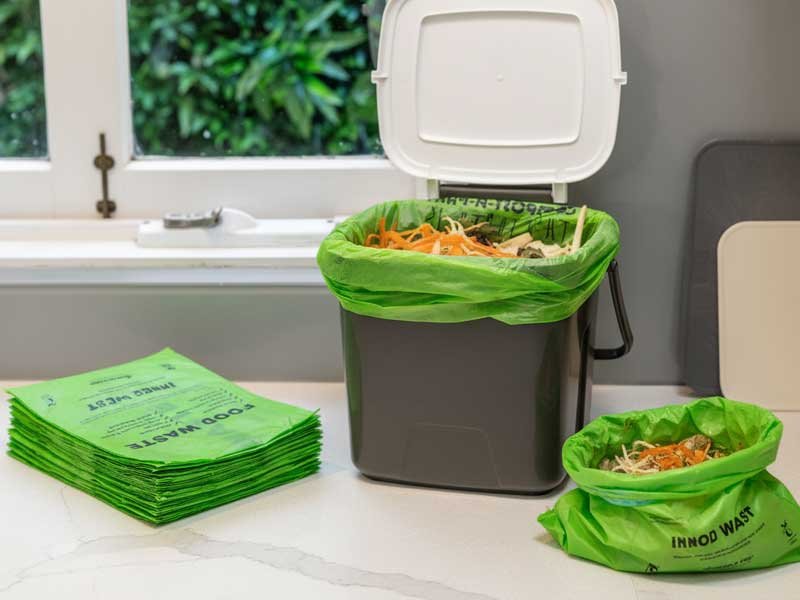
Kitchen caddy liners are one of the most common compostable bag applications in Australian FOGO programs.
For a council or household rollout, buyers should confirm the actual caddy dimensions rather than ordering only by nominal litre capacity.
Typical procurement details include:
- caddy capacity
- liner width
- liner length
- bag thickness
- bags per roll
- rolls per household
- liner color
- certification requirement
- certification mark
- council logo or printed instructions
- carton quantity
- annual household demand
Common kitchen caddies are in the approximately 7L–10L range, but dimensions vary between programs.
The liner should fit the actual caddy without excessive material while still allowing residents to remove and transfer food scraps easily.
For long-term council programs, the annual liner requirement should be calculated from:
Number of Households
× Rolls per Household
× Bags per Roll
= Annual Liner Quantity
This is more useful for tender planning than specifying only a one-time order quantity.
Why Are Many FOGO Caddy Liners Green?
We provide OEM / private-label manufacturing for government programs, retail brands, and large distributors involved in FOGO rollouts.
Green or lime-green liners are used by some councils to help residents and waste operators distinguish approved compostable liners from conventional plastic bags.
For example, some local programs require liners to be:
- clearly labelled compostable
- lime green or another specified color
- marked with an approved compostability certification logo
However, green is not a universal national FOGO requirement.
Color and artwork should be confirmed with the council, waste contractor or receiving program before manufacturing.
For custom projects, liner color can be specified together with printing and packaging requirements.
What Should Be Included in a FOGO Liner Tender?
A good FOGO liner tender should define more than the words “compostable bag.”
The more precise the specification, the easier it is for suppliers to quote the same product and for buyers to compare offers.
| Tender Item | Information to Specify |
|---|---|
| Application | Kitchen caddy / food waste / commercial organics |
| Caddy or bin size | Actual dimensions or volume |
| Bag dimensions | Width × length |
| Thickness | Project requirement |
| Certification | AS4736, AS5810 or local requirement |
| Color | Lime green / green / custom |
| Printing | Council logo, sorting instructions or unprinted |
| Bags per roll | Project-specific |
| Rolls per household | Where applicable |
| Core | Core / coreless |
| Packaging | Bulk carton / retail pack / distribution pack |
| Annual volume | Estimated total requirement |
| Delivery schedule | One-time rollout / recurring delivery |
| Documentation | Certification and product-specification records |
For large tenders, buyers should also define acceptable manufacturing tolerances and repeat-order controls.
FOGO Starter Kits & Household Rollouts
Council FOGO programs often distribute kitchen caddies and liners as part of a household rollout.
A typical rollout may involve:
Kitchen Caddy
- Compostable Liner Roll
- Sorting Instructions
- Household Distribution Packaging
For projects where ORIZON supplies the liner component, the bag specification and packaging can be developed around the council’s rollout plan.
Possible liner-related customizations include:
- bags per roll
- number of rolls per household
- roll label
- council logo
- printed sorting instructions
- liner color
- outer packaging
- carton configuration
The final certification-mark usage and artwork should be confirmed before printing.
For repeat programs, it is useful to maintain one approved master specification for future production.
Who Buys FOGO Compostable Bags?
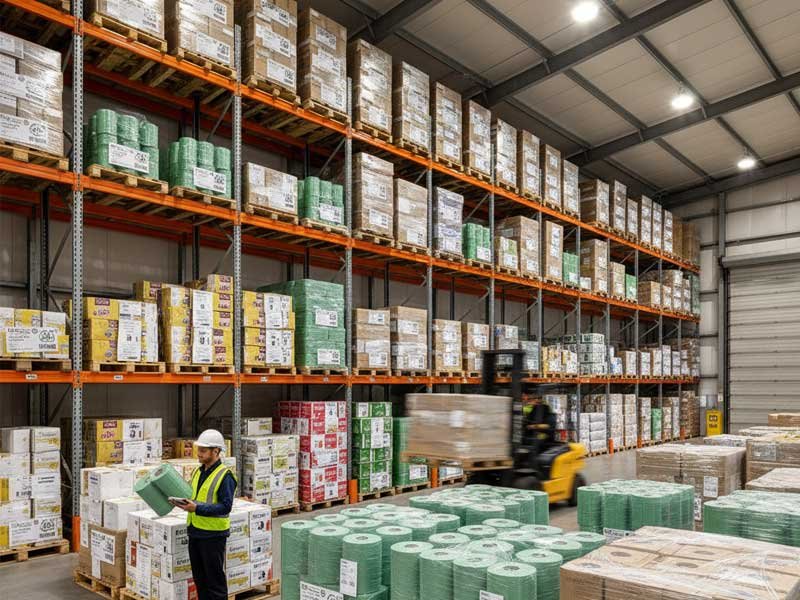
Importers & Distributors
Australian distributors may require bulk cartons, multiple liner sizes, private-label packaging and repeat-order supply.
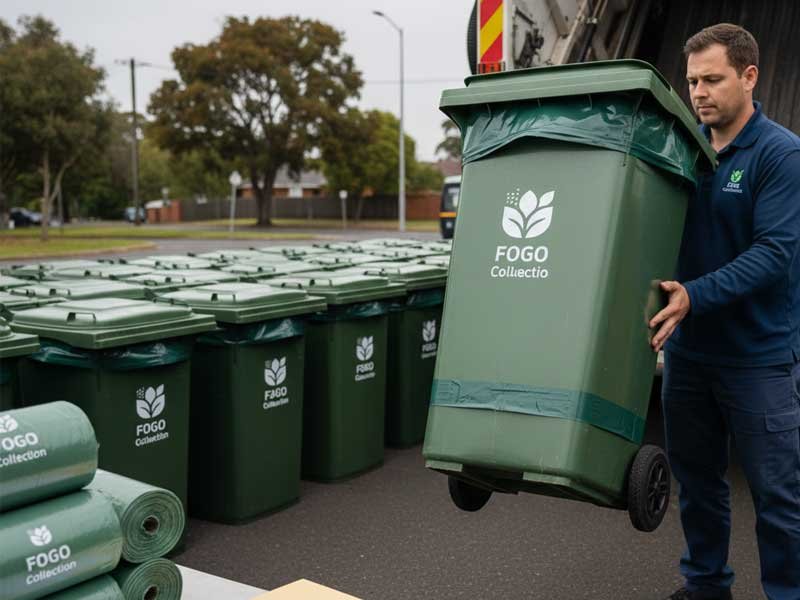
Councils
Typical requirements include kitchen caddy liners, household rollout quantities, recurring supply and tender documentation.
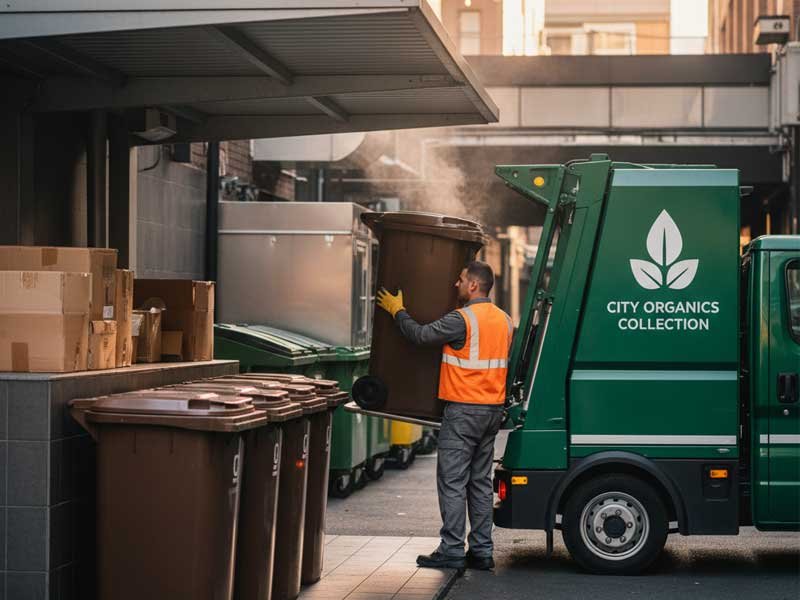
Waste Contractors
Contractors may require approved liners for food-waste programs across multiple sites or council contracts.
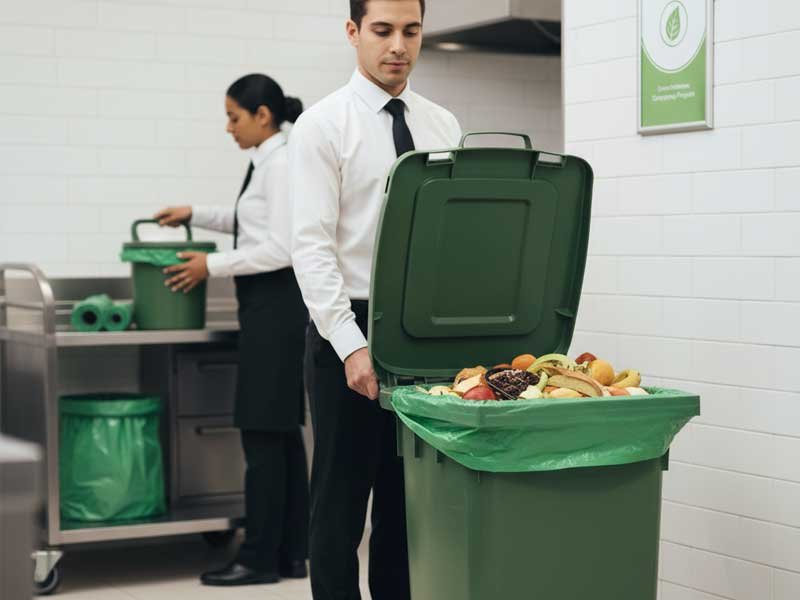
Hospitality & Food-Service Groups
Commercial kitchens, venues and institutions may use compostable liners where the receiving food-organics program permits them.

Private-Label Brands
Retail caddy liners can be developed with custom colors, printing, roll counts and packaging, subject to certification and trademark requirements.
Bulk, OEM & Contract Supply
FOGO projects are often different from ordinary retail bag orders.
Council and contractor programs may require:
- annual volume forecasting
- scheduled deliveries
- multiple liner sizes
- custom colors
- custom printing
- project-specific roll counts
- carton and pallet planning
- certification documentation
- tender samples
- repeat-order specifications
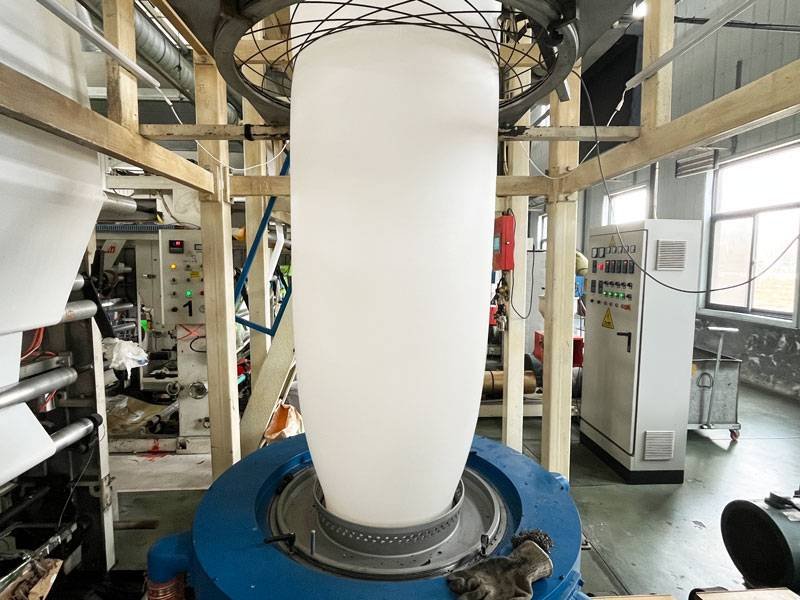
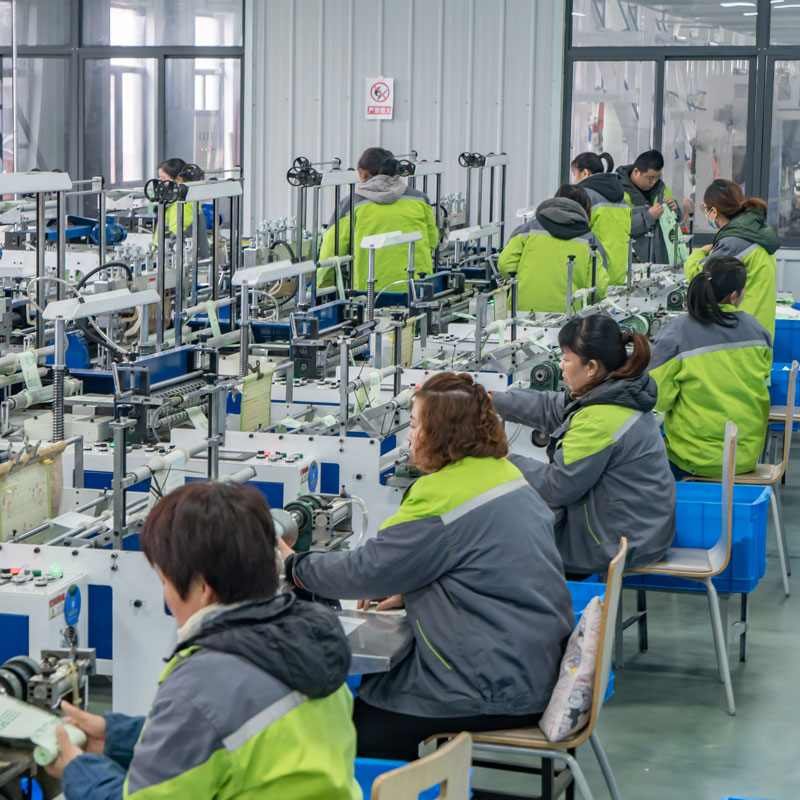
ORIZON supports OEM and bulk compostable bag manufacturing for B2B projects.
Available customization can include:
- liner dimensions
- thickness
- color
- one- or multi-color printing
- bags per roll
- paper core or coreless formats
- labels
- retail or bulk packaging
- outer cartons
- palletized export packing
For projects involving certification marks or private-label branding, certification scope and trademark authorization should be checked before final artwork approval.
FOGO Bag Specification Checklist
Before requesting a quotation, prepare the following information where possible:
- Application — kitchen caddy, commercial food waste or other use
- Bag width × length
- Required thickness
- Caddy or bin dimensions
- Bags per roll
- Number of rolls required
- Bag color
- Printing requirement
- Required certification
- Target council / contractor / end-of-life program
- Packaging format
- Estimated annual quantity
If the final size has not yet been determined, provide the caddy or bin dimensions so that a liner size can be reviewed.
FAQ About FOGO Bags
There is no single liner rule that applies to every FOGO program in Australia.
Some councils permit certified compostable kitchen caddy liners, while others may specify particular certifications, colors, logos or council-supplied liners.
Always confirm the requirements of the local council or receiving composting program before selecting a bag.
AS4736 commercial-compostability certification is commonly specified for Australian FOGO kitchen caddy liners.
For example, some programs specifically permit kitchen caddy liners that comply with AS4736.
However, requirements differ by council and processor, so the target program should always be checked before procurement.
For more information, see our AS4736 compostable bags guide.
No.
AS5810 is a home-compostability standard.
A product certified to AS5810 should not automatically be assumed to be accepted in a kerbside FOGO program.
Some councils may accept AS5810-certified liners, while others specifically require AS4736 or another approved liner type.
Local program acceptance takes priority.
Some councils use lime green as a visual identification system to distinguish approved compostable caddy liners from conventional plastic bags.
However, the required color varies by program.
Always confirm the liner color and certification-mark requirements before approving custom production.
The liner should be selected according to the actual caddy dimensions rather than nominal litre capacity alone.
For council projects, provide the caddy width, depth and height together with the required bag count per roll.
This allows the finished liner dimensions and annual volume to be planned more accurately.
Yes.
FOGO liner projects can be manufactured with custom sizes, colors, printing, roll counts, labels and packaging.
For certification logos or private-label projects, trademark and certification requirements should be confirmed before artwork and mass production.
Need FOGO Bags for a Council, Distributor or Waste Program?
Send us your bag size, certification requirement, printing needs and estimated quantity.
We can review your specification and provide a B2B quotation for council, distributor or waste-program projects.
Please confirm local council or processor acceptance before finalizing the liner specification.