Pet Waste Management Solutions for Public Spaces & Communities
Pet waste management programs help municipalities, residential communities, property managers and public-space operators organize bag dispensing, waste collection, station refilling and routine maintenance across shared outdoor areas.
A pet waste management system is a structured approach to:
- waste collection
- material containment
- transport and disposal workflows
- public-space sanitation operations
- applicable waste-system and procurement requirements
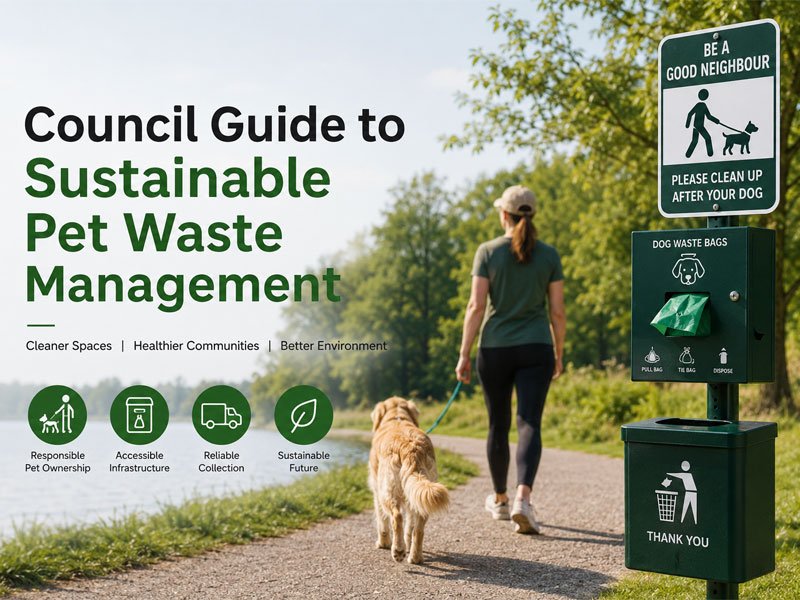
Choose a Pet Waste Program by Organization Type
Different organizations may use similar dog waste stations, but their operating priorities are not always the same.
| Organization | Main Operational Need | Detailed Page |
|---|---|---|
| Municipalities & councils | Public parks, trails, station networks, procurement and repeat refill supply | Municipal Pet Waste Programs |
| HOAs & residential communities | Shared green areas, resident access and routine station servicing | Residential Pet Waste Management |
| Apartment operators | High-use pet areas, dog parks and predictable refill schedules | Residential Pet Waste Management |
| Property managers | Multi-property purchasing, maintenance coordination and standardized refills | Residential Pet Waste Management |
| Animal shelters & welfare organizations | Higher-volume waste handling and facility sanitation workflows | Animal Shelter Waste Management |
| Parks, campuses & public facilities | Station-compatible bags and repeat bulk refill supply |
|
This structure keeps the program type clear before moving into product specifications.
How a Pet Waste Management Program Works
A practical pet waste program connects the collection point, bag supply, disposal point and maintenance schedule into one repeatable system.
1. Access
Place bag dispensers where dog owners are likely to need them.
Typical locations include:
- park entrances;
- walking paths;
- dog parks;
- apartment pet areas;
- shared green spaces;
- residential community routes.
2. Bag Supply
The refill format must match the installed dispenser.
A roll refill should not be ordered for a tissue-style dispenser, and a header-style pack needs the correct hanging or mounting configuration.
3. Disposal
Users need a clear place to dispose of collected pet waste.
The bag material does not determine the disposal route by itself.
4. Maintenance
A program should define:
- who checks stations;
- how often refills are replaced;
- who empties waste bins;
- where replacement cartons are stored;
- how shortages are reported.
For larger programs, consistent bag specifications and carton configurations can also make repeat procurement easier.
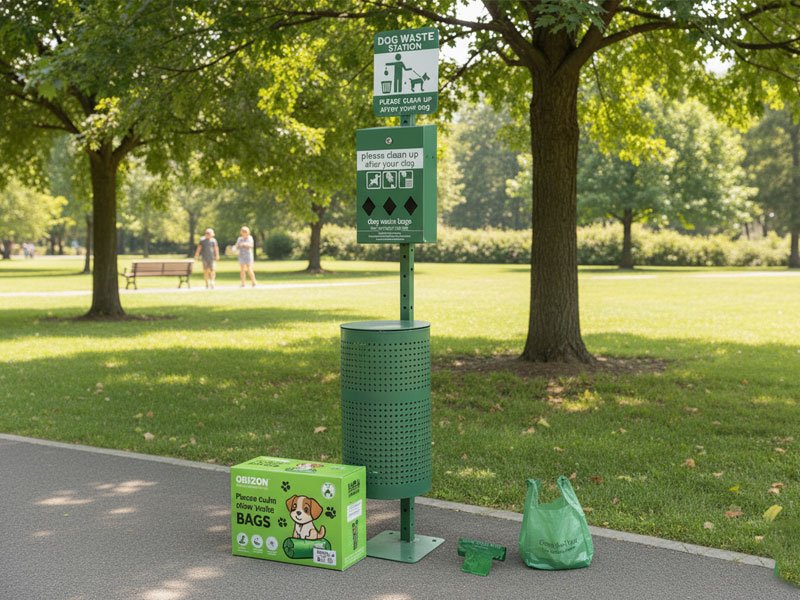
Dog Waste Station Refill Formats
Public dog waste stations do not all use the same bag format.
Before ordering, identify the installed dispenser and refill configuration.

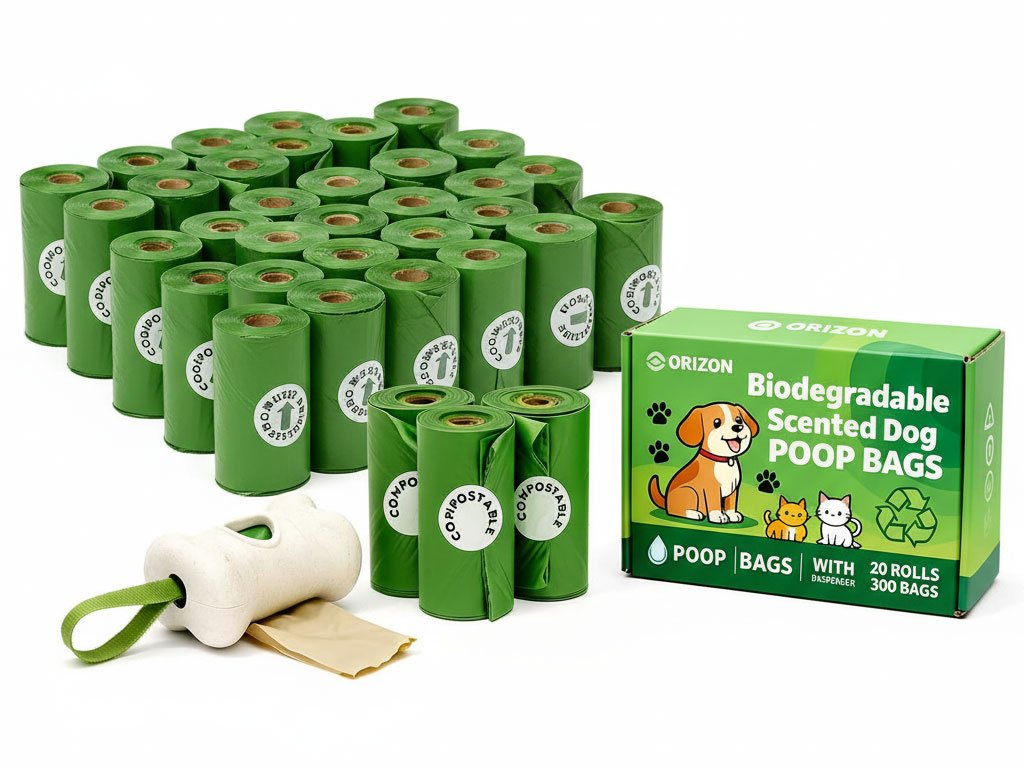
Roll refills are commonly used where higher bag capacity and longer intervals between refilling are priorities.
They may require specific:
- roll width;
- bag count;
- core or coreless construction;
- perforation;
- roll diameter.
Tissue-style bags are supplied as flat-packed packets rather than rolls.
They are used with compatible dispensers designed for controlled one-at-a-time dispensing.

Header-style bags are supplied in reinforced hanging packs for compatible fixed dispensers.
Important specifications can include header dimensions, hole spacing and bag count.
For an overview of all three formats, see: Dog Waste Station Refill Bags
The existing ORIZON station range already separates roll, tissue-style and header-style refill formats rather than treating them as one product.
Municipal & Council Pet Waste Programs
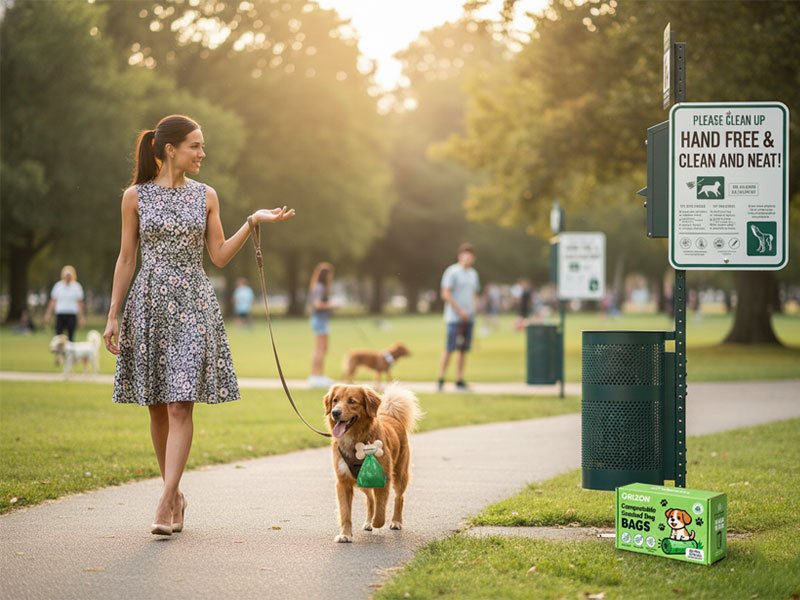
Municipal programs may operate across parks, walking routes, dog parks and other public spaces.

Their purchasing priorities often include:
- dispenser compatibility;
- repeat refill quantities;
- station standardization;
- carton and storage planning;
- documentation;
- predictable long-term supply.
Compostable bag requirements should be checked against the project specification and local disposal system.
A compostability certificate does not automatically mean that bagged pet waste is accepted in a municipal organics or composting program.
For public-space planning, procurement and program operation, see: Municipal & Council Pet Waste Programs
Residential Communities, HOAs & Apartments
Residential pet waste programs often use the same basic station components, but management tasks differ by audience.
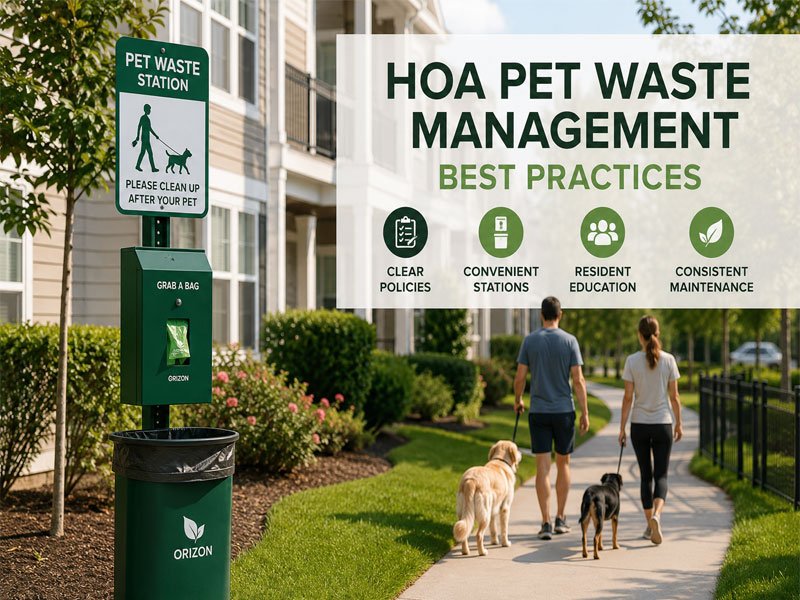
HOA and Community Programs
HOA boards may focus on:
- common-area cleanliness;
- resident access;
- station locations;
- community rules;
- predictable refill supply.
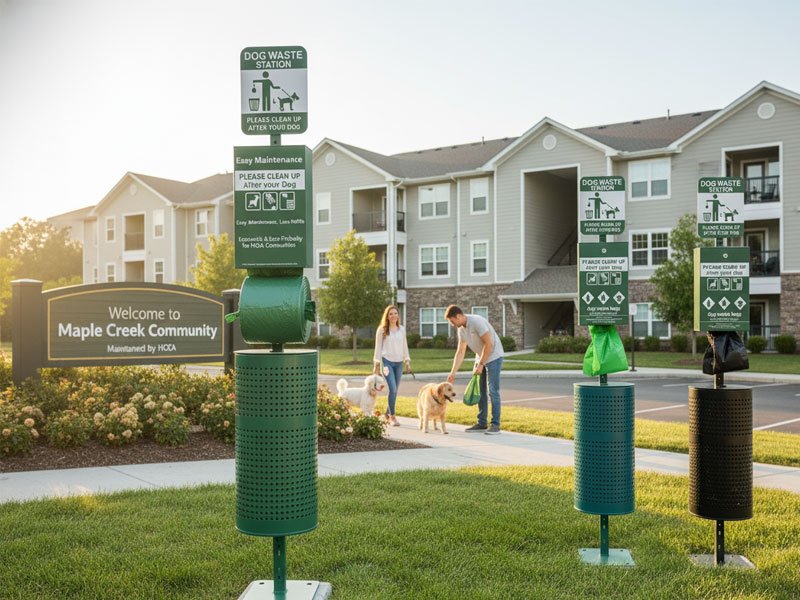
Apartment Operators
Apartment programs may place more emphasis on:
- high-use dog areas;
- amenity spaces;
- daily servicing;
- refill frequency;
- maintenance workload.
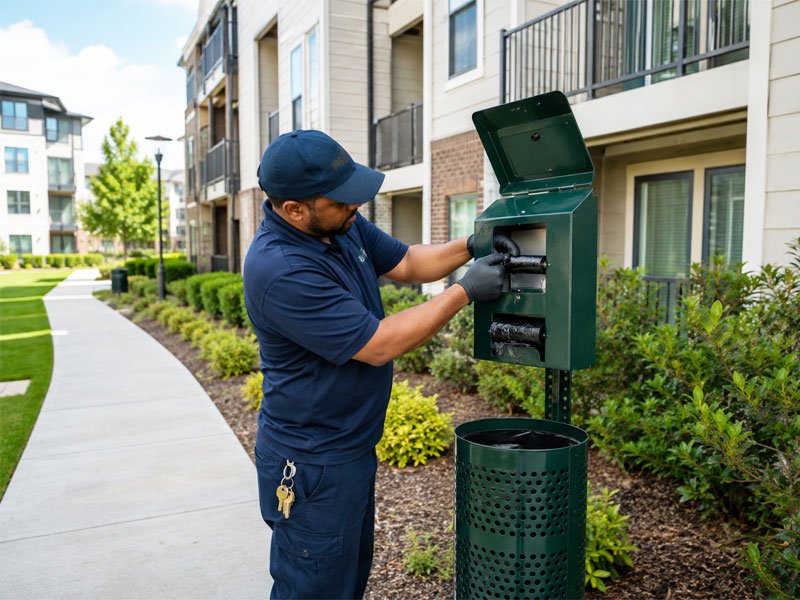
Property Managers
Property managers may need to standardize the same bag or refill format across several buildings or communities.
Their purchasing questions often include:
- whether existing dispensers use the same refill;
- carton quantities;
- monthly consumption;
- multi-property delivery;
- repeat-order consistency.
These audiences are covered together in the dedicated residential page : Residential Pet Waste Management Solutions for Communities & HOAs
Animal Shelter & Welfare Programs
Animal shelters have a different waste-management task from public dog waste stations.
Waste may include:
- dog waste;
- cat litter;
- soiled bedding;
- food waste;
- general facility waste;
- routine cleaning waste.
The bag specification therefore needs to match the actual load and facility workflow rather than simply using a standard public-station bag.
For shelter-specific waste collection and facility considerations, see: Animal Shelter Waste Management Solutions
What to Send a Supplier for a Pet Waste Program Quote
A better RFQ produces a more useful quotation.
Before requesting pricing, prepare the following information:
- organization type: municipality, HOA, apartment, property manager or other;
- number of dog waste stations;
- existing dispenser type or model;
- required refill format;
- bag dimensions;
- thickness, if already specified;
- estimated bags used per month;
- bags per roll, packet or header pack;
- destination country;
- certification requirement, if any;
- custom logo or printing;
- carton requirements;
- expected order quantity.
If an existing dispenser is already installed, send the model number, refill dimensions, photos or a physical sample before confirming bulk production.
Do not assume that two public dispensers use the same refill simply because they look similar.
Choosing a Bag Specification for Repeat Programs
For ongoing municipal or residential programs, repeat-order consistency matters.
A specification may define:
| Item | What to Confirm |
|---|---|
| Bag size | Width × length |
| Film thickness | Based on required use and performance |
| Bag format | Roll, tissue-style or header-style |
| Roll/pack count | Bags per refill |
| Core | Core / coreless where applicable |
| Perforation | Tear configuration for roll formats |
| Film colour | Standard or custom |
| Printing | Plain or custom |
| Certification | According to finished product and target market |
| Carton packing | Refills per carton |
| Delivery | Destination and repeat-order plan |
Where an existing program is already operating, the current approved refill specification is usually the best starting point for comparison.
Disposal and Environmental Considerations
A compostable dog waste bag and the pet waste inside it are two separate parts of the disposal decision.
A compostability certification does not mean that animal waste is accepted by every:
- municipal organics program;
- commercial composting facility;
- household collection system;
- local authority.
Program operators should confirm:
- local pet-waste disposal rules;
- intended collection stream;
- whether animal waste is accepted;
- certification requirements;
- disposal instructions shown to users.
Avoid telling users to place dog waste into a composting stream unless the receiving program specifically accepts it.
Compostability Standards, Certification and Program Requirements
Compostability requirements vary by destination market, intended disposal route and final finished-product specification.
Commonly referenced technical standards include:
- ASTM D6400
- EN 13432
- AS 4736
- AS 5810
Related third-party certification programs or conformity marks may include:
- BPI certification
- OK compost INDUSTRIAL by TÜV AUSTRIA
- OK compost HOME by TÜV AUSTRIA
These standards and certification programs are not interchangeable, and certification applicability should not be inferred from the material formulation, product appearance or intended use alone.
For pet waste bag projects, two separate questions should always be considered:
1. Does the applicable certification cover the finished bag specification?
2. Does the local waste program accept the bagged pet waste?
One does not automatically establish the other.
ORIZON’s current compostability certificates should be reviewed against the stated product type, applicable specification limits and final finished-product configuration. A dog waste bag should not be represented as covered by a particular certificate solely because it is a waste-collection bag or uses a similar compostable material.
Bag Supply vs Complete Station Services
ORIZON is a B2B manufacturer of compostable bag products and custom refill formats.
Our role in a pet waste management program can include:
- station-compatible bag production;
- custom refill specifications;
- roll, tissue-style and header-style formats;
- custom film colour;
- printing;
- carton configuration;
- private-label packing;
- documentation for applicable B2B projects;
- repeat production.
We do not provide local station installation, waste collection or on-site cleaning services.
This distinction is useful when planning a municipal or property-management tender: station hardware, maintenance services and refill bags may be sourced separately.
FAQ
A pet waste management program coordinates bag access, pet waste collection, disposal points and ongoing maintenance across a public or residential area.
For larger programs, it also includes refill purchasing, inventory and repeat supply planning.
Common formats include roll refills, tissue-style packets and header-style packs.
The correct format depends on the installed dispenser. Check the dispenser model and refill specification before ordering.
Check the dispenser model, refill dimensions, roll or core requirements, packet size or header-hole configuration.
For custom projects, send the existing specification, dispenser photos or a sample refill for review.
No.
Compostability certification and local acceptance of animal waste are separate questions. Confirm the disposal requirements of the municipality, collector or receiving facility before specifying a compostable bag.
Provide the number of stations, dispenser type, refill format, bag dimensions, estimated monthly usage, destination, certification requirements, printing needs and expected order quantity.
Yes, for qualified B2B programs.
Once the dispenser compatibility, bag specification and carton configuration are confirmed, the same approved specification can be used as the basis for repeat production.
Sourcing Bags for a Pet Waste Management Program?
ORIZON supplies compostable dog waste bags and station-compatible refill formats for municipalities, residential communities, property managers, public facilities and other B2B programs.
Send us:
- dispenser type
- refill format
- bag size and thickness
- estimated monthly or annual usage
- destination market
- applicable certification or documentation requirements
- printing and packaging requirements
We can review the specification and propose a production configuration based on the dispenser format, intended application, order volume and applicable documentation requirements.