BPI Certification Meaning for Compostable Packaging
Table of Contents
This page is for certification reference and compliance education.
The form below is for B2B verification and documentation requests only (e.g., certificate files, database verification, compliance statements). Retail and personal requests will not be processed.
BPI certification verifies that a product meets recognized industrial compostability standards in North America.
In regulated waste systems, the BPI logo is not a marketing label.
It is third-party confirmation that a product complies with defined composting standards.
This guide explains what BPI certification means, how it relates to ASTM D6400 and ASTM D6868, and how to verify certified compostable products.
What Is BPI Certification?
BPI (Biodegradable Products Institute) is a North American certification body that verifies compostable products against recognized ASTM standards.
When a product is labeled BPI Certified Compostable, it has:
• Passed third-party laboratory testing
• Met ASTM compostability requirements
• Been approved for logo usage
• Been listed in the official BPI database
BPI certification applies to industrial composting environments, not home compost systems.
To understand the underlying technical standard, see our ASTM D6400 compostable standard guide
What Does “BPI Compostable” Mean?
A BPI-certified product must comply with ASTM compostability standards, most commonly:
• ASTM D6400 – for compostable plastics
• ASTM D6868 – for coated paper and fiber products
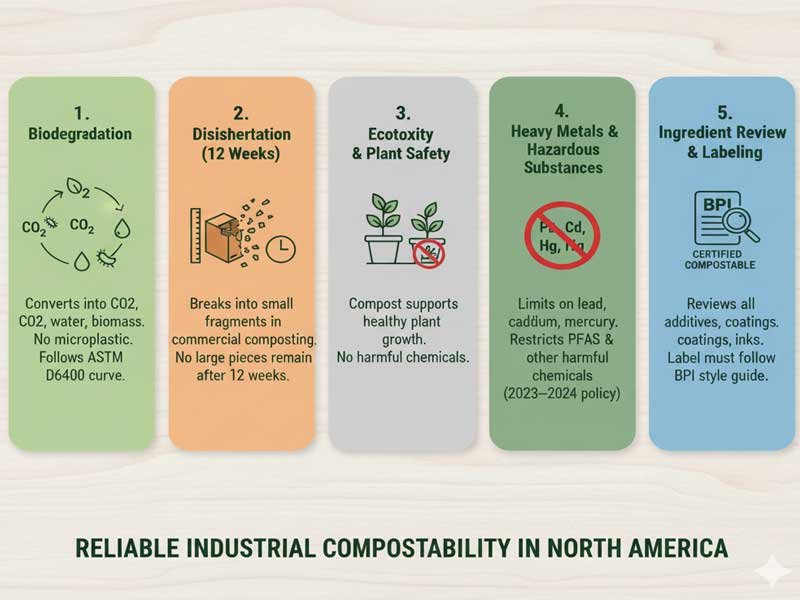
Compliance includes testing for:
• Biodegradation rate
• Disintegration during composting
• Heavy metal limits
• Absence of harmful residues
Certification confirms that the material is suitable for controlled industrial composting conditions.
For a detailed explanation of testing scope and requirements, refer to ASTM D6400 certification explained
BPI vs ASTM D6400: What’s the Difference?
This is one of the most common points of confusion.
ASTM D6400 is a technical standard.
It defines the compostability criteria for plastics.
BPI is a certification body.
It verifies that products comply with ASTM D6400 through third-party testing.
In simple terms:
• ASTM writes the standard
• BPI certifies compliance with that standard
The two are related but not interchangeable.
If you are comparing compostability standards globally, you may also review EN 13432 compostable standard (for EU markets)
What Is ASTM D6868?
ASTM D6868 applies to compostable coatings on paper or fiber-based packaging.
Examples include:
• Compostable paper cups with coating
• Coated paper food containers
• Laminated fiber packaging
Products certified under ASTM D6868 may also carry BPI certification if they meet testing criteria.
For more details on compostability terminology differences, see Biodegradable vs Compostable – key differences explained
Industrial Composting vs Home Composting
BPI certification applies only to industrial composting systems.
Industrial composting facilities operate under:
• Controlled temperature (typically 55–60°C)
• Managed aeration
• Defined processing timelines
Products certified under ASTM D6400 or D6868 are not automatically suitable for backyard composting.
Home compostable certification requires separate testing standards such as OK Compost HOME certification
BPI Certification vs Other Compostability Standards
BPI certification is mainly used for industrial composting programs in the U.S. and Canada. If you sell into other regions, you may also need additional compostability standards—such as EN 13432 for the EU, AS4736 for Australia industrial composting, or OK Compost HOME/INDUSTRIAL for specific labeling and acceptance requirements.
Here is a simple comparison to help you understand where BPI fits among global certifications:
| Standard | Region | Compost Type | Use Case |
|---|---|---|---|
| BPI Certification | USA & Canada | Industrial composting | North America market |
| EN 13432 | Europe | Industrial composting | EU export |
| OK Home Compost | Global | Home composting | Light packaging |
| AS4736 / AS5810 | Australia | Industrial / Home | AU / NZ organics programs |
Each certification is designed for a specific region and compost system.
If you sell globally, you may need more than one certification.
Our BPI Certified Products
We offer a range of BPI certified compostable bags for professional organics collection and food waste programs. All products listed below are finished-product certified and can be verified in the official BPI database.
Below you can see the BPI certified compostable products we currently offer. Each listing includes the material type and certificate number. I believe transparency is important, so you can check these certificates directly.
If you need the full test report or logo authorization files, I can provide those upon request.
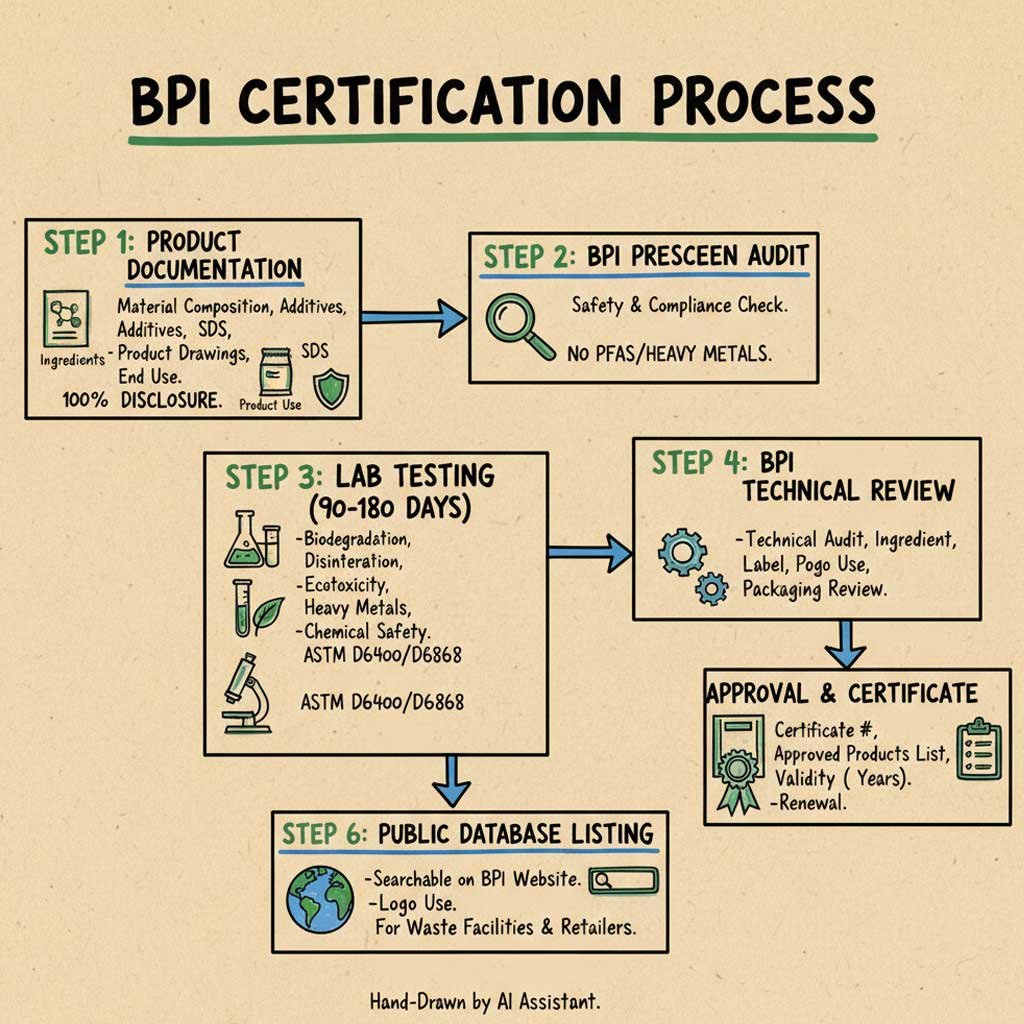
How to Apply for BPI Certification (Step-by-Step Guide)
This section summarizes the general BPI certification workflow for educational purposes. Certification is administered by BPI and testing is conducted by approved third-party labs.
BPI certification relies on recognized ASTM test methods, including the ASTM D6400 compostable standard, to evaluate industrially compostable plastic products.
Getting a product certified by BPI involves several scientific evaluations and documentation checks.
Here is the complete application process:
Step 1 — Prepare Product Documentation
You must provide:
- Full material composition (PLA/PBAT/Starch ratios)
- Additive, colorant, and ink disclosures
- Safety Data Sheets (SDS)
- Product drawings / film structure
- Intended end-use (bags, liners, packaging, mailers, etc.)
BPI requires 100% ingredient transparency before testing begins.
Step 2 — Pre-Screening Review by BPI
BPI reviews material safety and ingredient compliance.
If any chemical exceeds limits (such as PFAS, heavy metals), the product cannot enter certification testing.
Step 3 — Laboratory Testing (ASTM D6400 or D6868)
Testing must be conducted by a BPI-approved independent laboratory, which evaluates:
- Biodegradation curve
- Disintegration (84-day breakdown test)
- Ecotoxicity (plant growth test)
- Heavy metal limits
- Chemical safety
Testing typically takes 90–180 days depending on the product.
Step 4 — BPI Technical Review
After the lab submits test data, BPI performs:
- A technical audit
- Ingredient review
- Labeling review
- Packaging inspection
Step 5 — Approval & Certificate Issuance
When all requirements are met, BPI issues:
- Certificate Number
- Approved Products List
- Logo Usage Authorization
- Validity Period Information
Products must be renewed every 3 years, or earlier if the formula changes.
Step 6 — Listing on the BPI Public Database
Once approved, the product becomes publicly searchable on the BPI official website — a key requirement for waste facilities and retailers.
How to Verify a BPI Certified Product
To verify a BPI certified product:
Search the official BPI certified product database
Confirm the certificate number matches your product
Check that the certification covers the finished product
Ensure the correct BPI logo appears on the packaging
Common Misconceptions About BPI Certification
BPI certified does not mean biodegradable in landfill.
Compostable materials require oxygen and microbial activity to break down properly.
To understand landfill vs composting conditions, see Compostability vs landfill degradation explained
BPI certified does not mean home compostable.
Industrial and home composting conditions differ significantly.
BPI certification applies to specific products, not entire brands.
Always verify the individual SKU.
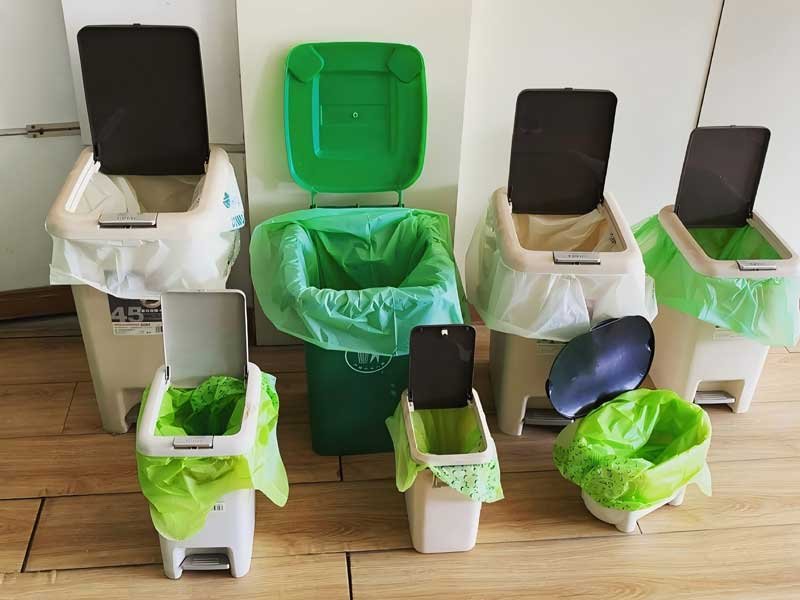
Who Typically Requires BPI Certification?
BPI certification is commonly required in:
• US municipal organics programs
• Food service operations
• Hospitality waste systems
• Institutional composting programs
• Sustainability-driven procurement frameworks
In regulated environments, certification clarity reduces contamination risk and improves facility acceptance rates.
For structured bulk programs aligned with certified compostable supply, see Compostable Trash Bags Manufacturer
Why Certification Transparency Matters
In professional waste systems, compostable liners are not simply “eco-friendly products.”
They are compliance components.
When certification scope is unclear, risk increases.
When documentation is incomplete, loads may be rejected.
Understanding the meaning of BPI certification supports informed sourcing decisions.
If you are sourcing for distribution or municipal programs, visit Compostable Trash Bags Wholesale