Many trading companies looking to develop the Australian market often ask me, “Which type of compostable bag should Australia use? Why do some bags labeled ‘biodegradable’ not accept the council?” This question isn’t limited to trading companies; SOHO businesses, Australian households, food service operators, and municipalities also share this confusion.
With the implementation of the FOGO (Fulfillment by Goods and Services) plan (2024–2030), more and more communities are requiring residents to separate food waste from regular bins. Plastic bags are becoming increasingly important—using the wrong bags can lead to pollution, truckload rejections, and increased workload for composting plants.
This guide defines compostable bags, outlines Australian certification standards, explains the uses of different sizes, key selection points, common mistakes, and provides real-world examples, clearly showing you which bags are compliant, how to choose, and how to avoid common pitfalls.
Whether you are a household consumer, a business owner, or involved in municipal projects, you will find clear answers here.
What Are Compostable Bags?
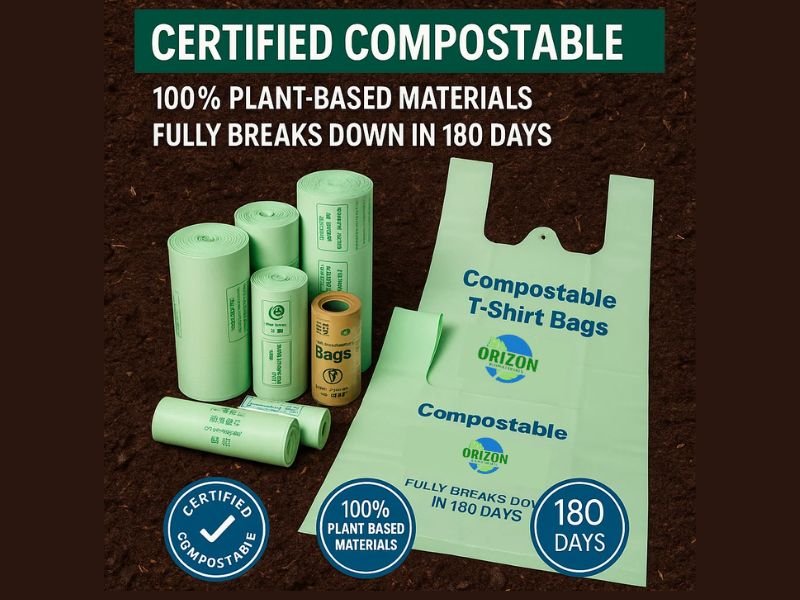
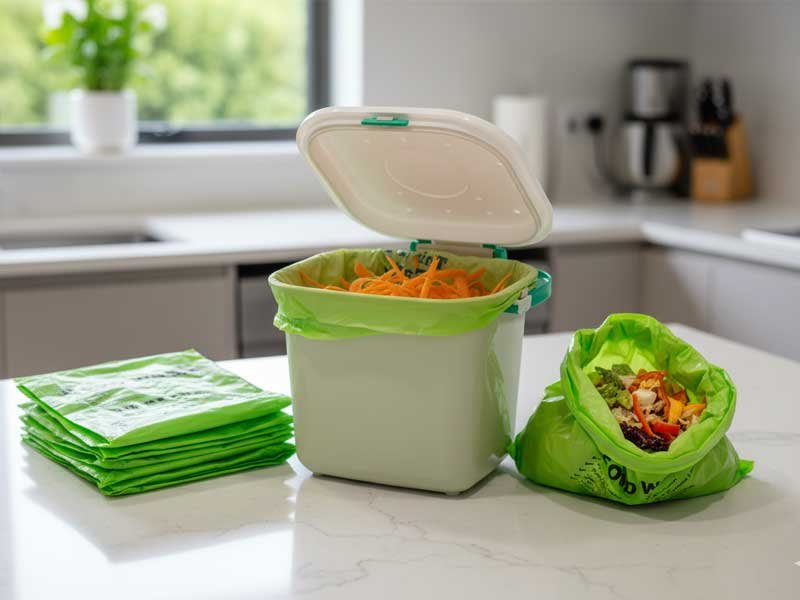
Compostable bags are bags that decompose into natural elements (mainly water, carbon dioxide, and nutrient-rich biomass) under specific composting conditions. They do not leave microplastics or produce harmful residues.
Several marketing concepts can cause confusion:
- Compostable:Completely decomposes in a composting environment; leaves no toxic substances or microplastics; in Australia, it must comply with AS5810 or AS4736.
- Biodegradable:Any material that can be “decomposed by microorganisms”; decomposition time and residues are uncontrollable; many contain plasticizers; not necessarily compostable.Several states have banned the use of “biodegradable” as a marketing concept (Source: Australian state EPA guidelines).
- Degradable / Oxo-degradable:Accelerates the breakdown into microplastics by adding metal salts; banned by the EU and several Australian states.
Of course, there’s an even simpler way: if the packaging only says “biodegradable” or “eco-friendly,” it’s not compatible with FOGO.
See this article for more information: Compostable vs Biodegradable: 2025 Comprehensive Guide

Australian Compostability Standards
Australia has some of the strictest composting standards in the world. Understanding this information is crucial.
AS5810 — Home Compostable
Suitable for:
- Small kitchen caddy liners
- Home composting systems
More stringent requirements due to lower decomposition temperatures and more variable environments.
AS4736 — Commercial Compostable
Suitable for:
- Municipal FOGO systems
- 120L / 240L wheelie bins
- Commercial composting plants
This is the only truly FOGO-approved certification.
How to determine if a product is truly certified?
I recommend checking the following five steps (because there are indeed too many “fake compostable bags” on the market):
- Does it have a Seedling Logo or ABA Compostable Logo?
- Does it have a Certification Number (e.g., ABAPxxxx)?
- Is it clearly labeled AS4736 or AS5810?
- Is the bag thickness within a reasonable range (generally 15–25 microns)?
- Does the material formula contain PLA, PBAT, or starch mixtures (but these must be certified, otherwise the material itself is meaningless)?
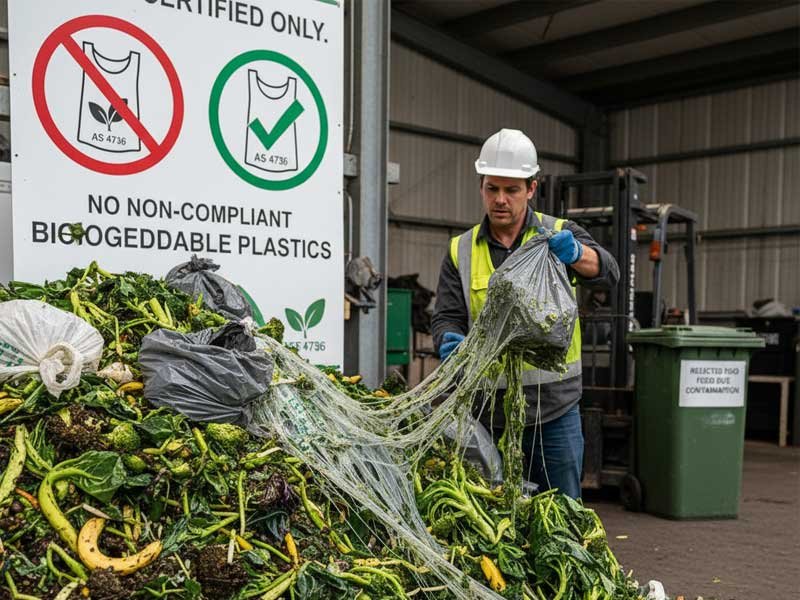
Several councils (such as Manningham, Wollongong, etc.) specifically remind consumers in their official documents that:
Bags labeled “compostable” in supermarkets without AS4736 are still considered contaminated.
Are Compostable Bags Required in Australia?
The answer depends on your state and council.
National FOGO Rollout (2024–2030)
Australian Government Goals:
- By 2030, remove 80%–90% of food waste from landfills.
- Nationwide implementation of the Food Organics & Garden Organics (FOGO) collection system.
- The role of bags becomes crucial.
State-by-State Overview
Different states:
- NSW: Most councils accept AS4736 bags.
- VIC: Statewide standardization of FOGO operations is underway; most accept compostable liners.
- QLD: Gradually implementing FOGO statewide.
- WA: First to adopt FOGO; AS4736 is widely accepted statewide.
- SA: Strictest standards for compostable bags.
Types of Compostable Bags Australia
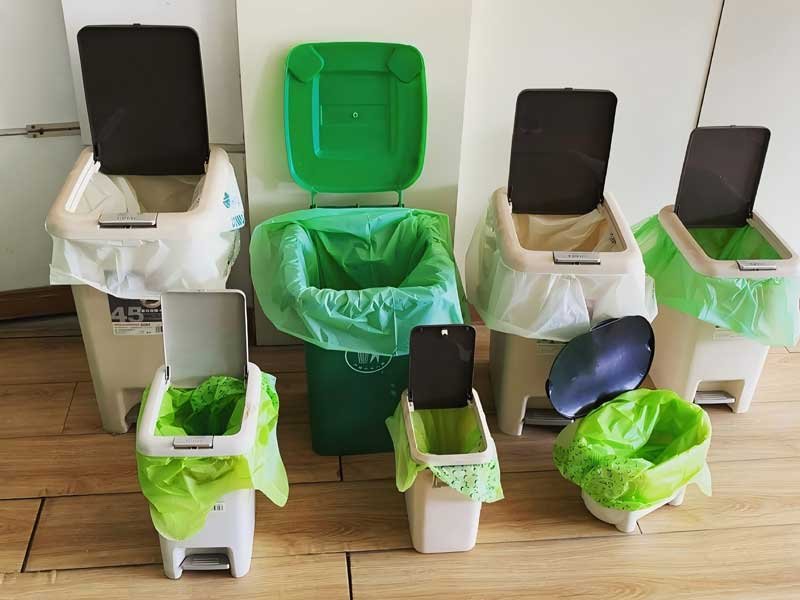
7-8 Liter Kitchen Waste Bin Liner Bags
- Best Use: Kitchen food scraps, countertop waste bins, everyday household organic waste
- Certification: AS5810 (Home Compostable)
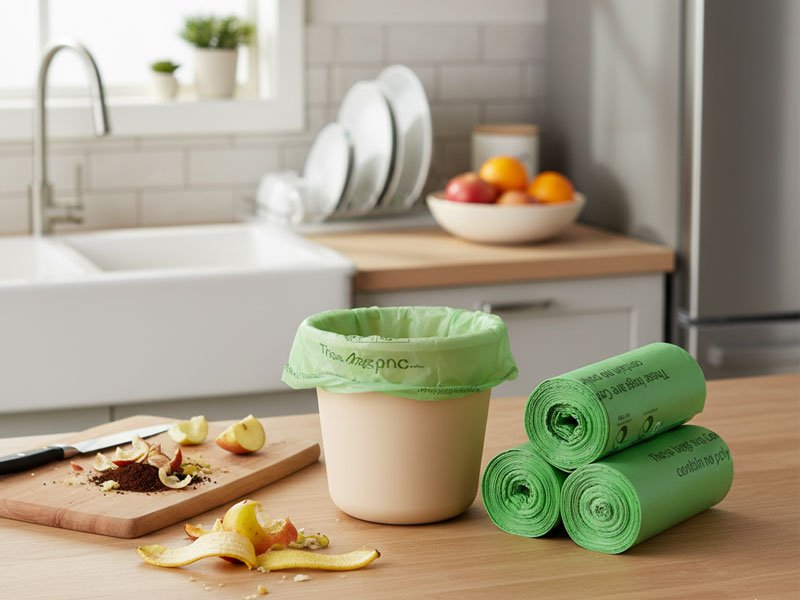
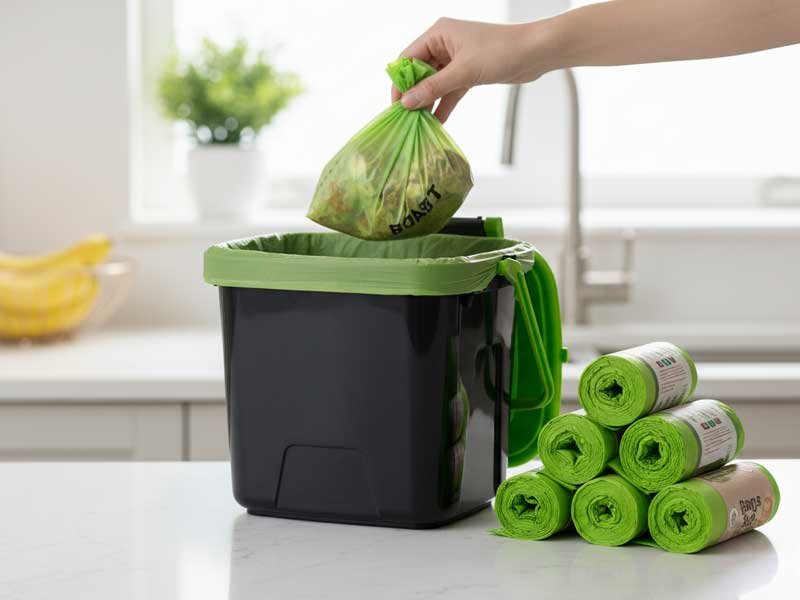
Small 7-8 liter compostable kitchen waste bin liner bags are a common choice for Australian households. They are designed for countertop compost bins and are specifically designed for collecting everyday food scraps such as fruit peels, coffee grounds, vegetable scraps, and leftovers.
These bags decompose in home composting systems, helping to reduce odor and mess in small waste bins.
20-35 liter household garbage bags
- Best use: Weekly household kitchen waste, medium-sized compost bins
- Uses: Household kitchens, small indoor garbage bins
Medium sized 20-35 liter household compostable garbage bags are ideal for handling daily kitchen waste generated over several days. Australian households typically empty their garbage bins weekly, so this size strikes a practical balance between capacity and cleanliness.
They are suitable for food scraps and mixed organic waste, and many municipalities recommend their use in small indoor food waste sorting systems.
50–60L Food Service Compostable Bags
- Best for: Restaurants, hotels, cafés, aged-care kitchens, food processing
- Strengths: Designed for wet and heavy organic waste
Larger 50–60L compostable bags are widely used in the Australian food service industry. This size supports high-volume organic waste disposal in environments where food waste is frequent and often contains moisture, oils, and liquids.service industry. This size supports high-volume organic waste disposal in environments where food waste is frequent and oservice industry. This size supports high-volume organic waste disposalservice industry.
These commercial compostable bags reduce cross-contamination and comply with sustainability requirements for hospitality businesses aiming to divert food waste from landfill.
120L–240L FOGO Wheelie Bin Liners
- Best for: Council kerbside FOGO programs, commercial cleaning services
- Required certification: AS4736 (Commercial Compostable)
Large 120L–240L compostable wheelie bin liners are essential for Australia’s growing FOGO (Food Organics & Garden Organics) programs. These bags must be AS4736 certified, ensuring they break down safely in industrial composting facilities used by councils.
Compostable Bags Materials & Performance
One of the most common questions on Reddit and community forums is:“Why do compostable bags break so easily?”
To answer this properly, we need to understand what these bags are made of and how the materials behave under real-world use.
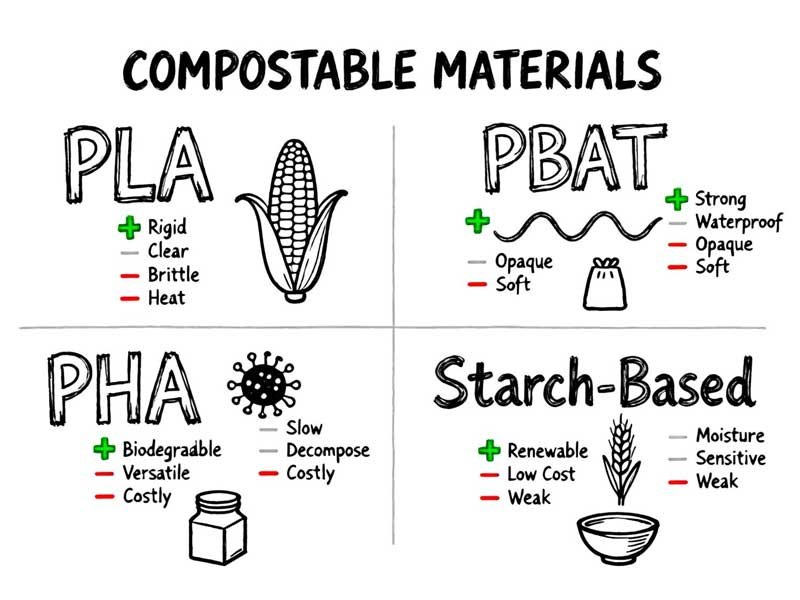
Most compostable garbage bags in Australia are made from a blend of PLA, PBAT, and plant starch. Each component plays a different role:
PLA (Polylactic Acid)
PLA is a plant-based plastic alternative made from corn or sugarcane. It provides structural support, helping the bag maintain its shape. However, PLA itself is relatively stiff and lacks flexibility, meaning it is prone to cracking or tearing under stress if used alone.
PBAT (Polybutylene Terephthalate)
PBAT is a biodegradable polymer designed to increase the flexibility and toughness of garbage bags. It prevents the bags from breaking under stretching and improves their durability when holding heavier organic waste.
Starch Blend
Starch helps the material absorb moisture and accelerates decomposition, which is crucial for composting. However, this also means the garbage bags are more sensitive to humidity and temperature.
Simply put: PLA = structural support, PBAT = flexibility, and starch = compostability. All three are necessary conditions for meeting the requirements of AS5810 or AS4736 certification.
See this article for more information:Compostable Bag Materials: The Ultimate B2B Buyer’s Guide
Why Do Compostable Bags Break or “Pre-Degrade”?
Many users assume a compostable bag breaking means “poor quality.”But in reality, it’s a material science issue, not a manufacturing defect.
Compostable bags start to degrade early when exposed to:
Heat
High temperatures accelerate the breakdown of PLA and starch components. Even leaving the bag in a warm kitchen for days can weaken it.
Moisture
Wet food scraps—especially soups, fruit peels, or leftover sauces—can soften the bag’s structure. Starch blends naturally absorb moisture, which triggers early degradation.
Direct sunlight
UV light speeds up the aging process of PBAT and PLA, making bags brittle much faster.
This behaviour is intentional.
The materials are designed to decompose quickly in composting conditions, so they’re also sensitive in everyday use.
This is why compostable bags will never be as strong or long-lasting as traditional plastic—because they’re not supposed to be.
How to Use Compostable Bags Properly
Municipalities in Randwick and Whitehorse, Australia, have provided practical guidelines to help extend the lifespan of compostable garbage bags and reduce breakage.
- Drain excess moisture from food scraps
The drier the garbage, the slower the garbage bag decomposes. Quickly draining or shaking it can significantly improve this.
- Avoid direct sunlight
Store garbage bags in a cool, dry place, such as a drawer, pantry, or under the sink.
- Empty the garbage bin every 2-3 days
The longer food scraps are stored, the more heat and moisture accumulate inside the garbage bag.
- Do not stockpile garbage bags for extended periods
Compostable garbage bags typically have a shelf life of 8-12 months. Even when stored, garbage bags will naturally age.
Following these simple steps can significantly improve the performance of garbage bags and reduce premature breakage.
Best Compostable Bags in Australia
| Brand / Supplier | Certifications (AS5810 / AS4736) | Sizes Available (Up to 240L?) | FOGO Suitable? | Material Formula | Durability / Notes |
|---|---|---|---|---|---|
| Biotuff | AS5810 & AS4736 | Yes – includes 240L | Yes | PBAT + PLA + starch | Generally strong, good stretch, widely used by councils |
| Compost-A-Pak | AS5810 & AS4736 | Medium to large sizes (some councils supply it) | Yes | Corn-starch based blend | Reliable brand, softer texture, good for kitchen & FOGO |
| GreatWrap | AS4736 (selected products) | Mostly medium bags, not always 240L | Partial | Plant-based biopolymer | Strong for food service; limited wheelie bin options |
| BioBag | AS5810 & AS4736 | Good household + commercial range | Yes | Starch-based blend | Well-known global brand, consistent performance |
| Biome (own brand) | AS5810 (mainly) | Small & medium household bags | No (not for 240L) | PLA + PBAT + starch | Good for home use; not for wheelie bins |
| Woolworths / Coles home-brand compostable bags | Some batches AS5810 / AS4736 | Small (tidy bags), medium only | Limited (depends on council rules) | Mostly PLA + PBAT | Convenient & cheap, but may tear more easily |
How to Choose the Right Compostable Plastic Bag
Choose by Usage Scenario
Different waste volumes and environments require different bag sizes. Below are the most common Australian use cases:
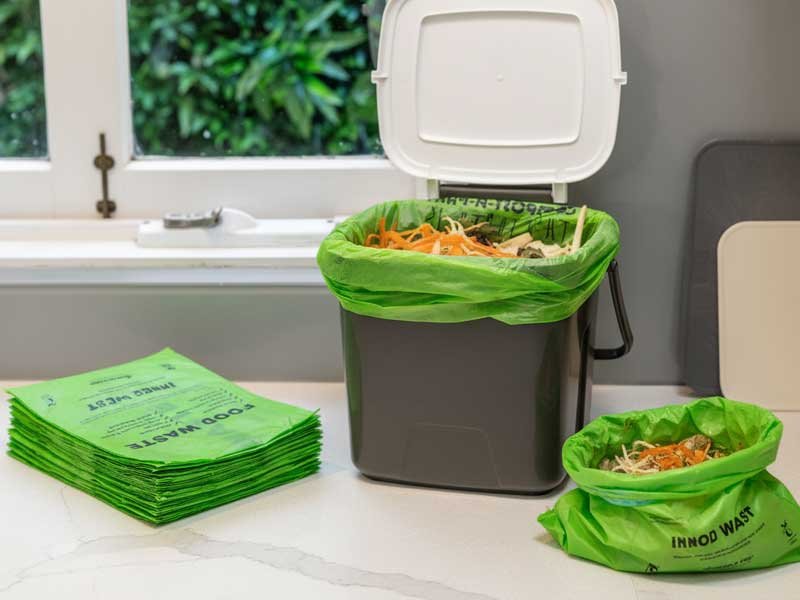
Household Kitchen — 7–8L
Perfect for small kitchen caddies and daily food scraps such as peels, tea bags, coffee grounds and leftovers.
Weekly Household Organics — 20–35L
Ideal for families emptying their kitchen bin once a week. Suitable for small indoor FOGO setups.
Restaurants, Cafés, Hotels — 50–60L
Designed for commercial kitchens producing wet and heavy food waste. These bags handle higher volumes and more moisture.
Council FOGO Wheelie Bins — 120–240L (AS4736 required)
Used for kerbside FOGO programs, commercial cleaning services, and high-volume organic collection.
Choose by Certification
Understanding Australia’s two key composting standards is essential:
AS5810 – Home Compostable
- Suitable for households
- Breaks down in backyard compost systems
- Commonly used for 7L, 8L, 20L, and 30L bags
AS4736 – Commercial Compostable
- Required for council-run FOGO programs
- Designed for industrial composting facilities
- Mandatory for 120L–240L wheelie bin liners
If you’re participating in a council FOGO bin program, AS4736 certification is non-negotiable.
Choose by Material Formula
Most high-quality compostable bags use a blend of:
- PBAT – provides toughness and flexibility
- PLA – adds shape and structure
- Starch – improves compostability
This PBAT + PLA + starch combination is the industry standard because it balances strength with compostability.
Avoid “PLA-only” bags
PLA alone is too stiff and brittle, making the bag tear easily. PLA-only bags are common in low-cost products and often perform poorly in real household or commercial use.
Simple way:
- Household users: 7–8 liters or 20 liters, AS5810 compliant
- Restaurants or cafes: 50–60 liters, AS4736 compliant
- Municipal agencies or waste disposal contractors: 120–240 liters, AS4736 compliant
- Residents of the Australian Capital Territory (ACT): Please check local regulations – some ACT municipalities do not allow the use of compostable waste bags for organic waste (FOGO).
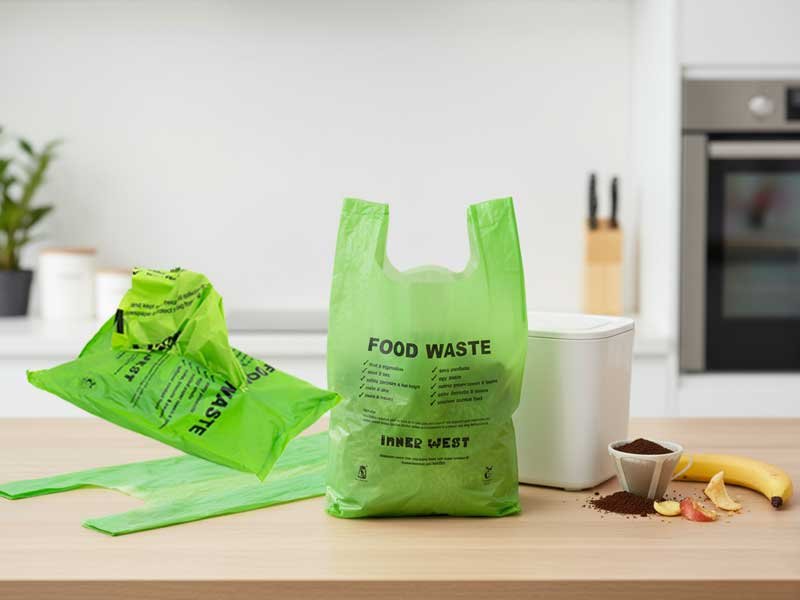
Where to Buy Compostable Bags in Australia
Supermarkets (Everyday Convenience)
Most households buy compostable bin liners from major supermarkets. They are affordable and easy to find.
- Woolworths – Offers home-brand compostable tidy bags and selected certified options.
- Coles – Sells small and medium compostable liners suitable for kitchen caddies.
Supermarket options are ideal for daily kitchen waste, but generally do not include 120–240L wheelie bin liners.
Hardware & Home Stores
Large hardware chains also carry compostable bin bags for both home and garden use.
- Bunnings – Stocks several compostable bag brands, including options for indoor bins and small organics caddies.
Bunnings selections vary by store, but it’s a common place for households upgrading to larger indoor FOGO bins.
Eco-Focused Retailers
Specialty eco stores usually carry higher-quality compostable bags with verified certifications.
- Biome – Known for AS5810 home-compostable bags and eco-friendly products.
- Flora & Fauna – Stocks a range of plant-based, certified compostable options.
These stores are popular among customers who prefer certified materials, ethically sourced products, and sustainable packaging.
Online Marketplaces
For convenience and variety, online platforms offer the largest selection of compostable bin bags.
- Amazon Australia – Wide range from household caddy liners to commercial-grade wheelie bin liners.
- eBay Australia – Offers both branded and bulk-pack compostable bags at competitive prices.
Online marketplaces are especially useful when searching for specific sizes like 7L, 36L, 60L, or FOGO-safe 240L bags.
Bulk / Wholesale / Council Supply
For restaurants, cleaning contractors, or organisations participating in FOGO, bulk purchasing is often more efficient.
Distributors & wholesalers
Commercial suppliers offer AS4736 certified bags in large quantities for:
- food service
- hotels
- waste management companies
Waste contractors
Many contractors bundle certified compostable bags with their organic waste collection service.
Municipal FOGO programs
Some local councils provide free or subsidised AS4736 liners, especially:
- 7–8L kitchen caddy liners
- 120–240L wheelie bin liners
These bags meet the requirements of industrial composting facilities used in kerbside organics systems.
Australia also has access to global and local compostable bag manufacturers such as Orizon, which supply certified AS4736 liners for councils and commercial use.
You can find an example of their 120–240L wheelie bin liners here: https://orizonbags.com/products/compostable-wheelie-bin-liners/

Environmental Benefits of Using Compostable Bags
Compostable garbage bags play a vital role in Australia’s transition to a more sustainable waste management system. Proper use of compostable garbage bags helps households, municipalities, and composting facilities reduce pollution and improve the overall efficiency of organic recycling.
Reduced Plastic Bag Residue
Unlike conventional plastic garbage bags, certified compostable garbage bags decompose safely in home or industrial composting environments. This eliminates persistent plastic debris and reduces microplastic pollution in soil and finished compost.
Improved Household Waste Sorting Experience
Compostable garbage bags make it easier for households to separate food waste from general waste.
This helps keep kitchen waste bins clean, reduces clutter, and encourages greater participation in organic recycling programs. A better user experience typically increases participation in food waste sorting.
Reduced Pollution at Composting Facilities
AS4736 certified garbage bags decompose under conditions at commercial composting plants.
This reduces pollution from non-compostable plastics—one of the biggest operational challenges facing composting businesses. The less contaminants, the higher the compost quality and the lower the sorting cost.
Supporting the Nationwide Promotion of FOGO (Food Organic and Garden Organic) Systems
As local governments across Australia continue to promote FOGO systems, compostable garbage bags help streamline the transition process.
They make food scrap collection more hygienic and reduce the workload for residents and contractors.
The widespread use of certified garbage bags helps achieve national waste reduction targets and helps remove more organic matter from landfills.
Reducing Odor and Pest Problems
The proper use of compostable garbage bags helps reduce odors, especially in warmer climates.
They form a barrier between food scraps and the surface of the garbage bin, reducing the likelihood of insects, fruit flies, or rodents being attracted to the garbage. This makes collecting organic waste from home and commercial kitchens easier and more pleasant.
Common Mistakes & Myths About Compostable Bags
1.”Biodegradable bags are acceptable.” — False
Biodegradable ≠ Compostable.
Most “biodegradable” bags contain additives that break down the plastic into smaller pieces, not completely.
They cannot be used in FOGO (Organic Waste and Organic Waste) bins, and composting facilities in Australia will reject them.
Only compostable bags that meet AS5810 (domestic) or AS4736 (commercial) standards are acceptable.
2.”PLA itself can be composted.” — Not true
PLA is too rigid and typically requires industrial-grade temperatures to decompose.
Pure PLA bags are not suitable for home composting or most municipal FOGO projects.
High-quality compostable bags use a mixture of PBAT + PLA + starch, not pure PLA.
3.”The thicker the bag, the better.” — Not true
Thicker compostable garbage bags take longer to decompose and may not be certified.
Compostable materials are designed for rapid decomposition; overly thick garbage bags can slow the decomposition process and may cause problems with composting facilities.
Thin, certified inner liner bags are generally more effective.
4: “You can leave garbage bags in direct sunlight.” — False
Direct sunlight accelerates UV degradation, making garbage bags brittle.
High temperature and humidity accelerate the pre-decomposition of garbage bags.
Compostable garbage bags should be stored in a cool, dry, dark place.
5: “All municipalities accept compostable garbage bags.” — Incorrect
Most municipalities allow the use of AS4736 certified inner liner bags in FOGO (Organic Waste Management) projects, but ACT (Kansas City) is a notable exception—they do not accept compostable garbage bags.
Some municipalities also restrict the size or type of garbage bags allowed.
Be sure to check your local municipality’s guidelines.
Real Case Examples
Case 1 — A Melbourne Family Cut Kitchen Bin Odour by Half
A family from Melbourne shared their experience:
They were using regular garbage bags, but the small kitchen bin easily developed odors, and on FOGO collection days, wet waste often clumped and was difficult to empty.
After switching to 8L AS5810 certified compostable garbage bags, their experience improved significantly:
- Emptying only every 2–3 days
- Significantly reduced odors
- Cleaner kitchen bin
- Family members were more willing to consistently sort their waste
Although compostable bags still need to be protected from prolonged exposure to sunlight, the overall improvement in usability is very noticeable.
Case 2 — A Café in Brisbane Solved Wet Waste Leakage Issues
A coffee shop in Brisbane also encountered similar problems. They previously used regular biodegradable bags, but these frequently resulted in:
- Leakage of wet waste
- Bag bottoms cracking
- Frequency of cleaning required for the kitchen floor
After switching to 60L AS4736 certified compostable bags, the situation improved immediately:
- Bags no longer easily cracked
- The kitchen environment was cleaner
- Employees found handling wet waste easier
The owner stated that the effect of this change was “immediately noticeable.”
FAQ
Can biodegradable garbage bags be composted?
No. Most biodegradable garbage bags are not compostable and should not be placed in food waste bins (FOGO bins).
Only garbage bags that meet AS5810 or AS4736 certification are suitable.
Will compostable garbage bags have an odor?
The garbage bags themselves do not have an odor, but the food scraps inside may.
Empty the garbage bin every few days and dispose of wet waste to reduce odor.
How long can compostable garbage bags be stored?
Most compostable garbage bags can be stored for 8-12 months if stored properly.
Keep them away from heat sources, sunlight, and humid environments.
Can compostable garbage bags be placed in any green garbage bin?
Not necessarily.
Most municipalities accept compostable garbage bags that meet the AS4736 standard, but regulations vary by region.
Consult your local municipality—for example, compostable garbage bags are not permitted in the Australian Capital Territory (ACT).
Conclusion
The importance of compostable waste bags is steadily increasing in Australia. Whether for daily household use, commercial kitchens, or municipalities, choosing the right standards, appropriate sizes, and proper usage can effectively reduce pollution, improve compost quality, and make waste disposal cleaner and easier.