If you buy retail carry bags in bulk, you’ve probably asked this question: Should I choose T-shirt bags or die-cut bags? I’m writing this from a manufacturer point of view. I work with a compostable bag factory in China that supplies B2B buyers only. So I’m not trying to “sell a style.” I’m trying to help you pick the right bag for the job.

What is a T-Shirt Bag?
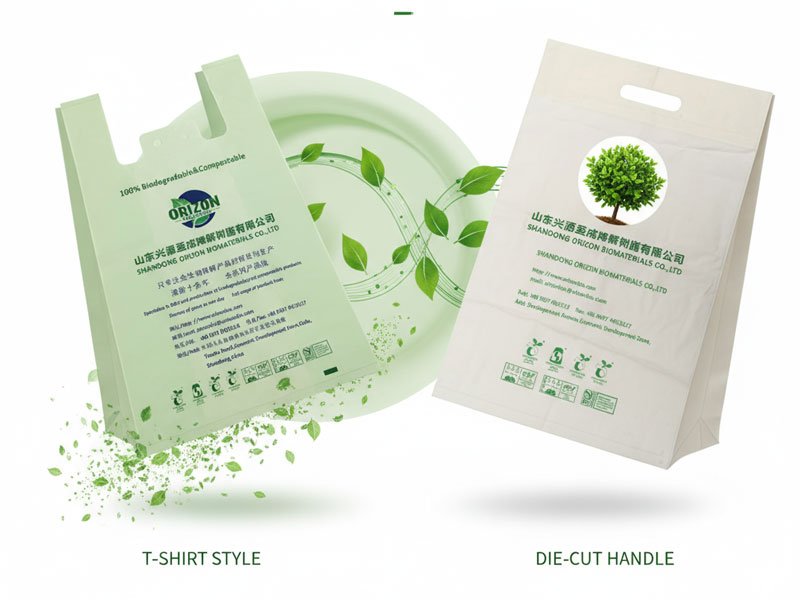
A T-shirt bag (also called vest bag or singlet bag) is the classic grocery carry bag. It has two long handles and side gussets. It’s made for speed at checkout and quick loading.
It is popular because:
- It’s fast to pack
- It opens wide
- It works well for mixed items (food + daily goods)
Many packaging guides list T-shirt/vest bags as the standard choice for high-volume grocery and everyday retail.
For high-volume grocery and everyday retail use, our compostable t-shirt carry bags are engineered for fast packing, wide openings, and stable load handling in checkout environments.
What is a Die-Cut Bag?
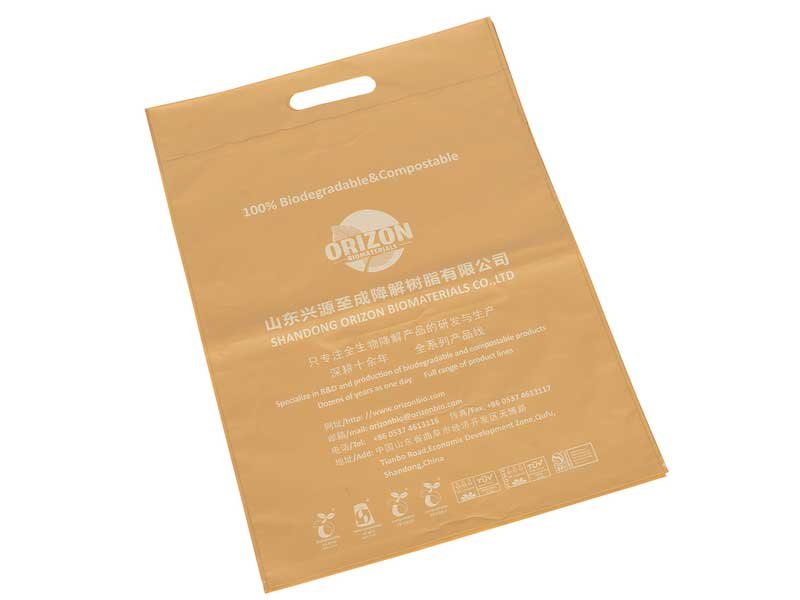
A die-cut handle bag is a bag with a handle hole punched out of the bag body. Many suppliers describe it as a neat, retail-friendly option, often used for boutiques, retail goods, and trade shows.
A key detail: many die-cut bags use a reinforced handle (or can add a reinforcement patch). This improves carrying strength, especially for heavier items.
For retail brands that prioritize clean presentation and branding space, our compostable die-cut handle bags are designed for boutique retail, promotions, and trade-show applications, with optional reinforced handles for added strength.
The Real Difference (Not Just “Looks”)
Most articles stop at “T-shirt is cheap, die-cut looks nicer.” That’s only half the story. Here are the differences that matter for buyers.
1) Packing speed vs presentation
- T-shirt bags win on speed. Cashiers and staff can open and pack them quickly.
- Die-cut bags win on presentation. They often look cleaner and more “brandable.”
If you run a supermarket, speed may beat appearance.
If you run a boutique, appearance may beat speed.
2) Comfort and customer experience
This shows up in reviews and social comments more than people think.
Customers notice:
- Handle comfort (does it cut into the hand?)
- If the bag swings and feels stable
- If it tears when they carry heavier items
People complain online when bags feel weak or fail in real use.
So, if your brand cares about “unboxing” or customer experience, don’t ignore handle design.
3) Strength depends on handle design (and reinforcement)
A die-cut hole can be a weak point if it’s not reinforced. That’s why many die-cut bags highlight reinforced handles or optional reinforcement.
T-shirt bags, on the other hand, spread load through the handles and side gussets. This can feel safer for mixed grocery loads.
4) Printing and branding
If printing matters (logos, seasonal campaigns, brand colors), die-cut bags often provide a “flat face” that looks like a mini billboard.
T-shirt bags can also be printed, but the shape and gussets can reduce the clean look of a big front logo.
Quick Comparison Table (Buyer Decision View)
Choose T-shirt bags if you need:
- Fast checkout packing
- Lowest cost per bag at high volume
- Wide opening for mixed items
Choose die-cut bags if you need:
- Better presentation (boutique / promotion)
- Cleaner branding area
- A more premium “hand-carry” look

How to Choose in 60 Seconds (My Simple Rule)
Ask yourself 3 questions:
Where will the bag be used?
- Checkout carryout → T-shirt bags
- Boutique / gift / event → Die-cut bags
What weight is typical?
- Light to medium items → either can work
- Heavier items → consider die-cut with reinforcement, or thicker T-shirt
Many die-cut bag guides stress durability and reinforcement for heavier carrying.
If you’re sourcing retail carry bags in bulk and need both structure options under one supply program, you can view our full range of compostable shopping bags wholesale — supplied exclusively for B2B buyers, private label brands, and distributors.
Is branding a key goal?
- If yes → die-cut is often easier to make “premium”
- If no → T-shirt is usually the most efficient choice
Compostable Versions: What Buyers Should Know
This is where many online articles are weak.
When you switch from conventional plastic to certified compostable materials, you should pay extra attention to:
- Thickness selection (don’t under-spec)
- Consistency across batches
- Storage conditions (heat and humidity control)
- Compliance wording (avoid vague “biodegradable” claims)
If your buyers are in markets that care about compliance, you need consistent specs and honest labeling—because “eco claims” are being checked more closely now.
A Simple Spec Checklist
FAQ
What is the difference between t-shirt bags and die-cut bags?
T-shirt bags use long handles and side gussets for fast checkout packing. Die-cut bags have a punched handle and flatter front panel, often chosen for cleaner retail presentation.
Which is better for high-volume retail checkout?
T-shirt bags are usually preferred for high-volume checkout due to faster packing. Die-cut bags are more common in boutique and promotional retail.
Are die-cut handle bags stronger than t-shirt bags?
Not always. Strength depends on thickness and handle design. Heavier loads often require reinforced die-cut handles, while t-shirt bags distribute weight through handles and gussets.
Which bag type is better for printing and branding?
Die-cut bags typically provide a cleaner surface for logos. T-shirt bags can be printed, but gussets may affect large front designs.
How do I choose the right size and thickness for wholesale orders?
Select size based on product dimensions and packing method. Thickness should match load weight, sharp edges, and wet-use risk; reinforced handles help reduce failures on heavier die-cut bags.
Can these carry bags be made in certified compostable materials
Yes. Both styles can be produced in certified compostable materials, provided the specification matches your market’s compliance standard and remains consistent across orders.
What details should I send suppliers to get comparable wholesale quotes?
Provide market, bag type, size, thickness, handle reinforcement, printing, packing method, monthly volume, and delivery terms.
Final Takeaway
If your goal is speed + high volume, choose T-shirt bags.
If your goal is branding + presentation, choose die-cut bags (and consider reinforcement).