Sustainability claims have become a standard part of fashion retail—but they also come with growing scrutiny.
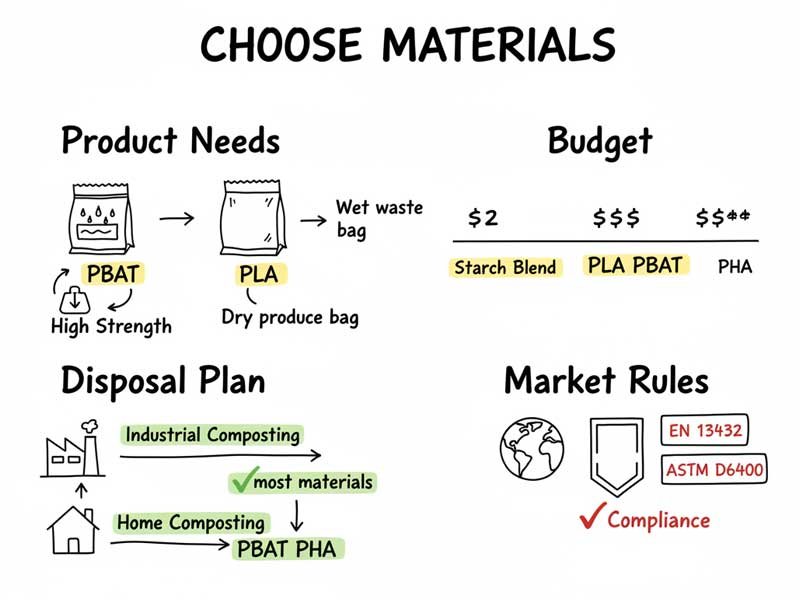
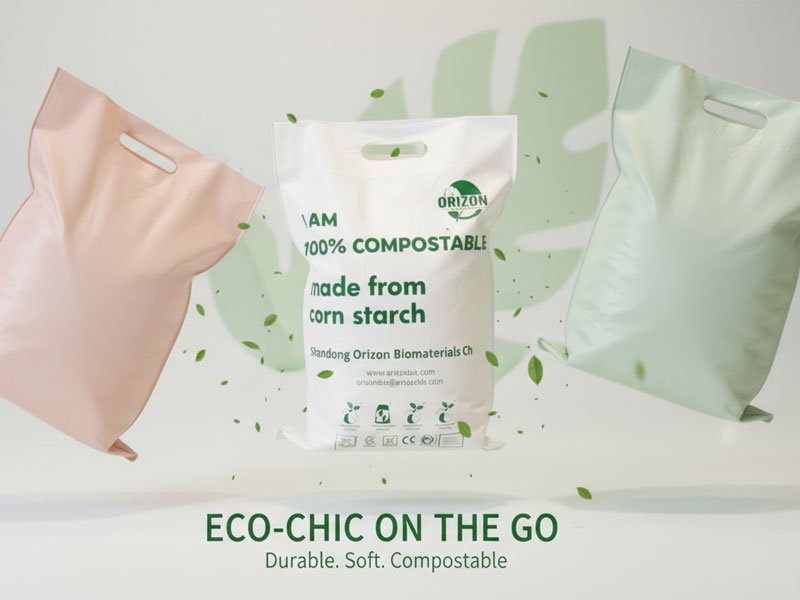
Many fashion brands now use compostable carry bags as part of their environmental positioning. However, sourcing compostable packaging without falling into greenwashing traps is not as simple as choosing a bag labeled “eco” or “biodegradable.”
Procurement teams are increasingly expected to verify materials, certifications, and supplier claims. A single vague statement or incorrect label can create compliance risks and damage brand credibility.
This guide explains how fashion brands can source compostable carry bags for fashion brands responsibly, with a focus on certification, documentation, and supplier evaluation—rather than marketing language.
What Greenwashing Looks Like in Carry Bag Sourcing
Greenwashing in packaging rarely comes from intentional deception. More often, it results from unclear terminology or incomplete verification.
Common warning signs include:
- Bags labeled “biodegradable” without certification
- Sustainability claims based only on raw material descriptions
- Lack of documentation for finished products
- Generic “eco-friendly” language without test reports
For fashion brands, these gaps can become public issues once sustainability claims are reviewed by regulators, partners, or consumers.

Compostable vs Biodegradable: Why the Difference Matters
One of the most common sourcing mistakes is treating biodegradable and compostable as interchangeable terms.
Biodegradable simply means a material can break down over time, without defining how long the process takes or what remains afterward.
Compostable, by contrast, is a regulated category. Certified compostable carry bags must meet defined standards for:
- Disintegration
- Toxicity
- Residue quality
For fashion brands making public sustainability commitments, compostable certification provides a verifiable foundation that biodegradable claims alone do not.
In practice, many sourcing issues start with unclear terminology. Compostable and biodegradable are often used interchangeably, even though they represent very different compliance outcomes.
For a clear breakdown of compostable bag definitions, materials, and common retail applications, you can refer to our detailed guide on compostable shopping bags explained.
What Certifications Actually Reduce Greenwashing Risk
Certification is the most effective way to separate verified compostable packaging from vague sustainability claims.
Common Standards by Market
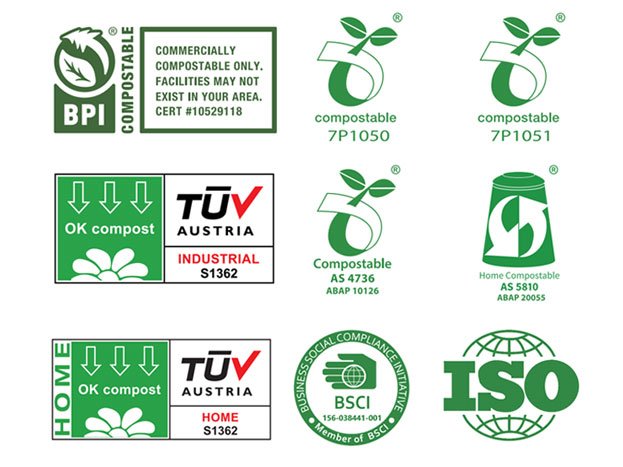
Depending on where the bags are supplied, fashion brands typically encounter:
- EN 13432 – European Union (In the European market, compostable carry bags are typically expected to comply with EN 13432, which evaluates the compostability of the finished product rather than just the raw material. A more detailed overview of certification scope and testing requirements is available in our resource on EN 13432 certified compostable bags.)
- ASTM D6400 / BPI – United States
- AS 4736 / AS 5810 – Australia
These standards assess the finished bag—not just the resin used to make it.
Certification Is Not Just a Logo
A reliable compostable bag supplier should be able to provide:
- Valid certificates
- Test scope details
- Product–certificate matching
- Updated documentation when formulations change
Without this, even certified materials can become compliance risks.
How Evaluate Compostable Carry Bags for Fashion Brands Suppliers
Greenwashing risk often increases when supplier evaluation is rushed.
What Procurement Teams Should Verify
Before approving a supplier, fashion brands should confirm:
- Certification applies to the finished carry bag
- Material formulation is consistent across batches
- Printing inks are compatible with compostable standards
- Documentation matches the target market
- Supplier understands labeling and claim boundaries
These checks are far more important than unit price alone.
Why Supplier Transparency Matters
From a manufacturing perspective, transparency reduces misunderstandings later.
Suppliers who clearly explain:
- What is certified—and what is not
- Where performance limits exist
- How specifications affect cost and compliance
are generally easier to work with long term.
Choosing the Right Bag Structure Without Overclaiming
Structure choice also affects sustainability claims.
For example:
- Die-cut handle bags often balance appearance and material efficiency
- Overbuilt bags may conflict with reduction goals
- Under-specified bags risk performance complaints
Fashion brands should align bag structure with actual retail use—not with aspirational claims.
Bag structure plays a key role in both performance and sustainability claims. In fashion retail, die-cut handle bags are often chosen to balance material efficiency, appearance, and load requirements.
For a deeper look at sizing, printing limits, and compliance considerations for this structure, see our guide on die-cut compostable bags for fashion retail.
Documentation Fashion Brands Should Keep on File
To support sustainability claims and audits, brands should retain:
- Certificates and test reports
- Supplier declarations
- Material safety data (where applicable)
- Artwork and labeling approvals
- Change logs for specifications
Keeping these records organized reduces risk during audits or regulatory reviews.
Common Sourcing Mistakes That Lead to Greenwashing Claims
Even well-intentioned brands can run into issues by:
- Relying on marketing descriptions instead of certificates
- Using incorrect terminology in packaging copy
- Applying certifications from one market to another
- Assuming compostable equals home compostable
- Changing specifications without updating documentation
Avoiding these mistakes requires cross-team coordination between procurement, compliance, and marketing.
Conclusion
Sourcing compostable carry bags responsibly is not about finding the most “eco” label—it is about building a verifiable, compliant packaging system.
For fashion brands, avoiding greenwashing starts with clear definitions, certified products, and transparent suppliers. When compostable carry bags are sourced with the same rigor as other regulated materials, they can support sustainability goals without introducing unnecessary risk.
FAQ
How can fashion brands avoid greenwashing when sourcing compostable carry bags?
By using certified compostable products, verifying documentation for the finished bag, and avoiding vague sustainability claims that cannot be supported by test reports.
Is certification required for compostable carry bags used by fashion brands?
In many markets, certification is not legally mandatory but is essential for substantiating sustainability claims and reducing regulatory and reputational risk.
What documents should suppliers provide for compostable carry bags?
Suppliers should provide valid certificates, test reports, material declarations, and documentation confirming that certification applies to the finished bag.
Can compostable carry bags be used across different markets with the same certification?
Not always. Certification requirements vary by region, and using the wrong standard for a target market can create compliance issues.
How should procurement teams evaluate compostable bag suppliers?
Procurement teams should assess certification coverage, material consistency, documentation transparency, and the supplier’s ability to support long-term supply.