For brands, distributors, and professional buyers, safety is not a marketing claim—it is a responsibility. When products are used in baby care environments, every material choice matters.
As compostable nappy bags become more common in retail and childcare supply chains, a key question often comes up: are compostable nappy bags safe for baby care? For brands supplying baby care products, certified compostable nappy disposal bags are increasingly used in childcare and retail environments.
The short answer is: they can be, but only when material selection, chemical safety, and third-party certification are clearly defined and verifiable. This guide explains what “safe” really means in a B2B context and how buyers can assess compostable nappy bags with confidence.
What Does “Safe” Mean in Baby Care Packaging?
In professional procurement, “safe” does not rely on a single label. For baby care packaging, safety typically involves three layers:
- Material safety : what the bag is made of, and what it avoids
- Chemical exposure risk : additives, inks, dyes, or fragrances
- Regulatory and certification safety : whether claims are supported by recognized standards
Understanding these layers helps buyers distinguish between marketing language and verified safety.
Materials Used in Compostable Nappy Bags
PLA, PBAT, and Starch-Based Polymers
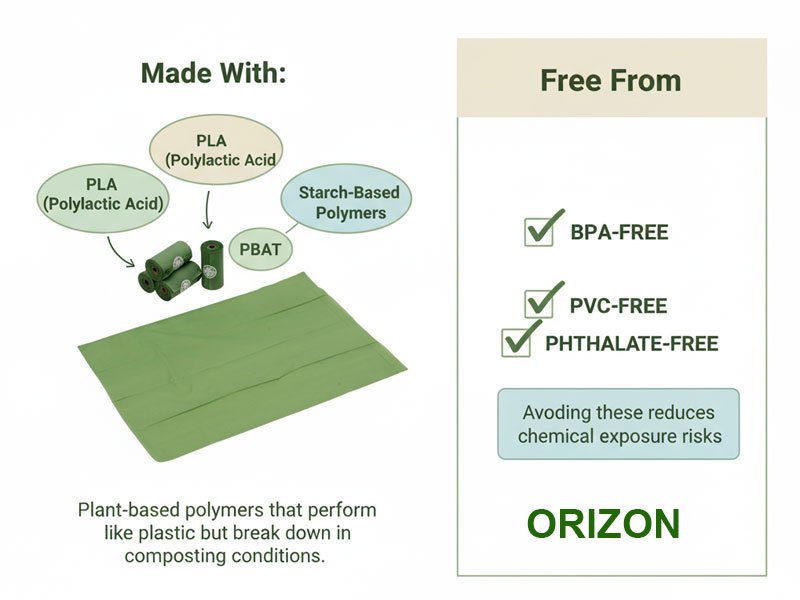
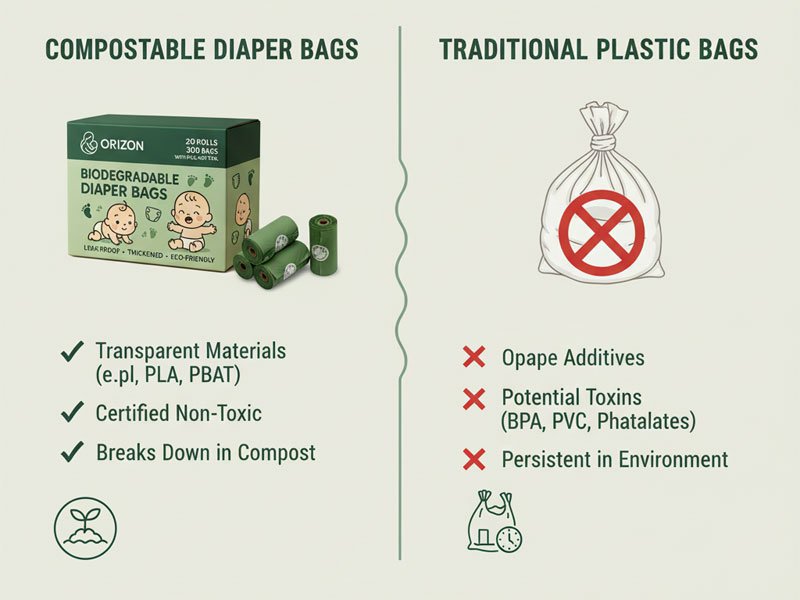
Most certified compostable nappy bags are made from plant-based polymers, commonly including PLA (polylactic acid), PBAT, and starch-based materials.
These compostable materials are designed to perform like conventional plastic while breaking down under controlled composting conditions. From a safety perspective, their value lies in material transparency—buyers know exactly what polymers are used and how they behave.
What These Materials Avoid
Equally important is what compostable nappy bags are not made from.
High-quality compostable nappy bags are typically:
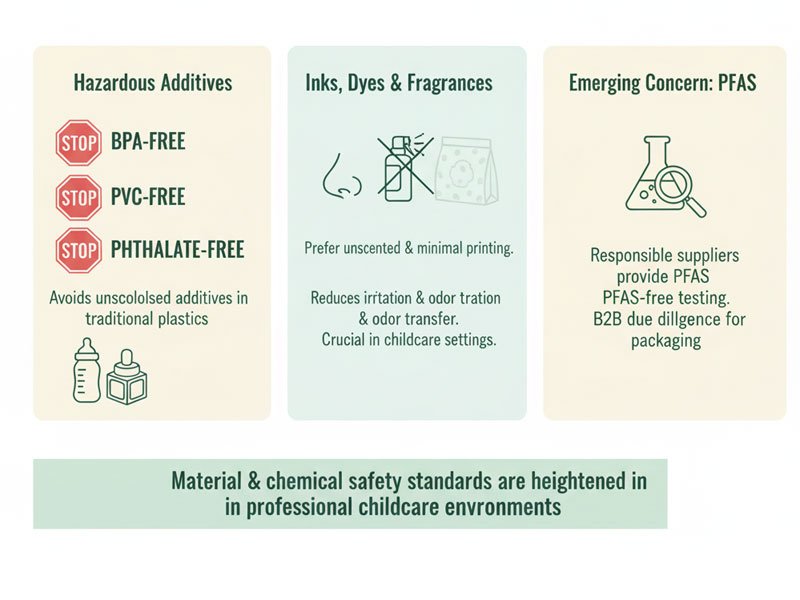
- BPA-free
- PVC-free
- Phthalate-free
Avoiding these substances reduces long-term exposure concerns, especially in environments where bags are handled frequently by caregivers.
Chemical Safety Considerations for Baby Care Use
BPA, PVC, and Phthalates – Why They Matter
Conventional plastic bags may contain additives that are not always disclosed. In baby care applications, even indirect contact raises questions.
Compostable nappy bags made from verified plant-based materials help reduce reliance on these additives, providing a clearer safety profile for professional buyers.
Inks, Dyes, and Fragrances
Material safety goes beyond the film itself.
Printing inks, colorants, and fragrances can also affect suitability for baby care use. Many buyers prefer unscented compostable nappy bags and limited printing to reduce potential irritation or odor transfer. These considerations are often overlooked but play an important role in childcare and institutional settings.
PFAS and Total Fluorine – What Buyers Should Know
In recent years, attention has increased around PFAS and fluorinated chemicals in packaging materials.
While compostable certifications focus on compostability performance, responsible suppliers increasingly support total fluorine testing and transparent material disclosures. For B2B buyers, asking about PFAS-related testing is becoming part of standard due diligence.
In professional childcare environments, material and chemical safety requirements are often higher due to frequent handling and disposal.
What Compostable Certifications Actually Test
EN 13432 and ASTM D6400
Recognized compostable certifications such as EN 13432 and ASTM D6400 do more than confirm biodegradation.
These standards include testing for:
- Material disintegration under industrial composting conditions
- Heavy metals limits
- Ecotoxicity, ensuring breakdown residues do not harm plant growth
This makes certified compostable nappy bags more predictable and verifiable than products labeled only as “biodegradable.”
What Certifications Do Not Cover
It is important to be precise.
Compostable certifications do not automatically mean:
- Food-contact approval
- Medical-grade certification
- Direct skin-contact testing
However, they do establish a baseline of material safety and environmental compatibility, which is why they are widely used as a compliance reference in regulated markets.
These requirements are defined under recognized compostable certification standards used in global markets.
Compostable vs Traditional Plastic Nappy Bags: A Safety Comparison
Traditional plastic nappy bags can persist in the environment for decades and may contain undisclosed additives. This difference is often misunderstood when biodegradable and compostable claims are used interchangeably.
Certified compostable nappy bags, by contrast, rely on defined materials, controlled testing, and third-party verification. From a risk-management perspective, this transparency makes compostable options easier to evaluate and justify in professional procurement decisions.
How B2B Buyers Can Verify Safety Claims
Certification Numbers and Databases
Verified compostable certifications are traceable. Buyers should request certification numbers and confirm them through recognized certification bodies or public databases.
COA, SDS, and Third-Party Reports
Beyond certifications, responsible suppliers can provide:
- Certificates of Analysis (COA)
- Safety Data Sheets (SDS)
- Third-party test reports
These documents support internal compliance reviews and help buyers meet their own audit requirements.
Red Flags to Watch For
Be cautious of products that rely on vague claims such as “eco-friendly” or “green” without supporting documentation. Clear material disclosure and verifiable certification are essential in baby care supply chains.
Are Compostable Nappy Bags Suitable for Baby Care Applications?
Compostable nappy bags can be suitable for baby care applications when they are made from verified plant-based materials, free from common harmful additives, and supported by recognized compostable certifications.
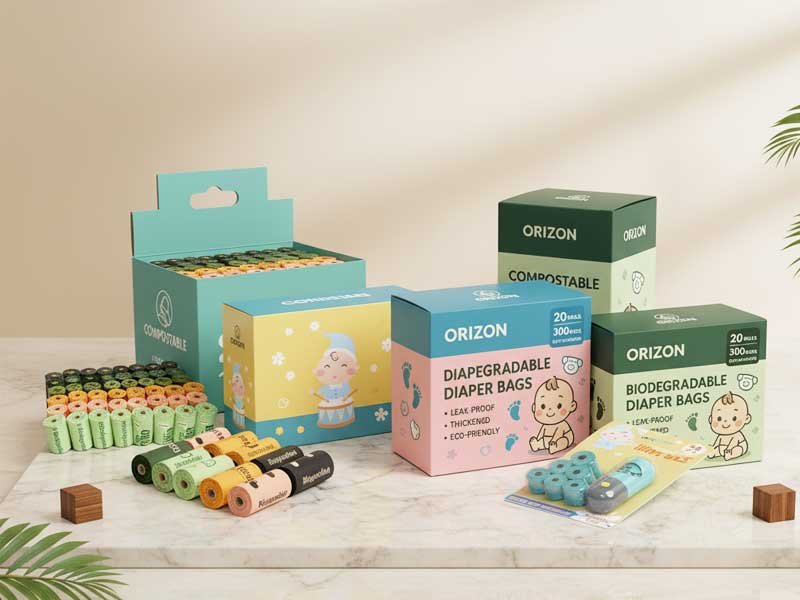
For brands and distributors, the key is not the label alone, but the combination of material transparency, certification, and documentation. This is why many brands choose compostable nappy disposal bags that are supported by clear material documentation and certification.
FAQ
Are compostable nappy bags BPA free?
Most certified compostable nappy bags are BPA-free, but buyers should always confirm material declarations.
Are compostable diaper disposal bags safe for babies?
They can be, when produced with non-toxic materials and supported by recognized compostable standards.
Do compostable certifications test chemical safety?
They include limits for heavy metals and ecotoxicity but do not replace product-specific safety testing.
Are scented compostable nappy bags safe for infants?
Unscented options are generally preferred in childcare and professional environments.
Conclusion
Safety in baby care packaging is not defined by a single claim. For B2B buyers, compostable nappy bags offer a safer, more transparent option when materials, chemical exposure, and certifications are clearly documented and verifiable.
By focusing on material disclosure and recognized standards, brands and distributors can make informed decisions that support both safety and sustainability goals.