When communicating with buyers looking to import AS5810 eco-friendly bags from China, I always hear the same concerns: some worry about fake certificates, some worry about unstable materials, and some simply don’t know how to compare different AS5810 compostable eco-friendly bag suppliers.
The truth is simple: most household compostable eco-friendly bags sold in Australia are currently made in China. However, not all factories can produce eco-friendly bags that meet the AS5810 standard, and not all “certificates” are genuine.
As a manufacturer with 16 years of experience producing biodegradable compostable bags, in this guide, I will share the lessons I’ve learned from working with buyers, factories, and laboratory reports, hoping to help you choose the right Chinese compostable bag supplier (we can also be one of your suppliers).
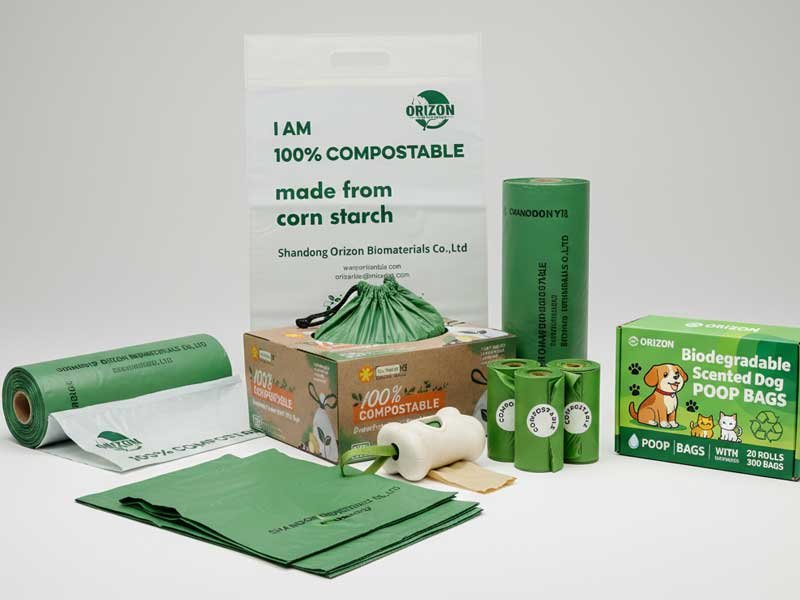
Why Many Buyers Choose AS5810 Bags China
China has become the world’s main source of AS5810 certified bags.
There are a few reasons for this:
- China has strong production capacity for compostable films
- PLA, PBAT, and starch-based resin are easy to buy locally
- Many factories already export to Australia
- Costs are lower than in Europe or the U.S.
- Custom work (OEM / ODM) is fast and flexible
But the bigger story is this: Not all factories are equal.
- Some have modern film extrusion lines and stable formulas.
- Some rely on low-grade raw materials.
- Some change materials when prices rise.
I’ve personally witnessed this: some products that previously passed AS5810 home compost tests suddenly failed decomposition or biodegradation tests due to formula changes.
Therefore, China is indeed a good option. However, the prerequisite is that you must choose a suitable supplier.
What AS5810 Requires
AS5810 is the Australian standard for home composting. It tests whether the finished product can safely decompose in a home compost.
The standard includes four key aspects:
- Biodegradability: The material must decompose into carbon dioxide, water, and biomass.
- Decomposition: After composting, there should be no large clumps of material remaining. Thickness plays an important role here.
- Ecotoxicity: The compost must be safe for plants and earthworms; ink is also important here.
- Impact on the composting system: The packaging bag must not slow down the composting process.
A packaging bag may pass the AS5810 standard in a laboratory but may fail the test in a person’s garden.
This is known as a “home composting test failure.” This situation is usually due to differences in actual composting conditions.
or a deeper explanation of how testing works in practice, you can read the article Australian AS5810 Home Compostable Standard: Australian AS5810 Home Compostable Standard: The Ultimate Guide
Current Status of AS5810 Compostable Packaging Bag Production in China
I roughly categorize Chinese factories into three types:
Small Workshops
- They purchase compostable film from external suppliers and produce the packaging bags themselves.
- Low cost, but they cannot control the PLA/PBAT ratio, thickness, or ink.
- AS5810 certified packaging bags have a higher quality risk.
Medium-Sized OEM Factories
- They produce the packaging bags themselves but source the film from external suppliers.
- Quality is somewhat improved, but consistency depends on other suppliers.
Large Integrated Factories
- They handle film blowing, compostable ink printing, and packaging bag production themselves.
- They can control all aspects—raw materials, extrusion, thickness, and ink.
- This reduces batch-to-batch variations.
For buyers importing products from China, the safest option is almost always the third type of factory.
How to Evaluate a Reliable AS5810 Supplier (10 Checks)
Here are ten checks I use when I assess an AS5810 compostable bags supplier in China.
- Real AS5810 certificate with a valid certificate number
- Stable raw materials (same resin source each batch)
- Clear explanation of PLA/PBAT/starch ratio
- Use of compostable ink only
- Consistent thickness (±3 microns)
- Modern extrusion equipment
- Internal lab or third-party QC reports
- Export experience to Australia
- Strong packaging for long shipping routes
- Ability to produce AS5810 custom bags or private label bags
If a supplier cannot answer basic questions about formula, ink, or thickness, that is a warning sign.
How to Verify the Authenticity of an AS5810 Certificate
Some suppliers use “test reports” instead of certificates. Test reports are not certifications.
Here are my methods for verification:
- ABA Certification: All genuine AS5810 certificates are issued by the Australian Bioplastics Association (ABA).
- Certificate Number: Each certificate has a unique certificate number. Please check that the certificate number matches the product.
- Company Name: Be cautious if the company name shown on the certificate does not match the actual company. (You can search our company name: Shandong Orizon Biomaterials Co., Ltd.)
- ABA Database: I would search the ABA’s public directory. If the supplier is not listed in the directory, the certificate is invalid.
- Validity Period: AS5810 certificates are typically valid for three years. Expired certificates are invalid.
Many buyers have suffered losses by trusting counterfeit or expired certificates.
AS5810 Bags China:MOQ, Lead Time, Printing, Size, and Price
Minimum Order Quantity, Delivery Time, Printing, Size, and Price
Minimum Order Quantity
5,000 to 50,000 pieces, depending on bag type. (Our factory’s MOQ is >500KG.)
- Delivery Time
- 20 to 35 days.
Printing
- 3 to 4 colors are safest.
- Heavy or dark printing increases the risk of failing ecotoxicity tests.
Size and Thickness
If the bags are too thick, they may not decompose quickly.
This is a common reason for failing the AS5810 household composting test.
Price
Factors affecting price:
- Resin cost (PLA, PBAT)
- Ink type
- Thickness
- Bag structure
- Order quantity
- Shipping cost (freight)
- Raw material price fluctuations.
This is known as raw material price fluctuation. A good supplier should clearly explain the cost structure.
Supply Chain Risks
Here are the risks I encounter most frequently:
1) Unstable Formulation
Factory manufacturers sometimes change resin suppliers to reduce costs. This can affect the strength and compostability of the packaging bags.
2) Inadequate Thickness Control
A thickness difference of 5 micrometers can cause packaging bags to fail the AS5810 test.
3) Non-Compostable Ink
Cheap inks may contain heavy metals. This will lead to excessive ecotoxicity in the product.
4) Storage Issues
High temperature and humidity can soften compostable films.
5) Batch Variations
If the extruder is not calibrated, the performance of packaging bags produced from the same order may vary.
There are no perfect suppliers. But good suppliers will honestly disclose the risks and how they manage them.
How to Reduce Costs Without Violating AS5810 Standards
- Slightly reduce packaging thickness: This is the simplest way to save money.
- Reduce printing area: Less ink means lower costs.
- Choose simpler packaging bags: Side-sealed bags are less expensive than drawstring bags.
- Optimize size: Many companies unnecessarily use oversized packaging bags.
- Improve carton packaging: Better packaging can improve container loading efficiency.
- Sign long-term contracts: This helps suppliers stabilize resin costs.
This is how to reduce costs without affecting compostability.
Sourcing AS5810 Bags China: Sourcing Process
- Choose bag type
- Apply for AS5810 certification
- Check formulation and inks
- Confirm thickness and printing
- Order samples
- Small-scale production followed by scaling up
FAQ
Who are the best AS5810 suppliers in China?
It depends on equipment, formula stability, and certification history.
Are AS5810 and EN13432 the same?
No. AS5810 is for home compost. EN13432 is for industrial compost.
What is the normal AS5810 Bags China MOQ?
5,000–50,000 pcs(MOQ 500KG)
Can China produce AS5810 private label bags?
Yes. Many factories offer OEM / ODM services.
How do I verify an AS5810 certificate?
Check the ABA website and compare the certificate number.
Why do some bags fail home compost tests?
Thickness, ink, and real compost conditions all matter.
Conclusion
Purchasing packaging bags China that meet AS5810 standards is safe, efficient, and cost-effective. However, this requires you to understand the materials, certifications, and potential risks associated with the bags.
Reliable suppliers will provide genuine certificates, strictly control formulations and thicknesses, use biodegradable inks, and maintain clear communication with you. Less reputable suppliers, on the other hand, may withhold information.
I hope this guide will help you gain a clear understanding of the relevant information, enabling you to make informed decisions—without guesswork or worry.
Related Articles