The topic of using sustainable packaging for clothing is likely familiar to many, but for many brands, it’s a headache-inducing decision. We’ve worked with fashion brands looking to reduce plastic waste, but they were unsure which option was better: biodegradable or compostable packaging. These two terms sound similar, but they are not the same, and choosing the wrong one can lead to compliance risks and a crisis of trust.
This guide will explain the real differences between biodegradable and compostable packaging for apparel from a clothing packaging perspective.
Biodegradable vs Compostable Packaging for Apparel: Quick Comparison
- Biodegradable packaging means the material can break down over time, but the speed, conditions, and final outcome are often unclear.
- Compostable packaging follows strict standards and is designed to break down into non-toxic components within a defined timeframe under composting conditions.
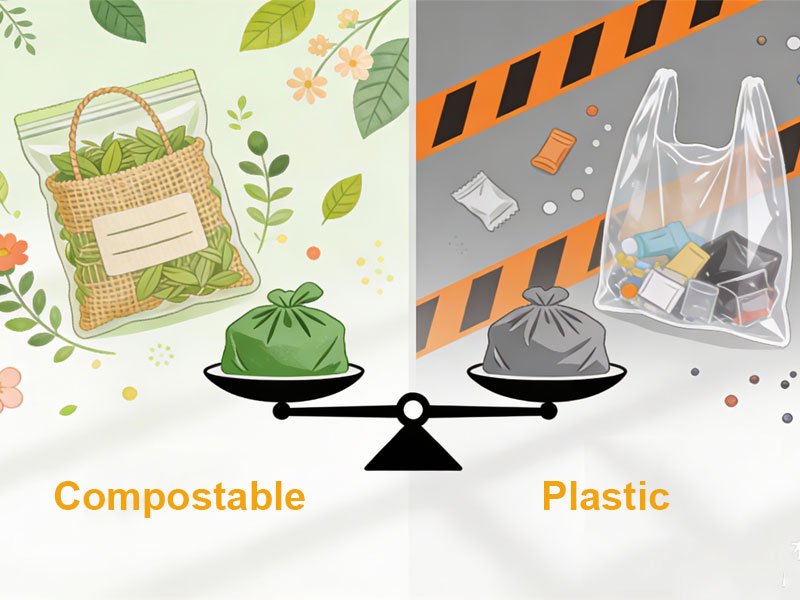
For apparel brands, this difference matters—not just for sustainability goals, but also for labeling, certification, and customer trust.
Why Apparel Brands Confuse Biodegradable and Compostable Packaging
Many suppliers use the word biodegradable because it feels safe and positive. But in practice, the term is very broad. Two materials can both be called biodegradable, yet behave very differently once discarded.
Fashion brands often ask:
- “If it breaks down eventually, isn’t that good enough?”
- “Why do some markets accept compostable claims but question biodegradable ones?”
The short answer is verification. Compostable packaging can be tested and certified. Biodegradable packaging often cannot.

What Is Biodegradable Packaging for Clothing?
Biodegradable packaging refers to materials that can decompose over time through natural processes, with no specific time limit required for decomposition.
For clothing packaging, this includes films or bags that claim to decompose faster than traditional plastics. However, there is currently no fixed decomposition timeline, and there is no guarantee that these materials will completely decompose and return to nature without leaving any residue.
How Biodegradable Claims Are Commonly Misused
One problem I frequently encounter is vague labeling. Packaging often features terms like “eco-friendly,” “green,” or “biodegradable,” but without clearly stating how long the degradation process takes or under what conditions it occurs.
Some supposedly biodegradable materials still break down into microplastics. This creates a disconnect between the message brands want to convey and the actual outcome of product disposal.
Why “Biodegradable” Alone Is Not a Compliance Guarantee
In many regulated markets, “biodegradable” is considered a marketing term and not a verified environmental claim. Without relevant certification, brands may face accusations of “greenwashing,” particularly in Europe and North America.
What Is Compostable Packaging for Apparel?
Compostable packaging is designed to break down into water, carbon dioxide, and organic matter under composting conditions.
For apparel packaging, compostable materials are commonly made from plant-based sources such as PLA and PBAT blends.
What Certified Compostable Really Means
Certified compostable packaging must meet specific standards, such as:
- EN 13432 (Europe)
- ASTM D6400 (United States)
These standards test how fast the material breaks down and whether it leaves harmful residues.
Industrial vs Home Compostable Packaging
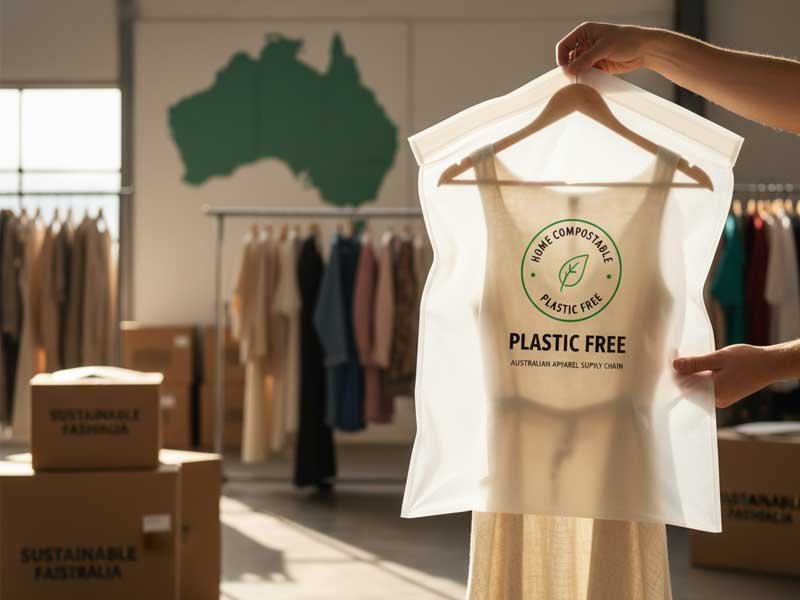
Not all compostable packaging is the same. Many apparel packaging solutions are industrial compostable, meaning they require controlled conditions. Home compostable options exist, but they must be clearly labeled and certified.
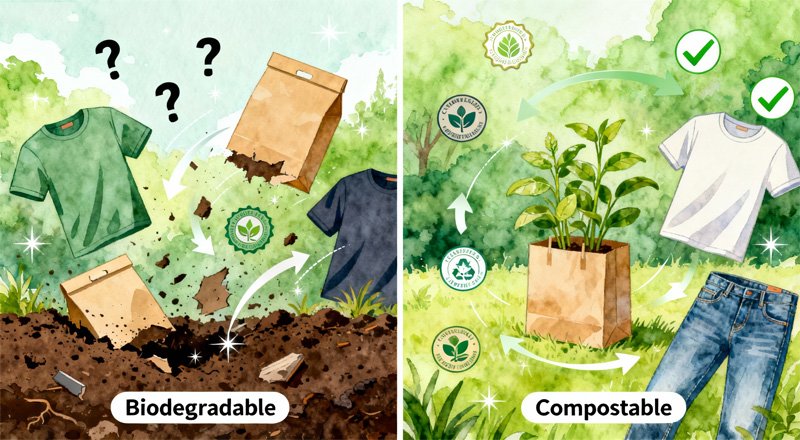
Biodegradable vs Compostable Packaging for Apparel: Key Differences
| Aspect | Biodegradable Packaging | Compostable Packaging |
|---|---|---|
| Definition | Broad and unclear | Strict and defined |
| Certification | Often none | Required (EN 13432, ASTM D6400) |
| Breakdown Result | May leave residues | Breaks down into non-toxic matter |
| Timeline | Uncertain | Defined timeframe |
| Compliance Risk | Higher | Lower |
| Apparel Use | Inconsistent performance | Predictable and verifiable |
Which Is Better for Apparel Brands?
From my experience, compostable packaging is usually the safer choice for apparel brands that sell in regulated markets.
When Compostable Packaging Makes Sense
- When brands want clear sustainability claims
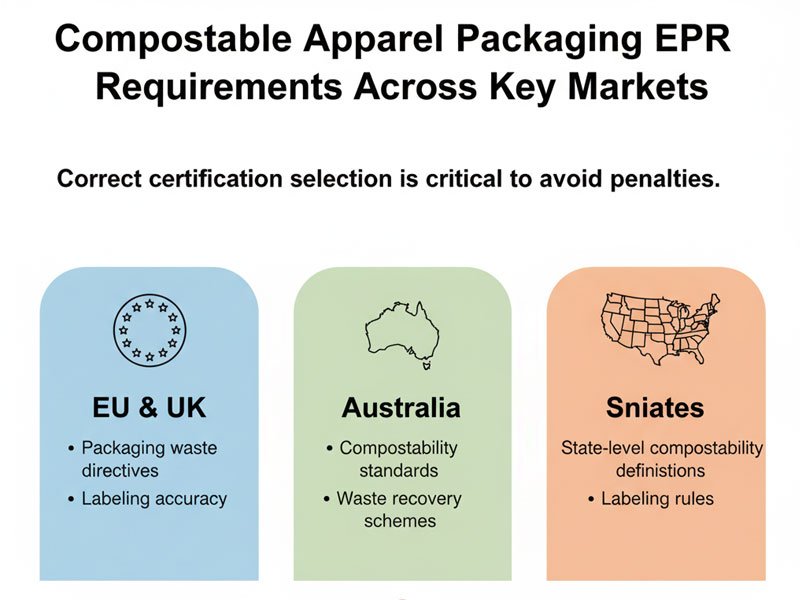
- When selling in the EU, US, or Australia
- When avoiding greenwashing risks is a priority
When Biodegradable Packaging Creates Risk
- When claims cannot be verified
- When packaging labels are vague
- When consumers expect clear disposal instructions

Certification and Compliance Considerations for Apparel Packaging
One of the most important steps is verification.
Brands should always:
- Ask for certification numbers
- Check certificates on official databases
- Confirm whether packaging is industrial or home compostable
Clear certification protects both the brand and the consumer.
How to Verify Compostable Certifications
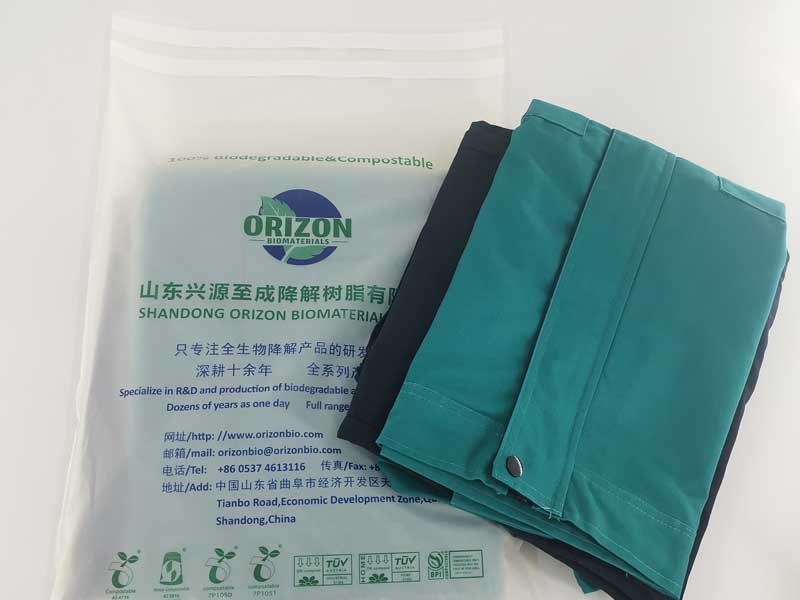
When a supplier claims their packaging is compostable, the first step is not to trust the logo—it is to verify the certification.
In my experience, reliable compostable packaging always comes with:
- A clear certification standard (such as EN 13432 or ASTM D6400)
- A certificate number
- The name of the issuing body
Brands should take a few minutes to check this information on official databases. For example, EN 13432 certificates can be verified through recognized certification bodies, and ASTM D6400 products can be checked through the Biodegradable Products Institute (BPI).
If a supplier cannot provide a certificate number, or says the certification is “in progress,” that is usually a warning sign. Compostable certification requires laboratory testing and third-party review. It is not instant, and it cannot be skipped.
Verification protects brands from unintentional greenwashing and gives confidence that packaging claims can stand up to scrutiny.
What Regulators Expect Brands to Disclose
Many brands focus on choosing the right material, but how sustainability claims are communicated is just as important.
Regulators generally expect packaging claims to be:
- Clear and specific
- Not misleading
- Supported by evidence
For compostable apparel packaging, this often means disclosing:
- Whether the packaging is industrial compostable or home compostable
- Which certification standard applies
- Any limitations on disposal (for example, requiring access to composting facilities)
Vague terms like “eco-friendly” or “green” without explanation can raise concerns, especially in regulated markets. I have seen cases where brands had compliant materials but unclear labeling, which still created compliance risks.
A simple rule works well: if a claim cannot be explained in one clear sentence, it probably needs clarification.
Common Mistakes Brands Make When Choosing Packaging
I often see the same mistakes repeated:
- Using “biodegradable” as a catch-all term
- Ignoring disposal infrastructure
- Assuming compostable means “can be composted anywhere”
- Trusting claims without documentation
These mistakes can harm credibility more than using conventional packaging.
FAQ
Are compostable bags really compostable?
Yes—when certified and disposed of correctly.
Are all compostable bags home compostable?
No. Many require industrial composting facilities.
Is biodegradable packaging safer than compostable?
Not necessarily. Without certification, biodegradable claims are harder to verify.
How should brands communicate packaging sustainability?
Clearly, honestly, and with verified standards.
Conclusion
Sustainable apparel packaging is not just about materials. It is about clarity, responsibility, and trust.
For brands, the goal should not be to choose the trendiest option, but the most transparent and verifiable one. In most cases, compostable packaging offers clearer rules and fewer risks than biodegradable alternatives.