Extended Producer Responsibility (EPR) is transforming how fashion brands evaluate apparel packaging. Across the European Union, producers are increasingly responsible for the environmental impact of the packaging they place on the market.
For clothing brands, this shift is influencing material choices, supplier selection, and compliance documentation.
For a full overview of commercial compostable clothing packaging solutions, see our Compostable Clothing Packaging Solutions.
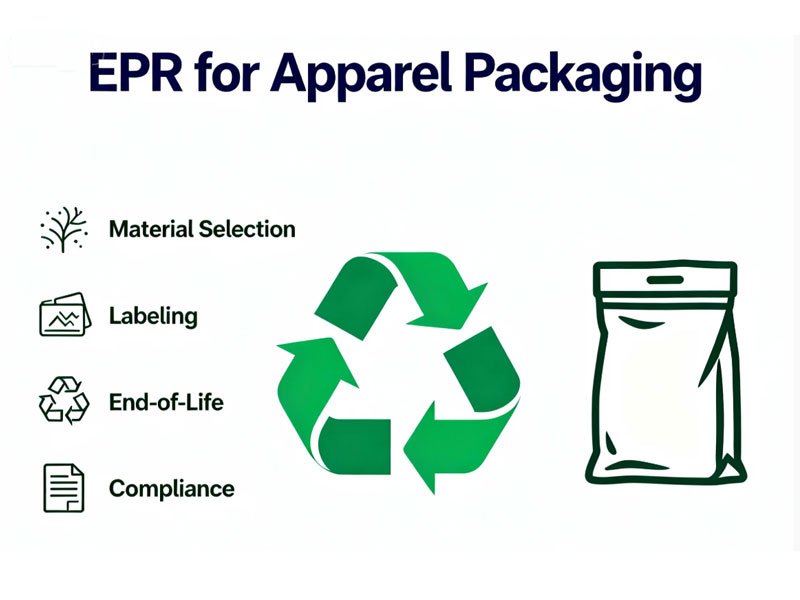
What Is Apparel Packaging EPR Compliance?
Extended Producer Responsibility (EPR) requires producers to take financial and operational responsibility for post-consumer packaging waste.
In practical terms, this means:
- Paying eco-modulation fees
- Reporting packaging material volumes
- Ensuring material recyclability or compostability
- Aligning with country-specific labeling requirements
EPR does not mandate compostable packaging directly. However, it increases pressure on brands to evaluate alternatives to traditional plastic garment bags.
Why EPR Is Impacting Fashion Packaging Decisions
Under EPR systems, packaging fees often depend on:
- Material type
- Weight
- Recyclability
- Environmental performance
Traditional poly garment bags may carry higher long-term risk under tightening regulations.
As a result, some brands are exploring certified compostable clothing packaging to reduce regulatory exposure and strengthen sustainability claims.
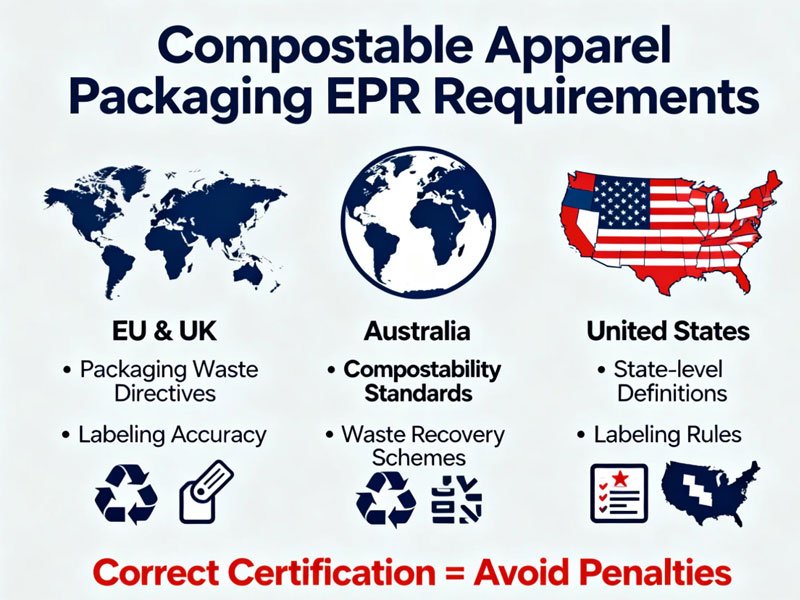
Compostable Packaging Under EPR: What Brands Must Understand
Compostable apparel packaging is not automatically EPR-compliant.
Brands must verify:
- Industrial compostability standards (EN 13432 in the EU)
- Proper labeling compliance
- Country-specific disposal instructions
- Facility acceptance
For compliance details, see: EN 13432 compostability certification
EPR Across Major EU Markets
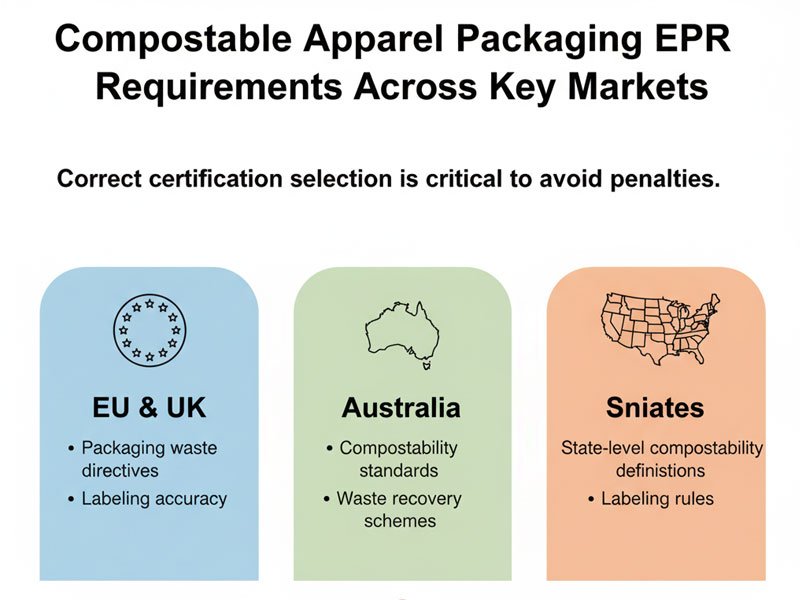
Different EU countries implement EPR differently:
- France: Eco-modulation penalties for non-recyclable plastics
- Germany: VerpackG registration & reporting
- Spain: Growing restrictions on misleading environmental claims
- Italy: Compostable packaging widely adopted in organic waste systems
Understanding local enforcement is critical before switching materials.
Should Fashion Brands Switch to Compostable Garment Packaging?
There is no universal answer.
Compostable packaging may be appropriate when:
- The brand operates in regulated organic waste systems
- The product lifecycle supports industrial composting
- Certification documentation is available
- Supplier traceability is verified
For commercial supply and technical specifications, see: Compostable Clothing Packaging Solutions
Key Risks to Avoid Under EPR
- Using “biodegradable” without certification
- Confusing material-level certification with product-level certification
- Ignoring country-level reporting obligations
- Assuming compostable equals recyclable
Conclusion
EPR regulations are changing how fashion brands assess apparel packaging materials. Compostable clothing packaging may support compliance strategies in certain markets—but only when certification and supply chain controls are clearly documented.
Brands must evaluate EPR, labeling laws, and regional composting infrastructure together—not in isolation.