Choosing the correct compostable bag thickness is critical for product performance, cost control, and user satisfaction.
Unlike traditional plastic bags, compostable bags are typically made from PLA + PBAT biopolymers, which behave differently from polyethylene films. Thickness directly affects:
- Tear resistance
- Load capacity
- Puncture strength
- Compostability performance
For buyers sourcing compostable bags, understanding micron thickness standards can help avoid product failure and reduce procurement risks. This is closely related to the compostable bag manufacturing process used by suppliers.
This guide explains how compostable bag thickness works, typical micron ranges for different applications, and how manufacturers control film thickness during production.
What Does Compostable Bag Thickness Mean?
Bag thickness refers to the thickness of the plastic film used to produce the bag.
It determines how strong and durable the bag will be during use.
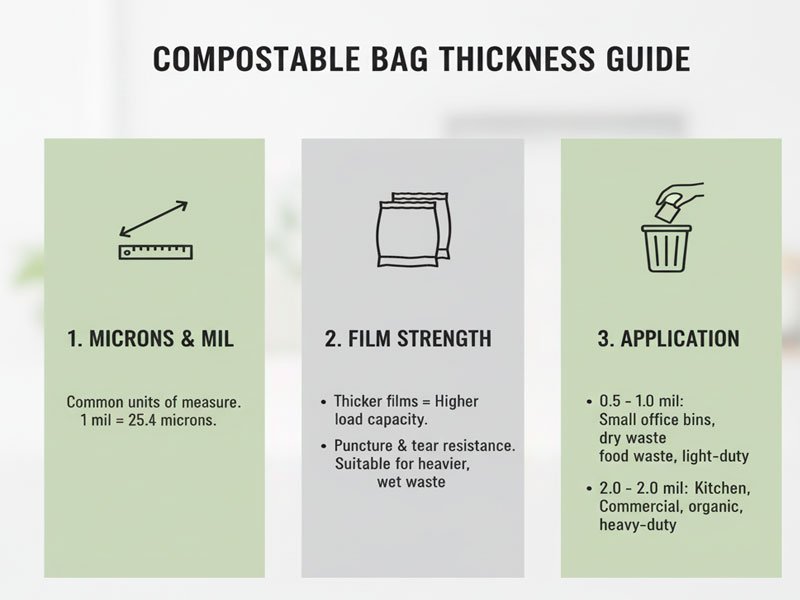
Thickness is typically measured in:
| Unit | Explanation |
|---|---|
| Micron (µm) | Most common measurement for film thickness |
| Mil | Common in the US plastic industry |
Conversion:
| Mil | Micron |
|---|---|
| 0.5 mil | 12.7 µm |
| 0.7 mil | 18 µm |
| 1.0 mil | 25 µm |
| 1.5 mil | 38 µm |
Because compostable materials have lower tensile strength than PE plastic, compostable bags often require slightly higher thickness to achieve similar durability.
Micron vs Mil Thickness Explained
Many international buyers encounter confusion between micron and mil measurements.
Here is the simple conversion rule:
1 mil = 25.4 microns
Example:
| Thickness | Micron | Mil |
|---|---|---|
| Produce bags | 12 µm | 0.47 mil |
| Dog waste bags | 18 µm | 0.7 mil |
| Kitchen liners | 22 µm | 0.86 mil |
| Trash bags | 30 µm | 1.2 mil |
Thickness selection also depends on bag volume. Buyers can refer to our compostable trash bag size guide to understand how bag size and thickness work together, while North American buyers prefer mil.
Compostable Bag Thickness Chart
The correct thickness depends heavily on the bag application and load requirements. For example, large compostable trash bags require thicker film compared to lightweight produce bags.
Below is a typical compostable bag thickness guide used by many manufacturers.
| Application | Typical Thickness (Micron) | Mil Equivalent |
|---|---|---|
| Produce bags | 10 – 15 µm | 0.4 – 0.6 mil |
| Dog waste bags | 15 – 20 µm | 0.6 – 0.8 mil |
| Small compost caddy liners | 18 – 22 µm | 0.7 – 0.9 mil |
| Kitchen bin liners | 20 – 25 µm | 0.8 – 1.0 mil |
| 13 gallon trash bags | 25 – 35 µm | 1.0 – 1.4 mil |
| Heavy duty garbage bags | 40 – 60 µm | 1.6 – 2.4 mil |
Choosing thickness outside these ranges may result in:
- Bag tearing
- Leakage
- Increased production cost
Therefore thickness optimization is essential for product design.
Thickness by Application
Different compostable bag applications require different thickness levels.
Dog Waste Bags
Typical thickness:
15 – 20 microns
Reasons:
- Lightweight waste
- Short usage time
- Cost-sensitive product
Many brands use thinner film to reduce cost while maintaining durability. See typical specifications used in compostable dog waste bags.
You can see typical product examples in dog waste bag packaging solutions.
Compostable Produce Bags
Typical thickness:
10 – 15 microns
Used in supermarkets for:
- fruits
- vegetables
- bulk food
Because produce bags carry lightweight items, lower thickness reduces material usage and improves sustainability.
Many supermarkets are replacing plastic produce bags with compostable produce bags to meet sustainability goals.
Kitchen Compost Bin Liners
Typical thickness:
18 – 25 microns
These bags must handle:
- wet food waste
- organic materials
- extended storage time
Food waste often contains moisture and sharp edges, so slightly thicker film improves durability.
Large Compostable Trash Bags
Typical thickness:
25 – 35 microns
Common sizes include:
- 13 gallon kitchen trash bags
- 30–50 liter garbage bags
For large outdoor bins or commercial use, thickness may reach:
40 – 60 microns
to prevent tearing during transport.
Compostable vs Plastic Bag Thickness
Traditional polyethylene trash bags are stronger than compostable materials.
Typical PE bag thickness:
| Plastic bag type | Thickness |
|---|---|
| standard trash bags | 15–20 µm |
| heavy duty trash bags | 30–50 µm |
Because compostable polymers have different mechanical properties, manufacturers often compensate by increasing thickness slightly.
However, excessive thickness may slow composting performance, so balancing durability and biodegradability is important.
How Manufacturers Control Film Thickness
Film thickness is controlled during extrusion and film blowing. Learn more about how compostable bags are manufactured in industrial production.
Key factors include:
- extrusion temperature
- blow-up ratio
- cooling rate
- film stretching
Modern compostable bag factories use automated thickness monitoring systems to maintain uniform film quality.
Consistent thickness ensures:
- stable bag strength
- predictable compostability
- reduced material waste
Understanding the compostable bag manufacturing process helps buyers evaluate supplier capability.
How Buyers Choose the Right Thickness
For procurement teams sourcing compostable bags, selecting the correct thickness depends on several factors.
1. Application scenario
Lightweight applications such as produce bags require thinner film.
Heavy garbage bags require thicker material.
2. Load capacity
Estimate the maximum load weight.
Example:
| Bag type | Typical load |
|---|---|
| dog waste bag | <1 kg |
| produce bag | 2–3 kg |
| kitchen trash bag | 5–8 kg |
3. Certification requirements
Certified compostable bags must comply with standards such as:
- ASTM D6400 (which defines how compostable plastics break down under industrial composting conditions.)
- EN13432
- OK Compost
Certification ensures that the bag will fully break down in composting conditions.
4. Cost control
Film thickness directly affects material cost.
Increasing thickness by 5 microns may increase raw material consumption by 20–25%, depending on bag size.
Therefore experienced manufacturers often help optimize thickness for both performance and cost efficiency.
Conclusion
Understanding compostable bag thickness helps buyers select the right product for their application.
Key takeaways:
- Thickness is usually measured in microns or mil
- Typical compostable bag thickness ranges from 10–60 microns
- The correct thickness depends on application and load requirements
- Film thickness directly impacts durability, cost, and compostability
By working with an experienced compostable bags manufacturer, buyers can optimize bag thickness, material formulation, and cost efficiency.
FAQ
What thickness are compostable bags?
Most compostable bags range between 10 and 35 microns, depending on the application. Produce bags are thinner, while trash bags require thicker material.
Are compostable bags thicker than plastic bags?
Compostable bags are often slightly thicker than traditional plastic bags because biopolymer materials have lower tensile strength.
What micron is a strong compostable trash bag?
A strong compostable trash bag is typically 25–35 microns, which provides good tear resistance for kitchen waste.
What thickness are dog waste bags?
Most compostable dog waste bags are 15–20 microns thick, providing a balance between strength and material efficiency.