Food waste is wet, heavy, and prone to odors. Using the wrong type of bag often leads to leaks, handling problems, and even rejection by composting facilities.
Compostable bags can work for food waste—but only when the right type of bag is used in the right composting system.
This guide explains when compostable bags are suitable for food waste, what features actually matter, common mistakes to avoid, and how businesses and distributors should approach sourcing compostable bags for food waste programs.
What Is Food Waste and Why Bag Choice Matters
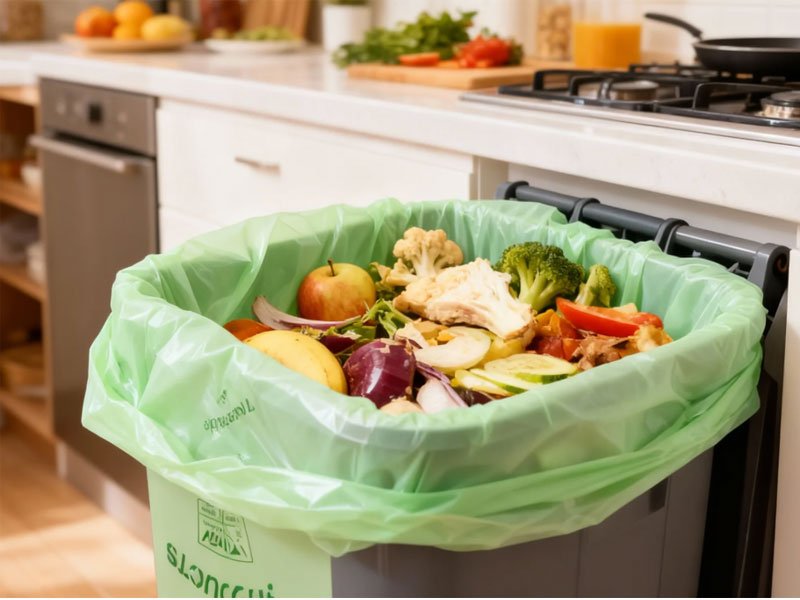
Food waste includes kitchen scraps, spoiled food, and organic residues generated by households, commercial kitchens, and food service operations.
Unlike dry waste, food waste:
- Contains high moisture and oils
- Becomes heavy quickly
- Produces odor if not properly contained
Using incorrect bags can result in leaks, contamination of organic waste streams, and increased handling costs. This is why food waste programs often specify strict requirements for acceptable liners.
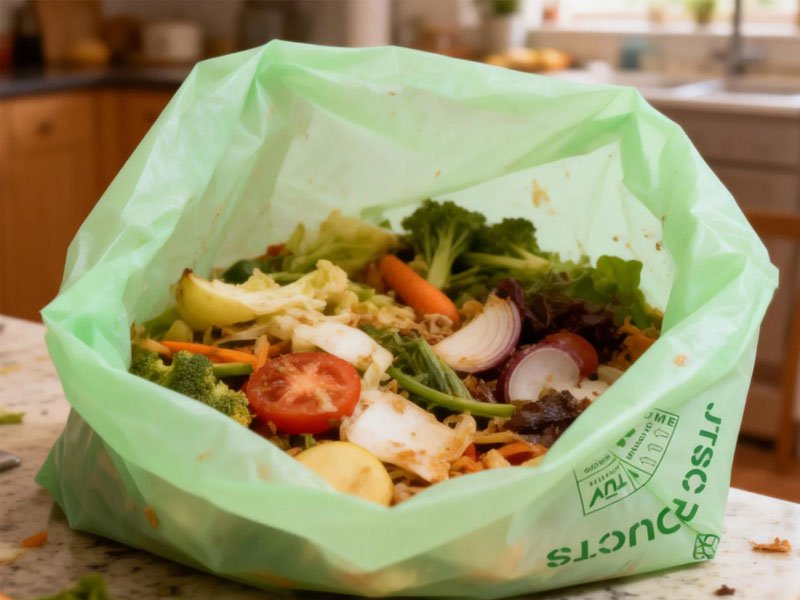
Can Compostable Bags Be Used for Food Waste?
Yes—but only in approved composting systems
Compostable bags can be used for food waste when they are certified compostable and accepted by the local composting facility. Most certified compostable bags are designed for industrial composting, not landfill disposal.
Acceptance depends on local collection and processing rules, which vary by region and operator.
Why biodegradable or degradable bags are often rejected
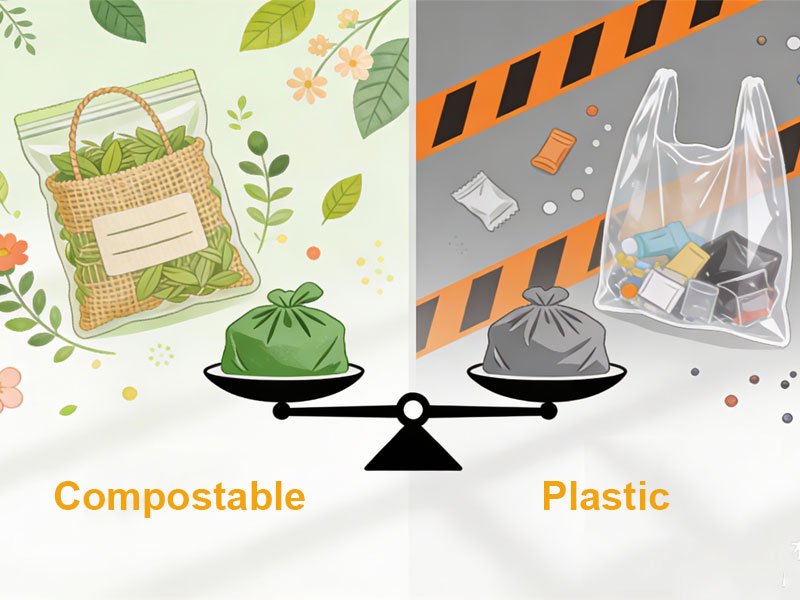
Many food waste programs explicitly prohibit “biodegradable” or “degradable” plastic bags.
These materials do not meet compostability standards and may fragment rather than fully break down, contaminating finished compost. Certification under recognized compostability standards is critical.
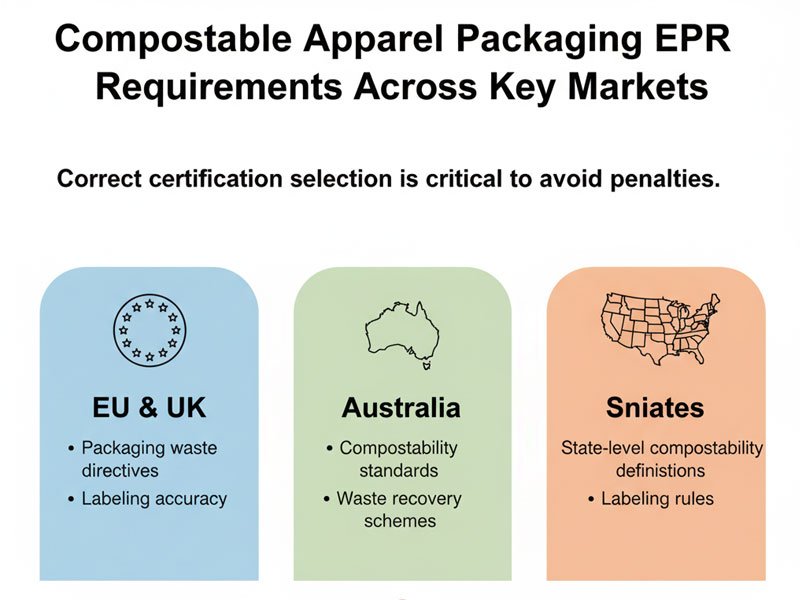
For buyers operating in regulated markets, using certified compostable bags under standards such as AS4736 or EN13432 helps reduce compliance risks.
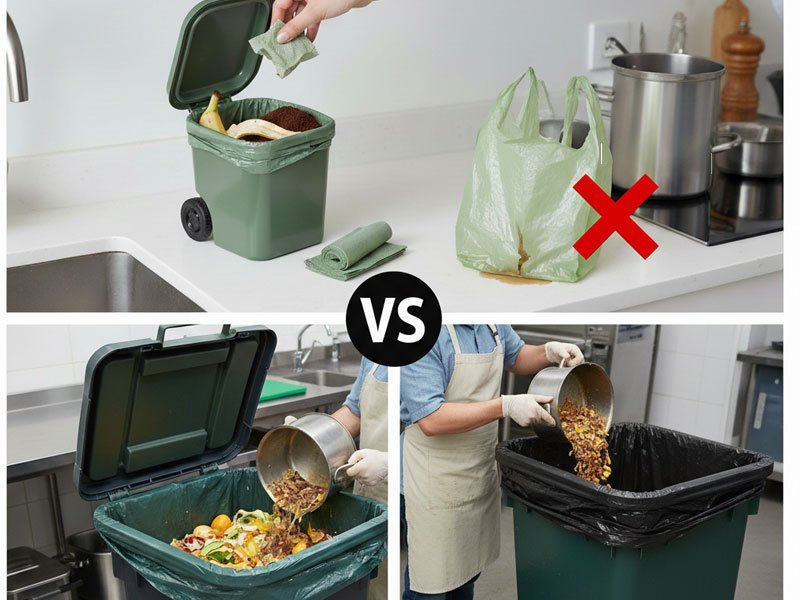
Household vs Commercial Food Waste: Different Needs
Household kitchen caddy use
Household food waste is usually collected in small kitchen caddy bins.
Key requirements include:
- Smaller bag sizes
- Easy knotting or tying
- Odor containment for short-term storage
Thin carry bags are often unsuitable, as they tear easily when wet.
Commercial kitchens and food service
Commercial food waste volumes are significantly higher.
These environments require:
- Stronger liners designed for wet organic waste
- Better leak resistance
- Reliable performance during transport and handling
Using liners not designed for food waste often results in spills and increased cleanup costs.
Industrial Composting vs Home Composting
This is one of the most misunderstood aspects of compostable bags.
Most certified compostable bags require industrial composting conditions, including:
- Elevated temperatures
- Controlled moisture
- Sufficient processing time
Home composting systems often lack these conditions, which is why many compostable bags do not fully break down in backyard compost piles.
Understanding this distinction helps set realistic expectations and prevents misuse.
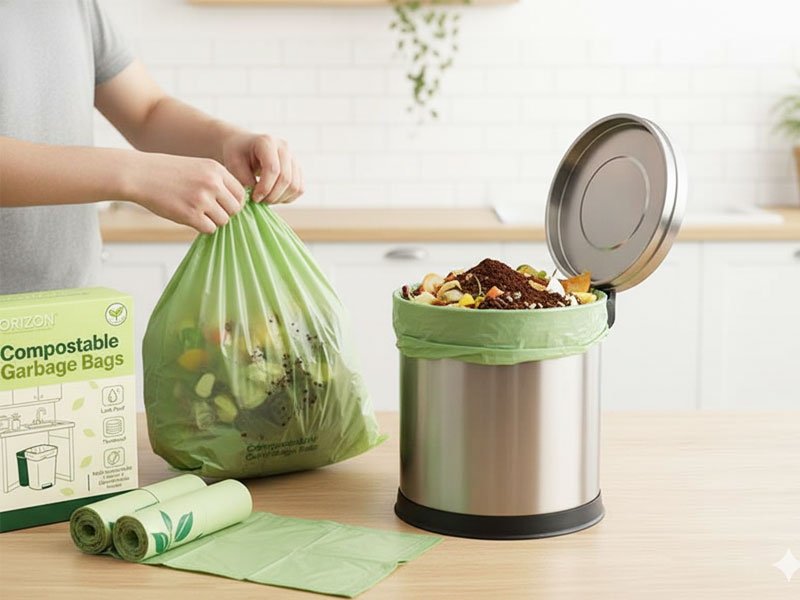
How to Choose Compostable Bags for Food Waste
Choosing compostable bags for food waste is not just about material claims. Performance and certification matter far more.
Strength and Wet-Load Performance
Food waste becomes significantly heavier once moisture is involved.
Compostable bags used for food waste should:
- Be designed as liners, not lightweight carry bags
- Have sufficient thickness for wet organic waste
- Resist tearing when lifting full bags
Bin liners or food waste–specific compostable bags generally perform better than shopping-style bags.
Leak Resistance and Sealing
Leaks are one of the most common reasons compostable bags fail in food waste applications.
Buyers should evaluate:
- Bottom seal quality
- Ability to tie or knot the bag securely
- Resistance to wet and oily residues
Reliable sealing helps prevent contamination and handling issues.
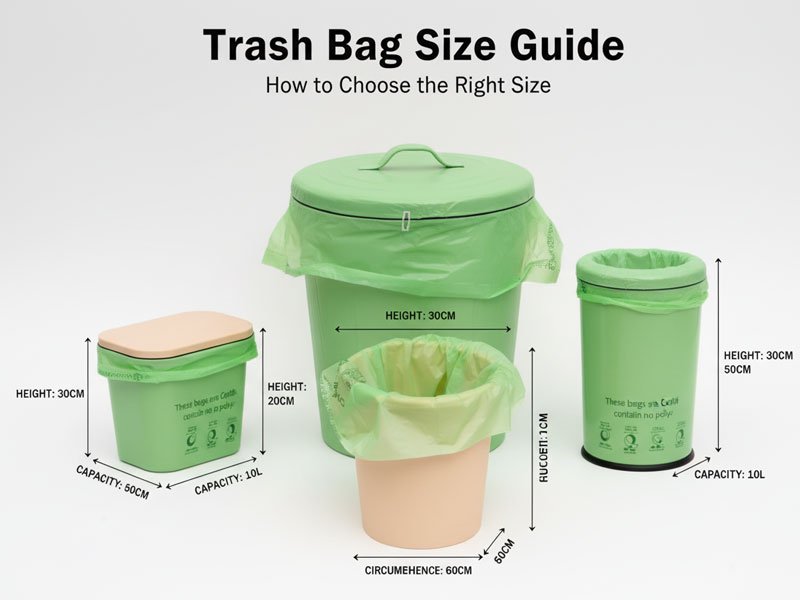
Correct Size for Food Waste Bins
Using the wrong bag size often leads to overfilling and tearing.
Typical guidelines:
- 8L–10L for household kitchen caddies
- Medium sizes for commercial kitchens
- Larger liners for centralized food waste collection
Selecting the correct size improves handling efficiency and reduces liner failure.
Certified Compostable Materials
Certification is essential for food waste programs.
Compostable bags for food waste should be:
- Certified under recognized compostability standards
- Designed for industrial composting environments
- Clearly distinguished from non-certified “biodegradable” plastics
Certification improves acceptance by composting facilities and reduces contamination risk.
Suitable Formats for Different Users
Compostable food waste bags are commonly supplied in:
- Roll format for frequent, front-of-house use
- Flat pack format for backroom or bulk handling
Format flexibility is especially important for wholesale and distribution programs.
For distributors sourcing multiple SKUs, understanding format differences is critical. Learn more about compostable bags for distributors and wholesale-ready supply models.
Common Mistakes When Using Compostable Bags for Food Waste
- Using non-certified “biodegradable” bags
- Using shopping bags instead of liners
- Overfilling thin bags
- Assuming all composting facilities accept compostable plastics
Avoiding these mistakes helps reduce waste rejection and operational issues.
How Businesses and Distributors Should Source Food Waste Bags
Businesses and distributors sourcing compostable bags for food waste should focus on more than price alone.
Key considerations include:
- Certification appropriate for the target market
- Bag performance in wet conditions
- Correct sizing and formats
- Clear labeling and documentation
Working with suppliers who understand compliance and distribution requirements reduces long-term risk.
For wholesale supply, private label programs, and multi-category sourcing, visit our compostable bags for distributors page.
Conclusion
Compostable bags can be effective for food waste when correctly selected and used within approved composting systems.
Performance, certification, and local acceptance all matter. Choosing the right bag—and the right supplier—helps reduce operational issues and compliance risks in food waste programs.
Frequently Asked Questions
Can compostable bags go in food waste bins?
Yes, if they are certified compostable and accepted by the local composting facility.
Are compostable bags suitable for wet food waste?
They can be, but only when designed as liners with sufficient wet-load strength and proper sealing.
Why are biodegradable bags not allowed in food waste programs?
Because they do not meet compostability standards and can contaminate organic waste streams.
Do compostable bags break down in home composting systems?
Most certified compostable bags require industrial composting conditions and may not fully break down at home.
What type of compostable bags are best for food waste?
Certified compostable bin liners or food waste–specific liners designed for wet organic waste.
CTA
Looking for certified compostable bags suitable for food waste programs? View our compostable bag solutions for distributors and wholesale supply