Many clothing brands are moving away from traditional plastic garment bags.
They want packaging that supports sustainability goals and meets new regulations.
Compostable garment packaging is one option.
But choosing the right solution requires more than just reading a material label.
For detailed commercial specifications and OEM requirements, see our Compostable Clothing Packaging Solutions.
This guide explains what brands should check before making a switch.
Why Brands Are Reviewing Garment Packaging
Fashion companies face growing pressure from:
- EU packaging regulations
- US compostable labeling laws
- EPR (Extended Producer Responsibility) rules
- Retail sustainability targets
At the same time, brands must keep packaging functional.
Garment bags protect products during storage, transport, and display.
The goal is balance — protection, compliance, and environmental performance.
Key Factors to Evaluate Before Switching
When choosing compostable garment packaging, brands usually review five areas.
1.Certification Scope
The finished product should meet recognized compostability standards.
Common standards include:
- EN 13432 (Europe)
- ASTM D6400 (United States)
- AS 4736 and AS 5810 (Australia)
You can learn more about the ASTM D6400 compostable standard
Certification must apply to the finished bag, not only the raw material.
2.Thickness and Performance
Garment packaging must remain strong during handling.
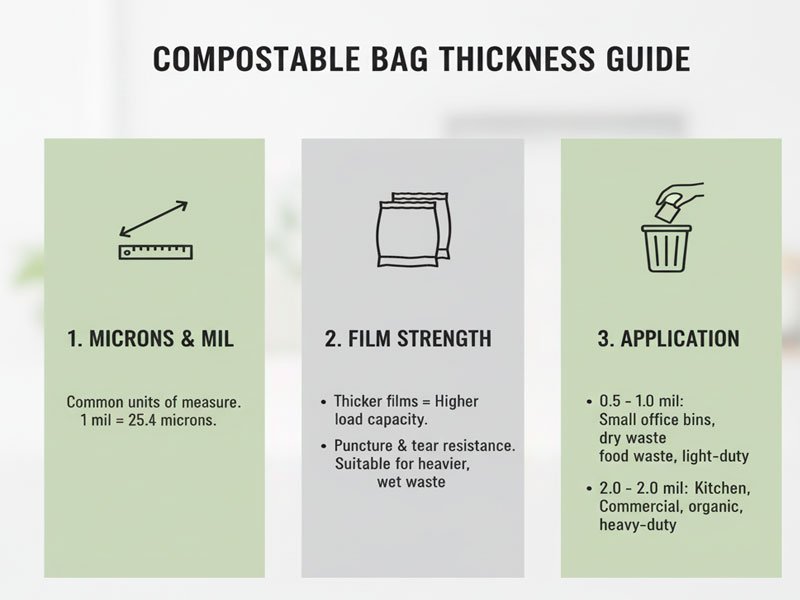
Typical thickness ranges:
- 18–25 micron for lightweight garments
- 25–30 micron for retail apparel
- 30–40 micron for heavy or export garments
If thickness is too low, tearing may occur.
If too high, costs increase and storage conditions matter more.
For detailed guidance, see our Garment Bag Size & Thickness Guide
3.Printing and Branding
Many brands require logo printing.
Before printing, confirm:
- Ink compatibility with compostable films
- Color consistency
- Certification impact
Some compostability standards limit certain additives.
4.Supply Chain Stability
Switching packaging affects:
- Warehouse operations
- Packing processes
- Export documentation
- Storage conditions
Compostable materials may have shelf-life considerations.
Brands should ask suppliers about:
- Lead time stability
- Batch traceability
- Storage recommendations
5.Regional Compliance Alignment
Garment packaging may be shipped across regions.
A bag suitable for one country may not meet rules in another.
For a broader overview of compostable standards, visit our Compostable Certifications Overview
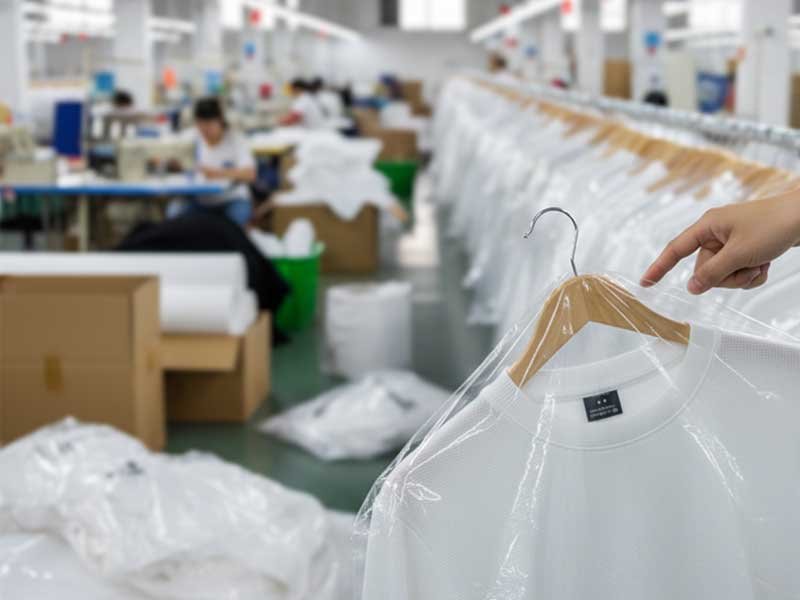
Garment Packaging Requirements by Sales Channel
Different sales channels require different packaging solutions.
Retail Stores
- Clear display appearance
- Hang-ready openings
- Consistent thickness
E-commerce Fulfillment
- Lightweight protection
- Secondary dust cover
- Easy packing workflow
Export Shipping
- Reinforced sealing
- Higher thickness
- Stable pallet stacking
Brands should align packaging choice with real use conditions.
Common Mistakes in Sourcing Compostable Garment Packaging
Many sourcing issues come from misunderstanding.
Confusing “Biodegradable” with “Compostable”
These terms are not always equal.
Certified compostable products must meet strict test criteria.
Ignoring Storage Conditions
High heat and humidity can affect compostable films.
Not Checking Finished Product Certification
Certification must match the final product format.

When Is It Practical to Switch?
Switching to compostable garment packaging may be practical when:
- The brand has sustainability reporting targets
- Retailers request certified packaging
- The company exports to regulated markets
- Plastic reduction goals are formalized
The transition should be planned carefully.
Final Considerations
Compostable garment packaging is not only a material choice.
It is a supply chain decision.
Brands should review certification, thickness, printing, and logistics before switching.
If you are evaluating structured sourcing for bulk orders, visit our Compostable Clothing Packaging Solutions
This guide is intended for B2B buyers and sourcing teams.