Packaging decisions in apparel retail go far beyond simple product protection.
For clothing brands and retailers, packaging must support brand presentation, protect garments during handling and shipping, and align with sustainability and compliance requirements. As environmental expectations increase, many brands are exploring compostable packaging for apparel retail as an alternative to conventional plastic solutions.
However, apparel packaging is rarely a single item. It is a system that may include carry bags for in-store takeaway, garment covers for protection, and mailer bags for e-commerce fulfillment.
This article outlines the most common compostable packaging options used in apparel retail and explains how brands evaluate bags, garment covers, and mailers from a B2B sourcing perspective.
Why Apparel Retail Requires Multiple Packaging Formats
Unlike grocery or general retail, apparel packaging often serves different purposes at different stages:
- In-store presentation and takeaway
- Garment protection during storage or transport
- E-commerce shipping and returns
Each stage places different demands on packaging structure, strength, and appearance. Understanding these differences helps brands avoid over-specifying one format to solve every use case.
Compostable Carry Bags for Apparel Retail
Carry bags are the most visible packaging element in physical retail environments.
They function as:
- A takeaway solution
- A brand touchpoint
- A compliance-sensitive item in regulated markets
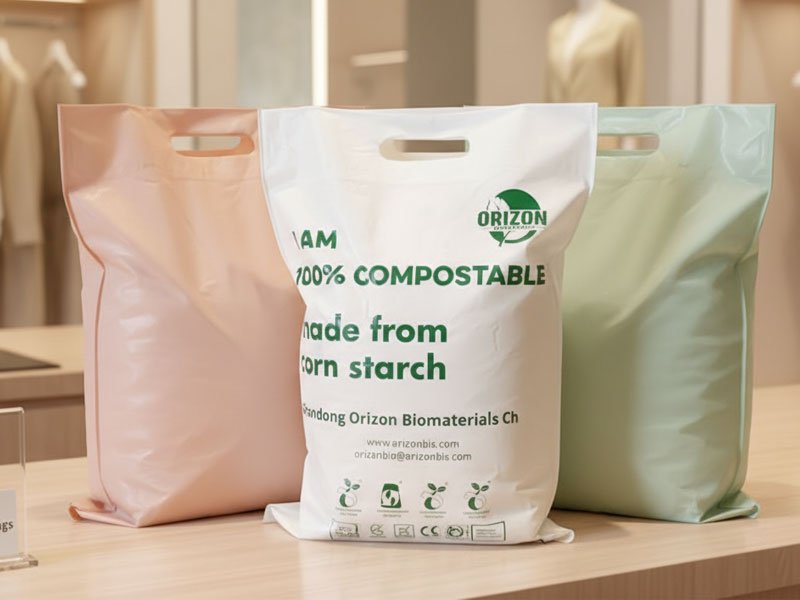
Compostable carry bags used in apparel retail are typically specified for appearance, moderate load capacity, and consistent branding.
In physical apparel stores, carry bags are not just functional items but part of the overall brand experience. Size, handle structure, and surface finish all influence how packaging is perceived at checkout.
For a more detailed look at carry bag structures commonly used in fashion stores, including sizing and appearance considerations, you can refer to our guide on compostable boutique bags.
Compostable Garment Covers and Inner Bags
Garment covers and inner bags are often overlooked, yet they play a key role in apparel packaging systems.
Typical Uses of Garment Covers
Compostable garment covers are commonly used for:
- Protecting folded or hanging garments
- Preventing dust or moisture exposure
- Separating individual items within cartons
These bags are usually not consumer-facing, but they affect product condition upon arrival.
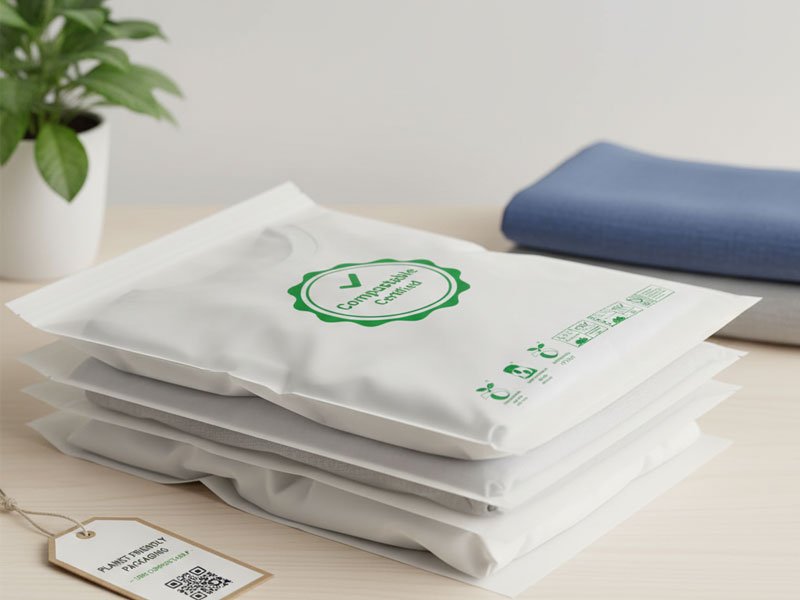
Garment covers are often used to protect apparel items during storage, handling, or distribution, especially when presentation and cleanliness matter. Although these bags are usually not consumer-facing, they play an important role in maintaining product condition.
More information on material options, sizing, and typical use cases can be found in our overview of compostable garment bags.
Flat Bags as Inner Packaging
Flat compostable bags are often used as:
- Inner liners
- Dust covers
- Secondary protection inside carry bags or mailers
Their simple structure allows brands to protect garments without adding unnecessary material or cost.
Flat compostable bags are widely used as inner packaging in apparel workflows, helping separate items, reduce dust exposure, and simplify packing without adding unnecessary structure.
Common formats and applications for this type of inner packaging are outlined in our guide to compostable flat bags.

Compostable Mailer Bags for Apparel E-commerce
E-commerce has become an essential channel for apparel brands, making shipping packaging a critical part of the system.
Compostable mailer bags are typically used for:
- Shipping folded garments
- Handling returns
- Reducing outer packaging weight
They are designed to balance:
- Tear resistance
- Moisture protection
- Sealing reliability
For apparel brands selling online, mailer bags must balance protection, sealing reliability, and material efficiency during shipping and returns. Compostable mailers are often chosen to reduce packaging weight while maintaining durability.
Shipping-focused specifications and common formats are covered in more detail in our resource on compostable mailer bags.

How Brands Choose the Right Combination of Packaging
Rather than selecting a single “best” option, apparel brands often combine multiple compostable packaging formats.
A common approach includes:
- Carry bags for in-store takeaway
- Garment covers or flat bags for inner protection
- Mailer bags for e-commerce fulfillment
The optimal mix depends on sales channels, garment types, and logistics workflows.
Compliance and Certification Considerations
Sustainability claims in apparel packaging must be supported by recognized standards.
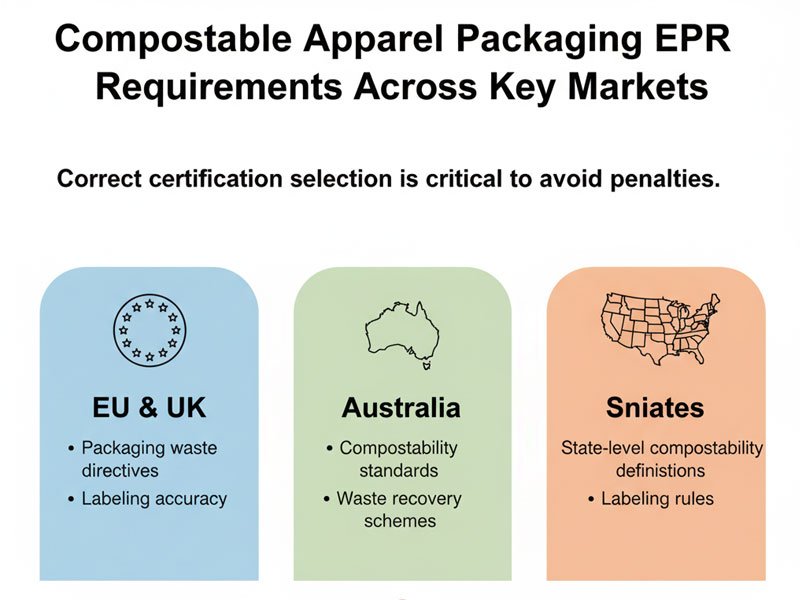
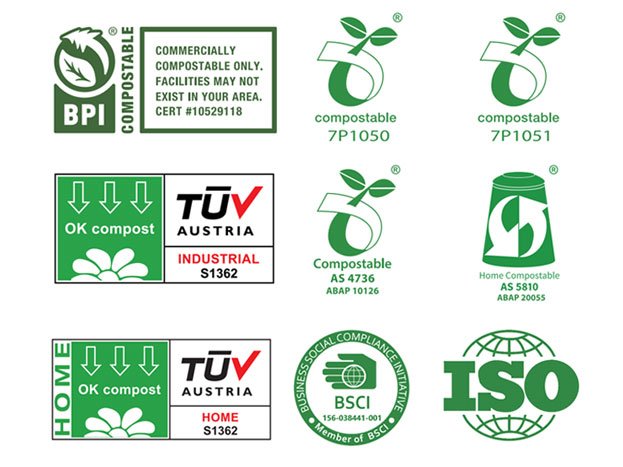
Depending on the target market, compostable packaging may require compliance with:
- EN 13432 (EU)
- ASTM D6400 / BPI (US)
- AS 4736 / AS 5810 (Australia)
Certification should apply to the finished packaging item, not only the base material.
In regulated markets, compostable packaging claims must be supported by recognized standards such as EN 13432, which evaluates the compostability of the finished product rather than only the base material.
A clearer explanation of certification scope, testing requirements, and documentation can be found in our overview of EN 13432 certified compostable bags.
Common Packaging Mistakes in Apparel Retail
Some issues frequently appear during sourcing:
- Using carry bags where garment covers are more appropriate
- Over-packaging lightweight apparel items
- Applying one certification across different markets
- Ignoring packing and fulfillment workflows
Avoiding these mistakes requires evaluating packaging as a system rather than as individual products.
Conclusion
Compostable packaging for apparel retail is not a single product choice but a coordinated packaging strategy.
By combining carry bags, garment covers, and mailer bags appropriately, apparel brands can protect products, support brand presentation, and meet sustainability requirements without unnecessary complexity.
For B2B buyers, aligning packaging formats with real retail and logistics workflows is the most effective way to build a reliable and compliant compostable packaging system.