Choosing between compostable and plastic dog poop bags is a dilemma for many, as businesses and pet owners face the challenge of disposing of dog waste in a practical yet environmentally friendly way.
In this article, I will draw upon my 16 years of experience manufacturing compostable bags to detail the differences between compostable and plastic dog poop bags, their respective environmental impacts, and which is better suited for your business or community.
What are Compostable Dog Waste Bags?
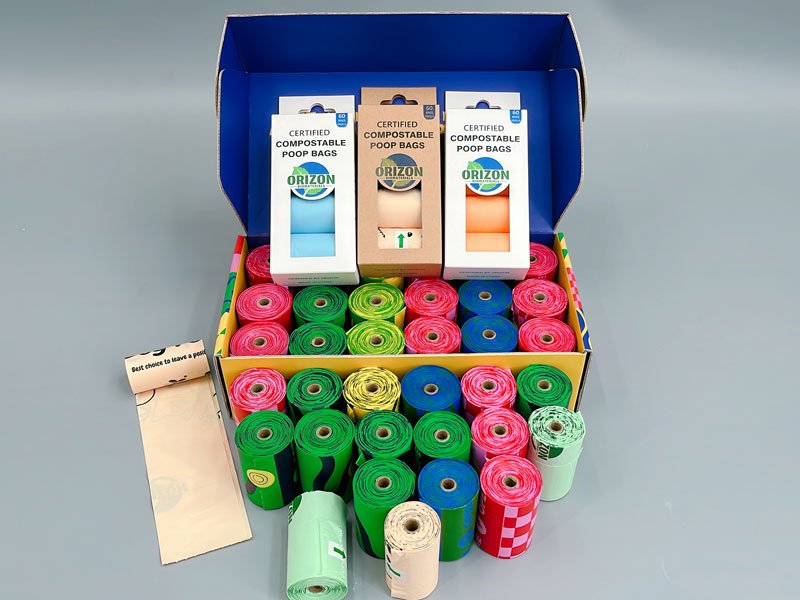
Compostable dog waste bags are made from biodegradable materials such as PLA (Polylactic Acid) and PBAT (Polybutylene Adipate Terephthalate). These bags are specifically designed to break down in composting environments, leaving no harmful residues behind.
- Eco-Friendly Certification: Our compostable bags are BPI certified, ASTM D6400 and EN13432 compliant, ensuring they meet global composting standards.
- How They Work: These bags decompose naturally in industrial composting facilities, breaking down into organic matter without leaving any plastic waste behind.
If you’re an Amazon seller or manage a pet waste station, compostable dog waste bags help you meet your sustainability goals while providing a functional, eco-friendly solution.

What are Plastic Dog Waste Bags?
On the other hand, plastic dog waste bags are typically made from polyethylene or polypropylene. These materials are not biodegradable, meaning the bags take hundreds of years to break down.
- Environmental Impact: Plastic bags remain in the environment for an incredibly long time. They are often not recyclable, and end up polluting landfills, oceans, and other natural habitats. This is a growing concern, especially with increasing environmental regulations on plastic waste.
While plastic bags are cheaper to produce, they contribute significantly to long-term pollution.
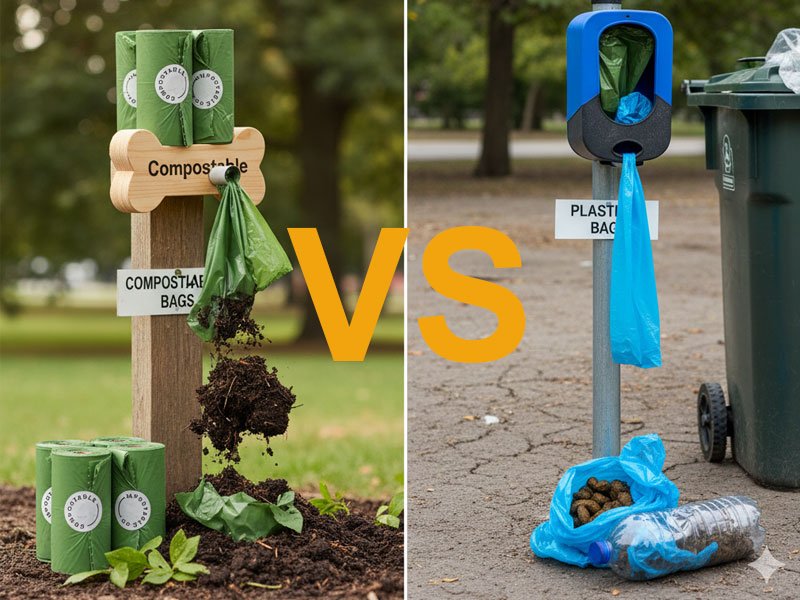
Key Differences Between Compostable vs Plastic Dog Waste Station Bags
Here’s a simple comparison of the main differences between compostable and plastic dog waste bags:
1. Environmental Impact
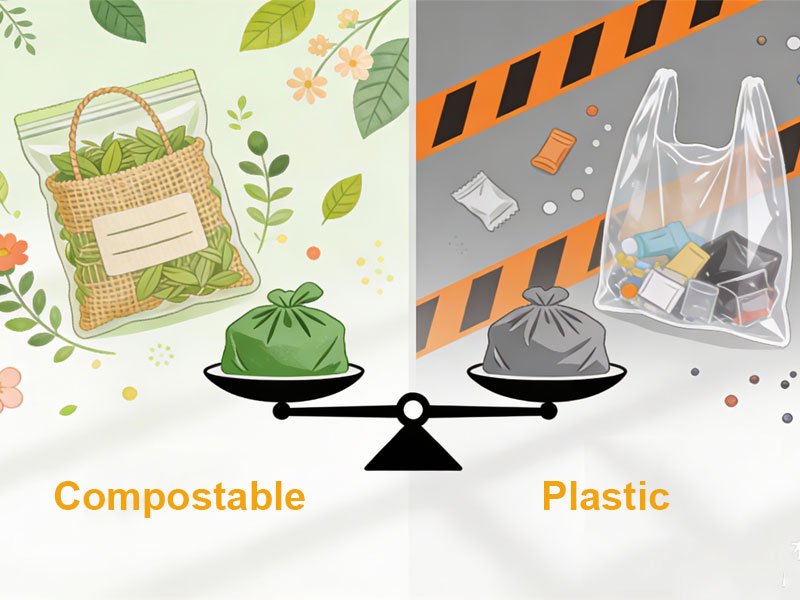
- Compostable Bags: These bags break down naturally in composting environments, reducing waste in landfills. They help keep our parks, streets, and oceans cleaner.
- Plastic Bags: Plastic bags don’t break down quickly, and can stay in the environment for hundreds of years. They add to plastic pollution and are harmful to wildlife.
(Source)
2. Cost
- Compostable Bags: They tend to cost more to produce than plastic bags due to the biodegradable materials used. However, businesses investing in sustainability see long-term benefits from eco-conscious consumers.
- Plastic Bags: These are cheaper to manufacture and buy in bulk. But, the cost comes at the price of contributing to environmental issues in the long run.
3. Durability
- Compostable Bags: While compostable bags are strong, they may not have the same long-term durability as plastic in certain conditions. However, they perform well in pet waste stations and for commercial use.
- Plastic Bags: They are typically stronger and more durable, but this comes at the cost of their negative environmental footprint.
4. Decomposition & Disposal
- Compostable Bags: These bags decompose in composting facilities, making them the ideal choice for businesses that have access to composting options. They break down into non-toxic organic material.
- Plastic Bags: These bags do not break down easily and are best disposed of through landfill or recycling, although recycling rates for plastic bags are low.
(Source)
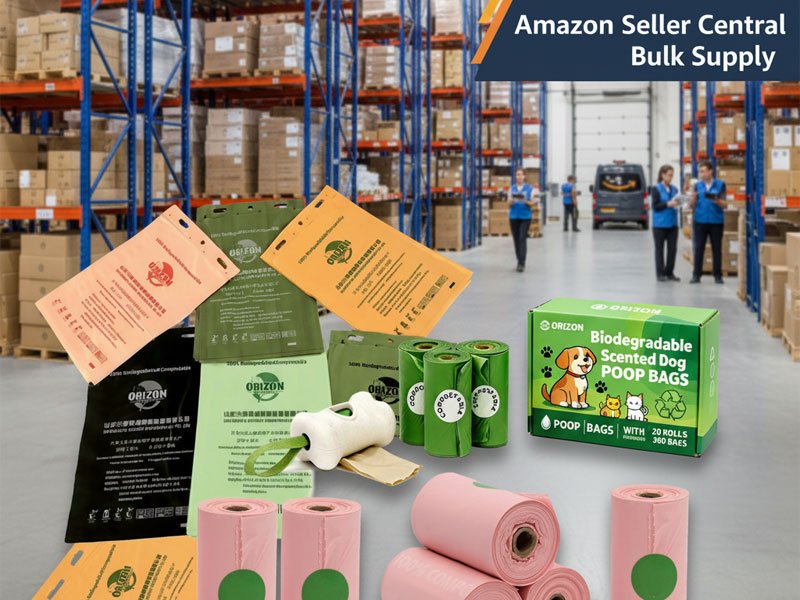
Best Use Cases for Each Type of Bag
Compostable Dog Waste Bags
- Best for: Eco-conscious businesses, pet waste stations in sustainability-driven areas, and Amazon sellers targeting green consumers.
- Use case: These are ideal for parks, dog-friendly communities, and urban areas with access to composting facilities.
Plastic Dog Waste Bags
- Best for: Budget-conscious businesses, pet stores, and locations that require cheap, durable bags for high-traffic areas.
- Use case: Perfect for businesses that aren’t yet focusing on sustainability but still need a functional waste management solution.
Why Switch to Compostable Dog Waste Bags?
Switching to compostable dog waste bags brings several key benefits:
- Sustainability: You reduce your business’s impact on the environment and contribute to the growing movement toward a greener future.
- Compliance with Regulations: With plastic bans becoming more common, using compostable bags ensures that your business is ahead of the curve in meeting eco-friendly regulations.
- Customer Loyalty: Consumers today are more likely to support businesses that prioritize sustainability. By using compostable products, you can align with this growing trend and build a loyal customer base.
Conclusion:
While plastic dog waste bags may seem like the more cost-effective option, compostable dog waste bags offer significant long-term advantages. They are more environmentally friendly and can help your business align with eco-conscious consumer values and regulatory trends.
If you’re an Amazon seller or manage a pet waste station, making the switch to compostable bags will help you stand out as a responsible, forward-thinking business.
Ready to make the change? Request a Bulk Quote or Request Free Samples today to start using compostable bags in your business.
FAQ
What is the main difference between compostable and biodegradable bags?
Compostable bags break down into natural organic material in composting environments, while biodegradable bags may still leave behind harmful residues in landfills.
Can I use compostable bags in my dog waste station?
Yes, compostable bags are ideal for pet waste stations, as long as you have access to composting facilities.
Do compostable bags really break down?
Yes, as long as they are disposed of in an industrial composting facility. Compostable bags decompose naturally, unlike plastic bags.
Are compostable bags more expensive than plastic?
Yes, compostable bags cost more to produce, but they provide long-term benefits to your brand and the environment.