FOGO Compostable Bags Requirements in Australia (2026 Guide)

Australia is undergoing a nationwide transformation of its organic waste system.
Between 2024 and 2030, all municipalities are progressively implementing FOGO (Food Organics + Garden Organics).

As rollout accelerates, understanding official FOGO compostable bag requirements is critical for:

  • Municipal councils
  • Waste contractors
  • Distributors
  • Importers
  • Households

This guide explains the current 2026 compliance framework, certification rules, council acceptance standards, and common rejection risks.

FOGO Compostable Bags

What Is FOGO

FOGO stands for Food Organics + Garden Organics.

It is a separate organics waste collection system designed to divert food waste and green waste from landfill into composting facilities.

FOGO bags are not shopping bags.
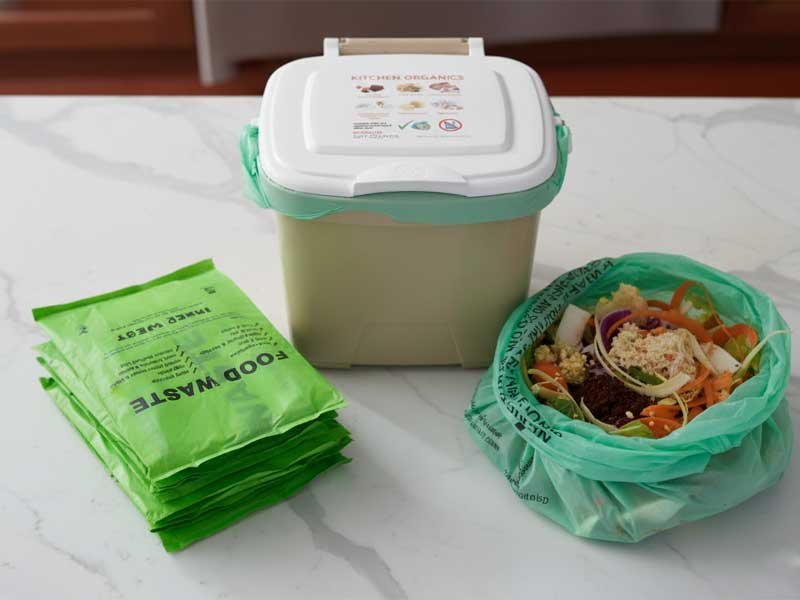
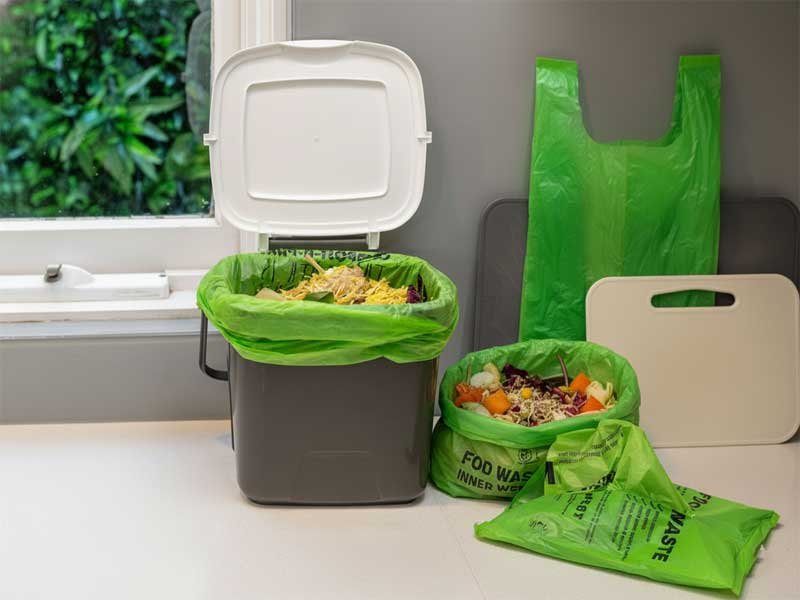
They are compostable bin liners specifically designed for:

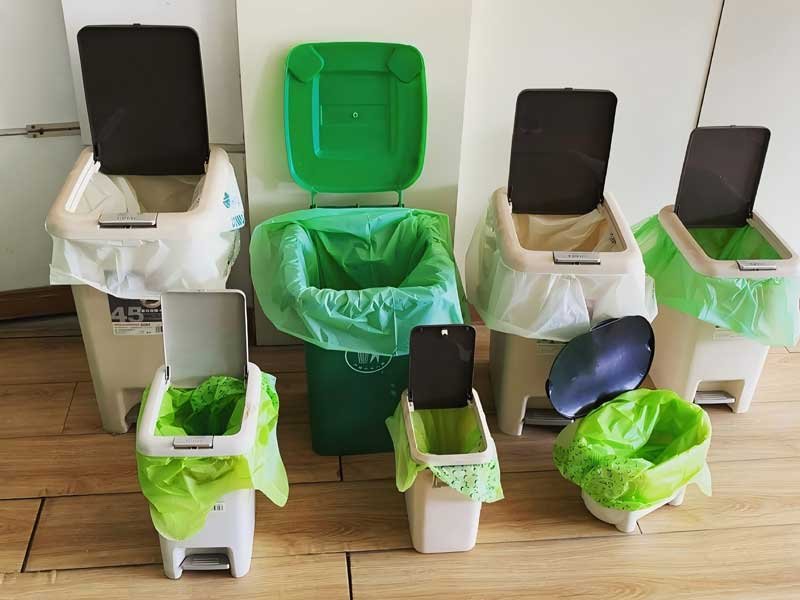
  • Kitchen caddies (7–8L)
  • Household FOGO bins (20–25L)
  • Kerbside organics bins (up to 240L)

National Rollout Timeline (2024–2030)

Under Australia’s National Waste Policy Action Plan:

  • NSW → 100% FOGO rollout by 2025
  • VIC → Full rollout by 2026
  • QLD → Gradual implementation (priority regions first)
  • WA & SA → Progressive council adoption

This policy shift has significantly increased demand for certified compostable bin liners.

For a broader overview of Australian compostable regulations, see: Australia Compostable Bags Requirements

Certification Requirements for FOGO Bags

FOGO compostable bags must be certified under one of the following standards:

Both standards are administered by the Australian Bioplastics Association (ABA).

A compliant bag must:

✔ Display the official ABA compostable logo
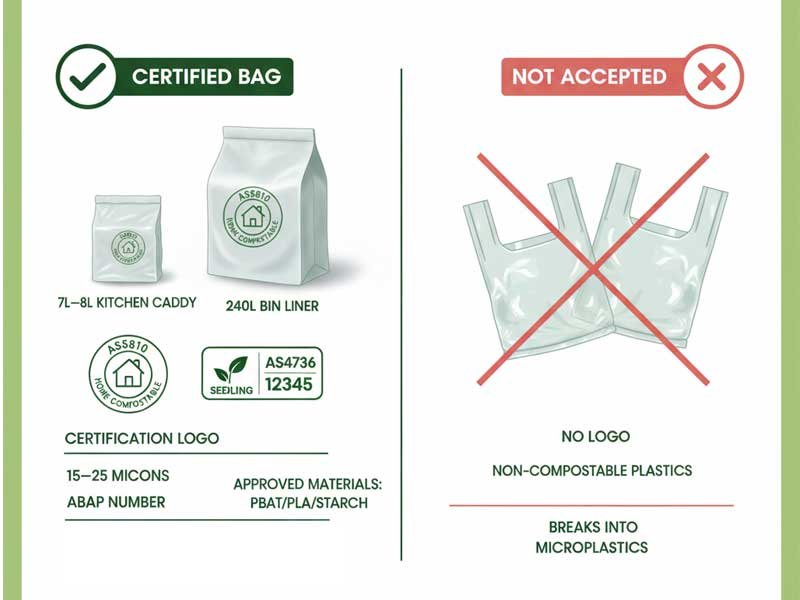
✔ Include a valid certification number (ABAP XXXX)
✔ Be accepted by local council FOGO guidelines

Non-certified “biodegradable” or “degradable” bags are not allowed.

For full certification breakdown, see:

Why “Biodegradable” Bags Are Rejected

Many councils explicitly reject:

  • Oxo-degradable bags
  • Uncertified PLA bags
  • Generic “biodegradable” supermarket bags

Reasons:

  • They fail compost facility testing
  • They cause contamination
  • They leave microplastic residues
  • Entire truckloads of waste may be rejected

For deeper compliance risk discussion, see:

council approved compostable bags

How Councils Verify Compliance

Most councils require:

  • ABA logo visibility
  • Certification number traceability
  • Correct labeling (AS5810 / AS4736 wording)
  • Proper thickness range (typically 15–25 microns)

Some councils require:

  • Green-colored liners
  • Specific warning text
  • QR or traceability codes

For state-specific rules, see: Council Requirements by State

Approved Sizes for FOGO Applications

CapacityTypical ApplicationCommon Keywords
7–8LKitchen caddy linersAS5810 caddy liners
20–25LHousehold FOGO bins20L compostable bin liners
30–35LMulti-purpose organicsHousehold compostable waste bags
240LKerbside council bins240L FOGO bin liners

Correct sizing reduces contamination and improves participation rates.

How to Distinguish ABA Certified Compostable Bags

Why Councils Prefer Certified Compostable Liners

Using certified compostable liners helps:

  • Reduce plastic contamination
  • Improve compost quality
  • Increase household participation
  • Reduce odor and pests
  • Improve collection efficiency

However, environmental benefits depend on correct certification and proper disposal.

To understand disposal compatibility, see:

Best Compostable Trash Bags of different sizes

Common Municipal FOGO Compostable Bags Requirements(2026)

Large FOGO projects often require:

  • High production capacity
  • Multi-size supply
  • Certification documentation
  • Wet strength reliability
  • Water-based food-grade ink
  • Long-term pricing stability
  • Traceable labeling

For broader municipal packaging strategy, see: Community & Municipal Compostable Bags

Key Compliance Risks to Avoid

❌ Using “biodegradable” instead of certified compostable

❌ Missing ABA certification number
❌ Using incorrect thickness
❌ Supplying non-compliant private label products
❌ Ignoring council-specific rules

For a full compliance checklist, see: Compostable Packaging Compliance Checklist

FAQ

Are compostable bags mandatory in FOGO bins?

It depends on council rules. Some councils mandate certified bags. Others allow loose waste. Always check local guidelines.

Can biodegradable bags be used in FOGO bins?

No. Most biodegradable bags are rejected unless certified under AS5810 or AS4736.

Are PLA bags automatically accepted?

No. PLA must meet AS5810 or AS4736 certification. Material alone is not enough.

What happens if non-certified bags enter FOGO systems?

Composting facilities may reject entire waste loads due to contamination risk.

Conclusion

FOGO compostable bags in Australia must meet strict certification and council acceptance standards.

Using non-certified or incorrectly labeled bags can lead to:

  • Contamination
  • Rejected compost batches
  • Increased landfill diversion failure
  • Regulatory risk

Certification and council alignment are essential for successful FOGO participation.

滚动至顶部

Download Compostable Bags Catalog

下载表单
Get a QUOTE
询盘表单

This inquiry form is for business customers only. Retail and personal requests will not be processed.