Clumping cat litter creates heavy, wet waste that puts real pressure on disposal bags. Many buyers ask whether biodegradable cat litter bags are strong enough, what thickness is needed, and how these bags should be handled after use.
As a manufacturer supplying biodegradable cat litter bags for global B2B markets, we see these questions often—especially from pet brands and distributors switching from conventional plastic bags.
This guide explains how to choose suitable biodegradable cat litter bags for clumping litter, focusing on material strength, bag structure, and practical disposal considerations.
What Is Clumping Cat Litter and Why Bag Strength Matters
Clumping cat litter absorbs moisture and forms solid lumps.
Compared with loose litter, this creates:
- Higher weight in a small area
- More moisture contact with the bag
- Increased risk of puncture from sharp edges
Because of this, standard household trash bags are often not suitable. Biodegradable cat litter bags must be designed specifically for this type of waste.
Are Biodegradable Cat Litter Bags Strong Enough for Clumping Litter?
Yes—when properly specified.
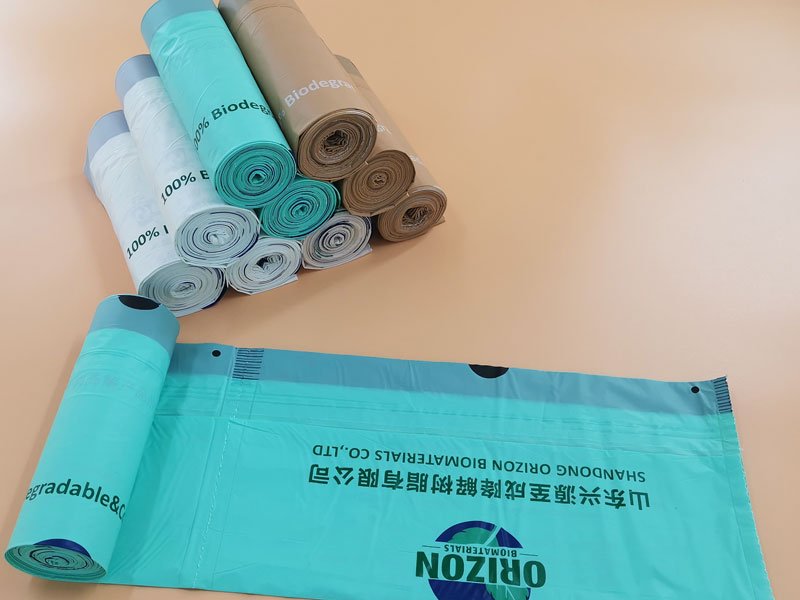
Biodegradable cat litter bags manufactured with PBAT-based blends are engineered to provide:
- Improved tear resistance
- Better flexibility under load
- Stable performance in wet conditions
The key factor is material formulation + thickness, not whether the bag is biodegradable or compostable.
Low-cost biodegradable films without reinforcement may fail under clumping litter weight, while properly designed litter bags perform comparably to traditional plastic bags during routine disposal.
Recommended Thickness for Biodegradable Cat Litter Bags
There is no single “best” thickness for all applications, but general guidance includes:
- Light daily cleaning: thinner films may be sufficient
- Clumping litter with moisture: medium thickness is recommended
- High-volume or commercial use: thicker film improves handling stability
Thickness should be selected based on:
- Litter type
- Bag size
- Disposal frequency
- Target market requirements
For product-level specifications, refer to:
- Drawstring Biodegradable Cat Litter Bags
- Flat Biodegradable Cat Litter Disposal Bags

Drawstring vs Flat Cat Litter Bags — Which Is Better?
Both bag structures are widely used in professional supply programs.
Drawstring Cat Litter Bags
- Secure sealing
- Better odor containment
- Easier handling during disposal
Often selected for retail pet brands and subscription products.
🔗 Internal link: drawstring biodegradable cat litter bags
Flat Cat Litter Disposal Bags
- Simple structure
- Cost-efficient for bulk supply
- Suitable for controlled disposal systems
Commonly used in wholesale distribution and institutional settings.
Internal link: flat biodegradable cat litter bags
Disposal Considerations for Biodegradable Cat Litter Bags
Biodegradable and compostable cat litter bags should be disposed of according to local waste management systems.
Key considerations:
- Some composting systems do not accept pet waste
- Industrial composting standards differ by region
- In many markets, litter waste is disposed of with general waste
Biodegradable materials help reduce long-term plastic pollution, even when composting is not available.
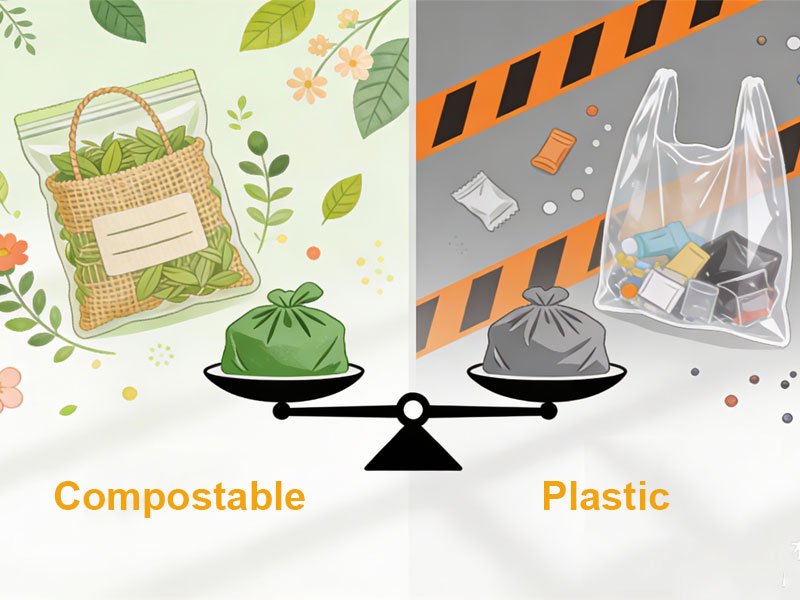
Biodegradable vs Plastic Cat Litter Bags — Practical Comparison
| Feature | Biodegradable Bags | Plastic Bags |
|---|---|---|
| Material source | Plant-based blends | Petroleum-based |
| Tear resistance | Engineered (PBAT) | Varies |
| Long-term pollution | Reduced | Persistent |
| Compostability | Project-based | No |
For B2B buyers, selection is usually driven by regulatory trends, brand positioning, and supply stability, not just disposal method.
Conclusion
Choosing biodegradable cat litter bags for clumping litter requires attention to material quality, thickness, and bag structure.
For professional buyers, properly specified biodegradable litter bags offer reliable performance while supporting sustainability goals and regulatory compliance.
Looking for wholesale biodegradable cat litter bags suitable for clumping litter?
Explore our product formats or contact our team for specification guidance.