In Australia, kitchen waste bin liners are widely used to collect food scraps for placement in FOGO (Food Waste and Organic Waste) bins.
However, how these liners are used, and which type to choose, largely depends on local council regulations, not just personal preference.
As a manufacturer of compostable bags with 16 years of experience, this article explains how to properly use kitchen waste bin liners in Australia, how to avoid common problems such as odors and leaks, and how councils and businesses can choose compliant compostable liners.
Quick Answer: How to Use Kitchen Caddy Liners (Australia)
If your council allows compostable liners for FOGO or food organics bins, the basic process is simple:
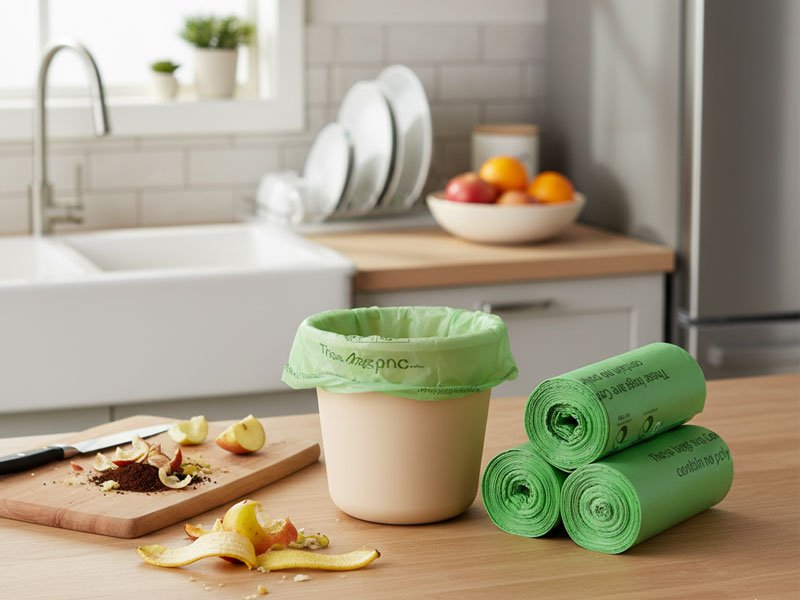
- Open the liner fully and fit it into your kitchen caddy
- Add food scraps only (no plastic or non-accepted items)
- Empty the liner into your green bin every 2–3 days
- Rinse the caddy regularly, especially in warm weather
Always check your local council guidelines first, as rules vary across Australia.
Are Kitchen Caddy Liners Allowed in Australia?
Yes—but only if they meet the correct composting standard required by your council.
Most Australian councils that run FOGO or FO programs require liners that meet:
- AS 4736 – Commercially compostable standard
Some councils do not accept home-compostable liners (AS 5810) in kerbside organics bins, even though they are compostable in backyard systems.
Most Australian councils require kitchen caddy liners to meet the AS 4736 compostable standard, which is designed for commercial and industrial composting systems.
You can read a detailed explanation of what AS 4736 means, how certification works, and why councils rely on it here: AS 4736 Compostable Bags .
If a liner does not meet the required standard, it may cause contamination and lead to rejected organics loads.
How to Open and Fit a Kitchen Caddy Liner Properly
Many compostable liners feel stiff at first. This is normal.
Best practice:
- Rub the liner opening gently between your fingers
- Shake it open fully before placing it into the caddy
- Ensure the base sits flat to reduce stress points
Avoid forcing the liner open aggressively—this can weaken the material.
What Size Kitchen Caddy Liner Should You Use?
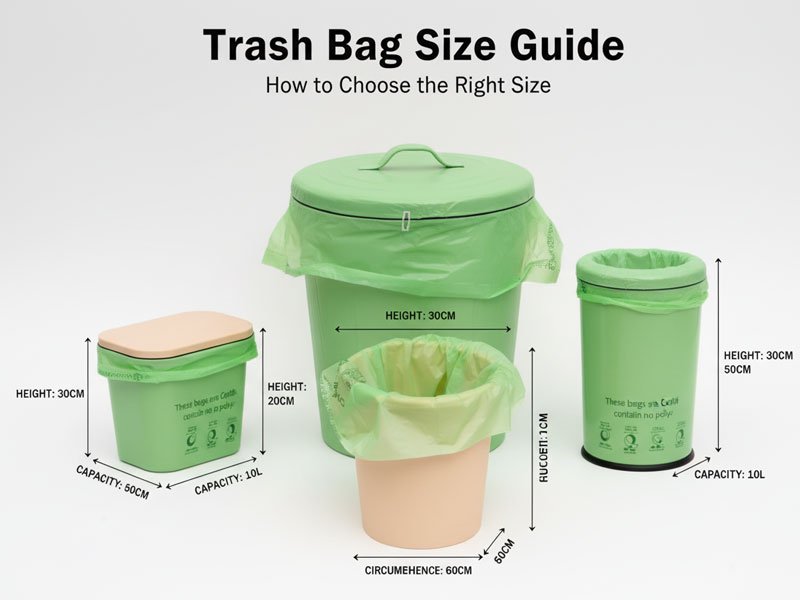
Most household kitchen caddies in Australia work best with:
- 8L liners (most common)
- 10L liners for larger caddies
- 12L liners only for oversized indoor bins
Choosing a liner that is too large often causes:
- Folding and sagging
- Higher risk of tearing
- Poor airflow and more odour
Choosing the right liner size depends on your caddy volume and how often food waste is emptied.
For a practical overview of common sizes such as 8L, 10L, and 12L, you can refer to our compostable caddy liner size guide, which outlines typical applications for each size.
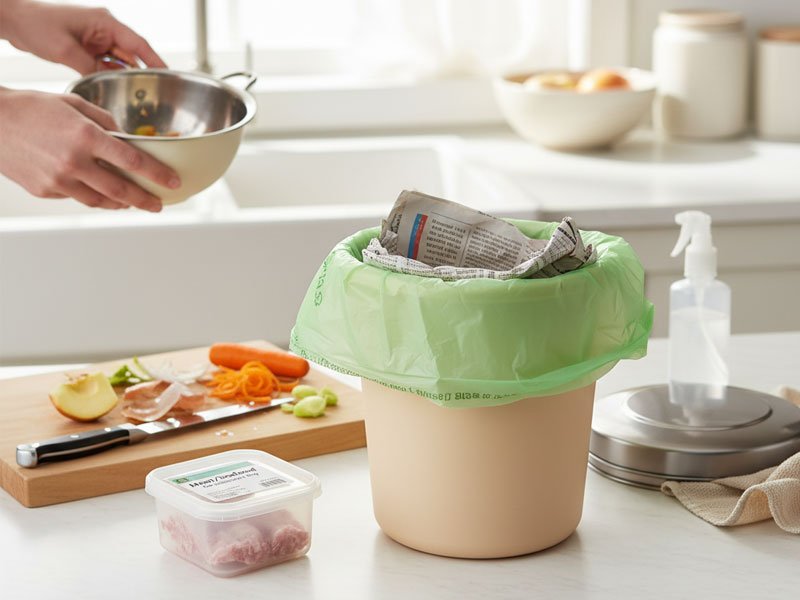
How to Prevent Smells, Leaks, and Fruit Flies
Smell and leakage complaints are rarely caused by the liner alone. They are usually related to how food waste is handled.
Practical tips that work:
- Drain excess liquid from food scraps before placing them in the caddy
- Line the bottom of the liner with paper towel or newspaper
- Empty the caddy more frequently during summer
- Rinse and dry the caddy after each emptying
- For meat or seafood scraps, store them in the freezer until bin day
These steps significantly reduce odour and insect issues.
Proper liner thickness and material structure also play a role in reducing leaks and handling wet food scraps.
Many councils and facilities use compostable kitchen caddy liners specifically designed for food waste collection to improve hygiene and reduce contamination.
What If You Run Out of Liners—or Prefer Not to Use Them?
Many councils allow alternative methods, including:
- Using newspaper or paper towels as a liner
- Going liner-free and rinsing the caddy frequently
Some councils also provide free or subsidised compostable liners through:
- Council offices
- Libraries
- Community centres
Check your local council’s waste program for details.
Common Mistakes That Cause FOGO Contamination
Avoid these frequent issues:
- Using bags labelled only as “biodegradable” (not compostable)
- Using non-certified compostable liners
- Placing full caddy liners directly into landfill bins
- Adding non-food items such as plastic, pet waste, or packaging
Contamination increases processing costs and can jeopardise organics programs.
For Councils & Businesses: A Simple B2B Liner Checklist
For organisations managing food waste at scale—such as councils, property managers, schools, or commercial kitchens—liner selection matters.
Key considerations:
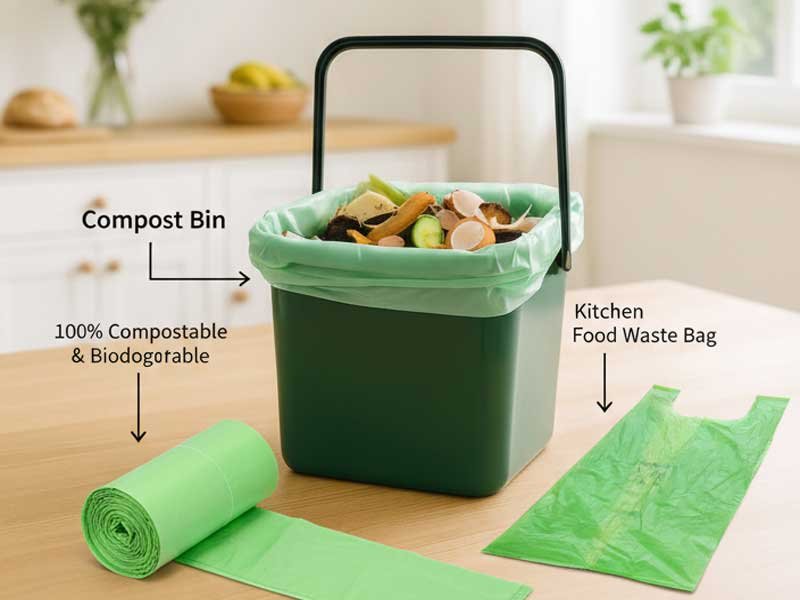
- Compliance with AS 4736
- Appropriate volume (8–12L for indoor caddies)
- Thickness matched to waste weight and emptying frequency
- Consistent batch quality and certification documentation
- Supply stability and packaging format (rolls or flat packs)
For councils, property managers, and commercial kitchens, liner selection is not just about convenience—it directly affects contamination rates and processing efficiency.
A structured overview of compostable bin liners for council and commercial use, including size options and compliance considerations, can help standardise organics collection programs.
FAQ: Kitchen Caddy Liners in Australia
Can I tie the liner before putting it in the green bin?
Yes, if your council allows it. Tie loosely to avoid tearing.
How often should I empty my kitchen caddy?
Every 2–3 days, or more frequently in hot weather.
Do I have to use a liner at all?
No. Many councils allow liner-free use if the caddy is cleaned regularly.
Are all compostable liners accepted in FOGO bins?
No. Acceptance depends on council rules and required certification.