For Australian packaging distributors, food packaging wholesalers, and retail buyers, choosing between roll and flat compostable bags is not just a packaging decision.
It directly affects store efficiency, waste control, replenishment cost, and customer complaints.
In practice, many sourcing discussions stall because buyers are asked to choose one format over the other, without understanding how each format performs in different retail and wholesale scenarios.
This guide compares perforated roll compostable bags and flat pack compostable bags from a practical B2B perspective, helping Australian buyers and distributors decide which format works better — and when using both makes the most sense.
What Are Roll Compostable Bags?
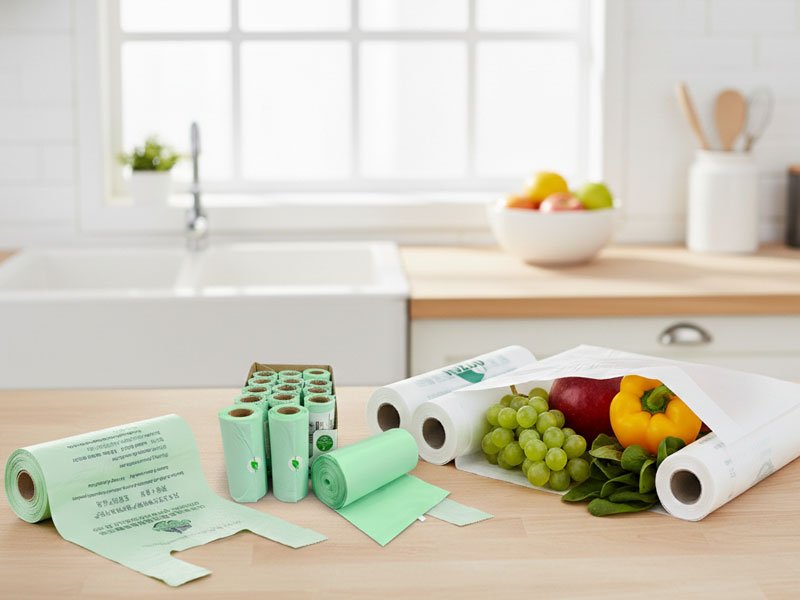
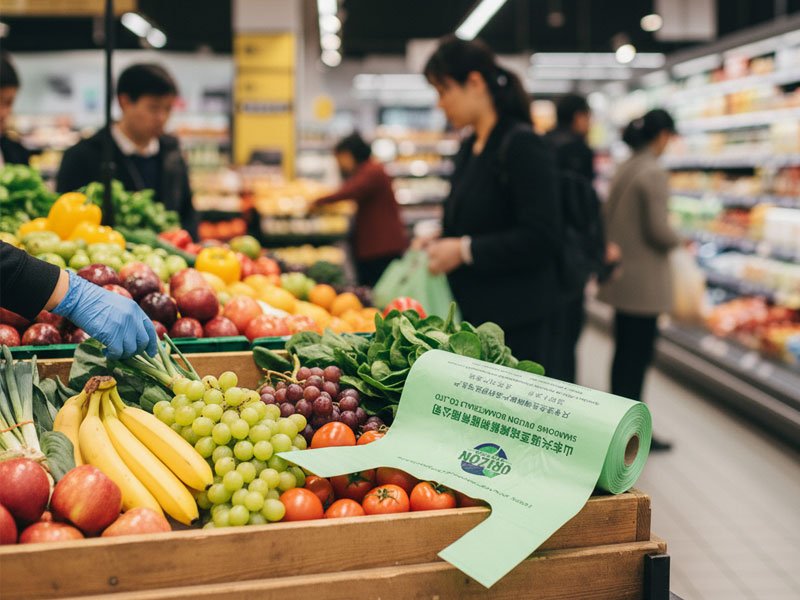
Roll compostable bags, often referred to in Australia as produce rolls, perforated bags on roll, or tear-off produce bags, are supplied on a roll with controlled perforation between each bag.
They are commonly used with bag racks or dispensers in self-service produce sections.
Roll Compostable Bags Type:
- Open-front flat-top
- Open-front vest
Typical Use Scenarios
- Supermarket produce departments
- High-traffic grocery stores
- Farmers’ markets and fresh food markets
- Retail environments with customer self-service bagging
Operational Advantages of Roll Bags
From a wholesale and retail operations standpoint, roll formats offer several advantages:
- Faster bag handling during peak shopping hours
- Controlled bag usage through perforation, reducing over-use
- Cleaner presentation on the shop floor
- Easier stock monitoring (bags per roll, rolls per carton)
For high-volume produce environments, perforated roll compostable bags are often the most efficient option.
Common Issues Buyers Should Watch
Many complaints about compostable produce rolls are not caused by the material itself, but by poor specification or manufacturing control. Buyers should pay attention to:
- Perforation strength (too weak causes tearing, too strong causes linking)
- Static cling, which can cause bags to stick together
- Opening performance, especially with wet hands
- Consistency between batches
These factors directly affect checkout speed and staff feedback — and should be discussed clearly during sourcing.

What Are Flat Pack Compostable Bags?
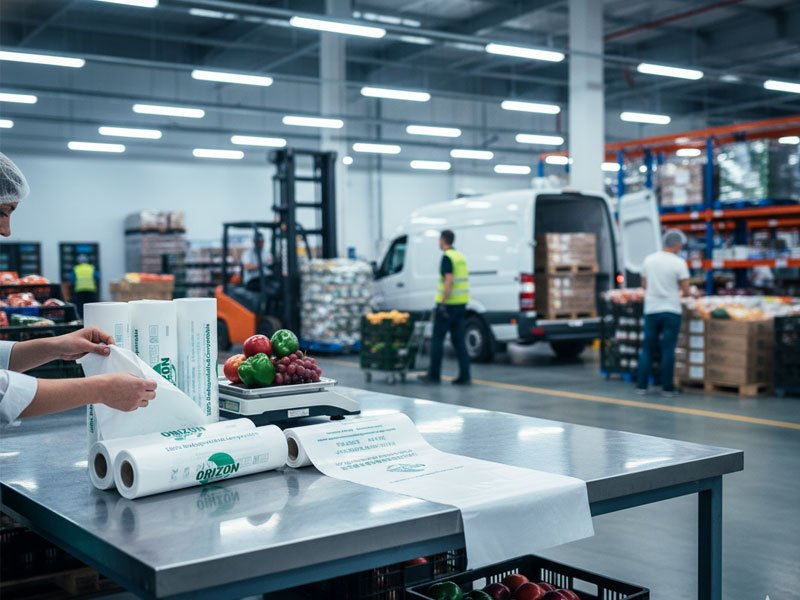
Flat pack compostable bags (also called flat-packed bags, loose bags in cartons, or bulk pack bags) are supplied stacked or loosely packed in cartons rather than on rolls.
They are widely used in back-of-house packing operations and wholesale environments.
Typical Use Scenarios
- Back-of-house produce packing
- Produce wholesalers and distribution centres
- Pre-packing fruit and vegetables
- Lower-traffic retail stores
Operational Advantages of Flat Pack Bags
From a procurement and cost-control perspective, flat packs offer:
- Lower unit cost per bag
- Easier carton-level replenishment
- Greater flexibility across bag sizes
- Simple bulk handling for warehouses and prep areas
For wholesalers and preparation areas, flat pack compostable bags are often the most economical solution.
Limitations to Consider
Flat formats may not be suitable for all retail environments:
- Slower manual handling on shop floors
- Higher risk of over-use without controlled dispensing
- Less suitable for customer self-service areas
Understanding these limitations helps buyers avoid misapplication and internal complaints.
Roll vs Flat Compostable Bags: Side-by-Side Comparison
| Factor | Roll Compostable Bags | Flat Pack Compostable Bags |
|---|---|---|
| Typical usage | Shop floor / front-of-house | Back-of-house / packing |
| Handling speed | Very fast | Medium |
| Cost per bag | Slightly higher | Lower |
| Usage control | High (perforation) | Low |
| Replenishment | Roll & carton based | Carton based |
| Best suited for | Supermarkets, high traffic | Wholesalers, prep areas |
For Australian buyers, this comparison often clarifies why a single format rarely solves every operational need.
Why Many Australian Buyers Use Both Formats
In real-world procurement, many Australian distributors and retailers do not choose roll or flat.
They choose both.
A common supply model looks like this:
- Roll compostable bags for shop-floor efficiency
- Flat pack compostable bags for back-of-house cost control
- Same compostable material and certification across both formats
This dual-format approach simplifies sourcing, reduces risk, and allows buyers to optimise both operational efficiency and unit cost.
Procurement Checklist Before Requesting a Quote
To avoid delays and mismatched specifications, Australian buyers typically confirm the following before requesting pricing:
- Bag size (width × length)
- Thickness range
- Format: roll, flat pack, or both
- Bags per roll / rolls per carton
- Carton packing and pallet configuration
- Required certification (e.g. AS4736, OK Compost)
- Estimated monthly volume
- Preferred delivery term (FOB, CIF, or DDP)
Having these details ready significantly speeds up quotation and sample approval.
Which Format Should You Quote First?
A simple rule many buyers follow:
- Supplying supermarkets : start with roll bags
- Supplying wholesalers : start with flat packs
- Supplying distributors : quote both formats
For packaging distributors serving multiple customer types, offering both roll and flat compostable bag formats is often the most commercially practical solution.
Conclusion
Choosing between roll vs flat compostable bags is less about which format is “better” and more about where and how the bags will be used.
Understanding these differences helps Australian buyers reduce complaints, control costs, and build more reliable supply programs.
Call to Action
Looking for compostable produce bags for the Australian market?
We supply both perforated roll and flat pack compostable bags, with Australia-ready compliance support for distributors and wholesalers.
View our Australia compostable bag solutions