Quick Answer
BPI compostable means a finished product has been independently certified by the Biodegradable Products Institute (BPI) to meet ASTM D6400 or ASTM D6868 standards and is designed to fully break down in industrial composting facilities in North America.
It does not mean the product is home compostable, biodegradable in nature, recyclable, or suitable for landfill breakdown.
What Is BPI Compostable?
When a product is labeled BPI compostable, it is making a certification claim, not a general sustainability statement.
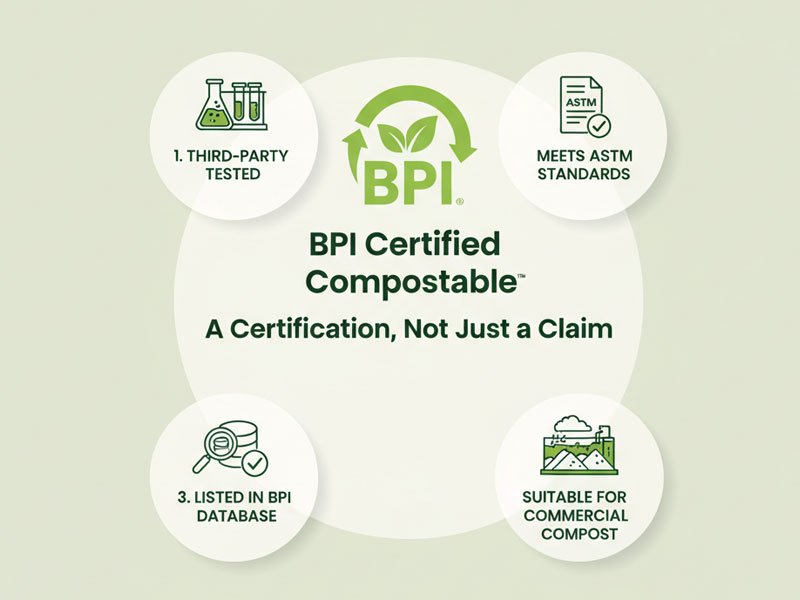
BPI compostable certification confirms that:
- The final, finished product has passed third-party compostability testing
- The product meets recognized ASTM compostability standards
- The product is listed in the official BPI product database
- The product is intended for commercial / industrial composting systems
In practice, BPI certification is used as a sorting and acceptance signal by composting facilities, waste haulers, and municipal organics programs across the United States and Canada.
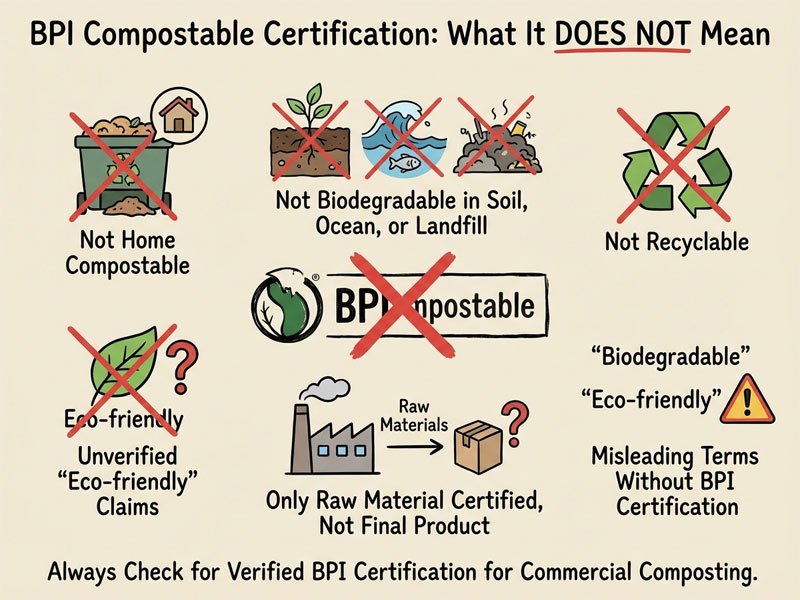
What BPI Compostable Does NOT Mean
One of the most common sources of confusion around compostable packaging comes from what BPI compostable does not mean.
BPI compostable does not mean:
- Home compostable
- Biodegradable in soil, ocean, or landfill environments
- Recyclable or compatible with recycling streams
- “Eco-friendly” without verified testing
- That only the raw material (resin) is certified
Many products use vague terms like biodegradable or eco-friendly without certification.
Without BPI certification, such claims offer no guarantee of compostability in real waste systems.
Many compliance issues come from misunderstanding labeling terms such as biodegradable and compostable. For a clearer breakdown, see our guide on biodegradable vs compostable packaging.
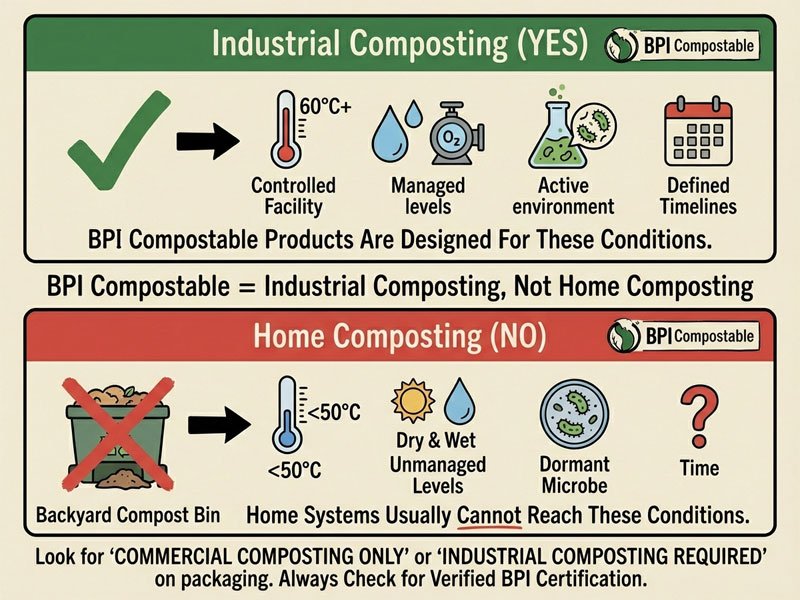
BPI Compostable = Industrial Composting, Not Home Composting
BPI compostable products are specifically designed for industrial composting conditions, not backyard compost piles.
Industrial composting facilities operate with:
- Controlled high temperatures
- Managed moisture and oxygen levels
- Active microbial environments
- Defined processing timelines
Home compost systems usually cannot reach these conditions, which is why BPI compostable products are not suitable for home composting in most cases.
This distinction explains why many packages clearly state “commercial composting only” or “industrial composting required.”
The Standards Behind BPI Compostable
ASTM D6400 and ASTM D6868
BPI certification is based on two key standards developed by ASTM International:
ASTM D6400
- Applies to compostable plastic materials
- Tests biodegradation, disintegration, and compost safety
- Ensures materials break down under industrial composting conditions
ASTM D6868
- Applies to compostable coatings, laminates, and fiber-based packaging
- Commonly used for paper products with compostable coatings
Meeting these standards means a product has been tested for complete compostability, not just partial degradation or fragmentation.
Finished Product Certification vs Resin Certification
A critical but often misunderstood point is the difference between certified resin and a certified finished product.
- Certified resin alone does not equal a certified product
- Additives, inks, thickness, and structure affect compostability
- BPI certifies the finished product, not just the material input
This is why BPI listings always apply to specific products and SKUs, not factories or raw materials.
For buyers, finished-product certification is what ensures real-world compliance.
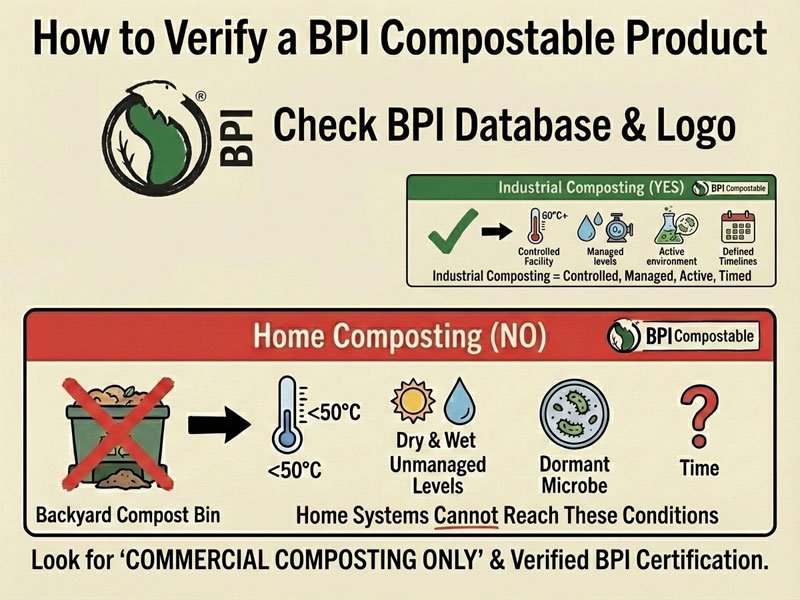
How to Verify a BPI Compostable Product
To confirm whether a product is truly BPI compostable, follow these steps:
- Search the product or supplier in the official BPI database
- Verify the certificate number and product description
- Confirm the certification applies to the finished product, not just the resin
- Check that the BPI logo usage follows official guidelines
- Ensure the certified product matches your target market and application
Verification protects buyers from mislabeling, compliance disputes, and contamination risks.
Why Buyers Specify BPI-Listed Products
For North America programs, many buyers specify BPI certified compostable bags to reduce compliance disputes and contamination risks.
BPI compostable certification is commonly required for food-service packaging, organics liners, and certified compostable pet waste bags supplied to North American municipal and commercial programs.
Buyers specify BPI certified compostable products to:
- Reduce contamination in compost streams
- Avoid rejected loads at composting facilities
- Minimize regulatory and labeling disputes
- Standardize procurement across regions
- Align with municipal and commercial composting requirements
This is why many procurement documents explicitly require BPI-listed finished products, especially for food-waste and organics collection programs.
Common Labeling Confusion: “Compostable Except in California”
You may see labels stating “Compostable, except in California.”
This wording does not mean the product is uncertified.
It reflects state-level labeling and acceptance rules, not compostability performance.
Certification confirms compostability under industrial conditions, but local acceptance rules determine whether a product can be used in a specific program.
Always verify both certification and local guidelines.
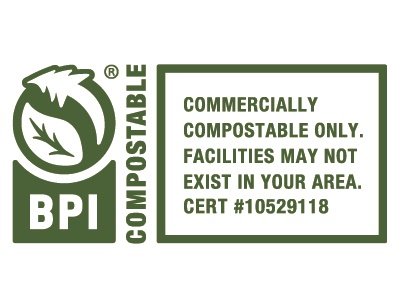
BPI Logo and Labeling Basics
The BPI logo serves as a visual sorting tool for composting facilities.
Proper logo use matters because:
- Facilities rely on logos to identify acceptable materials
- Misuse increases contamination risk
- Incorrect labeling can result in program rejection
Only products listed in the BPI database may display the BPI logo, and only in approved formats.
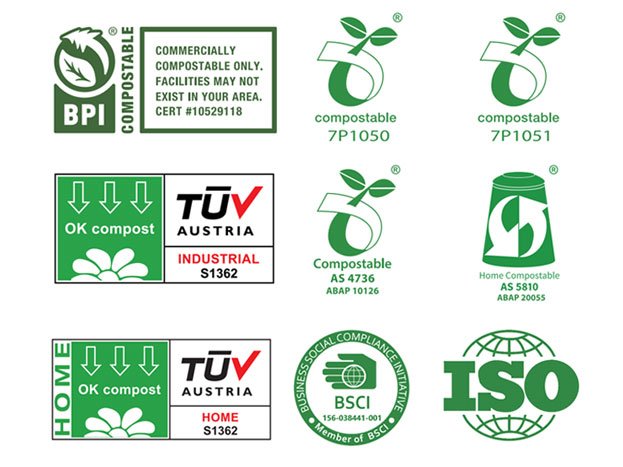
BPI vs Other Compostable Certifications
Different regions use different compostability standards:
| Certification | Primary Region | Compost Type |
|---|---|---|
| BPI | United States & Canada | Industrial |
| EN 13432 | Europe | Industrial |
| OK Compost HOME | Global | Home |
| AS 4736 | Australia | Industrial |
BPI certification is specifically aligned with North American composting infrastructure and acceptance rules.
FAQ
What does BPI compostable mean exactly?
BPI compostable means a finished product has been independently certified by the Biodegradable Products Institute to meet ASTM D6400 or ASTM D6868 standards and is designed to fully break down in industrial composting facilities in North America.
Is BPI compostable the same as biodegradable?
No. “Biodegradable” is a general marketing term, while BPI compostable is a verified certification based on standardized laboratory testing and third-party review.
Does BPI compostable mean home compostable?
No. BPI certification applies only to industrial composting environments and does not indicate suitability for home composting systems.
What standards are used for BPI compostable certification?
BPI certification is based on ASTM D6400 (for plastic products) and ASTM D6868 (for coated or laminated fiber products).
Is BPI certification issued for materials or finished products?
BPI certification applies to specific finished products, not raw materials or factories. Product design, thickness, inks, and additives all affect certification eligibility.
Why do North American buyers require BPI-listed products?
Many composting facilities, waste haulers, and municipal organics programs only accept products listed in the official BPI database to reduce contamination and compliance disputes.
How can buyers verify a BPI compostable product?
Buyers should verify the product listing in the official BPI database, confirm the certificate number, and ensure the certification applies to the exact finished product being supplied.
This page is provided for certification reference and compliance education.
BPI compostable certification applies to specific finished products and does not guarantee acceptance in all local waste programs.