As sustainability becomes a priority across industries, compostable packaging is gaining attention from brands, e-commerce what does compostable packaging mean? How does it differ from biodegradable packaging or recyclable materials? Is it truly an environmentally friendly alternative, or just another layer of green marketing?
This guide provides a professional, in-depth overview, tailored for B2B buyers, to help you assess the value, limitations, and sourcing methods of compostable materials.
What Is Compostable Packaging?
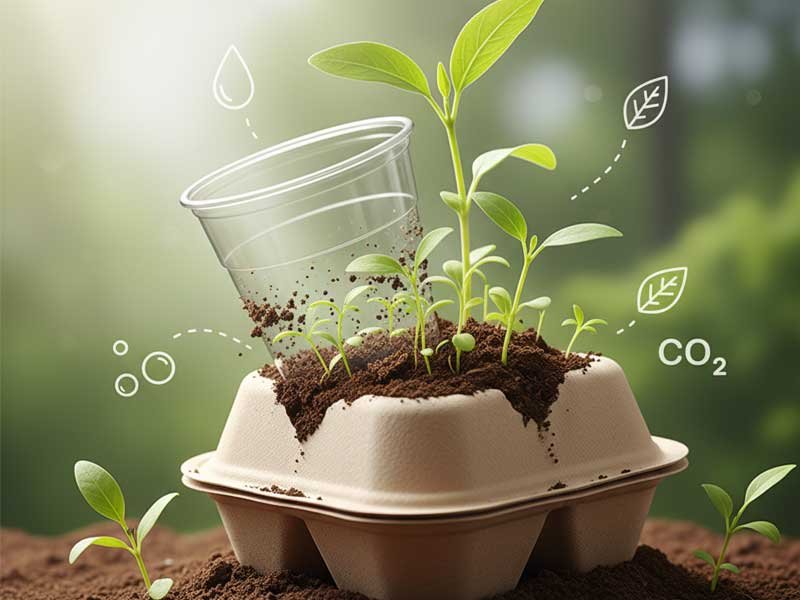
Compostable packaging refers to materials that decompose into non-toxic components (such as water, carbon dioxide, and organic matter) under specific composting conditions. Furthermore, it leaves no harmful environmental residues during the decomposition process.
Unlike traditional packaging materials (such as plastics, glass, and metals), its lifecycle design endpoint is biodegradation, not just recycling or landfill. It represents a more thorough environmentally friendly packaging solution.
It is mainly divided into two categories:
- Industrial compostable packaging: requires high-temperature, controlled environments in commercial composting facilities.
- Household compostable packaging: decomposes at lower temperatures and over longer periods in home composting systems.
Comparison Table
| Term | Breaks Down Into | Conditions | Certification Standards |
|---|---|---|---|
| Compostable | CO2, water, biomass | Requires composting (home or industrial) | EN 13432, ASTM D6400, BPI |
| Biodegradable | Varies (may leave residue) | Natural conditions over unknown period | Often unregulated |
| Recyclable | Transformed into new products | Industrial recycling infrastructure | Material-dependent |
What Is Compostable Packaging Made Of
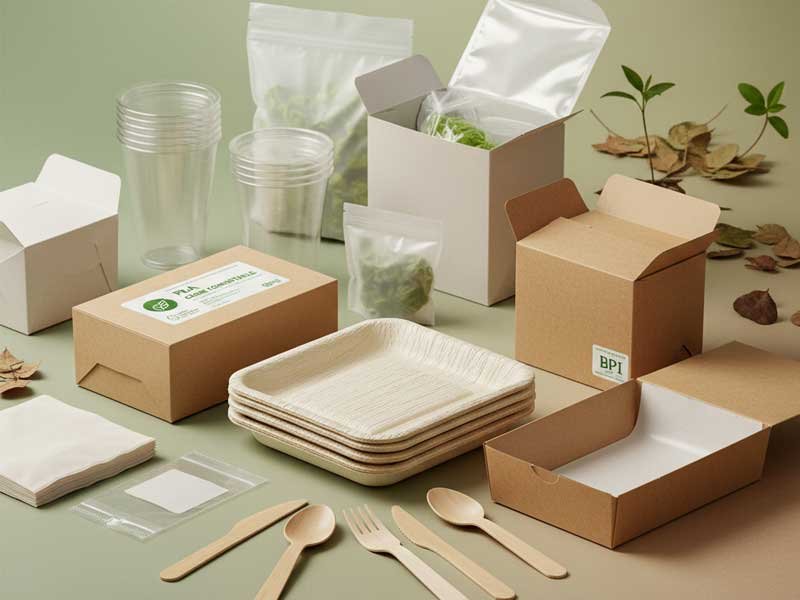
Compostable packaging is typically made from renewable plant-based materials, primarily including:
Bioplastics:
- PLA (Polylactic Acid): Produced from renewable biomass such as corn starch and sugarcane through fermentation. It offers good transparency and rigidity, making it suitable for disposable tableware, cups, and films. It usually requires industrial composting conditions.
- PHA (Polyhydroxyalkanoates): Produced by microbial fermentation, it has properties similar to traditional plastics and decomposes under both industrial and household composting conditions. It is also degradable in marine environments and is considered a highly promising bioplastic packaging option.
Cellulose-based materials:
- Paper and paperboard: Naturally compostable, but it’s essential to ensure that their coatings and adhesives also meet compostability standards.
- Plant fibers such as bagasse, bamboo, and palm leaves: Agricultural waste processed into tableware, containers, etc., offering excellent sustainable packaging
These sustainable materials typically require industrial composting to fully degrade within 90-180 days. While compostable bags for home use exist, they typically require a longer shelf life.
Why Choose Compostable Packaging?
Choosing compostable packaging is more than just a trend; it’s an investment in the future of our planet. The benefits of compostable packaging are obvious.
- Reduced Landfill and Plastic Pollution
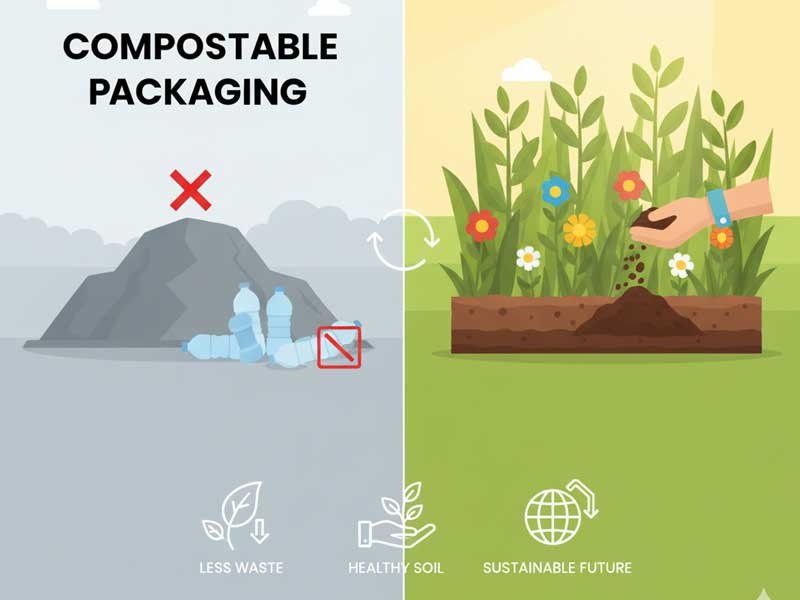
By returning to the soil at the end of its life cycle, compostable packaging effectively reduces the amount of waste ending up in landfills, alleviating land pressure.
It reduces reliance on traditional petrochemical plastics, thereby reducing the harm of plastic pollution and microplastics to ecosystems and the food chain.
The practice of zero-waste packaging provides a closed-loop solution for waste management.
- Creating Valuable Compost: Nourishing the Soil
The humus generated after compostable packaging decomposes is an excellent soil conditioner, rich in nutrients.
It improves soil structure, enhances water retention, and reduces the need for chemical fertilizers.
It supports the circular economy, transforming “waste” into “resources” and promoting sustainable agriculture.
- Supporting Sustainable Development
Choosing sustainable packaging solutions helps businesses enhance their brand image and meet consumer demand for eco-friendly products.
It reflects a responsible attitude towards the planet and aligns with the global vision of minimizing the environmental impact of compostable packaging.
Compostable vs Biodegradable vs Recyclable vs Reusable
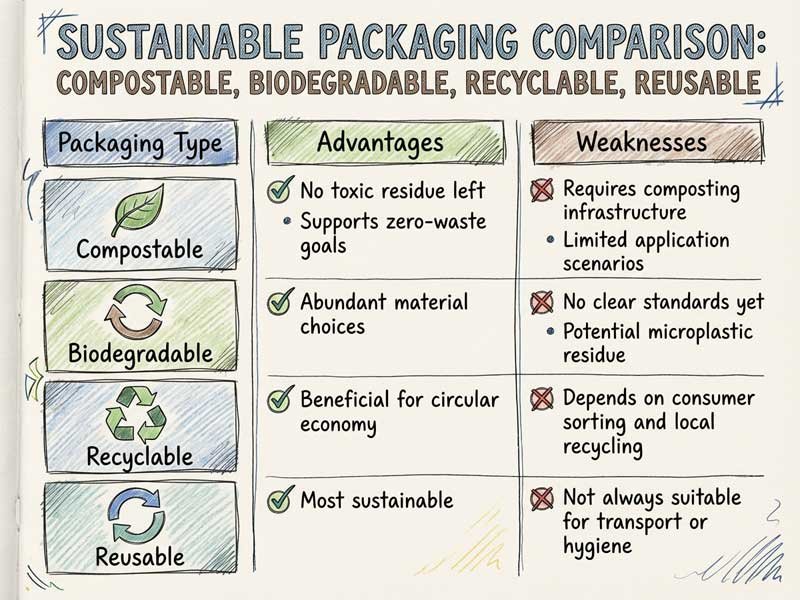
When choosing sustainable packaging, it’s important to compare:
| Packaging Type | Strengths | Weaknesses |
| Compostable | Leaves no toxic residue; supports zero-waste goals | Needs composting infrastructure; limited use cases |
| Biodegradable | Broad material options | No clear standard; may leave microplastics |
| Recyclable | Circular economy friendly | Depends on consumer sorting & local recycling |
| Reusable | Most sustainable | Not always viable for shipping or hygiene |
For many e-commerce businesses, a mix of plastic-free compostable mailers and recyclable boxes offers a practical solution.
What Is the Most Sustainable Packaging Material
To identify the most sustainable packaging material, an in-depth comparison of various mainstream materials is essential. This helps to understand their performance across different sustainability dimensions. The table below details the advantages, limitations, and best application scenarios for various eco-friendly packaging materials.
| Packaging Material Type | Key Advantages | Key Limitations / Challenges | When is it a Better Choice (Best Application Scenarios) |
| Compostable Materials | Offers an ideal “closed-loop” solution in regions with industrial composting facilities, shifting waste management from landfill to resource regeneration. Can be processed together with food scraps and other organic waste, preventing methane generation. Derived from renewable biomass, reducing reliance on fossil fuels. Reduces plastic pollution when properly managed. | Relies heavily on robust composting infrastructure; environmental benefits are not realized without it. Some bioplastics decompose slowly in home composting environments. Currently, costs are relatively higher. | Primarily for single-use food packaging (e.g., takeout containers, coffee cup liners), especially in scenarios where food residue is mixed and difficult to separate. In communities or cities with established industrial composting systems. Suitable for zero waste stores and events. |
| Recycled Plastics | Significantly reduces demand for virgin plastic production by re-using existing plastics (e.g., rPET, rHDPE). Lowers energy consumption and carbon emissions. Alleviates pressure from plastic pollution. Extends the life cycle of plastic materials. | Recycling processes still require energy and water. Recycling rates are subject to classification systems and public awareness. Supply and certification for food-grade recycled plastics remain a challenge.<br>- Performance may slightly degrade with each recycling loop. | In regions with well-established recycling infrastructure and high recycling rates. For non-food packaging that does not require direct food contact (e.g., detergent bottles, textile packaging). When technology and certification allow for food-grade applications. |
| Glass and Metal | Highly recyclable, can be recycled indefinitely without loss of quality or performance. Excellent barrier properties, especially suitable for food and beverage packaging. Glass is transparent, metal is sturdy and durable. Reduces reliance on virgin material extraction. | Higher energy consumption in production (especially for glass). Heavy weight leads to increased shipping costs and carbon footprint. Glass is fragile, requiring extra protective packaging. | For products requiring multiple reuses (e.g., glass bottles, jars). In regions with mature recycling systems and efficient product transport.<br>- Ideal for food, beverages, cosmetics, and products requiring high barrier properties and premium aesthetics. A premium eco-friendly packaging option. |
| Paper and Cardboard | Sourced from renewable resources (forests), often sustainably managed. Easily recyclable and often suitable for home composting. Lightweight, reducing shipping costs. Highly adaptable for printing and branding. | Often requires coatings for moisture and oil resistance, which can impact its recyclability and compostability. Sensitive to moisture and grease, prone to deformation. Risk of deforestation if not from certified sustainable sources. | For most dry food packaging (e.g., cereal boxes), electronics packaging, and shipping packaging. In scenarios where composite coatings comply with compostable packaging standards. Suitable for products requiring lightweight and easy branding. |
| Packaging Minimization and Reuse | The most eco-friendly packaging is often no packaging at all, or reusable packaging. Reducing the quantity of packaging material is the single largest environmental measure. Reuse: Designing durable, easy-to-clean, and recoverable packaging encourages consumers to use it multiple times, fostering resource cycling. Represents the highest priority in the circular economy hierarchy. | Requires changes in consumer behavior and education. Involves costs for cleaning, maintenance, and logistics for reusable packaging. Products must be suitable for unpackaged or reusable models (e.g., bulk foods). May not be suitable for all product types or distribution models. | Applicable to all product types and should be the primary consideration in any sustainable packaging strategy. Particularly suitable for bulk goods, durable products, and items operating on a deposit/rental model (e.g., beverage bottles, coffee cups). |
What Companies Use Biodegradable Packaging
More and more companies are adopting biodegradable packaging to reduce their environmental impact. E-commerce giants like Amazon and JD.com are introducing bio-based packaging bags and paper bags in their deliveries, while SF Express and UPS have launched compostable parcel bags, promoting green logistics.
In the fast food sector, McDonald’s uses bagasse boxes, KFC Singapore has launched plant fiber containers that decompose in 24 hours, and Starbucks Europe has introduced compostable hot beverage cups. All of these packages meet international compostability certification standards.
Environmental protection is also deeply integrated into consumer brands. Allbirds and Rothy’s use biodegradable packaging for shoe boxes, while Lush and Mary Kay use cornstarch filler instead of polystyrene foam. Niche brands like Zero Waste Cartel have also achieved “zero-plastic e-commerce” with 100% compostable parcel bags.
These brands’ actions demonstrate that biodegradable packaging is becoming an important tool for corporate sustainable transformation, balancing environmental responsibility and brand image.
Global Compliance & Regulatory Trends
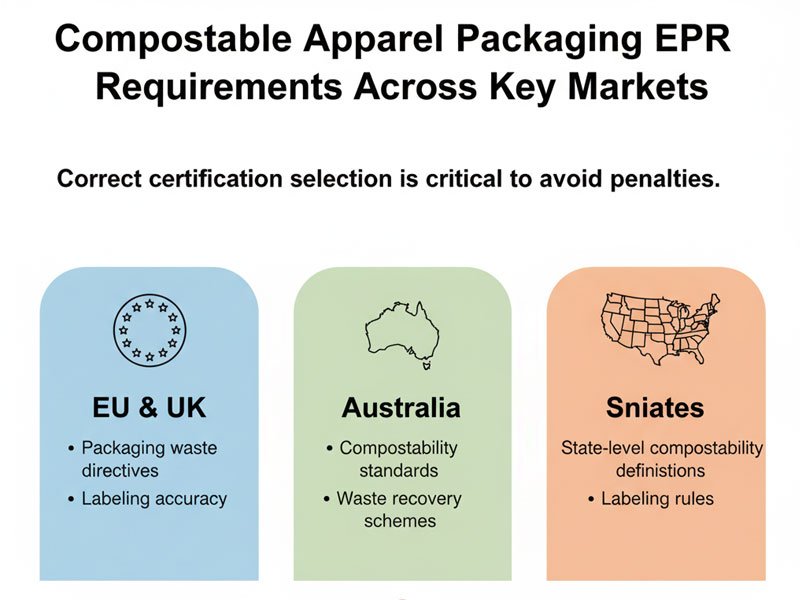
Compostable packaging standards vary by country. Key developments include:
- EU PPWR (2024–2028): Mandates compostable materials for tea bags, coffee capsules, fruit stickers
- California SB 54: Requires compostable labeling compliance; bans misleading “biodegradable” claims
- China GB/T 41010-2021: Defines biodegradable plastics, encourages compostable alternatives in pilot cities
Stay informed on local laws affecting packaging materials, especially for food, e-commerce, and export use.
What to Do with Biodegradable Packaging
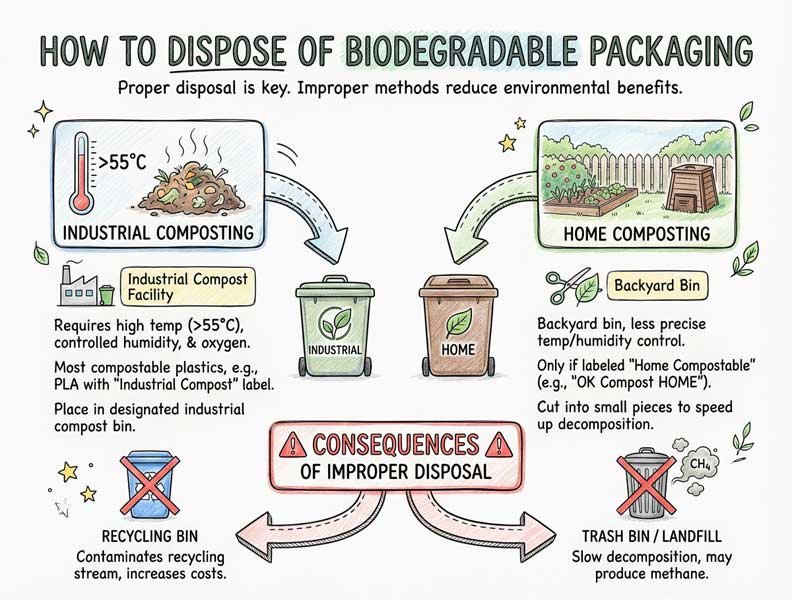
Understanding how to compost packaging is key to recognizing its value. Improper handling significantly diminishes its environmental benefits.
Industrial Composting: The ideal destination for most compostable plastic packaging.
What is an industrial composting facility?
These are facilities specifically designed for handling large quantities of organic waste, accelerating the microbial decomposition process through precise control of temperature (typically above 55°C), humidity, and oxygen levels.
Which products require industrial composting?
Most PLA products and packaging bearing the “Industrial Compost” certification mark.
Compostable packaging disposal: Place it in designated industrial compost bins, not regular trash or recycling bins.
Home Composting: Not all compostable packaging is suitable.
What is home composting?
It takes place in a compost bin in your own backyard, where temperature and humidity control is less precise than in industrial facilities.
Which compostable products are suitable for home composting?
Packaging usually clearly indicates “Home Compostable” or includes the corresponding certification mark (such as TÜV AUSTRIA’s “OK Compost HOME”).
Home composting precautions: Follow the instructions to cut the packaging into smaller pieces to accelerate decomposition.
Consequences of improper disposal:
If compostable packaging is thrown into a recycling bin, it may pollute the recycling stream and increase recycling costs; if thrown into regular waste, it will slowly decompose in landfills, potentially producing greenhouse gases such as methane.
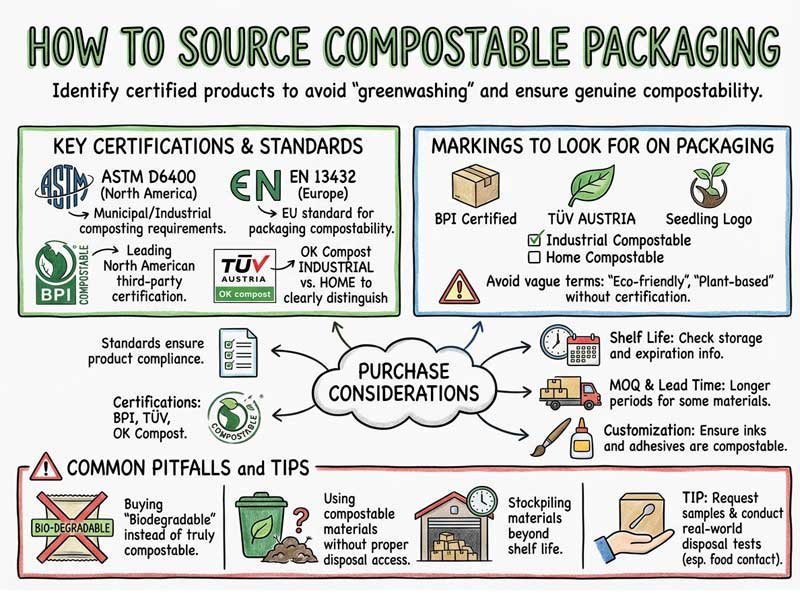
How to Procure Compostable Packaging:
To ensure you’re buying genuine compostable packaging, and not just “greenwashed” products, recognizing certification marks is crucial. These compostable packaging standards ensure the compostability of the product.
Certification Bodies and Standards:
- ASTM D6400 (North American Standard): Specifies the requirements for aerobic composting of plastics in municipal and industrial composting facilities.
- EN 13432 (European Standard): EU standard for the compostability and biodegradability of packaging materials.
- BPI (Biodegradable Products Institute) Certification: North America’s most reputable third-party certification, ensuring product compliance with ASTM D6400.
- TÜV AUSTRIA (e.g., “OK Compost Industrial” and “OK Compost HOME”): A leading European certification body; its mark clearly distinguishes industrial compost from home compost.
Markings on Packaging:
- Look for clear certification marks such as BPI, TÜV AUSTRIA, and the Seedling logo.
- Pay attention to the labeling; is it “Industrial Compostable” or “Home Compostable”?
- A Guide to Avoiding Pitfalls When Buying Compostable Packaging: Be cautious when purchasing products that lack official certifications or use vague terms such as “eco-friendly” or “plant-based.”
What to Look For:
- Certifications: BPI, TÜV Austria, OK Compost (home & industrial)
- Shelf Life: Ask for storage and expiration info
- MOQ and lead times: Some materials require longer production timelines
- Customization: Ensure inks and adhesives are also compostable
Common Pitfalls:
- Buying “biodegradable” instead of truly compostable
- Using compostable materials where they can’t be properly disposed
- Stockpiling materials beyond shelf life
Tip: Request samples and run real-world disposal tests—especially for food-contact compostable packaging.
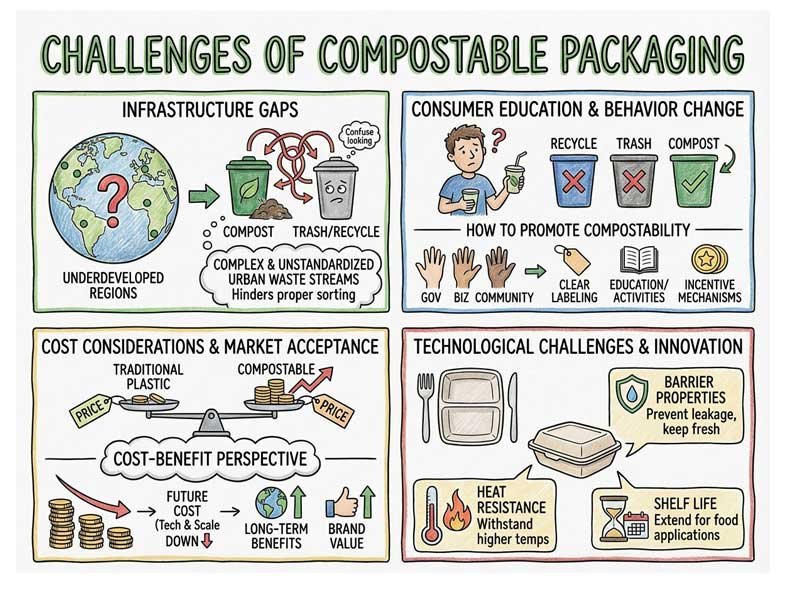
Challenges of Compostable Packaging
- Infrastructure Challenges: Composting Facility Coverage
Globally, the coverage of industrial composting facilities remains insufficient, especially in underdeveloped regions.
Complex and unstandardized urban waste stream classification systems hinder the proper entry of compostable packaging into the correct processing channels.
- The Necessity of Consumer Education and Behavioral Change
Many consumers lack awareness of compostable packaging and are unaware of its correct disposal methods, often mistakenly placing it in recycling bins or regular waste.
How to Promote Compostability: A collaborative effort from governments, businesses, and communities is needed. Clear labeling, educational activities, and incentive mechanisms are essential to guide consumers towards correct waste sorting habits.
- Cost Considerations and Market Acceptance
Currently, the production cost of compostable packaging is typically higher than that of traditional plastic packaging.
Cost-Benefit Analysis: With technological advancements and large-scale production, costs are expected to decrease. Furthermore, from a long-term environmental benefit and brand value enhancement perspective, this investment is worthwhile.
- Technological Challenges and Material Innovation
Some compostable packaging materials still need improvement in terms of barrier properties, heat resistance, and shelf life to meet the needs of special applications such as food.
What Is the Best Eco Friendly Packaging
To ensure you purchase truly compostable packaging, it’s crucial to understand that “best environmentally friendly packaging” isn’t a single material or solution, but rather a comprehensive choice that minimizes environmental impact within the context of a specific product, supply chain, and consumer behavior. It’s a result of multi-dimensional trade-offs.
The best isn’t a single answer, but rather a multi-dimensional balance. Every packaging material has its advantages and limitations. For example, glass is infinitely recyclable, but heavy and fragile; recycled plastics reduce the consumption of virgin resources, but the recycling process still requires energy. Therefore, “best” is dynamic and relative.
The Importance of Life Cycle Assessment (LCA). Life Cycle Assessment (LCA) is the most comprehensive tool for scientifically evaluating the environmental friendliness of packaging.
It quantifies the environmental impact of a product throughout its entire lifecycle, from raw material acquisition, production, transportation, use to final disposal, including:
- Carbon Footprint: Greenhouse gas emissions.
- Water Footprint: Water consumption.
- Energy Consumption: Energy requirements for production and recycling/treatment processes.
- Resource Efficiency: Use of renewable and non-renewable resources.
- Waste Generation: Landfill, incineration, composting, and recycling ratios and their impacts.
- Toxicity: Potential hazards to human health and ecosystems.
Considerations: When choosing “best” environmentally friendly packaging, businesses and consumers should consider the following factors:
- Renewability: Whether the material comes from renewable resources (such as plants).
- Recyclability: Whether it can be effectively recycled and reused.
- Compostability: Whether it can safely return to nature under specific conditions.
- Packaging Minimization: Whether it reduces unnecessary packaging, achieving zero-waste packaging.
- Reusability: Whether it can be used multiple times by consumers.
- Product Protection: Whether the packaging effectively protects the product and reduces waste caused by product damage.
- Supply Chain Efficiency: Whether the weight and volume of the packaging affect transportation efficiency and energy consumption.
- Consumer Behavior: Whether consumers understand how to properly dispose of the packaging. For “green-washed” products, identifying certification marks is crucial. These compostable packaging standards ensure the compostability of the product.
The Future of Compostable Packaging
The future of compostable packaging is promising, with packaging innovation accelerating.
- Research and Development of New Compostable Materials
Introduction to Cutting-Edge Materials: Scientists are exploring more innovative materials, such as polymers extracted from seaweed, mushroom mycelium, casein, and even agricultural waste like rice husks and coffee grounds, which possess unique properties and broader compostability. These plastic alternatives will greatly expand the application scope of compostable packaging.
- Policy Promotion and Global Cooperation
More and more countries and regions are introducing policies to restrict the use of single-use plastics and encourage sustainable packaging solutions.
Cooperation among international organizations helps establish unified certification standards and waste management systems, promoting the global adoption of compostable packaging.
- Industry Development and Business Opportunities
The FMCG, food delivery, and e-commerce industries are actively embracing compostable packaging as an important strategy to enhance brand image and meet consumers’ environmental needs.
This has brought new business opportunities to enterprises and has also driven the entire packaging industry toward a greener direction.
FAQ
Can compostable packaging decompose in a landfill?
No. Landfills lack the oxygen and microbial activity necessary for composting.
Is compostable packaging always better than recyclable packaging?
Not necessarily. Recyclable packaging may be more practical if composting is not possible.
Can I use compostable packaging bags to store frozen food or liquids?
Some materials can, but barrier properties vary. Request food safety certification.
Where can I find a reliable supplier?
Look for manufacturers that provide industrial compostable packaging bags, certified materials, and clear documentation.
Conclusion
Compostable packaging is a key tool for building a circular economy and reducing our environmental footprint. It offers the potential to transform waste into valuable resources and is an important step in addressing the plastic crisis.
As consumers, we should understand and use compostable packaging correctly; as businesses, we should actively explore and adopt compostable packaging solutions. Through our collective efforts, we can accelerate the adoption of compostable packaging and contribute to a more sustainable tomorrow for our planet.
Related Articles:
- EN 13432 – The Complete Guide to Compostable Packaging Certification
- Commercial Composting Vs Home Composting: Which Suitable for Your Green Lifestyle
- What Is PLA? Ultimate Guide to Biobased Fully Biodegradable Industrial Plastics
- Compostable Bag Materials: The Ultimate B2B Buyer’s Guide
- What Is BPI Compostable Certification? The Complete 2025 Guide