What Does “Compostable” Really Mean?
What Does “Compostable” Mean?
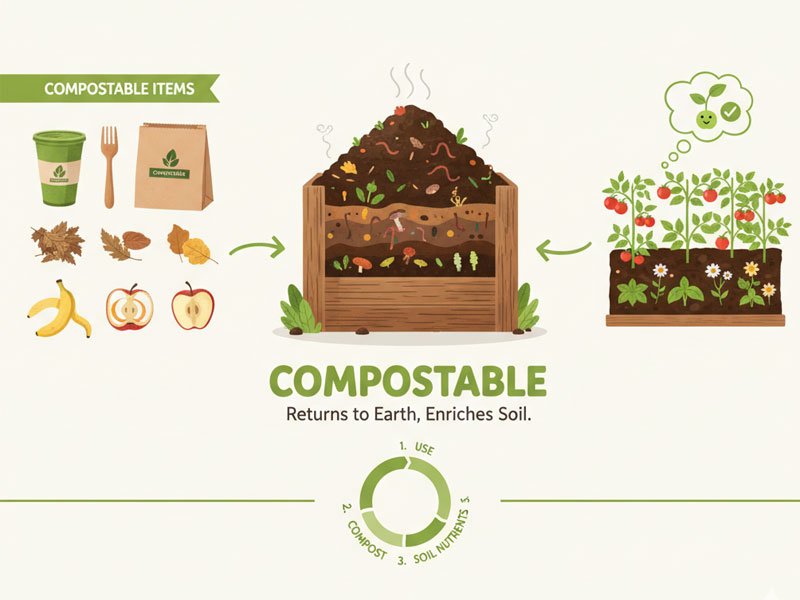
Compostable means a material is designed to break down into water, carbon dioxide, and organic matter under specific composting conditions, within a defined timeframe, without leaving toxic residue.
In practice, compostable does not mean a product will naturally disappear in soil, oceans, or landfills.
Most compostable materials are intended for controlled composting systems, not natural environments.
Compostable Is a Controlled Claim — Not a Natural Process
A common misunderstanding is assuming compostable materials behave like food scraps or leaves.
In reality, compostability is a managed biological process that requires:
- Sustained heat
- Controlled moisture
- Oxygen
- Active microbial conditions
Without these conditions, compostable materials may remain intact for long periods or break down incompletely.
This is why compostable packaging does not automatically decompose in:
- Home gardens
- Backyard compost piles
- Soil or marine environments
Compostable vs Biodegradable: Why the Terms Are Not the Same
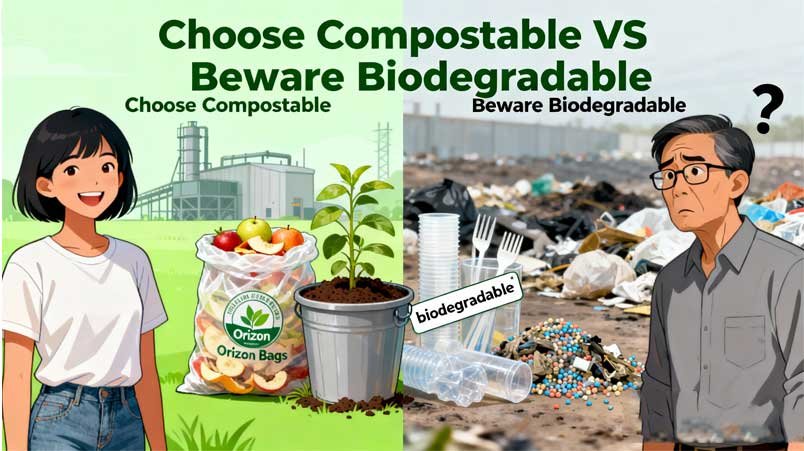
Although compostable materials are technically biodegradable, the two terms are not interchangeable.
Biodegradable describes a process, but does not define:
Timeframe
Conditions
Environmental safety
Compostable is a certified subset of biodegradable materials with:
Defined conditions
Defined timelines
Verified outcomes
To understand the full distinction, see our comparison: Biodegradable vs Compostable: Key Differences Explained
Does Compostable Mean Home Compostable?
No.
This is one of the most common sources of confusion.
Most compostable products on the market are designed for industrial composting facilities, not home compost systems.
Why home composting is different
Home composting operates at:
Lower temperatures
Inconsistent conditions
Limited microbial activity
As a result, only products explicitly certified for home composting are suitable for backyard or household compost bins.
To understand where compostable claims apply, see: Home Composting vs Industrial Composting: Key Differences Explained
How Is “Compostable” Verified?
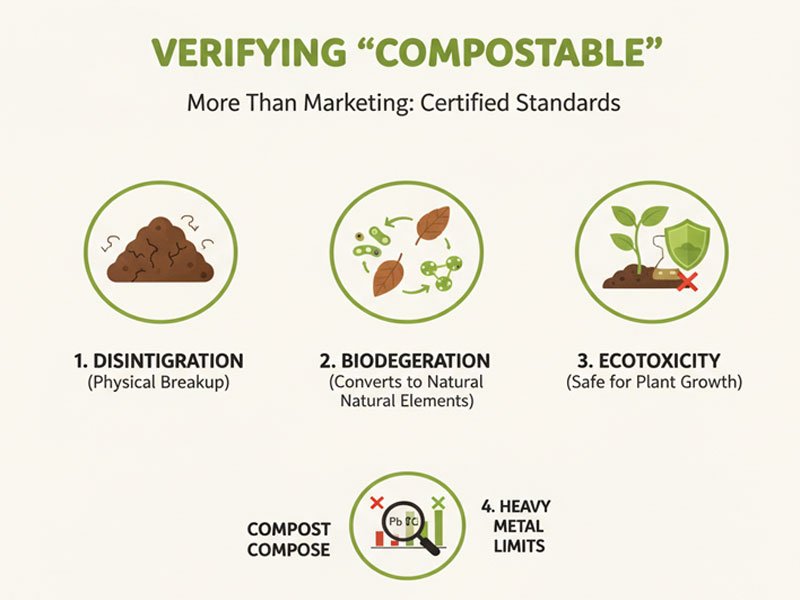
Compostable is not a marketing term.
It is verified through recognized certification standards.
A product can only be called compostable if it passes tests for:
Disintegration (material breaks apart)
Biodegradation (material converts into natural substances)
Ecotoxicity (no harm to plant growth)
Heavy metal limits
These tests are conducted under defined composting conditions and timeframes.
Common Compostable Certifications You May See
Different regions use different certification systems.
Each defines where and how a compostable product can be processed.
Common examples include:
Industrial compostable standards (municipal or commercial facilities)
Home compostable standards (household composting)
Region-specific compostability standards
For a clear explanation of how certifications differ, see: OK Compost HOME vs Industrial: Which Certification Applies?
What Compostable Does NOT Mean
To avoid common mistakes, it is important to understand what compostable does not mean.
Compostable does not mean:
- Recyclable
- Suitable for all compost bins
- Guaranteed to break down in nature
- Accepted by all councils or waste systems
Whether a compostable product is accepted depends on:
- Local waste infrastructure
- Composting facility rules
- Council or municipal guidelines
Where Should Compostable Products Be Disposed?
Compostable products should only be placed into a composting system that accepts them.
In most cases:
Industrial compostable products → professional composting facilities
Home compostable products → household compost bins (if certified)
Incorrect disposal can:
Contaminate recycling streams
Cause compost rejection
Remove any environmental benefit
For practical disposal guidance, see: How to Dispose of Compostable Plastics Correctly
Why “Compostable” Alone Is Not Enough
Seeing the word compostable on packaging is only the first step.
To evaluate whether a compostable claim is meaningful, always ask:
Is the product certified?
Which composting system is it designed for?
Is that system available where the product will be used?
Without these answers, compostable becomes a vague label rather than a reliable environmental solution.
Key Takeaways
- Compostable means a material is designed to break down under specific composting conditions
- Most compostable products require industrial composting
- Compostable does not mean biodegradable anywhere
- Certification defines where compostable claims apply
- Correct disposal is essential for real environmental benefit
Related Knowledge Pages
FAQ
Yes, but biodegradable does not mean compostable. Compostable is a certified, regulated subset of biodegradable materials.
No. Compostable materials contaminate plastic recycling streams.
No. Compostable materials require controlled composting conditions.
No. Only products certified for home composting are suitable for household compost systems.
Conclusion
Compostable describes a defined system, not a promise of natural disappearance.
Understanding what compostable really means helps buyers, brands, and waste systems reduce contamination, avoid greenwashing, and make decisions that align with real-world composting infrastructure.