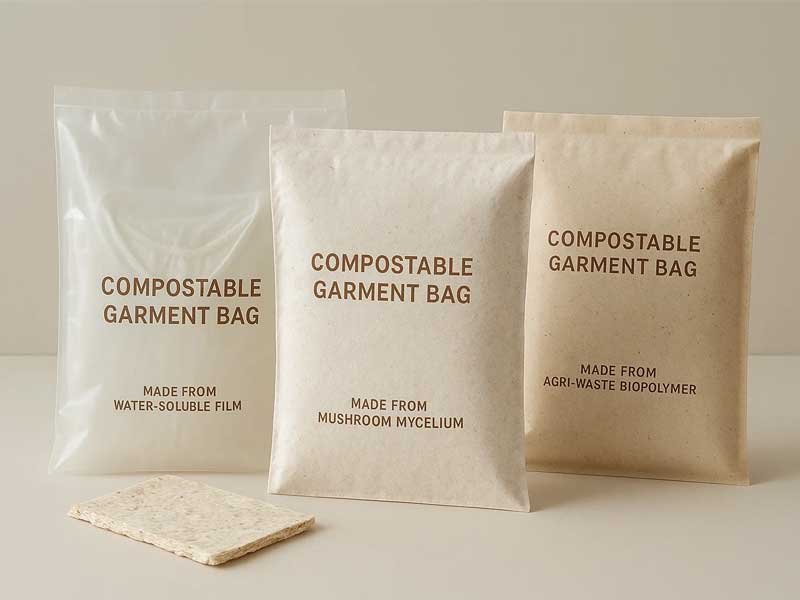
Fashion brands are increasingly evaluating certified compostable materials for apparel packaging. However, environmental claims alone are not sufficient. For compostable garment bags to be accepted in regulated waste systems, they must comply with recognized certification standards and documentation requirements.
This guide explains the most important certifications used for compostable garment packaging and how clothing brands, packaging distributors, and sourcing teams can verify compliance.
For a complete overview of commercial solutions and OEM supply options, see our Compostable Clothing Packaging Solutions .

Why Certifications Matter for Compostable Garment Bags
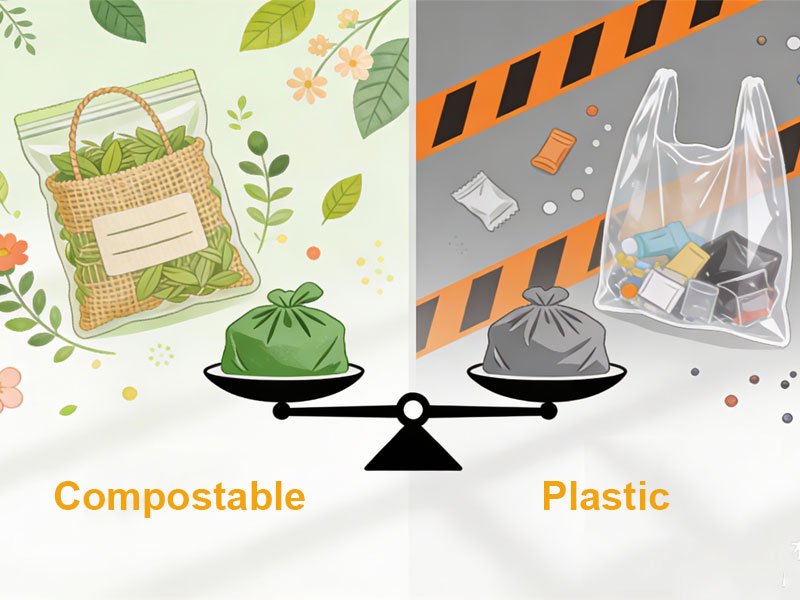
Many packaging materials claim to be biodegradable or eco-friendly, but these claims do not guarantee acceptance in regulated waste systems.
Certified compostable garment bags must meet strict testing criteria related to:
- biodegradation performance
- disintegration during composting
- eco-toxicity limits
- heavy metal restrictions
Without proper certification, compostable packaging may be rejected by composting facilities or fail regulatory verification in certain markets.
Clothing brands sourcing sustainable packaging should therefore verify certification documentation before switching materials.
For a broader overview of how compostable garment packaging is used across fashion supply chains, see: Compostable Garment Packaging for Clothing Brands
Key Certifications Used for Compostable Garment Packaging
Several international certification systems are commonly used to verify compostable plastics used in packaging.
The most widely recognized certifications include:
- EN 13432 (European Union)
- ASTM D6400 (United States)
- BPI Compostable Certification
- TÜV OK Compost Industrial
- AS4736 & AS5810 (Australia)
Each certification focuses on industrial or home compostability under controlled testing conditions.
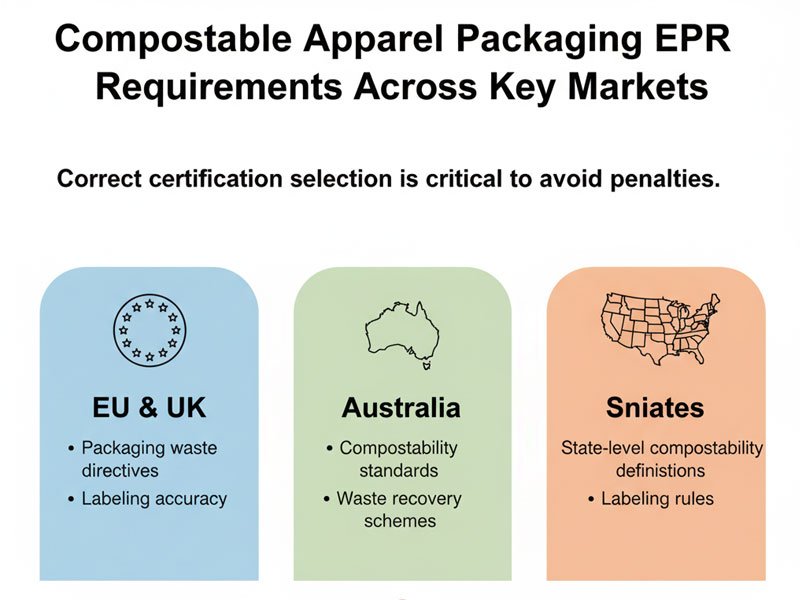
Below is a simplified overview of the most relevant standards for apparel packaging.
EN 13432 Certification (European Union)
EN 13432 is the primary compostability standard used within the European Union. Packaging materials certified under EN 13432 must meet strict requirements for biodegradation, disintegration, and ecological safety.
Many European fashion brands require EN 13432 certification for compostable garment bags used in retail or distribution packaging.
Learn more about verification and testing requirements: EN 13432 Certification: How Buyers Can Verify Compliance
ASTM D6400 Standard (United States)
In the United States, ASTM D6400 defines compostability requirements for plastics designed to be processed in industrial composting facilities.
For compostable garment packaging used in North American markets, ASTM D6400 compliance is commonly required.
Testing evaluates:
- biodegradation rate
- compost disintegration
- environmental safety of residues
For a detailed explanation of this standard, see our guide to the ASTM D6400 compostability standard.
BPI Certification (North America)
The Biodegradable Products Institute (BPI) certification program is widely recognized in the United States and Canada.
BPI certification confirms that a product meets ASTM compostability standards and has been independently verified.
Many retailers and waste programs require BPI certification before accepting compostable plastic packaging.
Learn how BPI certification works: What Does BPI Compostable Mean?
OK Compost Industrial Certification
The OK Compost Industrial certification, issued by TÜV Austria, confirms that a material meets industrial composting requirements under controlled conditions.
This certification is commonly used across European packaging markets and is often seen alongside EN 13432 compliance.
Brands selecting compostable garment bags for European retail packaging frequently request this certification to ensure compatibility with industrial composting systems.
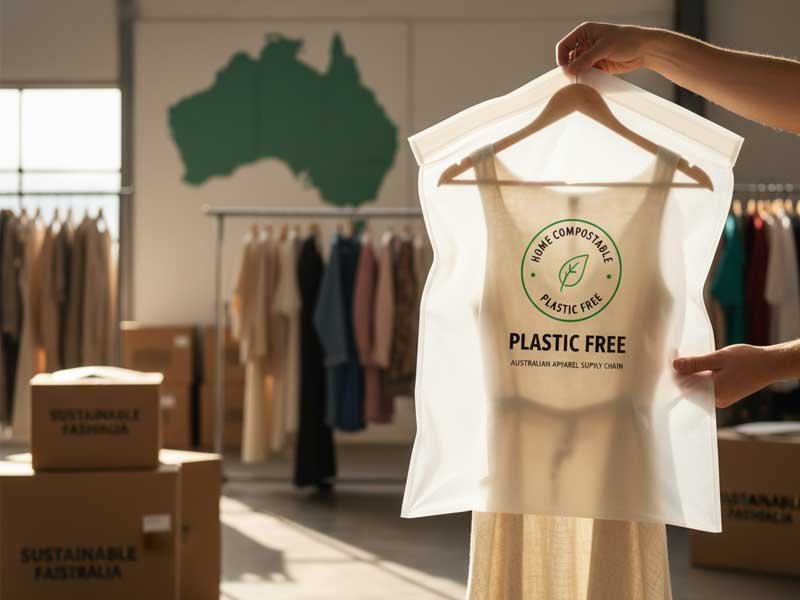
Australia: AS4736 & AS5810 Standards
Australia uses two separate compostability standards:
AS4736 — Industrial compostable packaging
AS5810 — Home compostable packaging
These standards are often relevant for brands distributing packaging within Australian markets or participating in regulated organic waste programs.
Learn the differences between these certifications: AS 4736 vs AS 5810 Compostable Certifications
How Buyers Can Verify Compostable Certifications
When sourcing compostable garment bags from manufacturers, buyers should request documentation that verifies certification claims.
Typical verification steps include:
- certification number validation
- product-level certification confirmation
- test report documentation
- supplier traceability records
It is important to verify that certification applies to the finished product, not only to raw materials.
A step-by-step verification guide is available here: How to Verify a Compostable Certificate
Common Compliance Mistakes in Apparel Packaging
Fashion brands sometimes encounter compliance risks when switching to compostable packaging.
Common mistakes include:
- confusing biodegradable claims with certified compostability
- relying on material certification rather than product certification
- using outdated certification logos
- assuming compostable packaging is accepted in all waste systems
Understanding these risks helps brands avoid greenwashing concerns and regulatory issues.
How Certifications Fit into Apparel Packaging Decisions
Certification is only one part of selecting compostable garment packaging.
Brands must also consider:
- packaging thickness and strength
- garment protection requirements
- warehouse and fulfillment workflows
- export logistics conditions
A technical guide to garment packaging specifications is available here: Garment Bag Size & Thickness Guide for Apparel Packaging
Conclusion
Certified compostable garment bags can support sustainability strategies for fashion brands when properly verified and integrated into compliant packaging systems.
Understanding international certification standards helps buyers ensure that compostable packaging claims are supported by recognized testing frameworks and regulatory acceptance.
For sourcing support, custom manufacturing options, and technical packaging specifications, explore our Compostable Clothing Packaging Solutions