The fashion industry packaging system ships billions of clothing items every year, and packaging plays a significant role in the industry’s environmental footprint. Traditional plastic garment bags, poly mailers, and packaging materials often end up in landfills, creating long-term waste problems.
As sustainability becomes a core focus for fashion brands, many companies are exploring sustainable clothing packaging and sustainable apparel packaging solutions to reduce environmental impact while maintaining product protection and logistics efficiency.
From compostable garment bags to recyclable mailers and minimal packaging strategies, apparel brands today have multiple options to transition toward more sustainable packaging systems.
This guide explores the most common materials, packaging ideas, and solutions used in sustainable fashion packaging today.
Sustainability Challenges in the Fashion Packaging Industry
Packaging waste has become a major concern within the fashion industry.
Global fashion e-commerce growth has significantly increased the number of packaging materials used for shipping clothing items. Many garments are still packed in plastic garment bags that are difficult to recycle or reuse.
Common sustainability challenges include:
- Excessive plastic packaging
- Low recycling rates for flexible plastic films
- Lack of standardized packaging systems across fashion brands
- Increasing regulatory pressure on packaging materials
Because of these challenges, brands are actively searching for sustainable packaging for clothing that can reduce waste without disrupting supply chains.
Types of Sustainable Clothing Packaging Materials
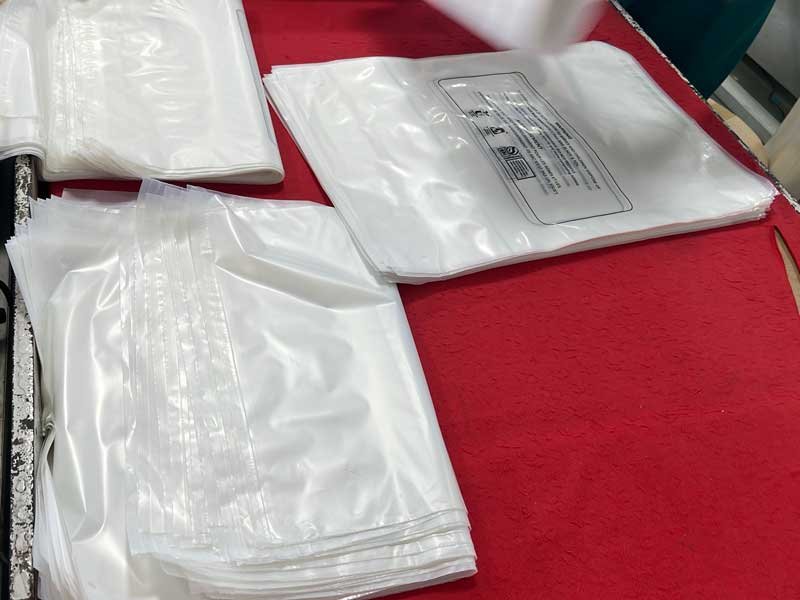
Different sustainable materials can be used for clothing packaging depending on logistics needs, cost considerations, and environmental goals. Many fashion brands today are exploring compostable apparel packaging as a plastic alternative.
Compostable Clothing Packaging
Compostable packaging materials are designed to break down under industrial or home composting conditions.
Common compostable packaging used by clothing brands includes:
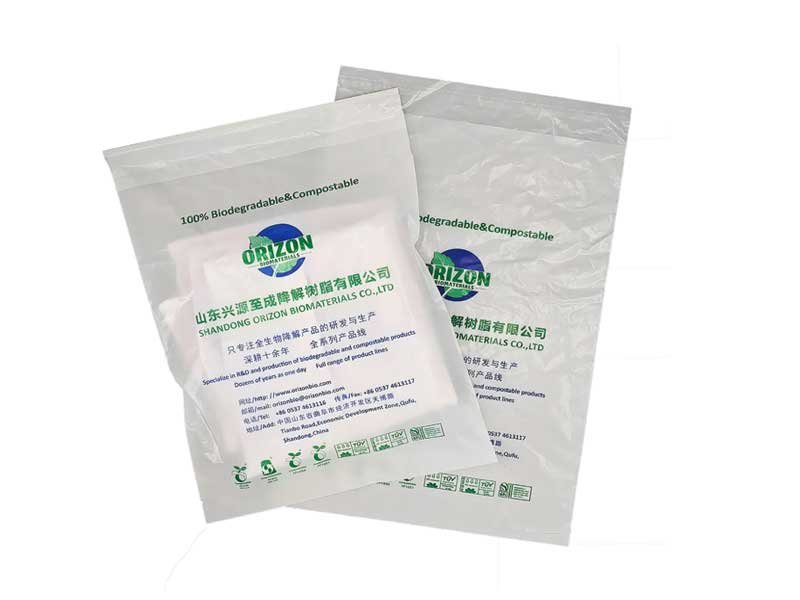
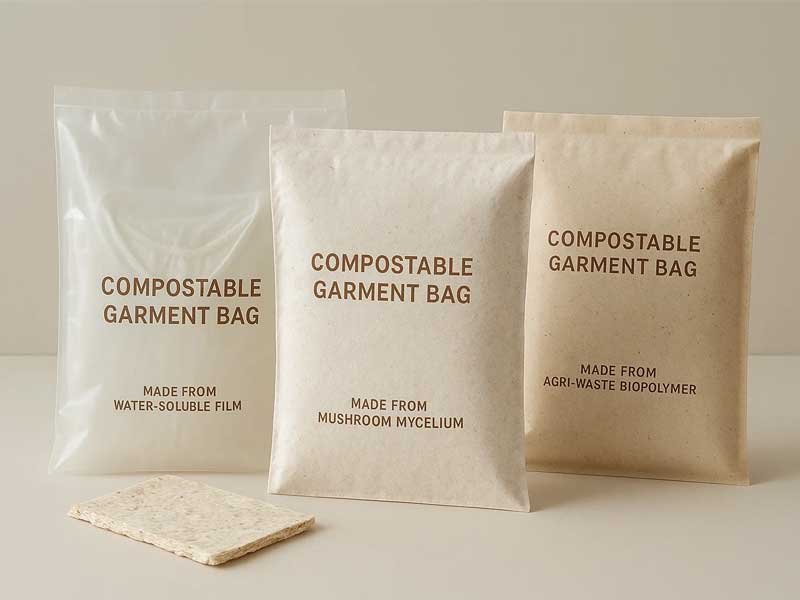
- Compostable garment bags
- Compostable mailing bags
- Compostable protective packaging films
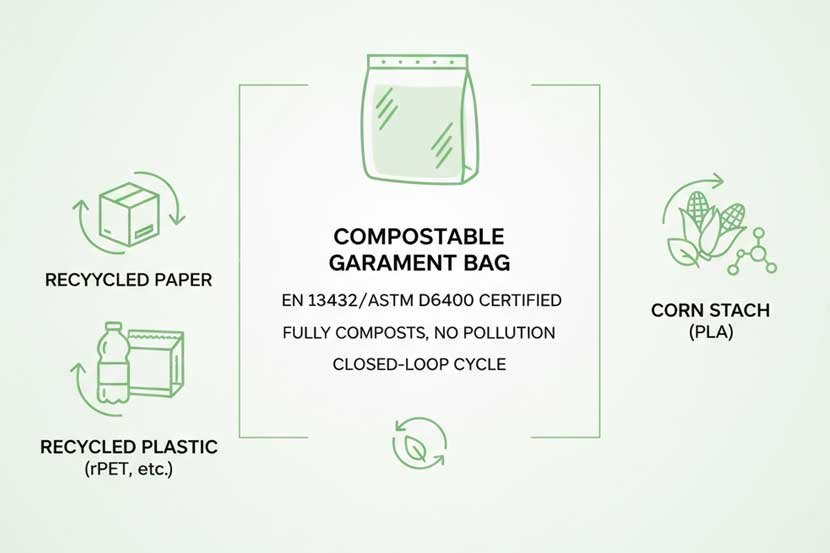
These materials are typically made from PLA, PBAT, or other plant-based polymers and must meet certification standards such as:
- EN 13432
- ASTM D6400
- OK Compost certification
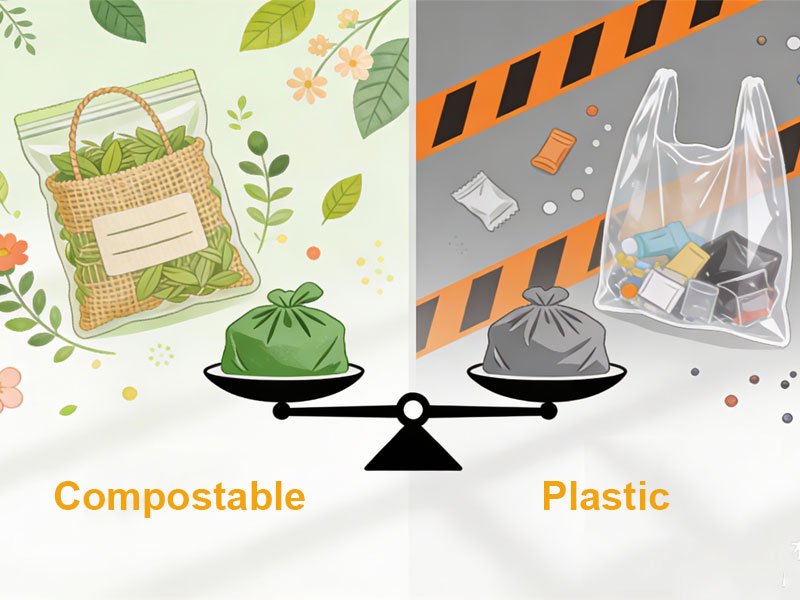
Compostable packaging is becoming increasingly popular among brands seeking plastic-free fashion packaging alternatives.
Compostable Materials (A Closed-Loop Solution)
Certified compostable packaging goes a step further. Under defined composting conditions, these materials fully decompose into water, carbon dioxide, and organic matter—without leaving harmful residues. This is why many brands are paying closer attention to compostable garment bags.
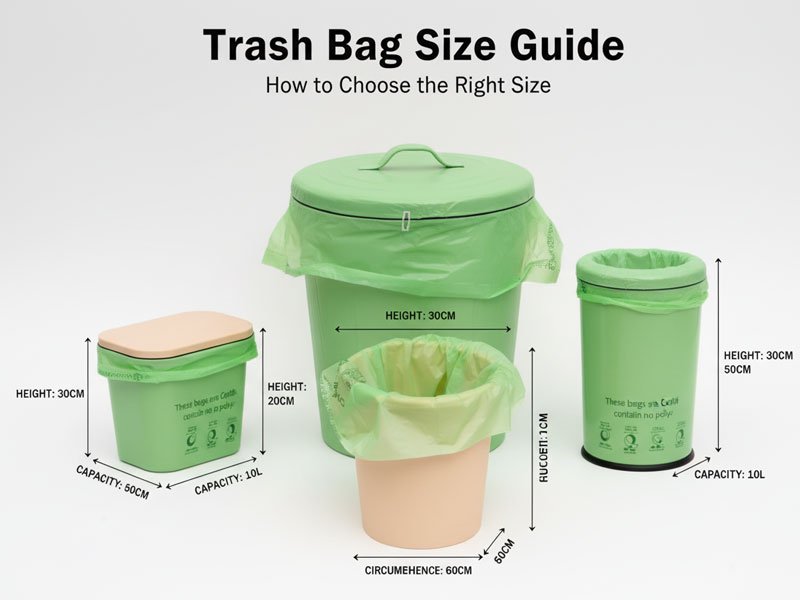
Before you decide on materials, start with the basics: garment bag size and thickness. The right specifications reduce shipping damage, wasted material, and customer complaints.
Recyclable Clothing Packaging
Recyclable packaging focuses on materials that can be processed through recycling systems.
Common recyclable clothing packaging includes:
- Recyclable poly mailers
- Paper envelopes
- Kraft shipping bags
Many fashion brands adopt recyclable materials because they are widely accepted in recycling systems, especially in regions with established recycling infrastructure.
However, flexible plastic films still face recycling limitations in many countries.
Biodegradable Clothing Packaging
Biodegradable materials are designed to break down over time through natural processes involving microorganisms.
Some biodegradable clothing packaging materials include:
- biodegradable plastic films
- starch-based packaging materials
While biodegradable packaging can reduce long-term environmental impact, the lack of standardized certification sometimes creates confusion for brands and consumers.
Because of this, many brands prefer certified compostable packaging instead.
Reusable Packaging Solutions
Reusable packaging is another sustainable approach gaining traction in the fashion industry.
Examples include:
- reusable garment shipping bags
- returnable packaging systems
- durable mailers used for reverse logistics
Some fashion brands are experimenting with reusable packaging programs that allow customers to return packaging for reuse.
| Packaging Type | Material | Recycling/Disposal | Typical Use |
|---|---|---|---|
| Compostable | PLA + PBAT | Industrial / Home Compost | Garment bags |
| Recyclable | PE / Paper | Recycling systems | Mailers |
| Biodegradable | Starch blends | Natural degradation | Packaging films |
| Reusable | Durable polymers | Return logistics | Shipping bags |
Sustainable Packaging Ideas for Clothing Brands
Many apparel brands are exploring creative ways to reduce packaging waste while maintaining product protection.
Here are some common sustainable packaging ideas for clothing brands:
- Replace plastic garment bags with compostable garment bags
- Use recyclable paper mailers or compostable courier bags instead of traditional plastic shipping bags.
- Minimize packaging layers to reduce material usage
- Introduce reusable garment shipping bags
- Use FSC-certified paper packaging materials
- Print packaging using water-based inks
These approaches allow fashion brands to improve sustainability without dramatically changing logistics processes.
How Apparel Brands Choose Sustainable Packaging
When selecting sustainable clothing packaging, brands typically evaluate several factors:
Environmental impact
Brands consider whether packaging materials are recyclable, compostable, or reusable.
Packaging durability
Packaging must still protect garments during shipping, storage, and handling.
Supply chain compatibility
Sustainable packaging must integrate smoothly into existing packing and fulfillment processes.
Certification and compliance
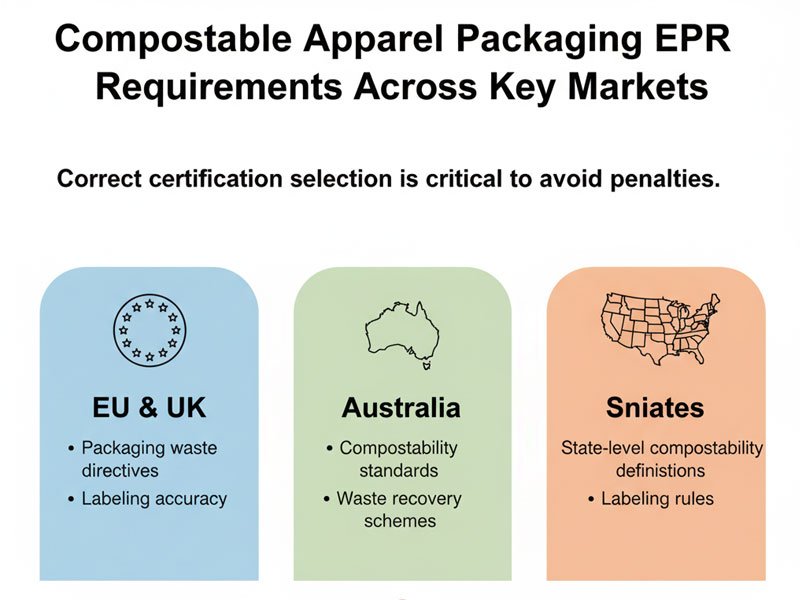
Certification and compliance are critical for many global fashion brands. Many companies require verified compostable packaging certifications before adopting new materials.

Compostable Garment Bags: Materials and Performance
Most compostable garment bags used in apparel packaging are made from blends of PLA (polylactic acid) and PBAT.
- PLA is derived from renewable plant sources such as corn starch. It provides structure and clarity.
- PBAT adds flexibility and tear resistance, making the bags suitable for transport and retail handling.
In real applications, properly manufactured compostable garment bags are strong, flexible, and protective. They are not fragile novelty items—a misconception I still hear surprisingly often.
Certifications for Sustainable Clothing Packaging
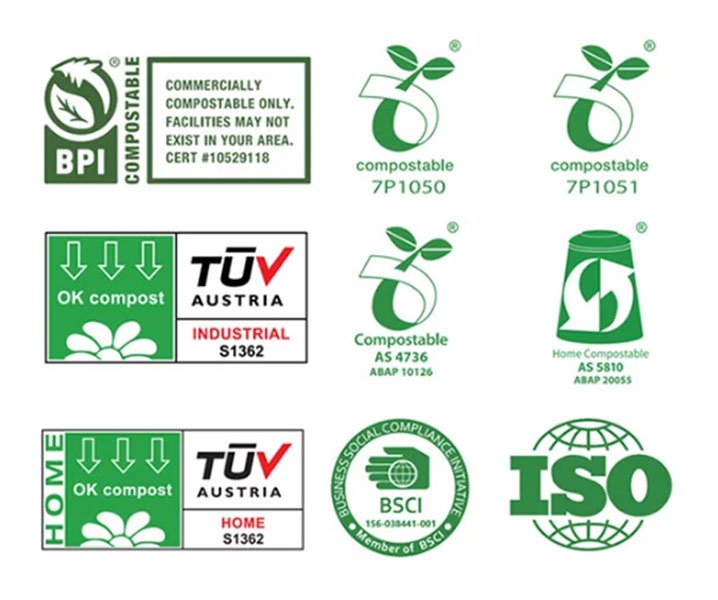
Certifications help verify that packaging materials meet environmental performance standards. These compostable packaging certification standards ensure materials break down under controlled composting conditions.
Common certifications include:
- EN 13432 – European standard for compostable packaging
- ASTM D6400 – U.S. compostable plastics standard
- OK Compost – certification for industrial or home composting
- FSC Certification – sustainable forestry certification for paper materials
These certifications help brands demonstrate transparency and compliance with sustainability commitments.
Cost vs Performance: What Brands Should Expect
Sustainable packaging decisions often start with cost concerns. That’s understandable.
However, when brands evaluate packaging holistically—performance, compliance, brand perception, and long-term risk—the conversation usually changes. Compostable garment bags today can meet the same functional requirements as plastic in most fashion brand and clothing brand packaging operations, including protection against dust, moisture, and handling damage.
The key is matching material specifications to real usage conditions rather than assuming all eco-friendly packaging behaves the same.
Challenges When Switching to Sustainable Apparel Packaging
The transition is not without challenges:
- Higher perceived material costs
- Uncertainty about strength or durability
- Difficulty identifying reliable suppliers
- Consumer confusion around disposal
These challenges are real, but they are manageable with the right planning and supplier transparency.
Future Trends in Sustainable Fashion Packaging
Sustainability regulations are rapidly evolving worldwide, particularly in Europe and North America.
Key trends shaping sustainable fashion packaging include:
- Extended Producer Responsibility (EPR) policies
- Plastic packaging taxes
- Increased demand for compostable and recyclable materials
- Consumer preference for environmentally responsible brands
As these trends continue, sustainable packaging will become a standard requirement for many clothing brands rather than an optional initiative.
FAQ
What is sustainable clothing packaging?
Sustainable clothing packaging refers to packaging materials used in the fashion industry that reduce environmental impact. These materials may include recyclable paper, compostable packaging films, or reusable shipping bags.
What materials are used in sustainable fashion packaging?
Common materials include recyclable paper, compostable bioplastics, biodegradable films, and reusable packaging materials.
How do clothing brands use compostable garment bags?
Many brands use compostable garment bags as inner packaging to protect apparel while reducing plastic waste and supporting sustainability commitments.
Are compostable garment bags really compostable?
Yes—when certified under standards such as EN 13432 or ASTM D6400 and disposed of in appropriate composting environments.
Are all compostable bags suitable for home composting?
No. Some are designed only for industrial composting. Home compostable certification should be checked carefully.
Compostable vs biodegradable packaging for apparel: what’s the difference?
Biodegradable packaging may break down slowly and inconsistently, sometimes leaving residues. Compostable packaging follows strict standards, ensuring complete breakdown into non-toxic materials within a specified period under controlled composting conditions.
How to choose a supplier for sustainable apparel packaging?
Choose suppliers that provide verifiable certification numbers, clear material composition details, recent test reports, and proven experience supplying regulated markets. Transparency and compliance are more important than marketing claims.
Conclusion
The shift toward sustainable clothing packaging and sustainable fashion packaging solutions reflects a broader transformation happening across the fashion industry.
By adopting compostable apparel packaging, recyclable materials, or reusable systems, apparel brands can reduce their environmental footprint.
while meeting consumer and regulatory expectations.
As technology and material innovation continue to advance, sustainable packaging solutions will play an increasingly important role in the future of fashion logistics and product delivery.
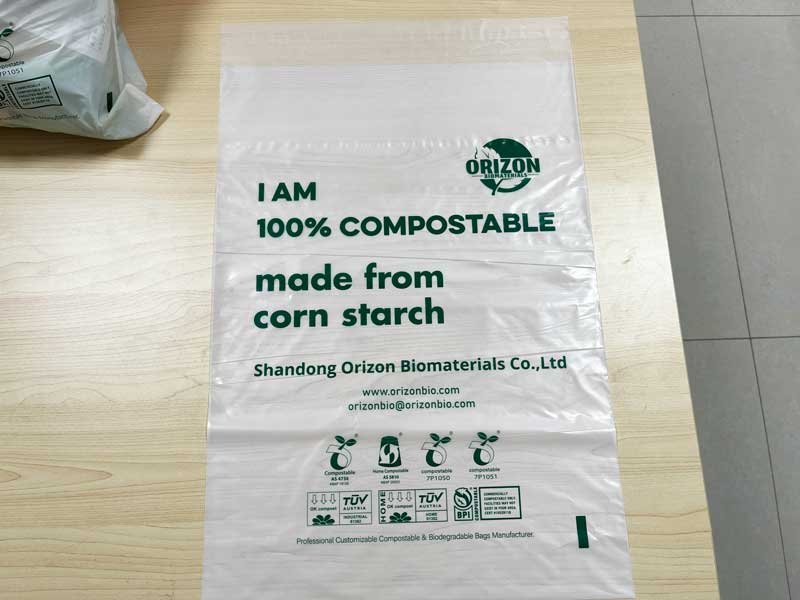
Many manufacturers today offer custom printing options for compostable garment bags, allowing clothing brands to integrate logos, product information, or sustainability messages directly into their packaging. Just ask our team!
Sources:
- https://www.unep.org/zh-hans/news-and-stories/press-release/quan-qiu-yi-ci-xing-su-liao-cha-xun-zhi-nan
- EU Single-Use Plastics Directive: Directive (EU) 2019/904 eur-lex.europa.eu
- California Plastic Bag Ban + Fines : California SB 270 & AB 793 calrecycle.ca.gov
- ASTM D6400: American Society for Testing and Materials, astm.org
- EN 13432 : European Committee for Standardization – cen.eu
- BPI Certification : Biodegradable Products Institute – bpiworld.org