“Biodegradable” sounds like a positive and responsible choice. But when it comes to waste bags, biodegradable claims can be risky if they are not clearly explained.
Many problems around waste bags are not caused by bad intentions. They come from vague language, unclear expectations, and misunderstanding how waste is actually handled.
This article explains why biodegradable claims can create environmental, compliance, and trust risks—and why clearer terminology matters.
What Are Biodegradable Claims?
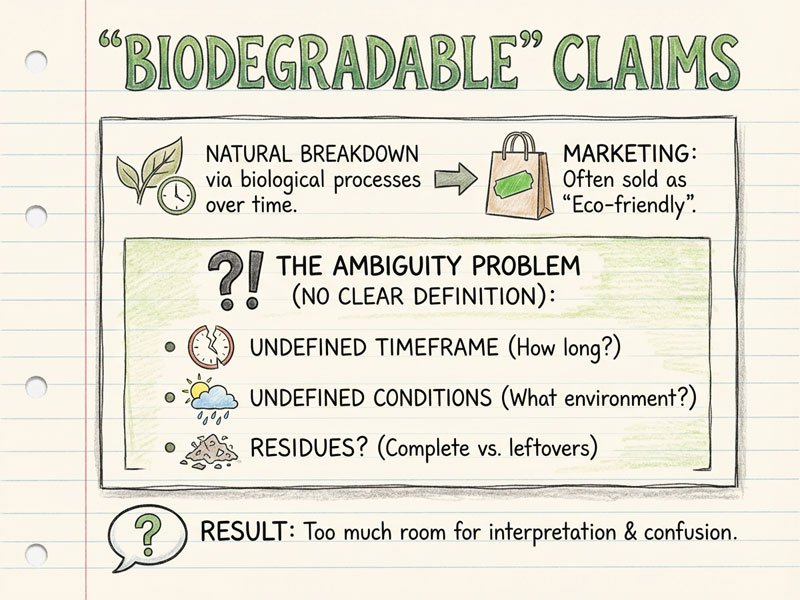
Biodegradable claims suggest that a product can break down naturally over time through biological processes. Many biodegradable waste bags are marketed as environmentally friendly, but the term itself does not clearly define how fast degradation occurs or under what conditions it happens.
However, the term biodegradable does not clearly define:
- How long degradation takes
- What environmental conditions are required
- Whether the material fully breaks down or leaves residues
Because of this, biodegradable claims often leave too much room for interpretation.
Why Biodegradable Claims Are Often Misunderstood
Many users assume that biodegradable means:
- “Breaks down quickly”
- “Safe in all waste systems”
- “Better for the environment in every case”
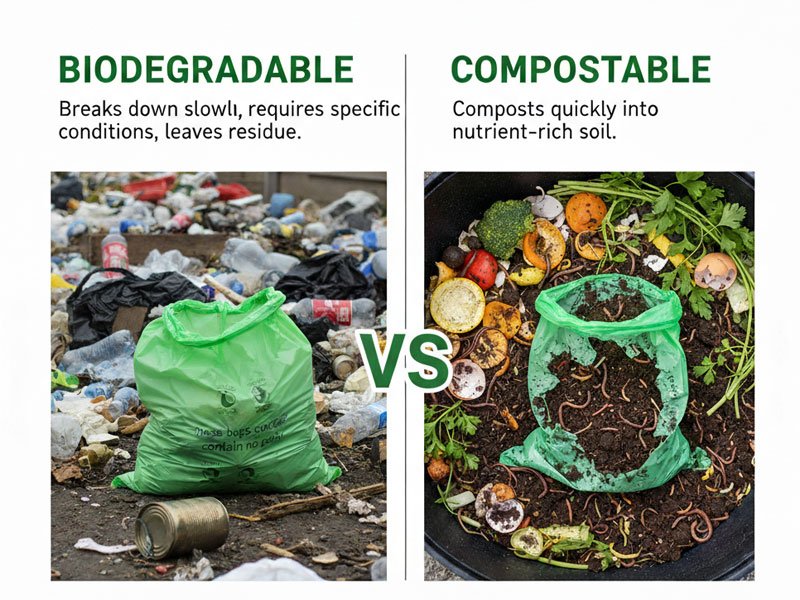
In reality, biodegradable waste bags behave very differently depending on where they end up. When these assumptions are not met, disappointment and confusion follow.
This gap between expectation and reality is where biodegradable claims become risky.
Disposal Conditions Matter More Than the Claim
The environmental outcome of a waste bag depends more on disposal conditions than on the label itself.
Landfill Conditions
Most landfills are designed to limit oxygen and slow decomposition.
Under these conditions, biodegradable waste bags may break down very slowly—or not in a meaningful way.
In some cases, partial degradation without oxygen can contribute to methane generation, which raises additional environmental concerns.
This is why biodegradable claims without disposal context can be misleading.
Composting and Organic Waste Systems
Composting systems provide heat, moisture, oxygen, and microbial activity.
However, not all biodegradable waste bags are designed to work in these systems.
Without clear compostability standards, biodegradable claims alone do not guarantee compatibility with industrial composting facilities.
Greenwashing Risks and Trust Erosion
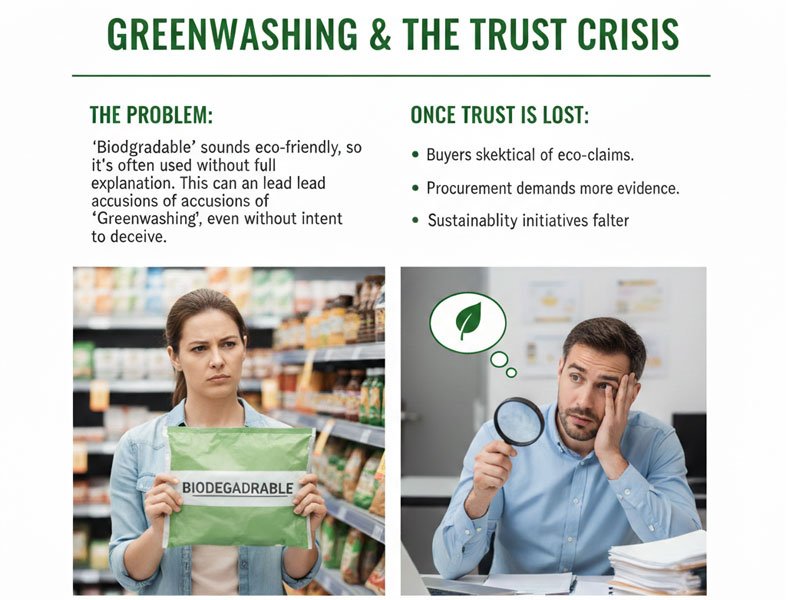
Because “biodegradable” sounds environmentally responsible, it is sometimes used without enough explanation.
This can lead to accusations of greenwashing, even when no deception was intended.
Once trust is lost:
- Buyers become skeptical of environmental claims
- Procurement teams demand more proof
- Sustainability messaging becomes harder to defend
Clear and qualified claims help protect credibility.
Regulatory and Compliance Concerns
Another major risk of biodegradable claims is regulatory ambiguity.
In many markets:
- Environmental marketing claims must be accurate and verifiable
- Broad or absolute claims may require qualification
- Misleading claims can attract regulatory attention
For organizations operating across regions, unclear biodegradable claims can create compliance and reputational risks.
This is especially important for public programs, institutions, and B2B buyers.
Performance Expectations vs Reality
Biodegradable claims can also create performance-related risks. These performance gaps are often discussed when users ask whether do biodegradable trash bags work in real kitchen and waste-handling conditions.
Users may expect biodegradable trash bags to:
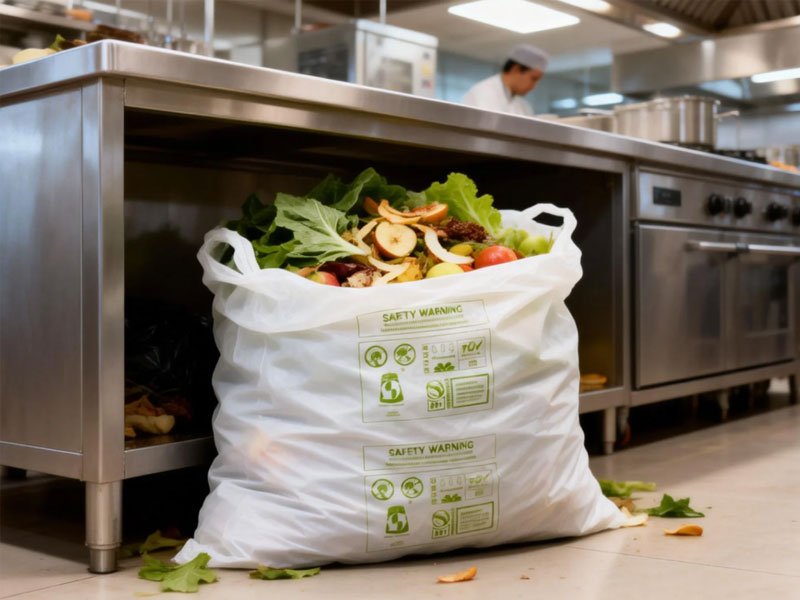
- Hold wet kitchen waste reliably
- Store waste for several days
- Perform like conventional plastic bags
When biodegradable waste bags lose strength faster in warm or humid environments, users often blame product quality rather than mismatched expectations.
Clear labeling helps prevent these misunderstandings.
High-Risk vs Low-Risk Claim Language
Certain phrases increase risk, while others reduce it.
High-Risk Claim Examples
- “100% biodegradable”
- “Breaks down anywhere”
- “Disappears naturally”
These statements are broad and difficult to support.
Lower-Risk, Qualified Claims
- “Designed to biodegrade under specific conditions”
- “Results vary depending on environment and disposal method”
- “Industrial composting required”
Qualified claims set realistic expectations and reduce misunderstanding.
Why Compostable Claims Are Often Clearer
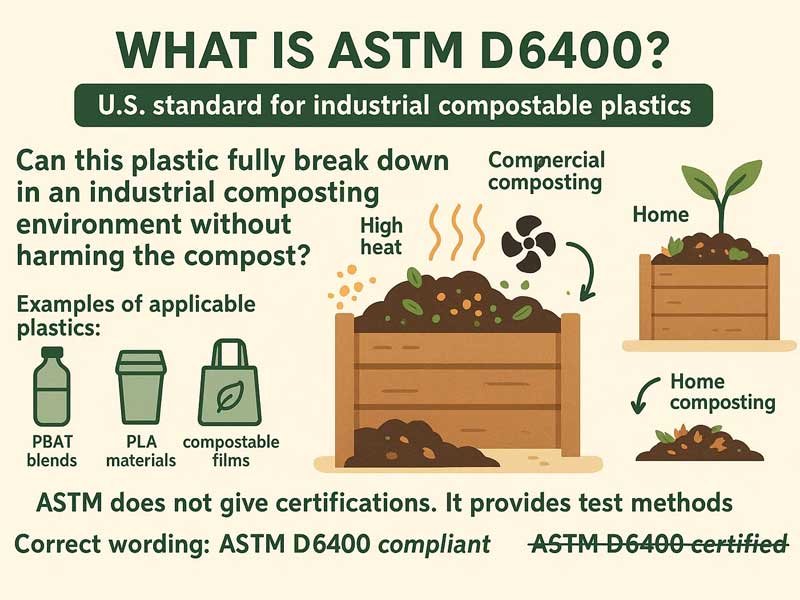
Compostable waste bags are typically tested against recognized standards under defined conditions.
Compared to vague biodegradable claims, compostable claims:
- Define specific disposal requirements
- Set clearer performance expectations
- Are easier to verify and communicate
This does not mean compostable bags work everywhere—but their claims are usually more controlled. In regulated waste programs, compostable trash bags for the USA provide clearer disposal outcomes than loosely defined biodegradable claims, especially where industrial composting infrastructure exists.
Biodegradable vs Compostable: Why the Difference Matters
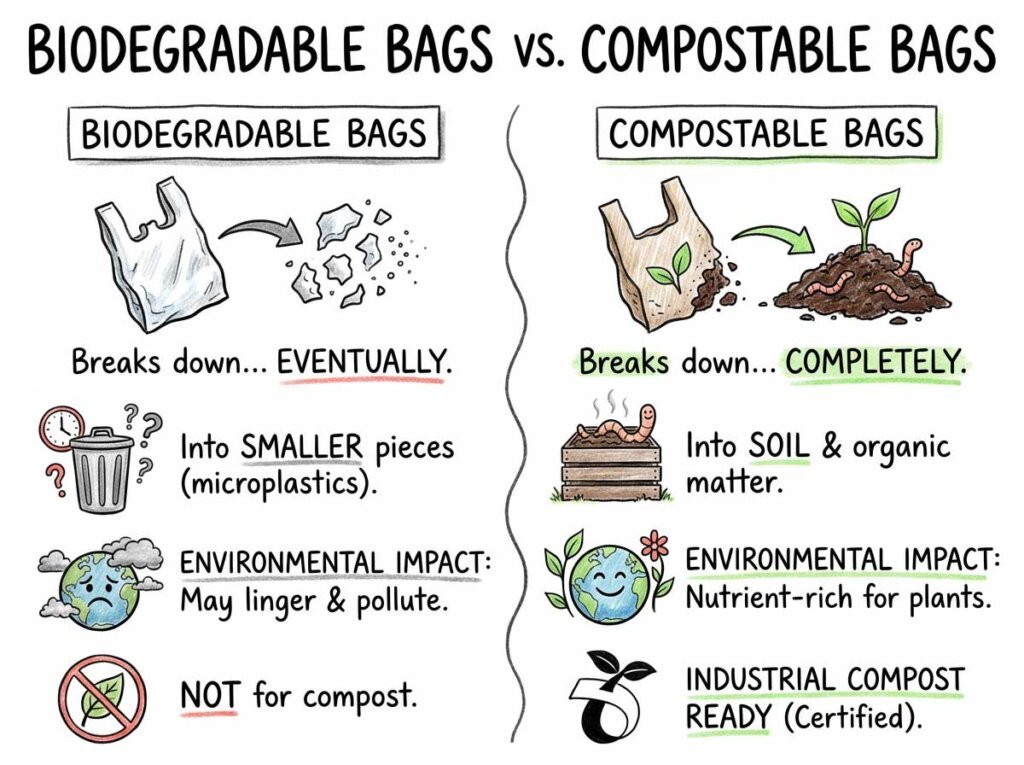
Confusion between biodegradable and compostable waste bags is one of the main sources of risk.
Understanding biodegradable vs compostable waste bags helps users:
- Choose products that fit their waste systems
- Avoid improper disposal
- Reduce environmental and compliance uncertainty
Clear definitions matter more than attractive labels. Understanding the difference between biodegradable vs compostable waste bags is essential for avoiding misuse, mislabeling, and unrealistic disposal expectations.
Our Perspective as a Compostable Bag Manufacturer
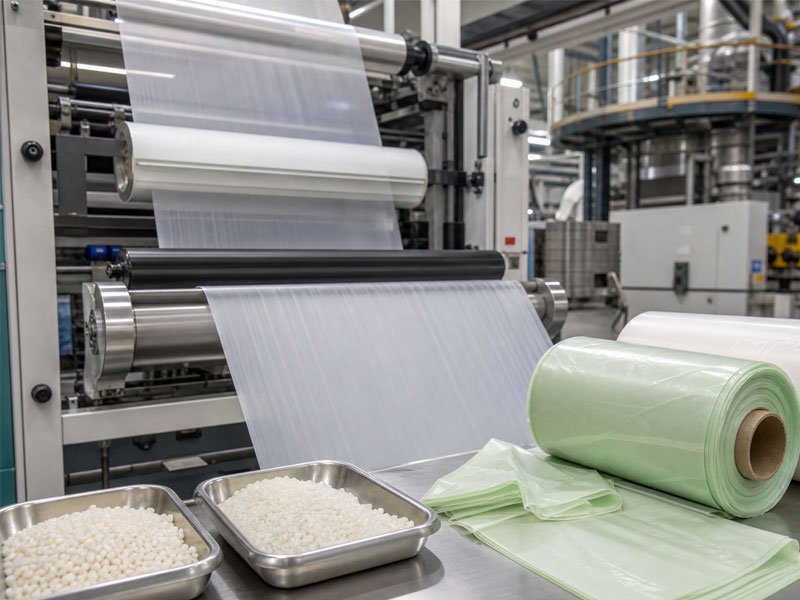
As a compostable bag manufacturer, we focus on PLA and PBAT–based compostable waste bags designed for controlled composting environments.
We avoid using broad biodegradable claims without clear standards, because unclear messaging often leads to misuse and confusion.
Clear positioning helps everyone involved—from users to waste handlers.
Conclusion
Biodegradable claims alone do not guarantee environmental benefit or predictable performance. Without clearly defined conditions, timelines, and disposal pathways, these claims can easily be misunderstood.
For waste bags, where the product ends up matters more than the label used to describe it. Landfill conditions, composting infrastructure, and local waste systems all influence the real outcome.
Unqualified biodegradable claims increase the risk of greenwashing, compliance challenges, and loss of trust. Clear, condition-based terminology helps set realistic expectations and supports responsible waste management.
In systems where composting is available, compostable claims offer a more structured and verifiable framework—but only when matched to the correct disposal environment.
Learn More About Waste Bag Terminology
If you want a clearer comparison between biodegradable and compostable options, this guide may help: biodegradable vs compostable waste bags.