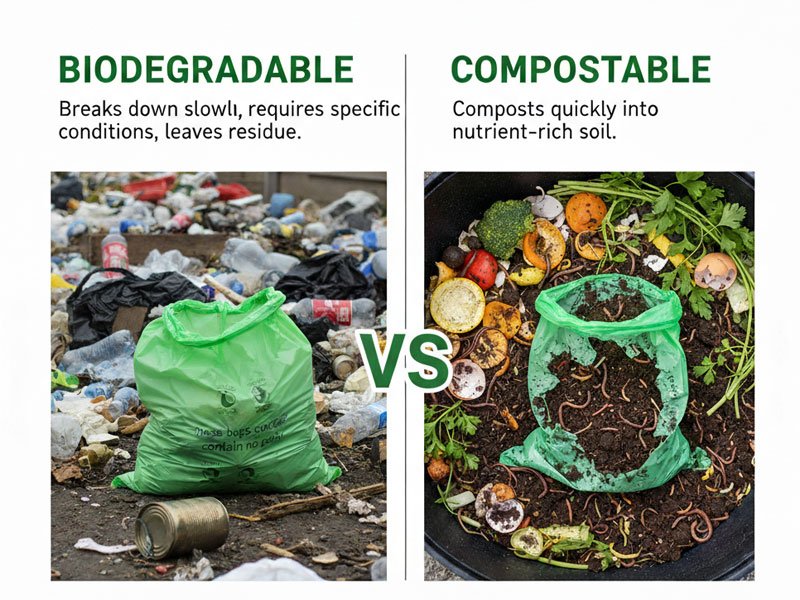
Many buyers assume that if a bag looks the same, it must be made the same way.
But when it comes to plastic bags and compostable bags, this assumption is not correct.
Understanding the compostable bags manufacturing process is essential for buyers evaluating compostable garbage bags for real-world applications.
In this article, we break down how compostable bags are made, how they differ from traditional plastic bags, and what buyers should really pay attention to.
Short Answer:
Compostable bags are not made the same way as plastic bags. While some machines may look similar, compostable bags require material blending, tighter temperature control, and more precise manufacturing processes.
What Is the Manufacturing Process of HDPE Plastic Bags?
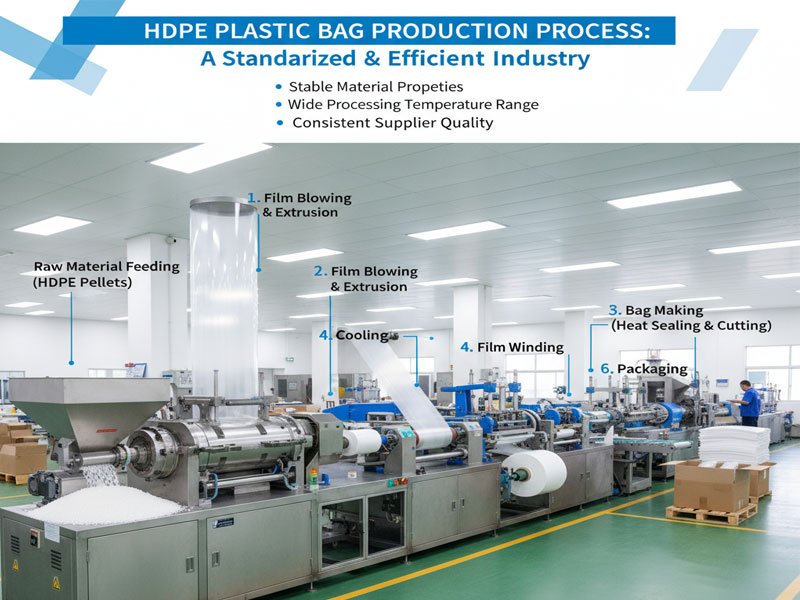
The production of HDPE plastic bags is a mature and standardized process.
Typical steps include:
- Raw material feeding (HDPE pellets)
- Blown film extrusion
- Cooling and shaping
- Film winding
- Bag making (heat sealing and cutting)
- Packaging
Key characteristics:
- Stable material behavior
- Wide processing temperature range
- High production efficiency
- Consistent quality across suppliers
Because of this, HDPE bags are considered a standard industrial product.
Learn more about the differences between compostable vs plastic bags in real applications.
How Compostable Bags Are Manufactured (PLA + PBAT)
The compostable bags manufacturing process is more complex and requires tighter control.
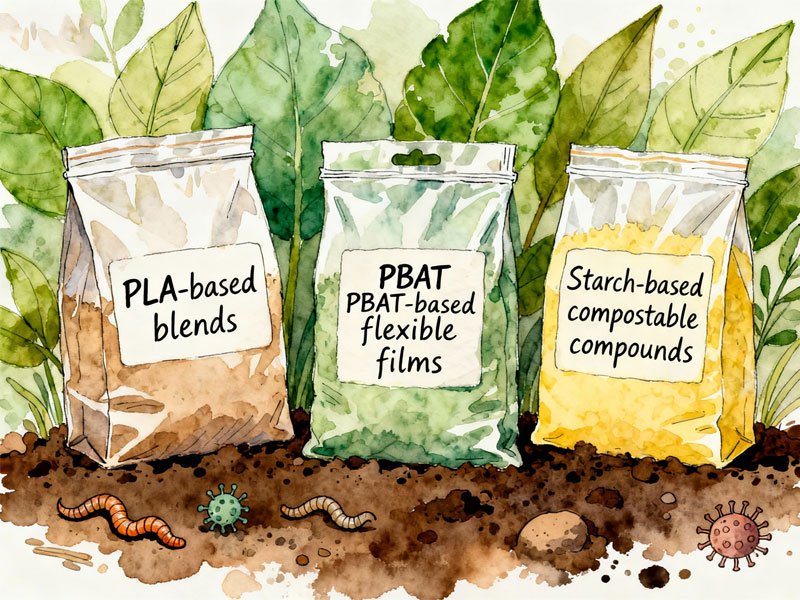
Most compostable bags are made from PLA and PBAT blends, which are engineered to balance flexibility and strength. If you’re not familiar with these materials, you can learn more about what are compostable bags made of and how each component affects performance.
Typical steps include:
- Raw material preparation (PLA, PBAT, additives)
- Material compounding (critical step)
- Blown film extrusion (high precision required)
- Controlled cooling
- Film winding
- Bag making (precise temperature sealing)
- Packaging
Key characteristics:
- Sensitive to temperature and humidity
- Narrow processing window
- Requires engineered material blends
- Higher technical requirements
Compostable bags are not just “eco-friendly products” — they are engineered materials designed for specific waste systems.
Overall, compostable bag production is not just about equipment — it’s about process control. This is why experienced suppliers with strong expertise in compostable bag manufacturing can deliver more consistent quality.
Key Differences in Equipment and Process
| Process Stage | HDPE Plastic Bags | Compostable Bags | Difference |
|---|---|---|---|
| Raw Materials | Direct pellets | PLA + PBAT blends | ❌ Different |
| Compounding | Not required | Required | ❌ Major difference |
| Film Blowing | Standard machines | Modified/controlled machines | ⚠️ |
| Cooling | Stable | Sensitive control needed | ⚠️ |
| Sealing | Wide tolerance | Narrow temperature window | ⚠️ |
| Printing | Standard | Standard | ✅ Same |
While some machines may look similar,the process control requirements are completely different.
For more details, refer to our compostable bag thickness guide to understand performance differences.
Key Takeaway:
Plastic bags are produced using stable materials and standardized processes. Compostable bags, however, require engineered materials, stricter process control, and higher manufacturing precision.
Why Compostable Bags Are Harder to Produce
The main reason lies in material behavior.
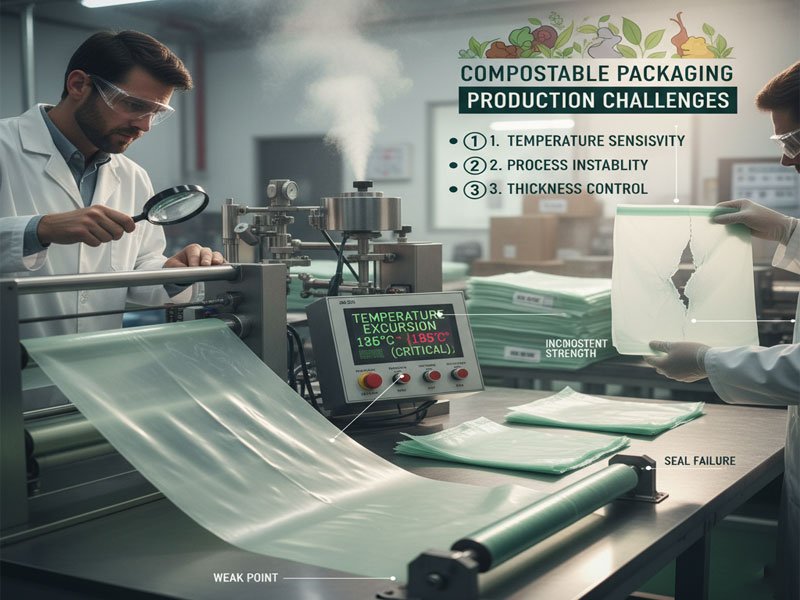
1. Temperature sensitivity
Compostable materials can degrade if overheated.
2. Process instability
Small variations in:
- temperature
- humidity
- material ratio
can lead to major quality issues.
3. Thickness control challenges
Unlike plastic, compostable films are harder to keep consistent.
This can cause:
- weak spots
- sealing failure
- inconsistent strength
Because of these challenges, buyers should not rely on specifications alone. Understanding how to check compostable bag quality can help identify issues such as weak sealing, uneven thickness, and poor durability.
Understanding how to check compostable bag quality is essential when comparing suppliers and avoiding hidden performance risks.
Why Quality Varies Between Suppliers
Two factories may use similar machines, but produce very different results.
Key factors include:
- Material formulation capability
- Process control experience
- Film thickness consistency
- Quality inspection standards
Choosing the right compostable bags manufacturer is critical to ensuring consistent product quality.
This is why:
- Some compostable bags tear easily
- Some leak or fail under load
- Prices vary significantly
How Buyers Can Evaluate a Compostable Bag Manufacturer
When sourcing compostable bags, buyers should not focus only on price.
Instead, evaluate:
- Material system (PLA + PBAT balance)
- Production process control
- Thickness consistency
- Sealing performance
- Certifications (EN13432, ASTM D6400, AS4736, AS5810)
Learn more about certification requirements:
You can also explore our full product range:
- compostable garbage bags
- dog waste bags supplier
- FOGO bin liners
Conclusion:
So, are compostable bags made on the same machines as plastic bags?
The answer is:
Partially yes — but functionally no.
While some equipment may appear similar,
the process, control, and technical requirements are completely different.
In simple terms:
- Plastic bags = standard industrial products
- Compostable bags = engineered products
And that difference defines:
- quality
- performance
- and price
If you are looking for a reliable custom compostable bags manufacturer, feel free to contact our team.
FAQ
Are compostable bags made on the same machines as plastic bags?
Some equipment may look similar, but compostable bags require tighter process control, material blending, and temperature management.
Why are compostable bags more expensive than plastic bags?
They require more complex materials, stricter production control, and lower production efficiency.
What materials are used in compostable bags?
Most compostable bags are made from PLA and PBAT blends.
Do all compostable bags have the same quality?
No. Quality varies depending on material formulation, thickness control, and manufacturing process.
What certifications should compostable bags have?
Common certifications include EN13432, ASTM D6400, AS4736, and AS5810.