Choosing waste bags today is no longer just about size or strength. Many people now ask a more important question: Should you choose biodegradable or compostable waste bags?
Although these terms are often used together, they are not the same. Understanding the difference helps you avoid confusion, reduce disposal mistakes, and choose waste bags that actually match your waste system.
What Is the Difference Between Biodegradable and Compostable Waste Bags?
Before choosing, it is important to understand what these labels mean.
What Are Biodegradable Waste Bags?
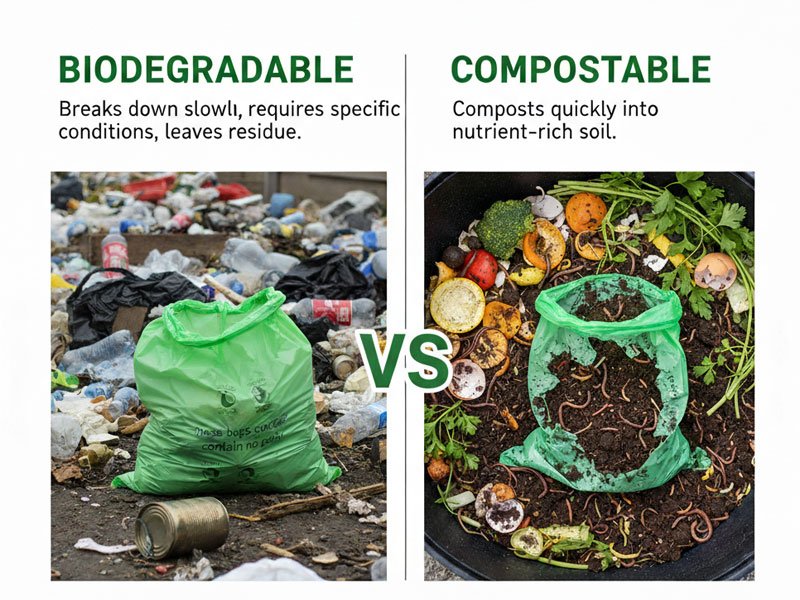
Many biodegradable waste bags are marketed as eco-friendly, but the term itself does not clearly define how fast the material breaks down or under what environmental conditions this process occurs.
Biodegradable waste bags are made from materials that can break down over time with the help of microorganisms.
However, biodegradable does not define:
- How fast the bag breaks down
- Under what conditions it breaks down
- Whether the process leaves residues
Some biodegradable garbage bags may take years to degrade, especially in environments like landfills.
What Are Compostable Waste Bags?
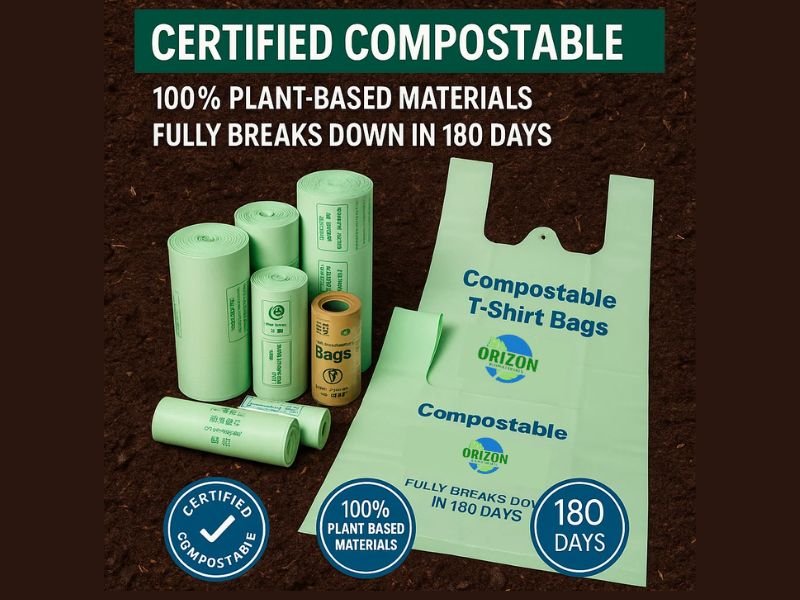
Compostable waste bags are designed to break down under specific composting conditions, usually industrial composting systems.
They are tested against recognized standards and are expected to decompose within a defined timeframe.
This distinction is often misunderstood, which is why understanding biodegradable vs compostable waste bags is essential before choosing a waste bag for kitchen or organic waste systems.
In simple terms:
- Compostable waste bags are biodegradable
- But not all biodegradable waste bags are compostable
This difference matters when waste handling systems are involved.
What Type of Waste Are You Handling?
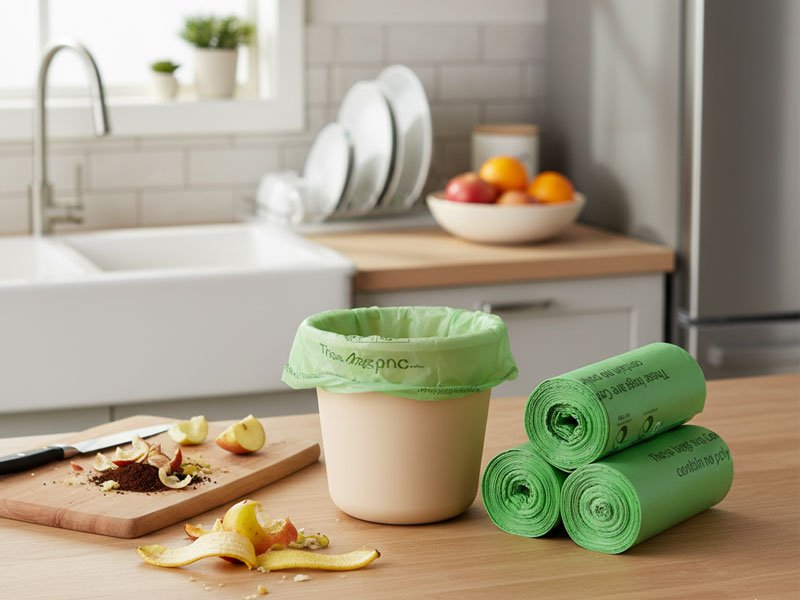
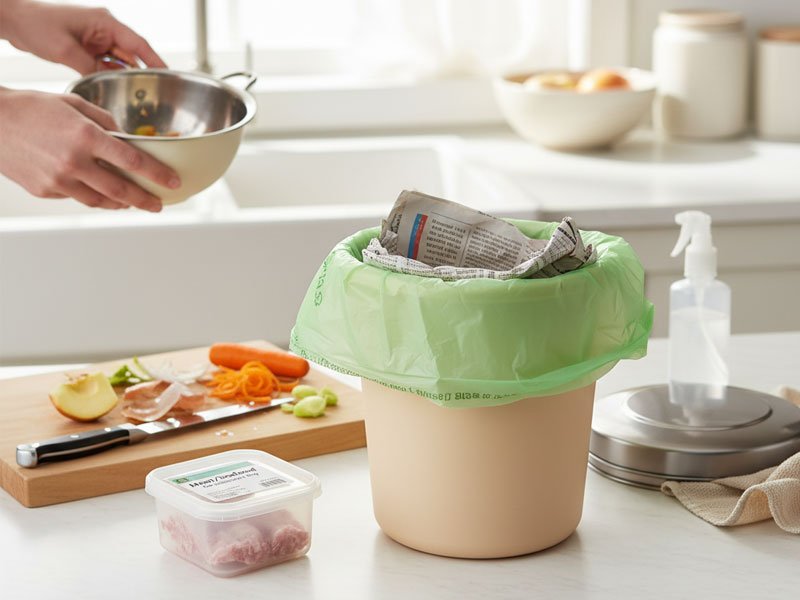
The type of waste you generate is the first factor in choosing between biodegradable or compostable waste bags. When handling wet kitchen waste, some biodegradable trash bags may lose strength more quickly, especially under warm or humid conditions.
Kitchen and Food Waste
Kitchen waste is usually:
- Wet
- Heavy
- Fast to decompose
Biodegradable trash bags may struggle with moisture and extended storage time.
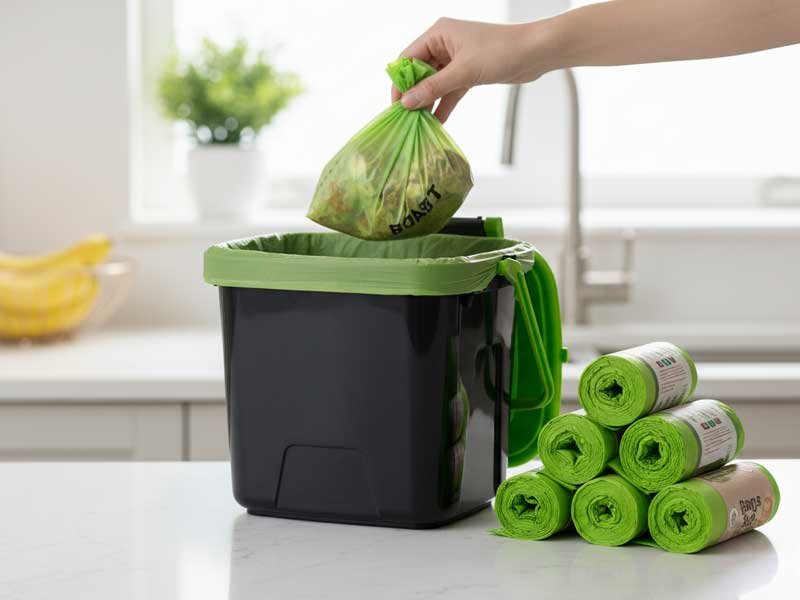
In systems where food waste is collected separately, compostable trash bags are often more suitable.
Dry or Mixed Waste
For dry or light mixed waste:
- Moisture exposure is limited
- Storage time is shorter
In these cases, biodegradable waste bags may work adequately, especially when composting systems are not available.
Where Does the Waste Go After Collection?
This is one of the most important—and often overlooked—questions.
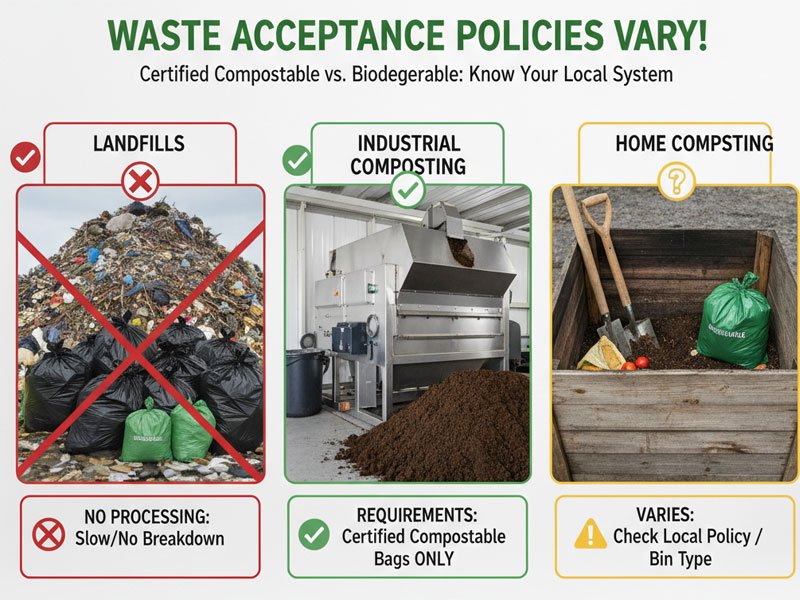
Waste Sent to Landfills
Most landfills are designed to limit oxygen and slow decomposition.
In these conditions, both biodegradable and compostable waste bags may break down very slowly.
If waste bags consistently end up in landfills, the environmental difference between biodegradable or compostable waste bags may be limited.
Waste Sent to Composting Systems
When organic waste is sent to industrial composting facilities, compostable waste bags offer more predictable results.
They are designed to break down alongside food waste under controlled conditions.
Performance Matters as Much as the Label
Environmental claims are important, but waste bags must still work.
Key performance factors include:
- Leak resistance
- Strength with wet waste
- Odor containment
- Storage stability
Biodegradable garbage bags may lose strength faster in warm or humid environments.
Compostable waste bags are usually engineered with clearer performance limits tied to composting systems.
Common Labeling Confusion and Greenwashing Risks
Many waste bags are marketed using broad sustainability language. This can create confusion for buyers and users.
Common issues include:
- Vague biodegradable claims without timeframes
- No clear disposal guidance
- Mixing biodegradable and compostable terms
Understanding these differences helps reduce greenwashing and unrealistic expectations. In many cases, vague biodegradable claims can create unrealistic expectations, especially when disposal conditions such as landfills or composting systems are not clearly explained.
When Biodegradable Waste Bags May Be Enough
Biodegradable waste bags may be suitable when:
- Waste is mostly dry
- Storage time is short
- Waste ends up in landfill or mixed streams
- Performance demands are low
They can serve as a transitional option in some situations.
When Compostable Waste Bags Are the Better Choice
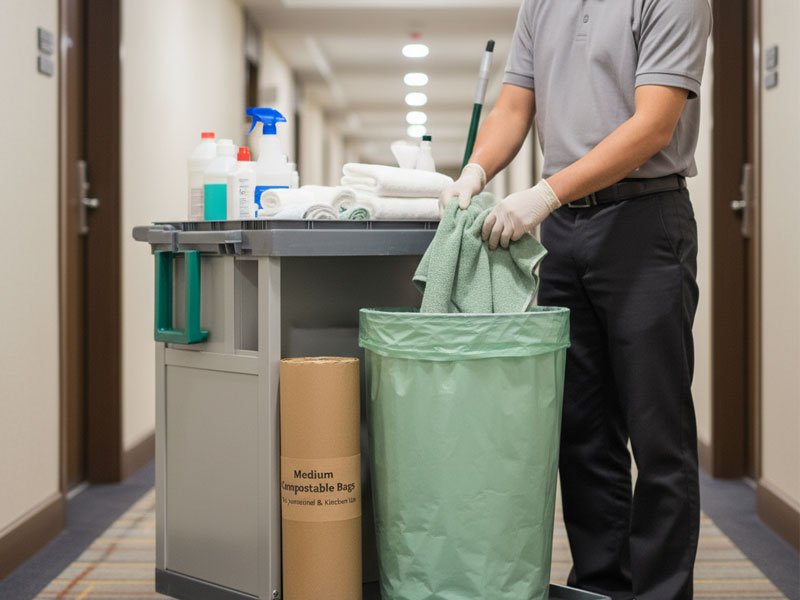
In many regulated waste programs, compostable trash bags for the USA provide clearer disposal outcomes than loosely defined biodegradable alternatives, especially where industrial composting infrastructure is in place.
Compostable waste bags are often the better option when:
- Food waste is collected separately
- Industrial composting systems are available
- Compliance or program requirements apply
- Clear disposal outcomes matter
In many regulated waste programs, compostable trash bags for the USA provide clearer disposal outcomes than loosely defined biodegradable alternatives.
Our Perspective as a Compostable Bag Manufacturer
As a compostable bag manufacturer, we focus on producing PLA and PBAT–based compostable waste bags designed for controlled composting environments.
We do not manufacture waste bags labeled only as biodegradable without clear compostability standards.
This helps reduce misuse, confusion, and unintended environmental impact.
How to Choose the Right Waste Bags
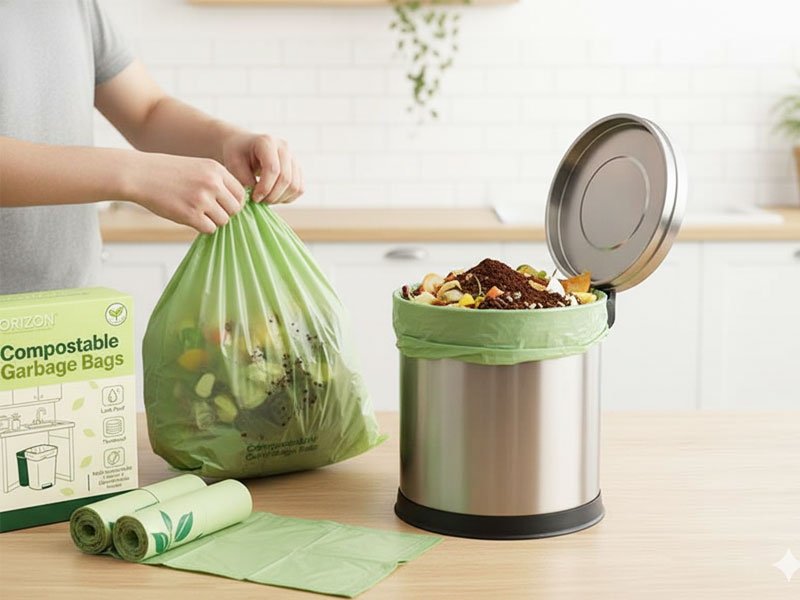
When choosing between biodegradable or compostable waste bags, ask three simple questions:
- What type of waste am I handling?
- Where does the waste go after collection?
- Do performance and compliance matter in this situation?
Matching the waste bag to the waste system is more important than choosing the most appealing label.
Conclusion
In systems designed to handle organic waste properly, compostable waste bags tend to offer more predictable results than bags labeled only as biodegradable.
Biodegradable garbage bags and compostable garbage bags are not the same. Biodegradability does not guarantee rapid or controlled decomposition. With a composting system in place, compostable garbage bags provide a more visible decomposition effect. Disposal conditions are more important than marketing terms.
Learn More About Compostable Waste Bags
If you are evaluating options for food waste or regulated waste programs, you may want to explore compostable waste bags designed for the USA market.