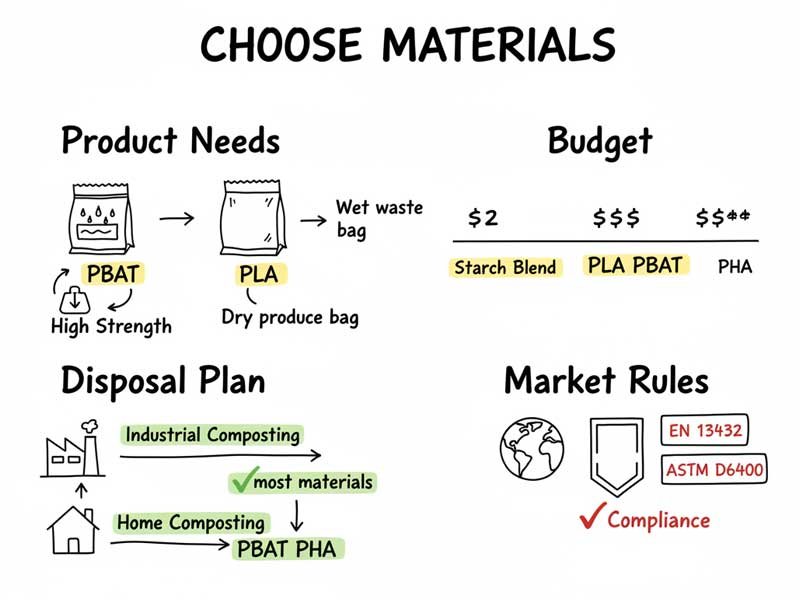
Biodegradable plastic typically takes 3–6 months to decompose in industrial composting, but in real life it can last from years to decades in soil, oceans and landfills. For example:
- PLA: 90–180 days in industrial compost, 1–3 years in soil, decades in landfills
- PHA: 1–6 months in industrial compost, months to years in soil and marine environments
- Biodegradable shopping bags: 3–6 months in industrial compost, 1–3 years in soil
- Traditional plastic bags: 100–500 years in soil, 400–600 years in oceans
The exact decomposition time depends on the material type, temperature, humidity, oxygen level and microbial activity.
Many customers ask: “How long does it take for biodegradable plastic to decompose?” The truth is—there is no universal number because the decomposition rate depends entirely on the environment and the material itself.
As a biodegradable bags manufacturer with 16 years of experience, we aim to help you clearly understand the real decomposition time of biodegradable plastics in different environments.
How Long Does Biodegradable Plastic Take to Decompose in Different Environments?
Truly biodegradable plastics such as PLA and PHA typically decompose in 90–180 days under industrial composting conditions.
However, in soil, home compost, landfills, or the ocean, the process can take years or even decades, depending on temperature, humidity, oxygen availability, and microbial activity.
Biodegradation Time Comparison Table
| Environment | PLA | PHA | Biodegradable Bags | Traditional Plastics |
|---|---|---|---|---|
| Industrial Composting | 90–180 days | 1–6 months | 3–6 months | ❌ No degradation |
| Home Compost | Months–Years | 6–12 months | Slow / incomplete | ❌ No degradation |
| Soil | 1–3 years | Months | 1–3 years | 100–1000 years |
| Ocean | Years–Decades | Months–Years | Very slow | 100–1000 years |
| Landfill | Decades | Decades | Decades | 100–1000 years |
All compostable, oxo-biodegradable, conventional, and biodegradable plastics showed signs of breakdown after nine months of exposure to air. Only compostable plastics effectively decomposed under specific conditions, making them suitable for environmentally friendly disposal. The other three remained intact after three years in soil or seawater, demonstrating limited environmental relevance. (This study, based on a study by Imogen Napper and Richard Thompson of the University of Plymouth, examines how long plastics take to decompose.)
1. Industrial Composting (Fastest: 90–180 Days)
Industrial composting maintains controlled conditions:
- 55–60°C temperature
- 50–60% humidity
- Adequate oxygen
- High microbial concentration
Under these ideal conditions:
- PLA decomposes in 90–180 days
- PHA can decompose in 1–6 months
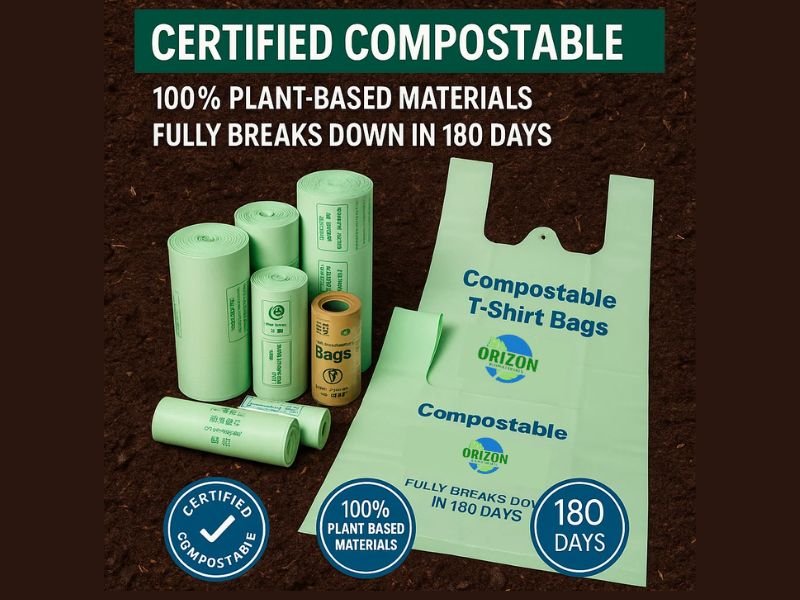
- Certified compostable bags also decompose in 3–6 months
This is the only environment where biodegradable plastics can reliably meet the timelines claimed by manufacturers.
2. Home Composting (Months–Years)
Home compost conditions vary drastically:
- Temperature is usually 20–30°C, far below industrial levels
- Microbial diversity is limited
- Moisture and oxygen are inconsistent
As a result:
- PLA often does not fully decompose
- PHA decomposes more reliably but still slow
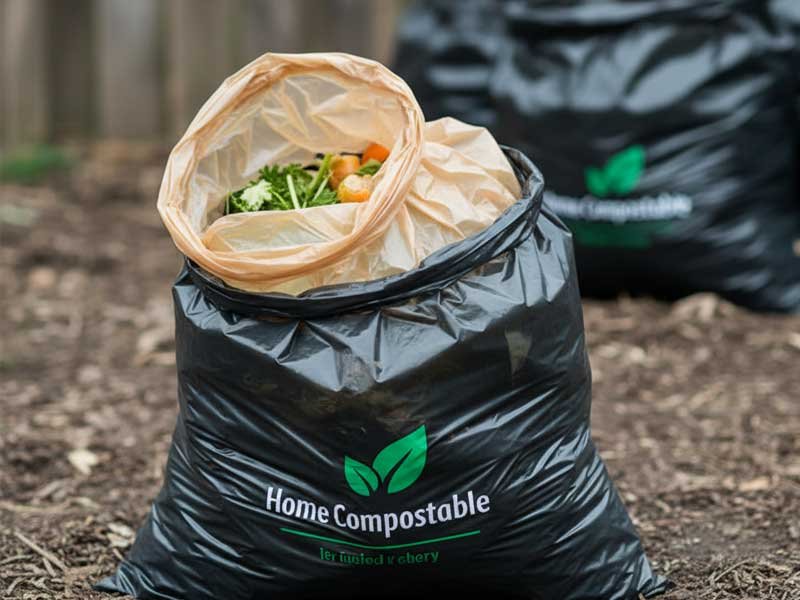
- Biodegradable bags may take months to years
A study in Waste Management Journal found over 70% of home composters fail to decompose PLA products.
3. Soil (Months–Years)
Soil decomposition rates depend on:
- Soil type
- Moisture
- Temperature
- Thickness of the product
Typical soil decomposition time:
- PLA: 1–3 years
- Biodegradable bags: 1–3 years
- PHA: faster, sometimes months
4. Ocean (Years–Decades)
Marine environments have:
- Low temperature
- Limited oxygen
- Different microbial communities
Most biodegradable plastics—especially PLA—degrade very slowly, taking:
- PLA: years to decades
- PHA: months to years (fastest candidate)
5. Landfill (Decades)
Landfills are:
- Anaerobic
- Cool
- Dry
PLA, PHA, and other biodegradable plastics barely decompose, similar to traditional plastics.
Additionally:
- PLA / PHA may release methane, a greenhouse gas 25× stronger than CO₂.
What Is Biodegradable Plastic?
Biodegradable plastics are materials that, in a specific natural environment, can ultimately decompose into water, carbon dioxide, biomass, and some inorganic salts through the action of microorganisms (such as bacteria, fungi, etc.). The biggest difference between them and traditional plastics lies in their “degradability.”
When it comes to biodegradable plastics, many people are confused by the terms biodegradable, degradable, and compostable. An online search reveals the following: degradable > biodegradable > compostable.

Common Types of Biodegradable Plastics:
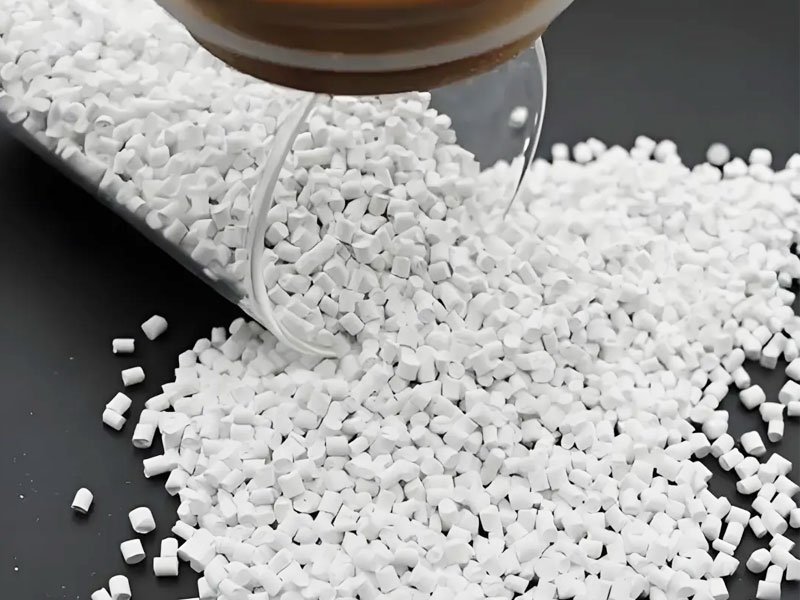
- PLA (Polylactic Acid): One of the most common biodegradable plastics, primarily made from the fermentation of renewable resources such as corn starch or sugarcane. PLA typically requires specific industrial composting conditions for effective decomposition (e.g., Biodegradable Products Institute (BPI) certification requires 90% decomposition within 90 days under specific conditions).
- PHA (Polyhydroxyalkanoates): Natural polyesters synthesized by microorganisms under specific conditions, capable of biodegrading in a wider range of natural environments (including soil and ocean), and considered a more promising next-generation biodegradable material. A study published in the Journal of Polymer Science indicates that some PHAs exhibit faster degradation rates than PLA in marine environments.
- PBS (Polybutylene Succinate): Has both petroleum-based and bio-based sources and is degradable under specific composting conditions.
Two special types:
- Oxidatively biodegradable plastics: These break down upon exposure to oxygen and ultraviolet light using additives. While not fully biodegradable, they do break down into microplastics, failing to truly solve the plastic pollution problem. Therefore, they have been banned in regions like the EU (Source: European Commission, 2019).
- Bio-based plastics: Bio-based plastics are made partially or entirely from biomass (such as corn, sugarcane, and cellulose). They are not synonymous with biodegradable plastics. Bio-based plastics can be biodegradable or non-biodegradable (such as bio-based PET), depending on the source of their raw materials.
Each biodegradable plastic behaves differently during decomposition. Therefore, understanding their characteristics is essential to predicting how long they take to break down.
How Does Biodegradation Work?
The “magic” of biodegradable plastics lies in their decomposition mechanism.
The molecular chain structure of these plastics is designed to be more easily “eaten” by microorganisms. When biodegradable plastics are placed under suitable environmental degradation conditions, such as sufficient moisture, oxygen, and a suitable temperature, the enzymes within those microorganisms begin to work. They attack the polymer chains of the plastic, breaking them down into smaller molecules.
This process is like microorganisms enjoying a feast. They continuously consume these small molecules and metabolize them, ultimately converting them into:
- Water (H₂O)
- Carbon dioxide (CO₂)
- Biomass (i.e., the microorganisms’ own cells, or some humic matter)
- And some non-toxic inorganic salts.
You see, this is a relatively natural cycle. This is fundamentally different from traditional plastics, which simply break down into smaller and smaller fragments (the horrible formation of microplastics). In the ideal plastic decomposition process, biodegradable plastics aim to disappear completely, not leave behind hidden dangers.
Microorganisms break down the polymer chains and convert the material into CO₂, water, biomass, and non-toxic minerals, completing a natural circular process.
In contrast, traditional plastics do not provide microorganisms with a recognizable molecular structure, so they fragment into microplastics instead of fully degrading.
“Biodegradable” vs. “Compostable” vs. “Oxo-degradable”
| Property | Degradable | Biodegradable | Compostable |
|---|---|---|---|
| Definition | Materials that break down into smaller molecules via physical, chemical, or biological processes. | Materials that decompose into natural substances (e.g., water, CO₂, biomass) via microbial action. | Materials that decompose in a composting environment into nutrient-rich compost, safe for soil use. |
| Scope | Broadest term, includes all types of degradation (e.g., photodegradation, thermal degradation, biodegradation). | Subset of degradable, limited to decomposition by biological processes. | Subset of biodegradable, specifically suited for composting with beneficial end products. |
| Conditions | May degrade under non-biological conditions (e.g., sunlight, heat). No specific environmental requirements. | Requires microorganisms, suitable temperature, humidity, and oxygen (e.g., soil or compost settings). | Requires specific composting conditions (e.g., industrial: 50-60°C; home: 20-30°C). Must meet standards like ASTM D6400 or EN 13432. |
| Limitations | Degradation products (e.g., microplastics) may not be eco-friendly. | Decomposition time varies; not all biodegradable materials are compostable. | Not all biodegradable materials are compostable; requires certification and proper facilities. |
| Examples | Photodegradable plastic bags, chemically degradable materials. | Certain bioplastics (e.g., PBAT), organic waste. | Certified PLA tableware, food scraps (for home/industrial composting). |
| Environmental Impact | May leave harmful residues (e.g., microplastics). | More eco-friendly, but depends on conditions and material. | Most eco-friendly, produces compost usable in agriculture/gardening. |
Notes:
- Practical Use: Choose materials based on their disposal infrastructure (e.g., home composting, industrial composting, or waste management). Always check if they are certified “compostable,” which is considered environmentally friendly.
How Long Does It Take for Biodegradable Plastic to Decompose?
This is the core question of this guide. The decomposition time of biodegradable plastics ranges from about 90 days to several decades, depending entirely on:
- The plastic type (PLA, PHA, PBAT-based, etc.)
- The final disposal environment
- Temperature, oxygen, and moisture
- Thickness and additives
Why There Is No Single “Exact Number of Days”
- Unlike traditional plastics, biodegradable plastics rely on microbial activity.
- If microbes are active → decomposition is fast.
- If microbes are limited → decomposition slows dramatically.
Therefore, the same PLA cup may:
- degrade in 90–180 days in industrial compost
- but remain nearly intact for years in soil
- and not decompose at all in landfills
Because the final disposal mode is different, industrial composting facilities, home compost bins, landfills (anoxic) or ocean/aquatic disposal, the following is a comparison of biodegradation times in different environments.
How Long Does PLA Take to Decompose?
PLA Decomposition Time
PLA (polylactic acid) decomposes fast only in industrial composting:
- 90–180 days in industrial composting facilities (above 55°C with high humidity and active microbes)
- 1–3 years in soil under favorable conditions
- Very slowly in home compost, often only partially breaking down
- Decades in landfills and marine environments where temperature and microbes are not suitable
This is why many “compostable” PLA cups or tableware do not disappear in backyard compost or landfills – they need industrial composting to meet the claimed 90–180 day decomposition time.
How Long Does PHA Take to Decompose?
PHA Decomposition Time
Compared with PLA, PHA (polyhydroxyalkanoates) has a broader biodegradation window:
- 1–6 months in industrial composting
- Months to about 1 year in soil under favorable conditions
- Months to years in freshwater and marine environments (faster than PLA)
Several studies have shown that some PHA grades can biodegrade in marine environments where PLA remains almost unchanged. This is why PHA is often considered a next-generation biodegradable plastic for applications where leakage into the environment is a concern.
How Long Do Biodegradable Bags Take to Decompose?
Most biodegradable shopping bags are made from PLA + PBAT or starch blends.
- In industrial composting, certified biodegradable bags usually decompose in 3–6 months.
- In soil, the same bags may need 1–3 years, depending on thickness and climate.
- In landfills and oceans, degradation is much slower and can also take many years, because conditions are not designed for composting.
Thin film bags always decompose faster than thick molded products because microbes can attack a larger surface area.
How Long Do Plastic Bags Take to Decompose?
Traditional plastic bags made from polyethylene (PE) do not biodegrade in a meaningful time frame. Instead, they slowly break into microplastics.
Typical estimates are:
- 100–500 years for plastic bags buried in soil
- 400–600 years for plastic bags drifting in the oceans
This huge gap compared with biodegradable bags (months to a few years) is the main reason why many retailers and governments are switching to certified compostable bags.
Differences between Biodegradable Plastics and Traditional Plastics
We are surrounded by all sorts of plastic products. From your phone case to coffee cup lids to supermarket bags, plastic is everywhere. I understand that in daily life, we may find it difficult to distinguish them. But you might be surprised when I tell you that their lifespans on Earth vary drastically.
The core difference of traditional plastics:
When we talk about “plastic,” we mostly mean traditional plastics, such as polyethylene (PE), polypropylene (PP), and polyethylene terephthalate (PET). The most significant characteristic of these materials is their inertness.
What is inertness? Simply put, they are very stable and rarely react chemically with other substances. Their molecular structure is very robust, making them impervious to microorganisms. Like an indestructible wall, bacteria and fungi find it difficult to effectively degrade them. This results in their extremely long decomposition cycles—typically hundreds to thousands of years.
Let me give you an example to give you a sense of this timescale:
- A plastic bag may take 10-20 years to “disappear” from the natural environment.
- A plastic bottle, on the other hand, may take 450 years.
- Some thicker plastic products can take thousands of years to decompose.
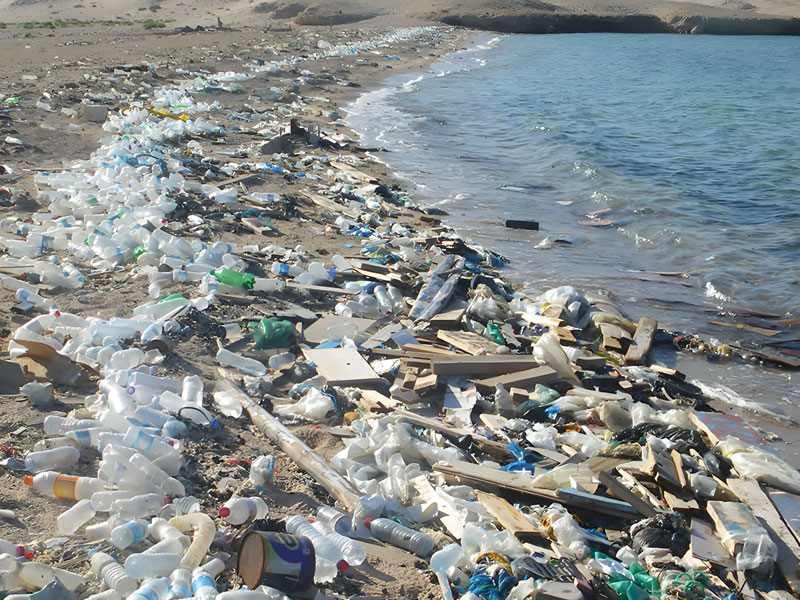
The plastic we discard today may even outlive all our descendants combined. This endless “lifecycle” is the root cause of the global plastic pollution crisis. It accumulates in landfills, pollutes our oceans (think of the slow and arduous degradation of ocean plastics), and eventually breaks down into tiny particles—microplastics—that seep into the food chain, posing a potential threat to the environment and human health.
This is why we need to seriously consider solutions to plastic pollution and seek alternatives to plastics.
Factors Affecting Biodegradable Plastic Decomposition Rate
Environmental Conditions:
- Temperature: In industrial composting, temperatures are typically maintained at 55-60°C, where microbial activity is several times higher than at room temperature. Therefore, the degradation time for PLA can be shortened from years to months. One study showed that PLA may take several years to completely decompose at 20°C, but only 3 months at 58°C (Source: Journal of Environmental Polymer Degradation, 2018).
- Humidity: Water is not required, but it should be kept within a certain range. Decomposition can be affected by excessive dryness or excessive humidity.
- Oxygen Supply: In aerobic environments (such as composting), microorganisms can efficiently convert plastics into CO2 and water. However, in anaerobic environments such as landfill decomposition, the decomposition rate is surprisingly slow and may even produce methane, exacerbating the greenhouse effect.
- Microbial Species: Not all microorganisms can decompose all biodegradable plastics. In marine environments, the lack of specific microbial communities that effectively decompose terrestrial biodegradable plastics results in extremely slow plastic degradation in the ocean.
- Material Form and Thickness: Thin-film biodegradable bags generally decompose faster than thick compostable tableware because microorganisms have a larger contact area. Studies have found that doubling the thickness of biodegradable plastic films can increase the time to complete decomposition by 20-50% (Source: Polymer Degradation and Stability, 2020).
- Additives and Coatings: Some biodegradable plastics have layers or additives added to increase their load-bearing capacity or toughness, which can also affect microorganisms.
Properties of Plastics Themselves:
- Chemical Structure and Molecular Weight: The “genes” of plastics, the polymer chain structure determines how easily they are decomposed. The longer the chain and the more complex the structure, the harder it is for microorganisms to break it. Polylactic acid (PLA) and polyhydroxyalkanoate (PHA) products are chemically easier for microorganisms to recognize and degrade than traditional plastics.
- Material Thickness and Density: The thicker and denser the plastic product, the longer it takes for microorganisms to fully penetrate and decompose it. A thin biodegradable bag will certainly decompose faster than a thick biodegradable lunchbox.
- Additives and Colorants: Sometimes, various additives are added to give plastics specific properties (such as flexibility and color). These additives may hinder the microbial decomposition process or leave undesirable decomposition products.
Environmental Impact:
Where you dispose of plastic is crucial to predicting its lifespan. Sustainable packaging may disappear quickly in industrial compost, but not in the ocean. This relates to the true realization of circular economy plastics.
Environmental Impact and Limitations of Biodegradable Plastics
While biodegradable plastics may seem like the most effective solution to plastic pollution, this is not the case. We cannot be blinded by the temporary marketing hype and the “green” halo.
The “Green Cleaning” Problem:
A report by the Consumers Union indicates that approximately 40% of “eco-friendly” plastic products on the market contain misleading claims and fail to deliver on their stated environmental benefits (Source: Consumer Reports, 2019).
Oxidatively biodegradable plastics are a prime example; their “biodegradable” claims were banned by the EU in 2019 because they merely break down into microplastics rather than truly decompose.
Infrastructure Challenges:
According to the U.S. Environmental Protection Agency, only about 10% of plastic waste in the U.S. is currently recycled, and industrial composting facilities capable of handling compostable plastics are scarce, covering less than 5% of the national population (Source: U.S. EPA, 2020).
Even if sustainable packaging is purchased, if there is no corresponding local plastic recycling infrastructure, it is likely to end up in landfills, as its decomposition principle cannot be realized.
Microplastic Problem:
Even biodegradable plastics, when incompletely decomposed under less than ideal conditions, can still break down into microplastics, potentially polluting soil and water, and harming ecosystems. A study published in Nature Sustainability suggests that the microplastics produced during the decomposition of some biodegradable plastics may be just as toxic as traditional microplastics (Source: Nature Sustainability, 2022).
Resource Consumption and Life Cycle:
The production of any material requires energy and resources. Even with bio-based plastics, the cultivation, processing, and transportation of their raw materials impact the plastic’s environmental footprint. We must consider the entire life cycle of plastics, not just its degradation phase.
How to Use Biodegradable Plastics Responsibly
Faced with these challenges, what should we do? I firmly believe that by taking responsible attitudes and actions, we can still drive the future of biodegradable plastics in a positive direction.
Consumer Role (Action Guide):
Besides reading biodegradable product guidelines and certifications, I recommend paying attention to the entire plastic lifecycle of a product. For example, choosing reusable coffee cups can reduce the use of hundreds of disposable cups each year (Source: Reusable Cup Association, 2023).
When dealing with compostable plastics, be sure to check local plastic disposal options, such as whether municipal organic recycling or industrial composting services are available.
Industry and Policy Responsibility (Outlook):
Global investment in the development of biodegradable plastics is increasing. According to market research reports, the global bioplastics market is projected to reach billions of dollars by 2028, indicating greater potential for plastic innovation and environmentally friendly plastics (Source: Grand View Research, 2021).
Future development directions include not only improving the control of factors affecting degradation rates but also research into developing biodegradable polymers that can degrade effectively in a wider range of environments, such as the ocean. For example, some new PHA materials are being developed to adapt to harsher natural environments (Source: Scientific Reports, 2023).
Meanwhile, environmental regulations for plastics are constantly being improved, aiming to provide clearer standards for degradation certification and to combat green cleaning practices, ensuring consumer trust in sustainable consumption.

What Are Some Biodegradable Raw Materials?
- PLA (Polylactic Acid)
Currently the most popular bioplastic on the market, it offers excellent thermal stability and solvent resistance. Common products such as transparent, “eco-friendly” cold drink cups and lunch boxes are mostly made of PLA. It is derived from renewable resources such as corn and sugarcane.
The molecular chain is designed to be stable, requiring sustained temperatures above 55°C and extremely high humidity for degradation. Only in these conditions can microorganisms efficiently break down its molecules, breaking down organic matter into water, carbon dioxide, and other nutrients that benefit the soil and contribute to the sustainable development of the Earth.
- PHA (Polyhydroxyalkanoate)
PHA is a rising star in bioplastics. Its unique molecular structure allows it to be synthesized by microorganisms under specific conditions as an energy storage substance.
It degrades rapidly in a variety of natural environments, including soil, freshwater, and even the ocean.
- Starch-based Plastics
This is a mixture of traditional plastics (such as polyethylene) with a large amount of starch. The so-called “degradation” process advertised by businesses is actually just microorganisms consuming the starch, causing the entire structure to disintegrate and ultimately break down into tiny fragments that are even more difficult to clean.
- Oxo-degradable plastic
This is not biodegradable plastic! Additives such as metal salts are added to traditional plastics to accelerate their physical breakdown under the action of light and oxygen. Microorganisms cannot break it down, but instead it turns into countless invisible microplastics, which pose a serious threat to soil, water supplies, and the food chain.
Any product labeled “oxo-degradable” or “degradable” should be considered a more serious environmental threat than regular plastic.
Biodegradable Plastics Break down in Landfills
- Methane release: PLA and PHA contain carbon, which, when decomposed in anaerobic environments, produces methane, which is 25 times more potent than CO₂. This release has serious environmental impacts and contributes to the climate crisis.
- Fragmentation without decomposition: Plastics undergo oxidative degradation, breaking down into microplastics that can easily enter soil and water systems.
- Incomplete degradation: Pollution cannot be fully degraded in landfills, potentially creating hidden hazards.
Does It Make Sense for Garbage to End up in a Landfill?
Yes, it does. This isn’t a technical issue; it’s a choice based on green environmental values. Because the investment costs of industrial composting facilities are relatively high, some places can’t afford them, so a lot of garbage ends up in landfills. On the surface, it might seem like bioplastic bags aren’t breaking down, but in the long run, this is an intangible investment in green, sustainable development.
Choosing bioplastics (such as PLA) reduces dependence on petroleum-based feedstock, and corn and sugarcane are renewable resources that can be grown annually.
Choosing recycled plastics can solve the current crisis. In the future, as technology advances, new methods of degradation may emerge, which may also be a good solution.
We should first properly manage plastic waste, giving discarded plastic bottles and packaging films a second life, rather than simply consuming new resources to make new things. We can contribute to solving the existing plastic waste problem.

Our 16 Years of Biodegradable Bag Manufacturing Expertise
As a manufacturer with 16 years of experience, we have tested biodegradation performance in various environments. Based on our in-house and third-party certified tests:
- Thin PLA bags decompose significantly faster than thick molded items
- Starch-blended bags disintegrate faster but may leave micro-residue
- PHA performs best in soil and aquatic environments
We comply with:
This ensures our products meet global composting standards.
FAQ
How long does biodegradable plastic really take to decompose?
Biodegradable plastic typically takes 3–6 months to decompose in industrial composting where temperatures stay above 55°C and microbial activity is high.
However, in real-world environments such as soil, oceans, and landfills, the process can take years or even decades because the required conditions (heat, oxygen, and specific microbes) are not present. The actual time depends on the material type (PLA, PHA, PBAT), thickness, moisture, and oxygen availability.
Can biodegradable plastics decompose in landfills?
Only very slowly.
Landfills are cold, dark, and oxygen-poor, making them unsuitable for biodegradation. In these anaerobic conditions, biodegradable plastics may take decades to break down, similar to traditional plastics.
Some materials may also generate methane, a greenhouse gas 25× more potent than CO₂. This is why proper disposal—especially industrial composting—is essential for biodegradable plastics.
Does PLA decompose in home compost?
Usually no.
PLA requires temperatures above 55°C to activate the enzymes needed for biodegradation. Home compost systems typically stay around 20–30°C, far below the required temperature.
As a result, PLA cups, tableware, and bags may only soften or fragment but will not fully decompose in backyard compost. PLA is designed for industrial composting environments only.
How long do biodegradable bags take to decompose?
Most biodegradable bags made from PLA + PBAT or starch blends decompose within:
- 3–6 months in industrial composting
- 1–3 years in soil
- Much slower in oceans or landfills
Thin biodegradable bags degrade faster than thick molded products because microbes can attack a larger surface area. Proper disposal is key to achieving the advertised decomposition time.
How long does a plastic bag take to decompose?
Traditional plastic bags made from polyethylene (PE) do not biodegrade in a meaningful way. They slowly fragment into microplastics instead.
Typical decomposition estimates include:
- 100–500 years in soil
- 400–600 years in oceans
Because conventional plastic bags persist for centuries, many regions have replaced them with certified biodegradable or compostable alternatives.
Do biodegradable plastics create microplastics?
If biodegradable plastics do not decompose under proper conditions, they can fragment and form microplastics—especially in soil, oceans, or landfills where the environment is not suitable for biodegradation.
When processed correctly (e.g., in industrial composting), certified compostable plastics break down into CO₂, water, and biomass, leaving no microplastic residue.
Are biodegradable plastics always better than traditional plastics?
Not always.
Biodegradable plastics are more environmentally friendly only when disposed of correctly, typically through industrial composting.
However:
- In landfills, they may decompose very slowly
- In oceans, most biodegradable plastics behave similarly to traditional plastics
- Some biodegradable plastics can still generate microplastics if conditions are not ideal
- Infrastructure for compostable plastics is limited in many countries
When used properly and composted in the right facilities, biodegradable plastics significantly reduce long-term pollution compared to traditional plastics.
Conclusion
How long does it take for biodegradable plastic to decompose? The answer is: there’s no standard answer, depending on the final disposal method. The specific decomposition time depends on the environment. If it’s not in the high-temperature, high-humidity environment of industrial composting, most biodegradable plastics will take a long time.
Related Artical: