What Is Biodegradable? Definition & Meaning in Packaging
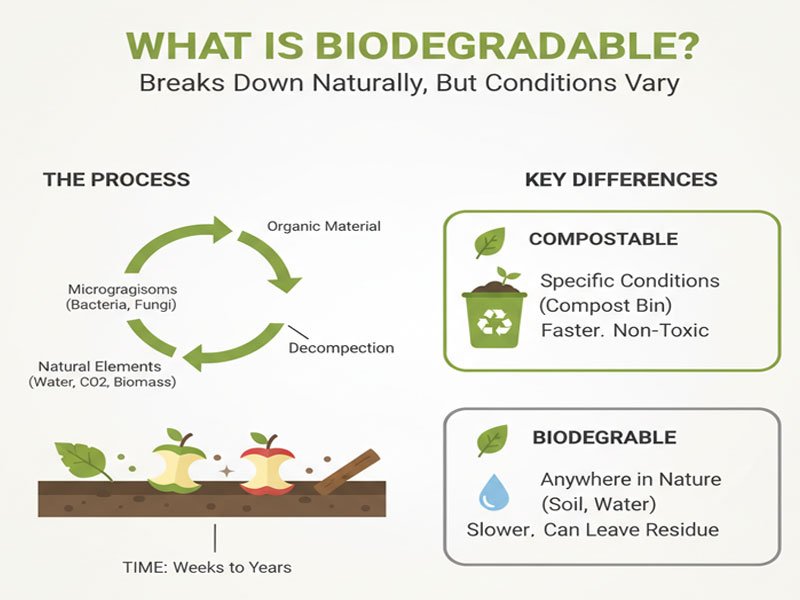
Biodegradable means a material can be broken down by microorganisms such as bacteria and fungi into natural substances like water, carbon dioxide, and biomass.
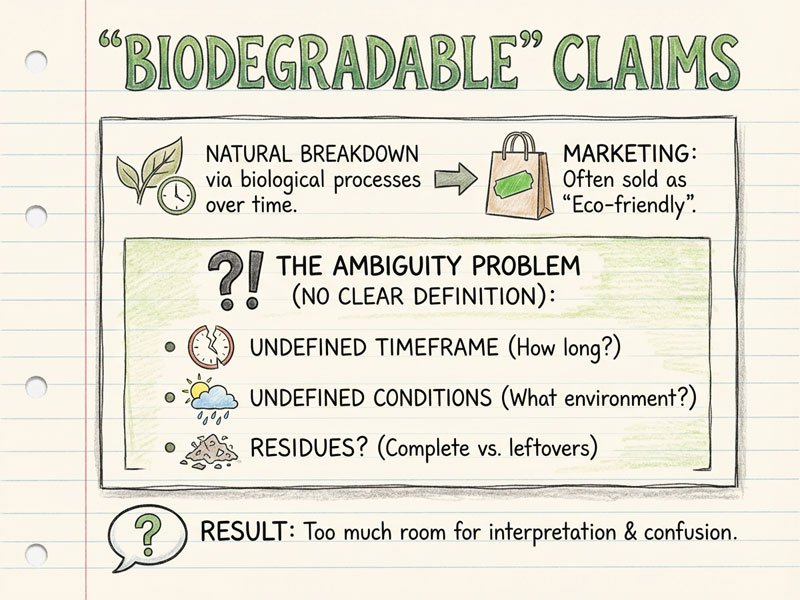
However, the term does not define how long the process takes, under what conditions it happens, or whether the breakdown is complete or environmentally safe.
In packaging and waste systems, this lack of clarity often leads to confusion and misuse.
What Does “Biodegradable” Mean?
A material is considered biodegradable if it can be decomposed by naturally occurring microorganisms through biological processes.
Unlike regulated environmental claims, biodegradable is a broad scientific description, not a performance standard.
It does not guarantee:
A specific decomposition timeframe
Complete breakdown in real-world conditions
Absence of microplastic residue
Compatibility with composting or recycling systems
As a result, two products labeled “biodegradable” may behave very differently depending on material composition and disposal environment.
How Biodegradation Works
Biodegradation occurs when microorganisms metabolize a material and convert it into simpler chemical compounds.
The speed and completeness of biodegradation depend on several factors:
Temperature
Oxygen availability
Moisture levels
Microbial activity
Material thickness and chemistry
In controlled laboratory conditions, biodegradation may appear effective.
In uncontrolled environments—such as landfills, oceans, or dry soil—the same material may persist for years or fragment into smaller particles.
Examples of Biodegradable and Non-Biodegradable Materials
| Biodegradable Materials | Non-Biodegradable Materials |
|---|---|
| Food waste | Glass |
| Paper | Aluminum |
| Cotton | Conventional PE plastic |
| Wood | PET bottles |
| Compostable bioplastics | PVC |
These examples show that not all plastics behave the same way.
Some biodegradable plastics require specific conditions to break down properly.
What “Biodegradable” Does NOT Guarantee
Many misconceptions stem from assuming biodegradable materials behave predictably in all environments.
Biodegradable does not mean:
The material will break down quickly
The material is suitable for composting
The material will not leave microplastics
The material is safe for soil or marine environments
The material can be placed in organics or recycling bins
Without defined conditions and verification, biodegradable claims provide no reliable guidance for waste sorting or environmental impact.
Biodegradable vs Compostable (Key Difference)
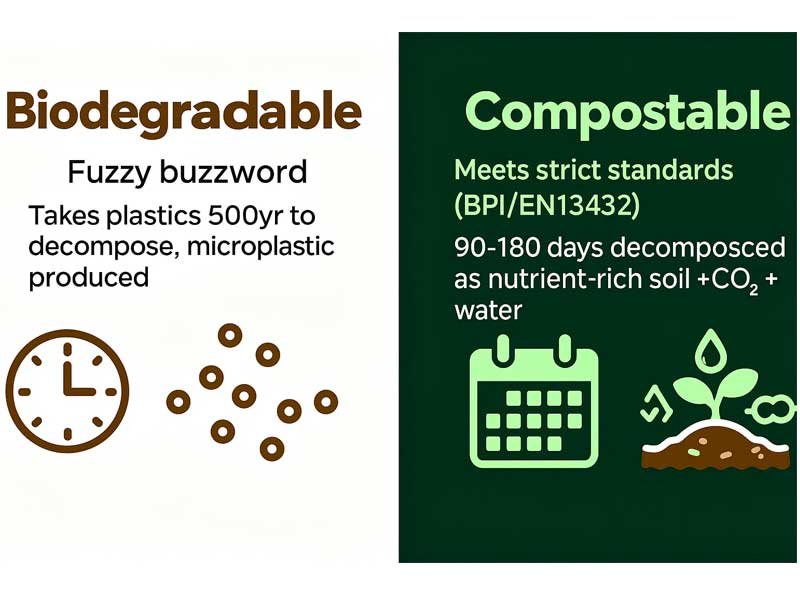
Biodegradable and compostable are often confused, but they are not interchangeable.
Biodegradable describes the potential to break down biologically, without defined timelines or performance requirements.
Compostable refers to materials that must fully break down within a specified timeframe, under controlled composting conditions, and without toxic residue, as verified by certification standards.
Compostable materials are biodegradable, but most biodegradable materials are not compostable.
For a detailed comparison, see:
Biodegradable Materials in Real Disposal Environments
In practice, disposal conditions matter more than labels.
- Landfills: Low oxygen and low microbial activity often slow or prevent biodegradation. Some biodegradable plastics may generate methane if anaerobic degradation occurs.
- Soil and marine environments: Many biodegradable plastics degrade extremely slowly and may fragment rather than mineralize.
- Waste collection systems: Most organics programs do not accept biodegradable items unless they are certified compostable.
For compostability standards and verification, see: Certifications
This is why biodegradable is not a valid sorting instruction in most waste management systems.
Biodegradable Claims, Standards, and Compliance Risks
Unlike compostable claims, biodegradable claims are rarely tied to enforceable performance standards.
Regulatory bodies have warned that vague environmental claims can mislead buyers and consumers:
The Federal Trade Commission advises that environmental marketing claims must be clearly qualified and not imply benefits that cannot be substantiated.
The Australian Competition and Consumer Commission has issued guidance highlighting risks associated with unqualified biodegradable claims on plastic products.
Without clear conditions, testing methods, and disclosure, biodegradable labeling may increase compliance, reputational, and contamination risks.
For packaging projects requiring regulatory alignment, see: OEM Compostable Bags
Common Misunderstandings About “Biodegradable”
Biodegradable does not mean compostable
Biodegradable does not mean recyclable
Biodegradable does not mean home compostable
Biodegradable does not ensure environmental safety
These misunderstandings are a major reason why many waste systems and councils restrict or discourage biodegradable products.
When Is the Term “Biodegradable” Appropriate?
The term biodegradable is most appropriate in scientific or material descriptions, where conditions and limitations are clearly stated.
In packaging and waste systems, biodegradable should not be used as a standalone environmental claim unless supported by:
Defined testing conditions
Timeframe disclosure
End-of-life clarification
Compliance with local waste rules
For disposal systems, certified compostable claims provide clearer, verifiable expectations.
FAQ
Biodegradable means something can break down naturally through microorganisms such as bacteria and fungi.
No. Compostable materials meet strict, time-bound standards. Biodegradable materials do not.
Not necessarily. Environmental impact depends on material type, disposal environment, and degradation completeness.
No. They may contaminate recycling streams and should not be treated as recyclable plastics.
Most do not. Many persist or fragment rather than fully biodegrade in marine environments.
Conclusion
Biodegradable describes a biological process, not a guaranteed environmental outcome.
Without defined conditions, timeframes, and verification, biodegradable claims offer limited guidance for waste handling or environmental protection.
Understanding these limitations is essential for buyers, policymakers, and waste systems seeking effective and compliant sustainability solutions.