Updated: 20 August 2026
PLA PBAT vs PHA film is a common material question for compostable bag buyers. PLA/PBAT film is widely used in commercial compostable bags today, while PHA film is gaining attention because of its bio-based origin and biodegradation potential.
But PHA, PLA and PBAT do not perform the same way in blown film extrusion, sealing, tear resistance, cost, and supply stability.
For B2B buyers, the best choice is not the newest material. It is the material or blend that fits your bag type, certification target, production scale, and market claim.
What Is PHA Film?
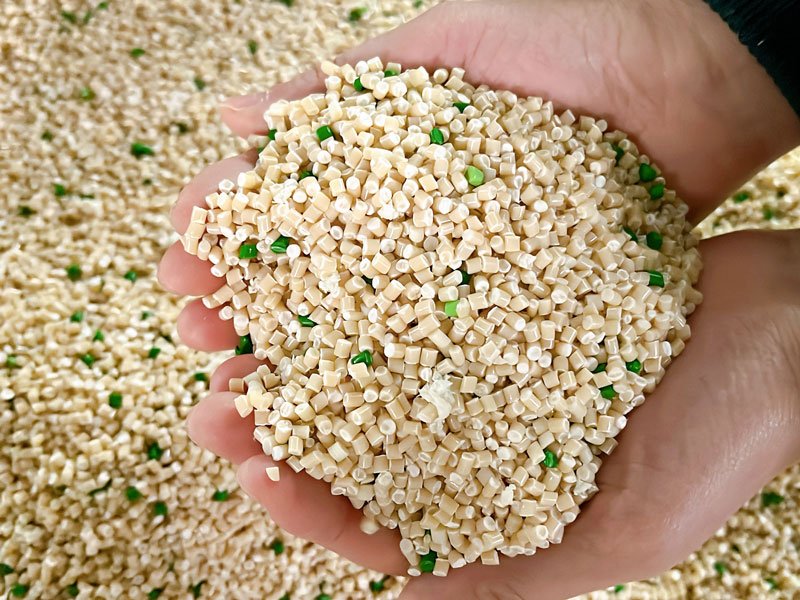
PHA film is film made from polyhydroxyalkanoates, a family of biopolyesters produced by microorganisms. Many PHA materials are bio-based and can show strong biodegradation potential under certain conditions.
For compostable packaging buyers, PHA film is attractive because it can support strong sustainability positioning. But commercial film use still depends on processing stability, film strength, cost, supply, and finished product test data.
Buyers should not assume every PHA film can make broad biodegradation claims. The claim must be supported by the finished film or finished bag test results.
What Is PLA PBAT Film?
PLA PBAT film is usually made from a blend of PLA and PBAT, often with starch or other approved components. PLA adds stiffness and bio-based content. PBAT adds flexibility, tear resistance, and better film processing.
This is why PLA/PBAT blends are widely used for compostable garbage bags, shopping bags, produce bags, mailer bags, and food waste bags.
PLA PBAT vs PHA Film Comparison
| Item | PLA/PBAT Film | PHA Film |
|---|---|---|
| Main strength | Stable film extrusion, flexibility, sealing, and lower cost. | Bio-based origin and strong biodegradation potential. |
| Main limit | PBAT is usually fossil-based, so bio-based content may be lower. | Higher cost, narrower processing window, and less mature supply. |
| Bag use | Common for compostable bags and packaging film. | More suitable for premium or special projects. |
| Scale | More practical for bulk B2B production today. | Still developing for large-scale film orders. |
| Buyer check | Check finished product certification and thickness scope. | Check grade, formula, test data, and realistic claim support. |
Why Buyers Are Considering PHA Materials
PHA (polyhydroxyalkanoates) has gained attention for one key reason:
👉 Many PHA materials are bio-based, but buyers should still check the exact grade, formulation, supplier data, and finished product test results.
Compared to PLA or PBAT, which are partially bio-based, PHA offers:
- Higher renewable content
- Potential for marine biodegradability
- Strong sustainability positioning
For brands focused on environmental impact and carbon footprint, this makes PHA very attractive.
However, material selection is not only about sustainability claims. Understanding compostable packaging standards and certifications is essential when selecting the right material for your market.
👉 It must also work in real production conditions. This is where the difference between theory and real production becomes clear.
Key Challenges of PHA in Film Applications
In practice, PHA still faces several challenges in film extrusion:
1. Processing Stability
PHA materials often have a narrow processing window, which can lead to:
- Film breakage
- Inconsistent thickness
- Difficult sealing performance
2. Cost Considerations
Compared to PLA/PBAT systems:
- PHA is significantly more expensive
- Cost fluctuations are higher
This makes it difficult for large-scale commercial use.
3. Supply Consistency
PHA production capacity is still developing globally.
This can result in:
- Longer lead times
- Variability between batches
These factors make PHA promising in theory, but still challenging in large-scale film production today.
Why PLA/PBAT Still Dominates Film Applications
Despite growing interest in PHA, PLA/PBAT blends remain widely used in compostable film today, especially for compostable bags and packaging products.
PLA/PBAT systems are popular because they give buyers a practical balance of processing, performance, cost, and supply.
For a deeper look at why PLA and PBAT are often blended for flexible compostable bags, read our guide to PLA PBAT blend for compostable bags.
Proven Processing Performance
PLA/PBAT blends can offer:
- Stable blown film extrusion
- Good flexibility
- Reliable sealing
- Controlled thickness
- Better roll converting performance
Balanced Cost Structure
Compared with PHA, PLA/PBAT blends are usually more cost-effective for bulk compostable bag production.
This matters for garbage bags, shopping bags, produce bags, mailer bags, and food waste bags, where buyers need both performance and price control.
Mature Supply Chain
PLA/PBAT raw materials are more established in the compostable film supply chain. This can support more stable production planning and repeat orders.
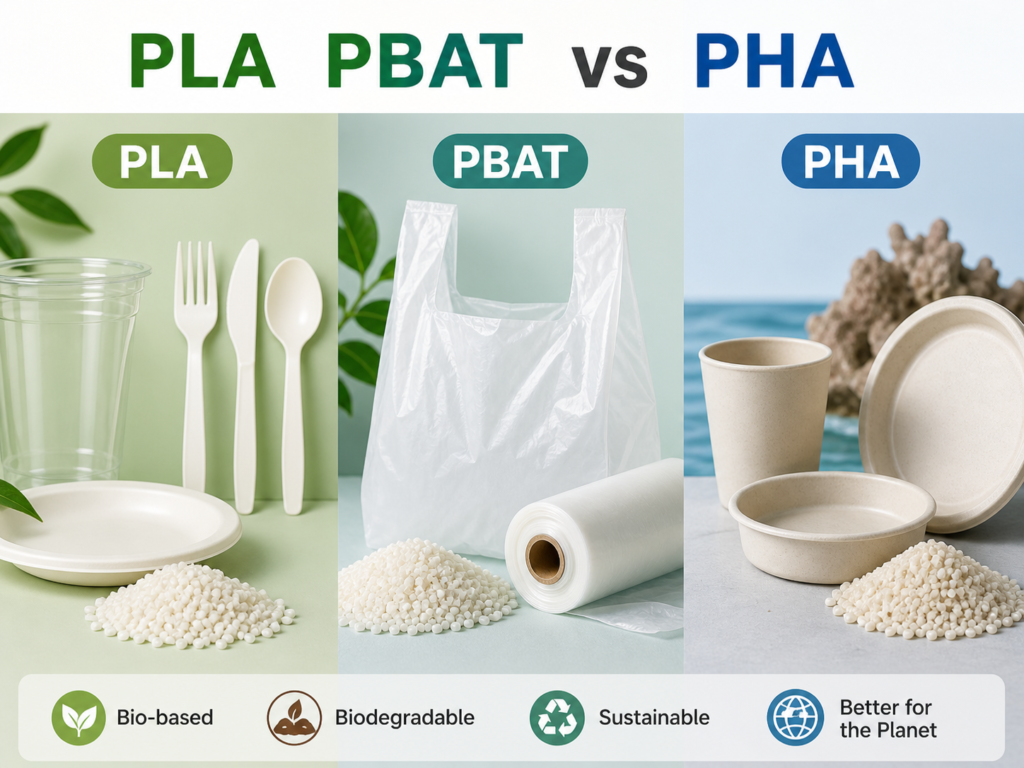
Difference Between PHA, PLA and PBAT
PHA, PLA and PBAT each play different roles in compostable material selection.
- PHA may support broader biodegradation potential, but cost and supply are still key limits.
- PLA adds stiffness and bio-based content, but it can be brittle when used alone in flexible bags.
- PBAT adds flexibility, tear resistance, and better blown-film processing, but it is usually fossil-based.
For compostable bags, the best material is often not a single resin. It is a tested blend that meets the target use and certification requirement.
Why Application Matters More Than Material Name
Instead of asking which material is better, buyers should ask which material fits the application.
For compostable bag applications, PLA/PBAT blends are often the more practical choice today because they can support flexibility, sealing, strength, and bulk production.
For premium or special projects, PHA may become more relevant as processing technology, supply capacity, and cost improve.
Different applications require different film properties. A compostable mailer bag, food waste bag, produce bag, and garbage bag will not always use the same material formula.
Compostability Depends on the Finished Product
Buyers should not approve a product only because the material name sounds sustainable.
Compostability depends on the finished product, including:
- Material formula
- Film thickness
- Color
- Printing ink
- Additives
- Bag structure
- Composting condition
A raw material certificate does not always prove that the finished bag is certified. Buyers should review the finished product scope, test report, and certification documents.
B2B Buyer Checklist
- Is the product made from PLA/PBAT, PHA, starch blend, or another formulation?
- Is the certificate for raw material or finished bags?
- Which standard applies: EN 13432, ASTM D6400, BPI, OK compost, or another standard?
- Does the certificate cover the bag thickness?
- Does the formula suit the target product, such as food waste bags, shopping bags, mailers, or garbage bags?
- Can the supplier provide test reports and material declarations?
- Is the claim industrial compostable, home compostable, biodegradable, or bio-based?
- Does the target market allow the claim on packaging?
Red Flags
- The supplier says “100% biodegradable” but gives no test standard.
- The supplier says “PHA film” but the product only contains a small PHA blend.
- The certificate only covers resin, not finished bags.
- The product claims home compostable but only has industrial composting proof.
- The supplier cannot explain PLA, PBAT, PHA, and starch roles in the formula.
- The artwork uses certification marks without approval.
Our Experience in Compostable Film Production
In our current compostable bag production, Orizon focuses mainly on PLA/PBAT-based systems for film applications.
This helps us support:
- Stable film extrusion
- Consistent thickness control
- Reliable sealing performance
- Practical cost control
- Repeatable B2B supply
We are also following the development of PHA materials and their potential applications in film processing. For most current commercial compostable bag projects, PLA/PBAT remains the more practical and scalable solution.
Orizon manufactures compostable garbage bags, shopping bags, produce bags, mailer bags, food waste bags, garment bags, dog waste bags, and OEM custom compostable packaging.
Related Material Guides
FAQ
What is the difference between PLA PBAT and PHA film?
PLA PBAT films are blends that combine stiffness, flexibility, sealing performance, and film processing stability. PHA films are made from polyhydroxyalkanoates and may offer broader biodegradation potential, but they can face higher cost and supply challenges.
Is PHA better than PLA PBAT for compostable films?
PHA can be attractive for selected projects, but PLA PBAT remains more practical for many commercial compostable films because of better processing stability, lower cost, and more mature supply.
Why is PLA PBAT still widely used instead of PHA?
PLA PBAT offers stable extrusion, consistent quality, and a mature supply chain. This makes it suitable for large-scale compostable bag production.
Can PHA be used for film extrusion?
Yes, PHA can be used for some film applications, but it may be limited by narrow processing windows, higher costs, and supply consistency issues.
What is the difference between PLA and PBAT?
PLA adds stiffness and bio-based content, while PBAT adds flexibility, tear resistance, and better blown-film processing. Compostable bags often use both in a blend.
Is PHA film ready for bulk compostable bag production?
PHA film can be used in some applications, but for many bulk compostable bag orders, cost, supply stability, and processing consistency still make PLA/PBAT blends more practical today.
Conclusion
PHA, PLA and PBAT all have value in compostable film development, but they serve different roles. PHA may support stronger bio-based positioning and wider biodegradation potential in selected cases. PLA/PBAT blends remain more practical for many current compostable bag projects because they offer stable processing, reliable performance, and better cost control. For B2B buyers, the safest choice is based on application, certification, finished product testing, and supply stability.
Talk to Orizon About Compostable Film
If you are evaluating PLA PBAT vs PHA film for compostable bags, send us your product type, target market, certification requirement, size, thickness, and expected order volume.
Our team can help you review material options and choose a practical compostable film solution for your application.
Explore our compostable bag solutions or contact us for OEM support based on your specific application and market requirements.