Updated: 20 August 2026
Quick Answer: Why Is PHA Film Difficult to Process?
PHA film can be produced by cast-film and blown-film extrusion. However, PHA is a family of polymers rather than one material with a fixed processing profile.
Some PHB and PHBV grades have a narrow melt-processing window. Excessive temperature, shear, or residence time can reduce molecular weight and change the mechanical properties of the finished film.
Other challenges may include low melt strength, unstable film bubbles, high crystallinity, brittleness, blocking, and a narrow sealing window.
These problems do not mean that all PHA film is unsuitable for commercial production. Performance depends on the PHA grade, molecular weight, formulation, additives, equipment, and processing conditions.
For buyers, the correct question is not simply whether PHA can be made into film. The more useful question is whether a specific PHA formulation can meet the required thickness, seal strength, line speed, aging performance, certification scope, and production cost.
What Is PHA Film?
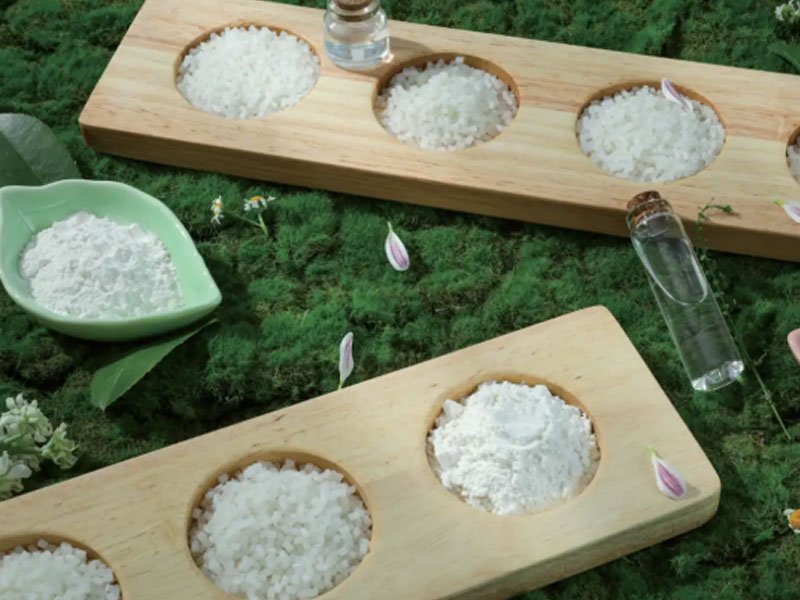
PHA is short for polyhydroxyalkanoate. PHAs are a family of polyesters produced through biological processes., a family of polyesters produced through biological processes.
Common PHA types used or studied for film applications include:
- PHB: polyhydroxybutyrate
- PHBV: poly(3-hydroxybutyrate-co-3-hydroxyvalerate)
- PHBH: poly(3-hydroxybutyrate-co-3-hydroxyhexanoate)
- P(3HB-co-4HB): a copolymer containing 3-hydroxybutyrate and 4-hydroxybutyrate
These materials do not have identical processing windows or film properties. Copolymer content, molecular weight, crystallinity, additives, and blending partners can change flexibility, melt strength, sealing, and aging behavior.
A PHA resin may be produced from biological feedstocks. However, the bio-based content and compostability of a finished film must be evaluated from the complete formulation, not the raw resin name alone.
| Processing Challenge | Possible Cause | Production Signs | What to Check |
|---|---|---|---|
| Thermal degradation | Excess temperature, shear or residence time | Lower melt strength, pressure change, brittle film | Temperature profile, residence time, molecular weight |
| Bubble instability | Low melt strength or unsuitable blow-up conditions | Bubble movement, film breaks, gauge variation | Melt rheology, BUR, TUR, cooling and output |
| Brittleness | High crystallinity or unsuitable formulation | Low elongation, cracking during conversion | PHA grade, copolymer content, tensile and aging tests |
| Blocking or tackiness | Film surface and crystallization behavior | Difficult unwinding or collapsed layflat | Antiblock system, cooling, winding and storage |
| Uneven thickness | Bubble instability or draw imbalance | Gauge variation across the roll | Die profile, air ring, take-up ratio and thickness map |
| Weak or narrow sealing window | Formulation and seal conditions | Seal failure or variable bond strength | Seal temperature, dwell time, pressure and hot tack |
| Property changes after storage | Continued crystallization or formulation aging | Film becomes stiffer or more brittle | Conditioned testing and shelf-life study |
BUR means blow-up ratio, which compares the film bubble diameter with the die diameter.
TUR means take-up ratio, which describes how strongly the film is drawn in the machine direction.
The correct BUR, TUR, output, and cooling conditions depend on the resin grade, formulation, film thickness, and extrusion line.
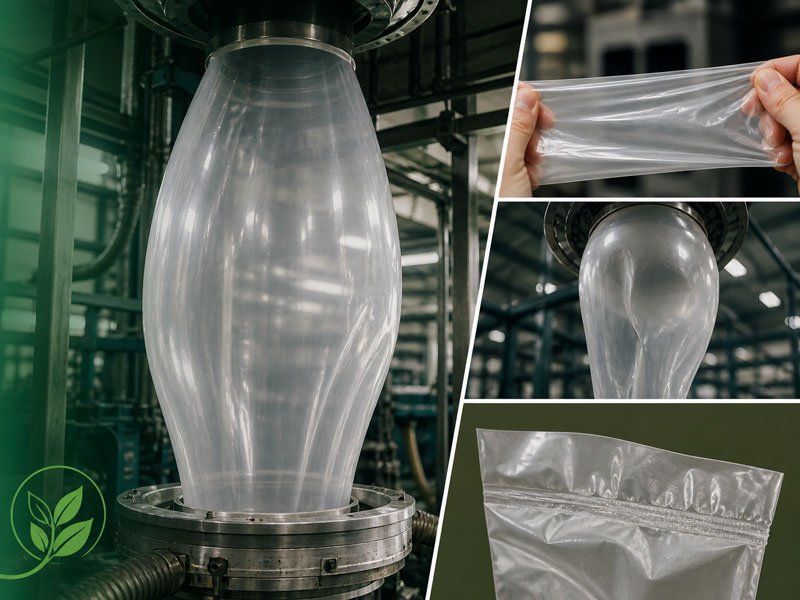
Processing Challenges in Blown Film Extrusion
PHA processing behavior varies by polymer type, molecular weight, copolymer content, formulation, and equipment. The following challenges may apply to some grades, especially PHB- and PHBV-rich formulations.
Narrow Thermal Processing Window
Some PHB and PHBV grades have a limited temperature range between effective melt processing and the start of significant polymer degradation.
Excessive melt temperature, shear, or residence time may reduce molecular weight. This can affect melt strength, elongation, and the mechanical performance of the finished film.
A PHBV processing study found that processing temperature and screw speed affected molecular weight and film properties. Another study showed that processing temperature could change PHBV crystallization and mechanical behavior.
For this reason, processors should evaluate:
- Resin supplier processing guidance
- Actual melt temperature
- Screw speed and motor load
- Melt pressure
- Residence time
- Molecular-weight or melt-flow changes
- Mechanical properties after processing
Melt Strength and Film Bubble Stability
Some PHA grades have insufficient melt strength for stable blown-film production without formulation or process adjustment.
Possible production signs include:
- Bubble movement
- Film breaks
- Uneven draw
- Gauge variation
- Unstable frost-line height
- Winding or layflat problems
Bubble stability should be tested using the intended resin grade, formulation, output, blow-up ratio, take-up ratio, cooling system, and film thickness.
PHA film blowing is technically possible. Research has shown successful film blowing with compatibilized PHBV blends and PHA-containing formulations. The results depend on the complete material and processing system.
Crystallization, Brittleness, and Aging
Some PHA formulations can develop high crystallinity. This may increase stiffness and reduce elongation.
Film properties may also change after production as crystallization continues during storage. A film that performs well immediately after extrusion may become stiffer or more brittle later.
Testing should therefore include conditioned samples and defined aging periods, not only samples taken directly from the production line.
Sealing, Blocking, and Winding
Seal performance depends on the PHA grade, formulation, film thickness, surface condition, and sealing equipment.
Buyers should not assume that one sealing temperature will work for every PHA film.
A seal-window study should review:
- Seal initiation temperature
- Seal temperature range
- Dwell time
- Sealing pressure
- Peel strength
- Hot-tack performance
- Failure mode
Antiblock and slip systems may also be required to support film opening, winding, slitting, and bag conversion.
Commercial Cost and Scale-Up Factors
PHA film cost cannot be judged from resin price alone.
A commercial evaluation should include:
- Resin and additive cost
- Drying and compounding requirements
- Extrusion line speed
- Start-up and scrap rate
- Film thickness consistency
- Conversion and sealing yield
- Testing and certification cost
- Supplier MOQ and lead time
- Storage stability
- Repeat-order formulation control
Prices and supply conditions vary by PHA grade, supplier, region, order quantity and contract date. Buyers should compare current project quotations rather than rely on a general statement about PHA cost.
How PHA Film Processability Can Be Improved
PHA film performance may be improved through formulation and process development.
Common approaches include:
- Selecting a PHA grade developed for film extrusion
- Controlling resin drying and storage
- Reducing unnecessary thermal residence time
- Adjusting screw speed, output and temperature profile
- Using compatible plasticizers or processing aids
- Using chain-extension or compatibilization systems where appropriate
- Blending crystalline and more flexible polymer grades
- Improving cooling, bubble control and winding conditions
- Testing antiblock and slip systems
- Developing a seal curve for the finished formulation
Each change can affect mechanical properties, compostability claims, food-contact status, color, odor, migration and certification scope. Additives should therefore be reviewed as part of the finished formulation.
Conditions That Affect Commercial PHA Film Scale-Up
Commercial scale-up depends on more than whether a laboratory film can be produced.
Before moving to regular production, manufacturers should confirm:
- Exact PHA grade and supplier
- Copolymer content and molecular weight
- Complete film formulation
- Resin drying and storage requirements
- Extruder screw and die configuration
- Temperature profile and residence time
- Output, BUR, TUR, and cooling conditions
- Target film thickness and tolerance
- Winding, slitting, printing, and sealing performance
- Mechanical properties after aging
- Scrap rate and repeat-run consistency
- Finished-product certification scope
PHA film has been produced successfully in research and pilot-scale extrusion. However, successful results from one grade or formulation should not be applied automatically to another.
Commercial readiness should be decided from pilot data, finished-film testing, conversion yield, supply terms, and the requirements of the target application.
When PLA/PBAT Film May Be the More Practical Choice
PHA should not be rejected only because it may require more development work. However, PLA/PBAT film may be the more practical choice for a specific project when the manufacturer already has a validated formulation, production data, and supporting documents for the required product.
PLA/PBAT may reduce project qualification work when:
- The formulation has already been tested on the intended blown-film line
- Film thickness, tensile strength, elongation, and sealing data are available
- The required bag structure has passed sample and production trials
- The intended compostability claim matches the available certificate scope
- Printing inks, colors, and additives have already been reviewed
- Repeat-order quality controls have been established
- Current cost, MOQ, capacity, and lead-time information are available
- The buyer’s launch schedule does not allow extended material development
For flexible bag applications, PBAT can provide flexibility and elongation, while PLA can contribute stiffness. However, the final performance depends on the blend ratio, additives, processing conditions, and film thickness.
Research on PLA/PBAT blown films also shows that plasticizers and formulation changes can affect flexibility, compatibility, tear strength, and processing behavior. See this PLA/PBAT blown-film study.
This does not mean that every PLA/PBAT film is easier to process or more suitable than every PHA film.
The choice should be based on:
- Target application
- Required mechanical performance
- Production and conversion data
- Intended disposal route
- Finished-product certification
- Target-market requirements
- Project cost and schedule
A PLA/PBAT raw-material certificate does not automatically certify the finished film. Thickness, printing, color, additives, and sealing structure must remain within the relevant certificate or test scope.
PBAT is a compostable polymer under defined conditions, but it should not automatically be described as bio-based. Bio-based content, compostability, and food-contact compliance are separate claims that require different supporting evidence.
For projects with a validated PHA formulation and sufficient pilot data, PHA may also be a suitable choice. Material selection should be based on finished-film evidence rather than the polymer name alone.
For buyers comparing practical material systems for bulk compostable bag production, our PLA PBAT blend for compostable bags guide explains why PLA/PBAT blends are still widely used in flexible film.
PHA Film vs. PLA/PBAT Film
PHA and PLA/PBAT films should be compared through the finished formulation and target application.
PHA formulations may offer different bio-based content and biodegradation profiles, but performance varies between PHA types and finished products.
PLA/PBAT blends have established use in many compostable bag applications. However, their processing performance also depends on the formulation, additives, thickness and equipment.
Neither material name automatically proves:
- Finished-product compostability
- Home compostability
- Marine biodegradability
- Food-contact compliance
- Acceptance by a composting facility
- Compliance with packaging laws
Buyers should review the finished-product certificate, test report, technical data, intended use and disposal route.
When PLA/PBAT May Be Considered
For some compostable bag applications, manufacturers already have established processing data for PLA/PBAT formulations. This may reduce development time and production risk for a defined project.
However, this does not mean that PLA/PBAT is always better than PHA.
Material selection should consider:
- Required film performance
- Production equipment
- Target thickness
- Sealing and conversion requirements
- Intended disposal route
- Finished-product certification
- Food-contact requirements, where applicable
- Cost and supply conditions
PHA and PLA/PBAT should be compared through finished-film data rather than general material claims.
Buyer Validation Checklist
Before approving a PHA film project, buyers should request:
- Resin grade and supplier information
- Full formulation disclosure under confidentiality, where required
- Technical data sheet
- Processing guidance
- Pilot-film samples
- Film thickness report
- Tensile and elongation results
- Tear and puncture results
- Seal-strength and hot-tack data
- Blocking and winding evaluation
- Aging and storage results
- Raw-material certificates
- Finished-product test reports
- Finished-product certification, where available
- Food-contact documentation, when the film will contact food
A certificate, test report, technical data sheet, supplier declaration, and Declaration of Conformity are different documents. They should not be treated as interchangeable.
FAQ
What is PHA film?
PHA film is made from polyhydroxyalkanoate polymers or PHA-containing blends. PHA is a family of polyesters, including PHB, PHBV, PHBH, and P(3HB-co-4HB). Each type can have different processing and film properties.
Can PHA be processed by blown-film extrusion?
Yes. Some PHA grades and PHA-containing blends have been processed successfully through blown-film extrusion. Results depend on the exact grade, molecular weight, formulation, additives, equipment, and processing conditions.
Research has demonstrated successful film blowing with selected PHBV blends and PHA-containing formulations.
Why is PHA film difficult to process?
Some PHB- and PHBV-rich grades have a narrow melt-processing window. Excessive temperature, shear, or residence time may reduce molecular weight and affect melt strength.
Other possible challenges include:
- Unstable film bubbles
- Uneven film thickness
- Brittleness
- Blocking or tackiness
- Winding problems
- A narrow sealing window
- Property changes during storage
These issues do not apply equally to every PHA grade.
Are all PHA grades suitable for film extrusion?
No. A grade developed for injection molding may not have the melt strength or flexibility required for film extrusion.
Buyers should confirm that the selected grade is intended for cast film, blown film, extrusion coating, or the required conversion process.
How can PHA blown-film stability be improved?
Possible approaches include selecting a film-grade PHA, controlling resin drying, reducing thermal residence time, adjusting the temperature profile, and optimizing BUR, TUR, cooling, and output.
Compatible plasticizers, processing aids, chain extenders, antiblock agents, or polymer blends may also help. Any formulation change must be reviewed for its effect on performance, certification, migration, and food-contact status.
Is PHA film always 100% bio-based?
Not necessarily.
The PHA resin may be produced through biological processes, but a finished film may contain other polymers, additives, colorants, processing aids, or coatings. Bio-based content claims should be based on the complete finished-film formulation and supporting test method.
Is every PHA film compostable or marine biodegradable?
No. The material name alone does not prove how a finished film will break down.
Compostability and biodegradation depend on:
- PHA type and formulation
- Film thickness
- Additives and colorants
- Test environment
- Temperature and microbial conditions
- Applicable test method
- Finished-product certification scope
Industrial compostability, home compostability, soil biodegradation, and marine biodegradation are different claims. Evidence for one environment should not be used to support another.
What is the difference between PHA film and PLA/PBAT film?
PHA and PLA/PBAT are different material systems.
Some PHA formulations may offer different bio-based content and biodegradation profiles. PLA/PBAT blends have established use in many compostable bag applications.
Neither system is automatically suitable for every project. Buyers should compare finished-film strength, elongation, sealing, aging, production yield, certification, disposal route, and cost.
Does PHA film automatically meet food-contact requirements?
No. Compostability and food-contact compliance are separate matters.
For food-contact applications, buyers must review the complete formulation, migration testing, supplier documents, and the food-contact rules of the target market. A compostability certificate does not replace food-contact documentation.
What should buyers test before approving a PHA film?
A commercial PHA film evaluation should include:
- Extrusion stability
- Film thickness and tolerance
- Tensile strength and elongation
- Tear and puncture resistance
- Seal strength and hot tack
- Blocking and winding performance
- Printing and conversion performance
- Aging and storage stability
- Production yield and scrap rate
- Finished-product certification scope
Testing should use the intended production formulation, film thickness, equipment, and final application.
Conclusion
PHA film extrusion is technically possible, but results cannot be generalized across the full PHA family.
PHB, PHBV, PHBH and other PHA copolymers can have different thermal windows, melt strength, crystallization behavior and mechanical properties.
Commercial development should begin with a defined grade and finished-film specification. Pilot trials should measure extrusion stability, film thickness, tensile strength, elongation, tear resistance, sealing, blocking and property changes during storage.
PHA should not be accepted or rejected from the material name alone. The decision should be based on the complete formulation, production data, finished-product testing, certification scope, cost and intended disposal route.
Discuss a PHA or Compostable Film Project
If you are evaluating PHA, PLA/PBAT, or another compostable film formulation, send us your target application, film thickness, bag structure, required performance, target market, intended claims, and estimated annual volume.
Our team can review the manufacturing requirements and identify the technical information needed before sampling or production.
Explore our compostable bag solutions.
Contact ORIZON for OEM project support.