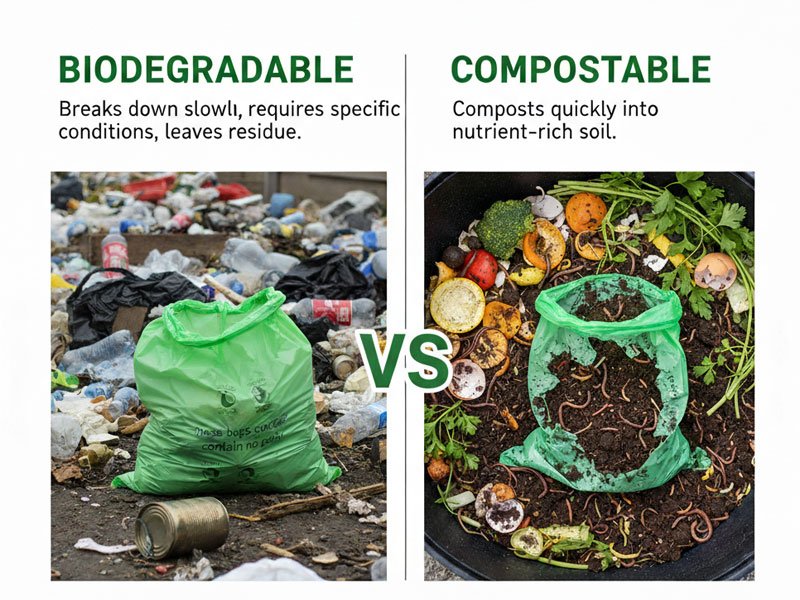
Clothing brands comparing compostable and conventional plastic packaging should evaluate more than material claims alone.
The two options can differ in film performance, unit cost, packaging weight, storage requirements, certification, end-of-life systems and supply-chain compatibility.
Compostable packaging may be appropriate where a brand requires a defined compostability specification and has a realistic composting route. Conventional plastic may remain more practical where cost, long storage stability, high clarity or established recycling systems are the priority.
This guide compares both options specifically for garment bags, apparel inner packaging and clothing fulfillment workflows.
Last reviewed: October 4, 2026
Quick Answer: Compostable vs Plastic Packaging for Clothing Brands
Neither option is automatically better for every apparel brand.
Compostable packaging can be suitable when the finished product is covered by an applicable compostability certification and the target market has an appropriate end-of-life route.
Conventional plastic packaging may offer lower cost, longer storage tolerance, high clarity and familiar supply-chain performance, but its recycling or disposal route depends on local infrastructure.
Clothing brands should compare both options using the same functional requirements: garment protection, thickness, packing efficiency, freight, storage, certification, cost and disposal route.

Compostable vs Plastic Apparel Packaging: Key Differences
The most fundamental difference between compostable packaging and traditional plastic packaging lies in the material source and end-of-life disposal.
| Factor | Compostable Apparel Packaging | Conventional Plastic Packaging |
|---|---|---|
| Typical materials | Compostable polymer blends such as PBAT / PLA / starch-based components | PE, PP or other conventional polymers |
| Typical apparel use | Garment bags, inner packaging, selected mailers | Garment bags, polybags, mailers |
| Compostability | Requires applicable compostability standard / certification scope | Not designed for composting |
| Recycling | Usually not intended for conventional plastic recycling streams | May be recyclable where appropriate collection exists |
| Film clarity | Depends on formulation and thickness | Often very high |
| Flexibility | Depends on formulation | Generally consistent and well established |
| Storage sensitivity | Requires closer control of heat, humidity and storage duration | Generally less sensitive |
| Unit cost | Often higher | Often lower |
| Freight impact | Depends mainly on bag weight, thickness, dimensions and packing efficiency | Same principle |
| Certification | May require finished-product compostability certification | Compostability certification not applicable |
| End-of-life route | Requires suitable composting route | Recycling or disposal route depends on material and local system |
| Best fit | Projects with defined compostability requirements | Projects prioritizing cost, long storage or conventional infrastructure |
Many clothing brands exploring sustainability initiatives are replacing traditional plastic garment bags with compostable garment bags made from certified compostable materials.
End-of-Life: Composting vs Recycling or Disposal
The main difference is not simply whether one material is “green” and the other is “plastic.”
Compostable packaging is designed for defined composting conditions when the finished product meets the applicable certification requirements. Its practical value therefore depends on whether an appropriate collection and composting route exists.
Conventional plastic packaging may be recyclable in some markets, particularly where suitable flexible-film collection systems operate, but availability and acceptance vary.
Clothing brands should therefore ask:
Where will this packaging actually go after use?
A compostable material without access to an appropriate composting route, or a recyclable plastic film without a collection route, may not achieve the intended end-of-life outcome.
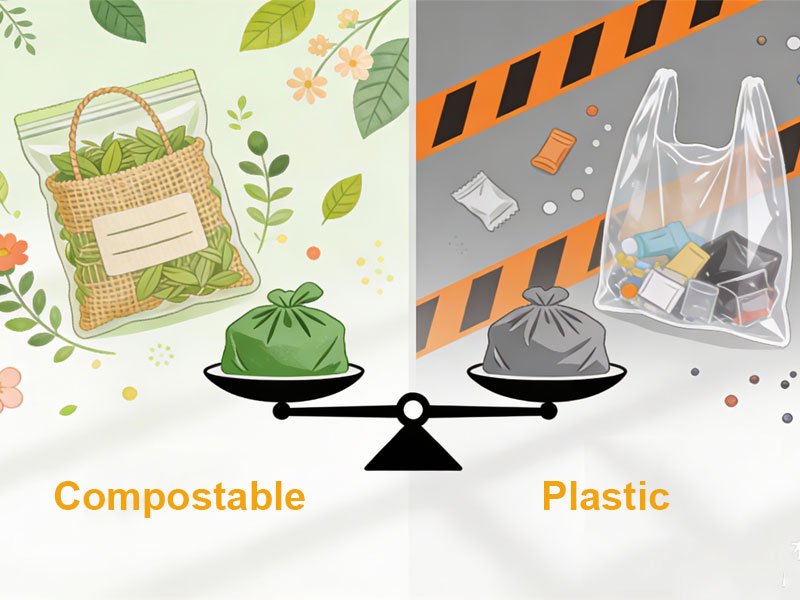
Performance Comparison for Garment Packaging
Performance should be compared using the finished bag specification, not the material category alone.
Important factors include:
Tear & Puncture Resistance
Both compostable and conventional plastic films can be engineered for garment packaging, but performance varies with formulation, thickness, sealing and bag design.
Clarity
Conventional plastic films often provide very high optical clarity. Compostable film clarity can vary by formulation, color and thickness.
Moisture and dust protection
Both materials can provide protective inner packaging when the correct specification is selected. Actual protection should be evaluated through the finished bag rather than assumed from the material name.
Seal & Closure Performance
Open-top, self-seal and other garment-bag formats should be tested with the intended film structure, closure system and packing workflow.
How Do Compostable and Plastic Packaging Affect Freight Costs?
Freight cost is usually influenced more by the finished package weight, dimensions, carton packing efficiency and shipment volume than by whether the film is compostable or conventional plastic.
For example, a thicker bag may increase material weight and carton weight regardless of polymer type. Larger bag dimensions or inefficient folding can also increase carton volume.
Apparel brands comparing freight impact should therefore compare the same finished specification:
- bag dimensions;
- film thickness;
- weight per bag;
- bags per carton;
- carton dimensions;
- gross carton weight; and
- pallet or container utilization.
A compostable bag should not automatically be assumed to cost more or less to ship simply because of the material. Freight should be calculated from the final packed specification.
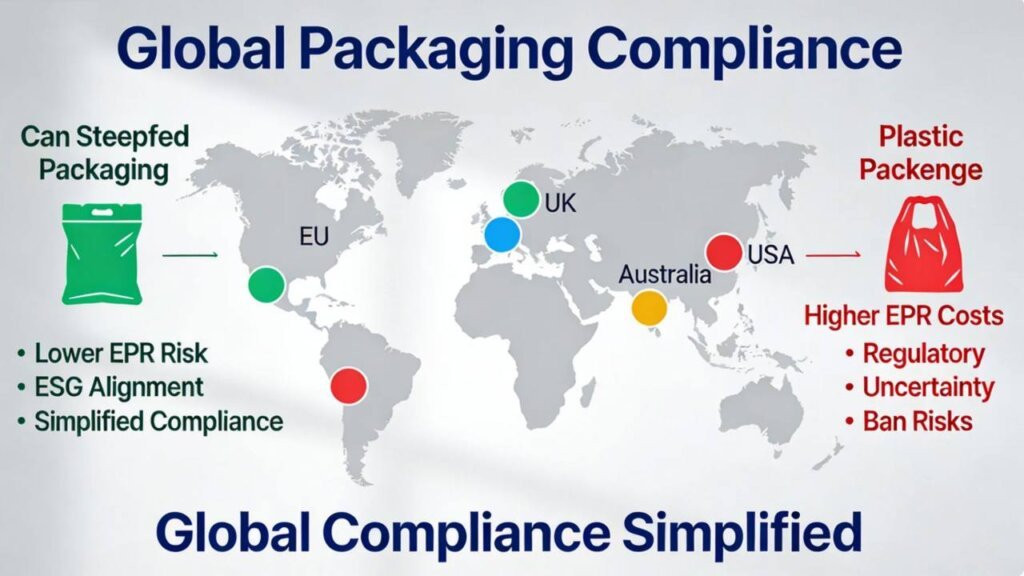
Cost Comparison: What Clothing Brands Should Compare
Conventional plastic garment bags usually have a lower material cost because of mature production scale and established supply chains.
Compostable garment bags may have a higher unit cost depending on formulation, thickness, printing, certification scope and order quantity.
A useful comparison should include more than price per bag.
| Cost Factor | Why It Matters |
|---|---|
| Material cost | Polymer and formulation affect base cost |
| Film thickness | Greater thickness increases material consumption |
| Bag dimensions | Larger bags use more material |
| Printing | Colors and print coverage affect setup and production cost |
| Certification | Applicable testing, certification or mark-use requirements may affect project cost |
| Packaging | Retail boxes, labels and cartons may have separate MOQs |
| Freight | Driven by packed weight and volume |
| Storage | Inventory duration and storage conditions may affect purchasing strategy |
| MOQ | Production scale can materially change unit economics |
Buyers should compare equivalent finished specifications, not a thin PE bag against a heavier compostable bag and conclude that the material difference alone explains the price gap.
Storage & Inventory Considerations
Apparel packaging may remain in inventory for months before use, so storage conditions matter.
Conventional plastic films generally tolerate longer storage periods with fewer environmental sensitivities.
Compostable films may require more careful control of:
- temperature;
- humidity;
- direct sunlight;
- packaging integrity; and
- inventory rotation.
Brands with long production cycles or seasonal inventory should confirm storage guidance for the exact compostable film specification before placing large-volume orders.
When Does Compostable Packaging Make Sense?
Compostable apparel packaging may be appropriate when:
- the brand has a defined compostability requirement;
- the finished product can be covered by the required certification scope;
- an appropriate composting route is available;
- customers or downstream partners receive clear disposal instructions; and
- the required film performance can be achieved with the selected specification.
When Might Conventional Plastic Be More Practical?
Conventional plastic packaging may remain more practical when:
- very low unit cost is the primary requirement;
- long inventory storage is necessary;
- extremely high clarity is required;
- the packaging already participates in an effective recycling system; or
- appropriate composting infrastructure is unavailable.
The purpose of a packaging comparison should be to identify the best fit for the actual supply chain, not to assume that one material is universally superior.
Before Switching from Plastic to Compostable Apparel Packaging
| Check | Question |
|---|---|
| Current specification | What size, thickness, closure and weight are you replacing? |
| Performance | Does the compostable alternative meet the same packing requirements? |
| Certification | Is the finished configuration within the required certification scope? |
| Disposal route | Is composting realistically available in the target market? |
| Storage | Can the product be stored under recommended conditions? |
| Cost | Are you comparing equivalent bag specifications? |
| Freight | How does the packed weight and carton volume change? |
| Artwork | Are environmental claims and certification marks permitted? |
| Trial | Should the brand test a pilot before full conversion? |
FAQ
Is compostable packaging better than plastic for clothing brands?
Not automatically. The better option depends on garment protection requirements, cost, storage conditions, target market, available end-of-life infrastructure and the required environmental claim.
Are compostable garment bags as strong as plastic bags?
They can meet many apparel packaging requirements when the correct formulation, thickness and sealing structure are used. Performance should be validated using the finished-bag specification rather than assumed from the material type.
Is compostable apparel packaging more expensive than plastic?
It is often more expensive on a unit basis, but the difference depends on dimensions, thickness, formulation, printing, certification requirements and order quantity. Equivalent finished specifications should be compared.
Does compostable packaging cost more to ship than plastic?
Not necessarily. Freight is mainly determined by finished bag weight, carton dimensions, packing density and shipment volume. Compare packed specifications rather than polymer type alone.
Can compostable garment bags go into plastic recycling?
Generally, compostable packaging should not be assumed compatible with conventional plastic recycling streams. Buyers should follow the applicable disposal instructions and local collection requirements.
What should a clothing brand check before switching from plastic?
Compare finished-bag performance, certification scope, storage requirements, unit cost, freight, packaging workflow and the realistic end-of-life route before changing the specification.
Which Option Is Right for Your Apparel Packaging Project?
Compostable and conventional plastic packaging each have practical advantages and limitations.
For apparel brands, the correct choice should be based on:
performance + cost + logistics + storage + certification + end-of-life infrastructure.
If compostability is a project requirement, evaluate the exact finished-product certification scope and confirm that an appropriate disposal route exists.
If cost, long storage life or conventional recycling infrastructure is the priority, plastic packaging may remain a practical option.
For brands evaluating a compostable garment-bag specification, ORIZON can review bag dimensions, thickness, closure type, printing, packaging and target-market requirements before quotation.