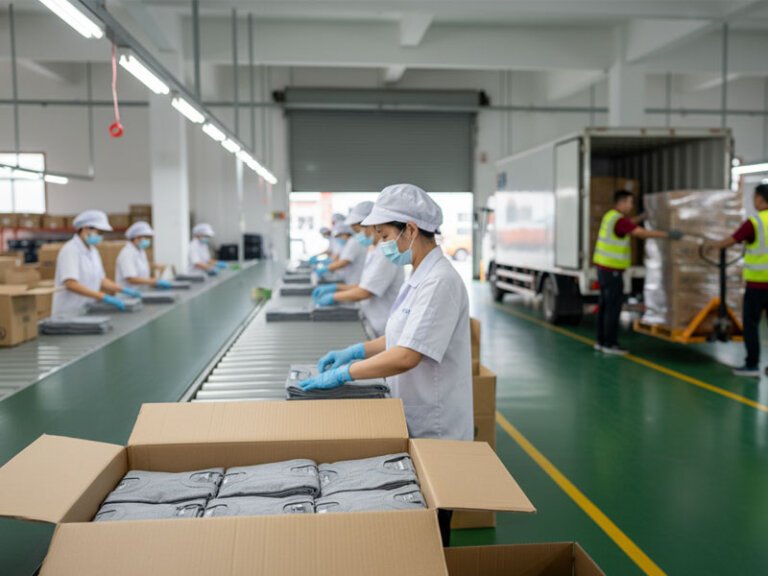
Compostable Dry Cleaning Garment Bags for Laundry Services
This page explains compostable garment bag options suitable for dry cleaning and laundry services.
It is intended as a use-case guide for B2B buyers, not a retail product listing.
Dry cleaning and laundry operations require garment bags that protect cleaned clothing from dust, static, and handling contamination while remaining compatible with high-throughput workflows. Compostable garment bags provide a certified alternative to conventional plastic when selected and applied correctly.
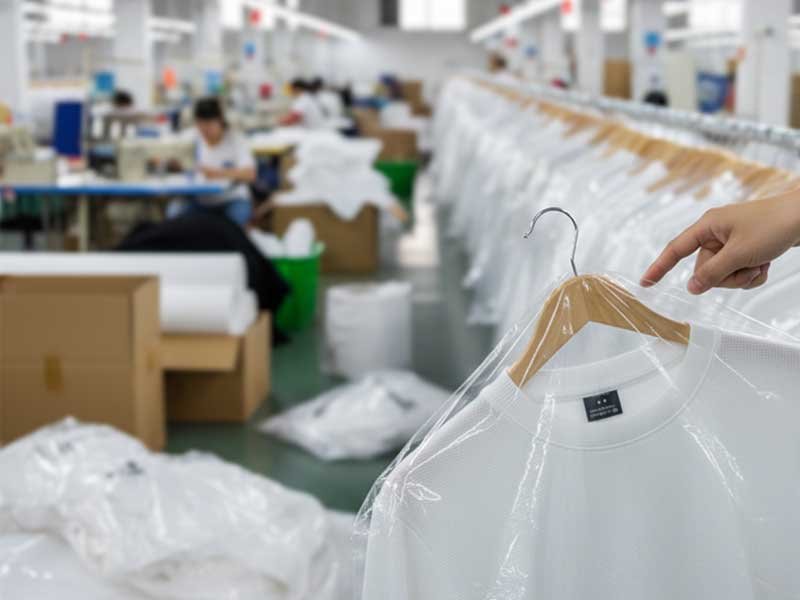
What Do Dry Cleaners Need from Garment Bags?
Unlike retail or e-commerce packaging, garment bags used in dry cleaning environments must meet practical operational requirements:
- Protection from dust and airborne particles
- Anti-static performance to prevent fabric attraction
- Long-length formats for coats, suits, and dresses
- Compatibility with continuous packing and hanging workflows
- Reliable strength without excessive material thickness
For commercial laundry and dry cleaning services, function and efficiency matter more than visual presentation.
Retail garment packaging and dry cleaning applications involve different workflows, which is why garment bag structures should be selected based on use case rather than material alone.
Recommended Garment Bag Structures for Dry Cleaning
Dry cleaning bags are defined by application, not by a single product type. Based on industry practice, the following structures are most commonly used:

Open-Top Long Garment Bags
Open-top garment bags are widely used as inner protective liners for dry-cleaned clothing. They allow fast garment insertion without sealing steps and are suitable for:
- Dust protection after cleaning
- Internal handling and sorting
- Export or bulk transport inside cartons
Recommended solution: Open-Top Compostable Garment Bags

On-Roll Garment Bags (Continuous Bags)
On-roll garment bags are designed for high-efficiency dry cleaning operations. Supplied on rolls with perforation, they support:
- Continuous dispensing on dry cleaning lines
- Consistent bag length and handling speed
- Reduced downtime during garment packing
This format is commonly used by dry cleaning chains and large laundry facilities.
In dry cleaning operations, sealed packaging is usually not required. For this reason, self-adhesive garment bags are less commonly used in dry cleaning workflows. For sealed inner packaging or e-commerce fulfillment, please refer to Self-Adhesive Compostable Garment Bags.
Material & Compostability Considerations
In dry cleaning applications, certified compostability is critical.
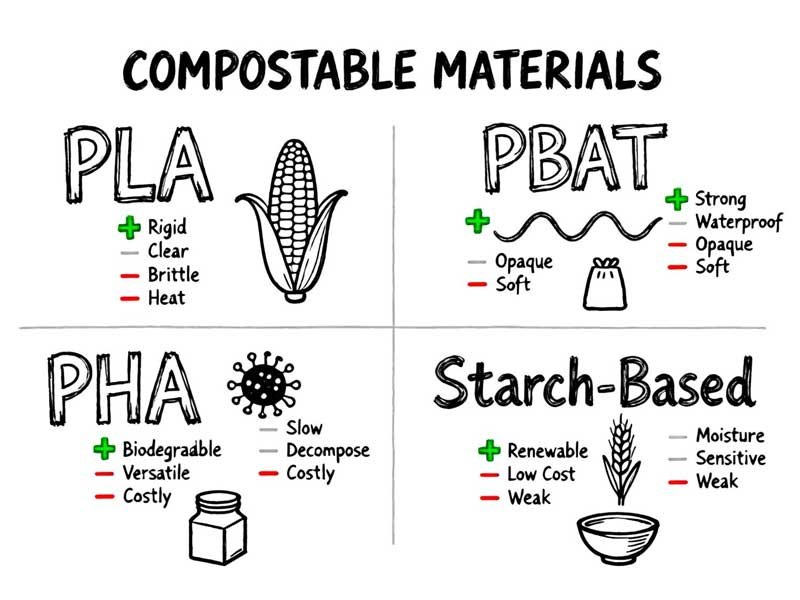
Compostable garment bags are typically manufactured from materials such as PLA and PBAT, designed to meet recognized international compostability standards, including:
- EN 13432
- ASTM D6400 / BPI
- OK Compost (where applicable)
- AS4736 / AS5810
It is important to distinguish certified compostable materials from vague “biodegradable” claims, which may not meet regulatory or waste-management requirements in many markets.
Common Mistakes in Dry Cleaning Packaging

Dry cleaning buyers often encounter the following issues:
- Using bags labeled “biodegradable” without certification
- Selecting film that is too thin, leading to tearing or static buildup
- Choosing sealed packaging that slows down packing workflows
- Ignoring compatibility with hanging and garment length requirements
Understanding the correct structure for the application helps avoid unnecessary cost and operational problems.
Product Categories
FAQ
Open-top long garment bags and on-roll garment bags are most commonly used in dry cleaning operations.
Yes, when properly specified, compostable garment bags can be used for hanging cleaned garments during storage and pickup.
In most cases, open-top or on-roll formats are preferred to maintain workflow efficiency.
Looking for compostable garment bags for dry cleaning or laundry services?