Compostable Garment Bags Manufacturer & OEM Supplier
Factory-direct compostable garment bags for apparel brands, garment factories, distributors and private-label packaging programs.
Available in open-top, self-adhesive and custom formats, with made-to-spec dimensions, thickness, printing, closure and bulk export packaging.
- B2B OEM & Wholesale Supply
- Custom Specifications
- Compliance Documentation Review
Standard customized production typically starts from approximately 500 kg per specification or design.
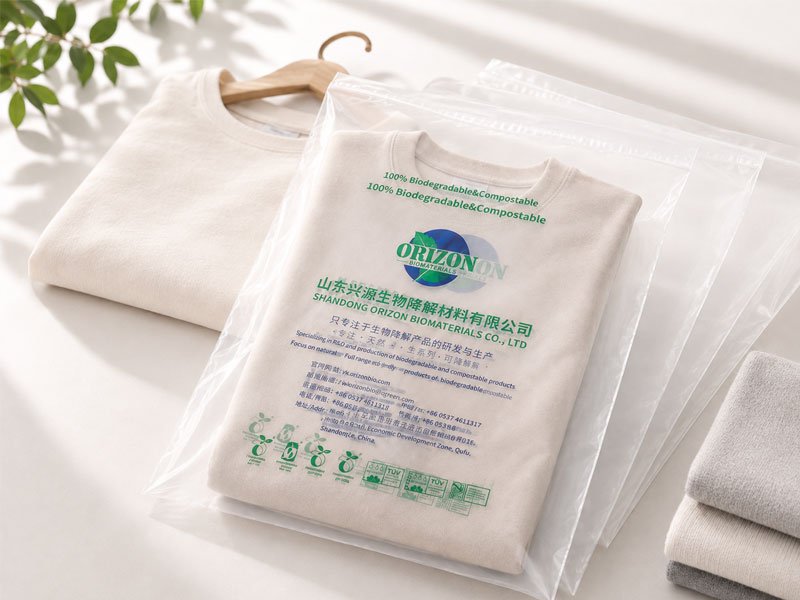
What Are Compostable Garment Bags?
Compostable garment bags are flexible inner packaging bags used to protect clothing during:
- factory packing;
- warehouse handling;
- export;
- retail distribution; and
- e-commerce fulfillment.
They can be considered as an alternative to conventional PE apparel polybags where a brand requires a defined compostable-material specification and an appropriate end-of-life strategy.
Typical B2B users include:
- apparel brands;
- garment factories;
- clothing exporters;
- e-commerce companies;
- fulfillment operations;
- packaging distributors; and
- private-label packaging programs.
The appropriate bag should be selected according to the folded garment dimensions, packing workflow, required protection and destination market.
For a broader overview of apparel packaging options: Sustainable Clothing Packaging for Apparel Brands
Types of Compostable Garment Bags
We offer a variety of compostable garment bags designed to fit different retail and commercial workflows:
Custom & Wholesale Compostable Garment Bags
ORIZON manufactures compostable garment bags for bulk B2B, OEM and private-label projects.
Specifications can be developed around the garment and packing workflow, including:
| Specification | Custom Options |
|---|---|
| Bag format | Open-top, self-adhesive, four-finger, hanger opening, flat bag |
| Material | PBAT / PLA / starch-based compostable formulations |
| Dimensions | Custom width, length and flap dimensions |
| Thickness | Selected according to garment weight, dimensions and handling |
| Closure | Open-top, adhesive flap, hanger opening or custom structure |
| Printing | Logo, barcode, SKU information and permitted compliance text |
| Film appearance | Transparent, tinted or custom color where applicable |
| Packaging | Bulk stacks, inner packs, cartons and palletized export packing |
| Supply model | OEM, wholesale and private label |
For multi-SKU projects, each combination of dimensions, thickness, structure, film color and artwork should be reviewed as a separate production specification.
How Apparel Brands Use Compostable Garment Bags
Garment bags are used differently across the apparel supply chain.
Garment Factory & Export Packing
Garment factories may use inner bags for:
- folding;
- production sorting;
- export-carton packing;
- warehouse identification; and
- protection during transportation.
Open-top or self-adhesive structures can be selected according to the packing workflow.
E-Commerce & Fulfillment
E-commerce apparel packaging may require:
- sealed inner packaging;
- visible SKU labels;
- barcode scanning;
- consistent bag dimensions;
- warehouse handling; and
- shipment preparation.
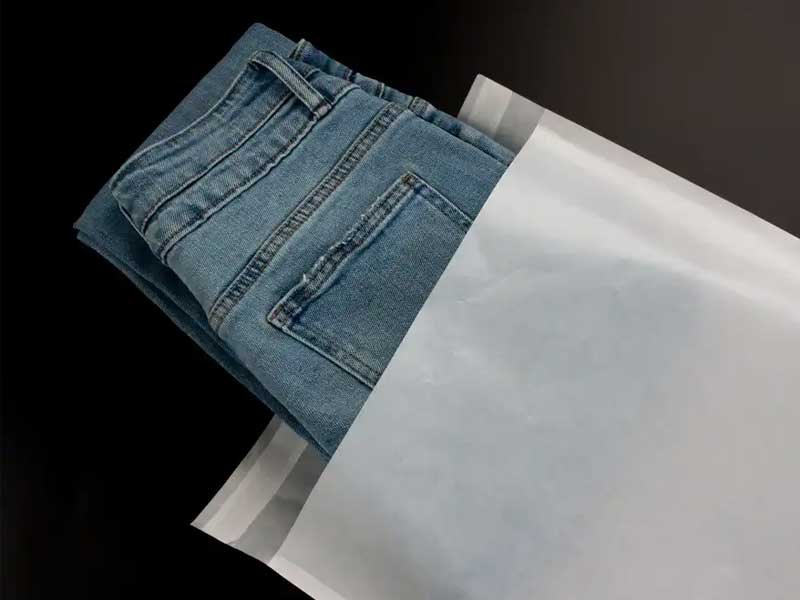
Self-adhesive garment bags are commonly considered where garments need to remain enclosed before being placed into an outer shipping package.
Retail Apparel Packaging
Retail programs may place greater importance on:
- garment presentation;
- film clarity;
- logo printing;
- bag structure; and
- customer handling.
The finished bag format should match how the garment moves from factory to warehouse, store or customer.
Compostable Alternatives to Plastic Garment Bags
Conventional PE polybags remain widely used in apparel manufacturing because they are lightweight, transparent and efficient.
Compostable garment bags can be considered where a buyer requires a different material and end-of-life strategy.
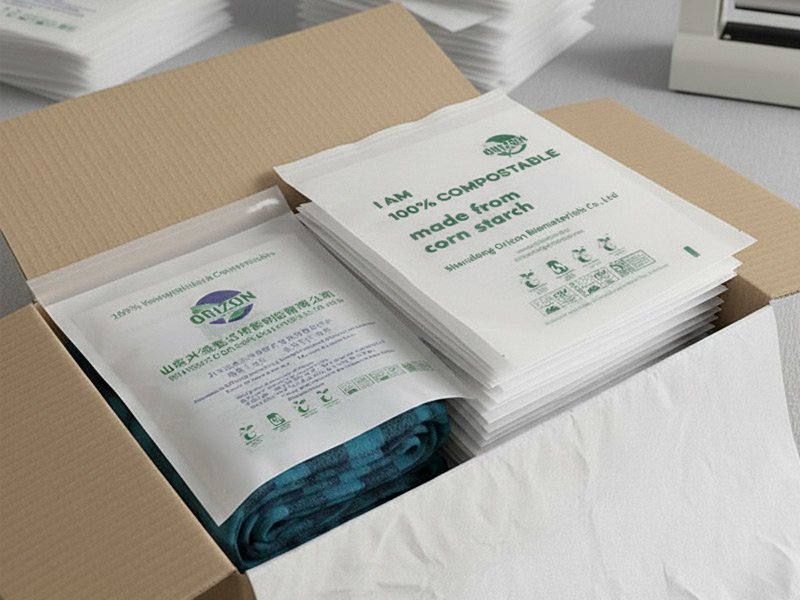
Buyers should compare:
- garment protection;
- film thickness;
- clarity;
- sealing;
- storage conditions;
- packing efficiency;
- cost;
- environmental claims; and
- available end-of-life infrastructure.
Compostable packaging should not automatically be treated as the best solution for every clothing program.
For a detailed comparison: Compostable vs Plastic Packaging for Clothing Brands.
Film Clarity & Barcode Visibility
Apparel packaging often needs enough visibility for warehouse staff to identify the garment, color, size label or barcode without opening the bag.
Film clarity can be affected by:
- material formulation
- thickness
- film color
- printing coverage
- lighting conditions
A bag described as transparent may still have some haze.
Barcode readability also depends on the contrast of the label and the scanner used in the warehouse.
If barcodes or SKU labels need to be scanned through the bag, test the finished film with the actual barcode and warehouse scanner before mass production.
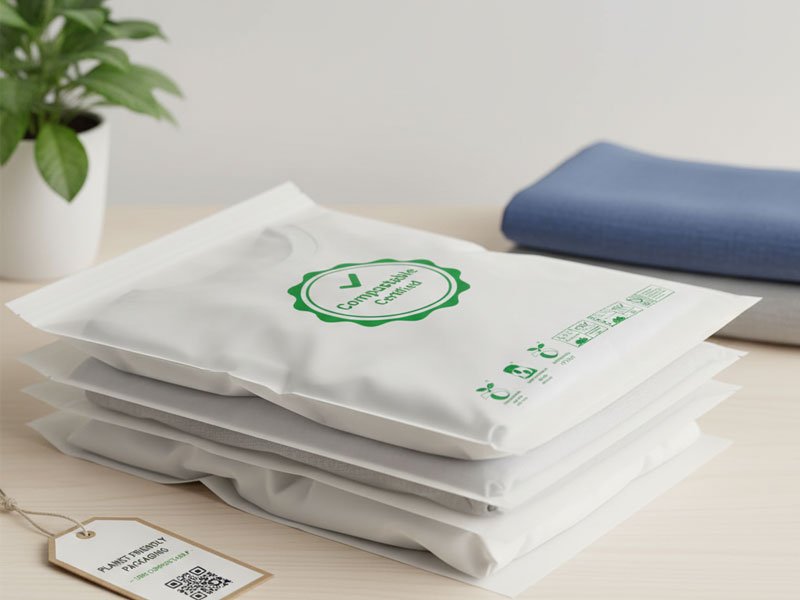
How to Choose Compostable Garment Bag Thickness
Thickness should be selected around the garment rather than using one micron value for every SKU.

Important factors include:
- bag dimensions
- garment weight
- fabric type
- folding method
- closure
- warehouse handling
- export packing
A lightweight T-shirt or underwear package may not need the same thickness as denim, hoodies or heavier garments.
Using more micron increases material use and cost, while using too little may increase tearing during packing and handling.
The final thickness should be confirmed with an actual garment test.
For buyers who want deeper clarity on micron selection, our Compostable Bag Thickness Guide explains how film thickness changes with bag size and application.
Garment Bag Closure, Flap & Ventilation Options
Small structural details can have a large effect on garment-packing performance.
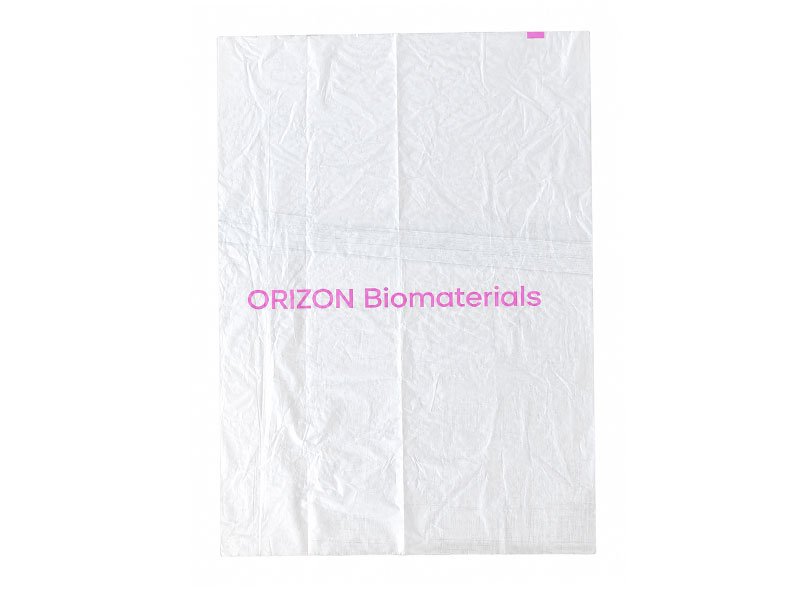
Open-Top Structure
Open-top bags are simple and fast to load.
They may suit factory and warehouse workflows where an adhesive closure is not needed.
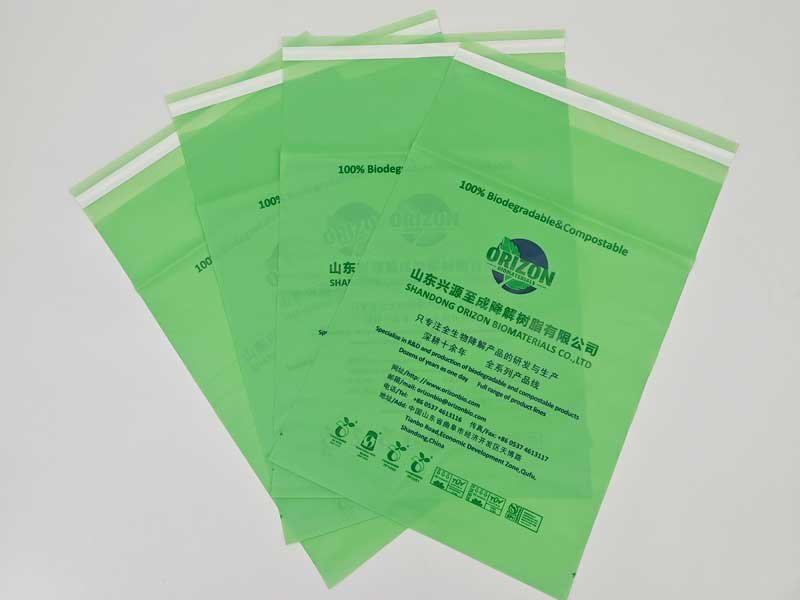
Adhesive Flap
A flap with adhesive provides a more enclosed package.
Important details include:
- flap length
- adhesive position
- release liner
- opening direction
- garment fit
The adhesive system should also be reviewed against any relevant compostability certification scope.
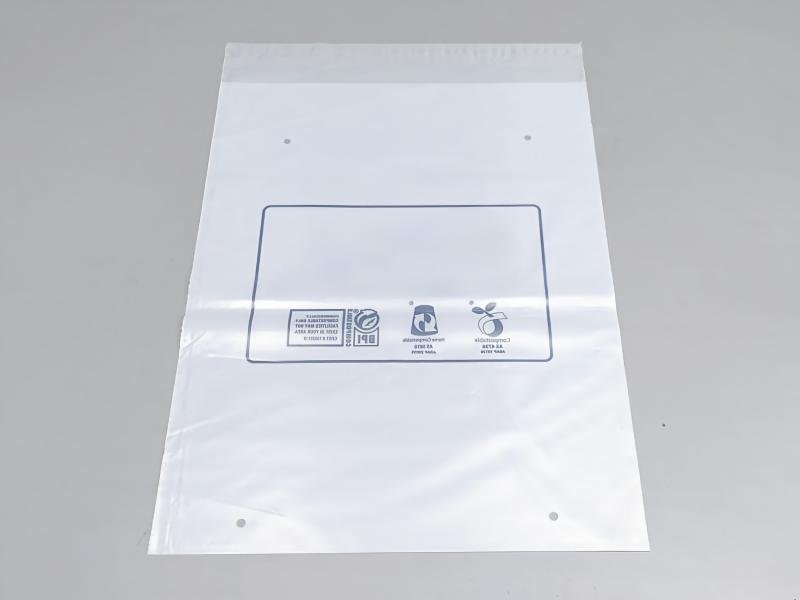
Ventilation Holes
Ventilation holes are not required for every garment bag.
They may be useful when trapped air needs to escape during folding, packing or carton compression.
The number and position should be selected according to the garment and packing workflow.
Compostable vs “Biodegradable” Garment Bags
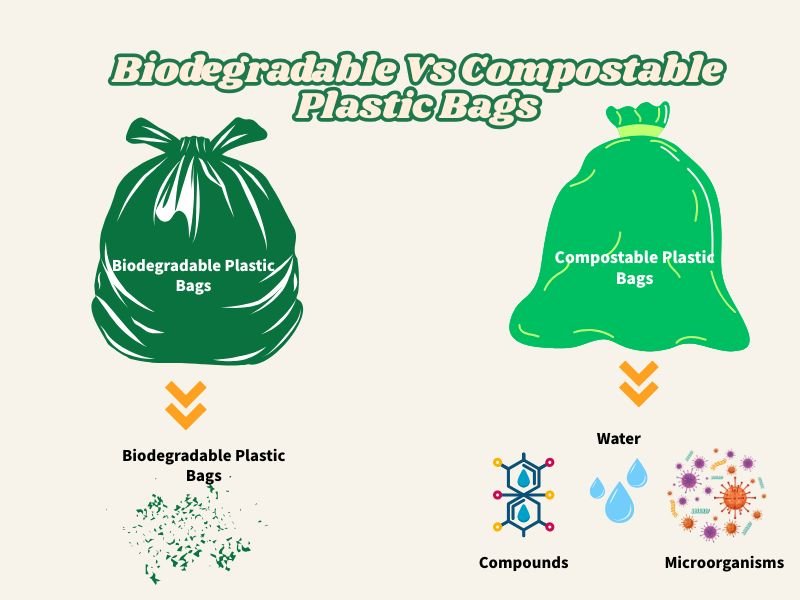
Apparel buyers often search for biodegradable garment bags when looking for alternatives to conventional clothing polybags.
However, “biodegradable” is a broad term and does not by itself define a specific composting environment, timeframe or certification requirement.
For B2B procurement, buyers should instead verify:
- which compostability standard or certification applies;
- whether the evidence covers the finished garment bag;
- whether thickness, film color, printing and adhesive components are within scope; and
- which end-of-life environment the product is intended for.
Compostable and biodegradable should therefore not be treated as interchangeable purchasing specifications.
OEM & Private Label Compostable Garment Bags
OEM garment bag projects can be developed around an approved specification covering:
- dimensions;
- thickness;
- film formulation;
- flap length;
- adhesive configuration;
- hanger or handle opening;
- ventilation holes;
- transparency or film color;
- logo and artwork printing;
- barcode / SKU requirements; and
- inner and master-carton packing.
For repeat production, the approved specification can be used as the reference for subsequent orders.
Where several garment SKUs are involved, send the required specification and estimated quantity for each SKU so production feasibility and MOQ can be reviewed separately.
Standard customized production typically starts from approximately 500 kg per specification or design.
Certification & Compliance for Compostable Garment Bag Projects
Certification requirements depend on the target market, intended claim and actual finished-product specification.
However, manufacturing a compostable garment bag does not mean that the product is automatically covered by ORIZON’s existing compostability certificates.
Factors that may affect certification applicability include:
- product type;
- material formulation;
- film thickness;
- colourants;
- printing inks;
- adhesive components;
- labels or added components; and
- finished-bag structure.
Certification marks should only be printed where the applicable finished product and mark-use requirements have been confirmed.
Important TÜV AUSTRIA Scope Notice
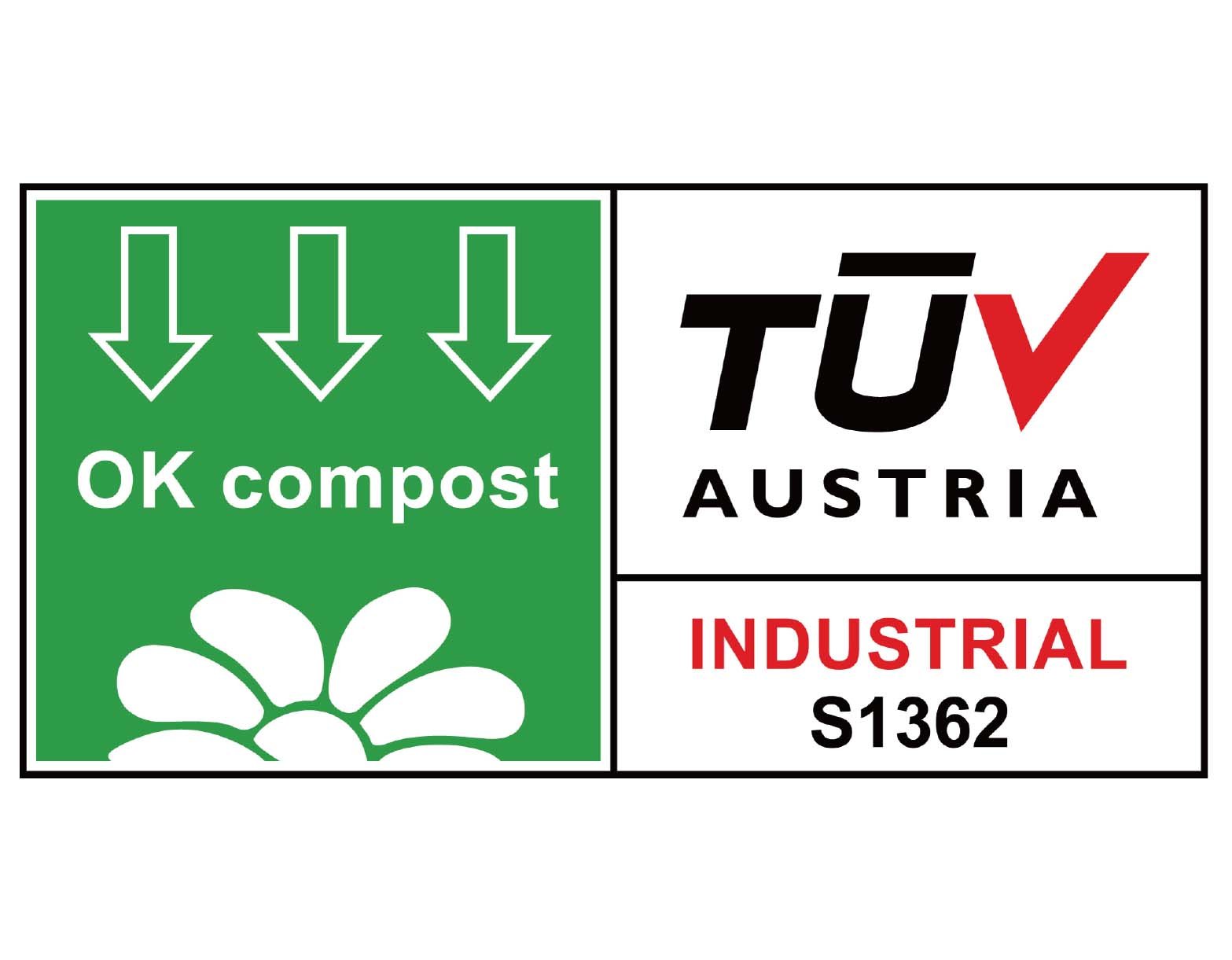
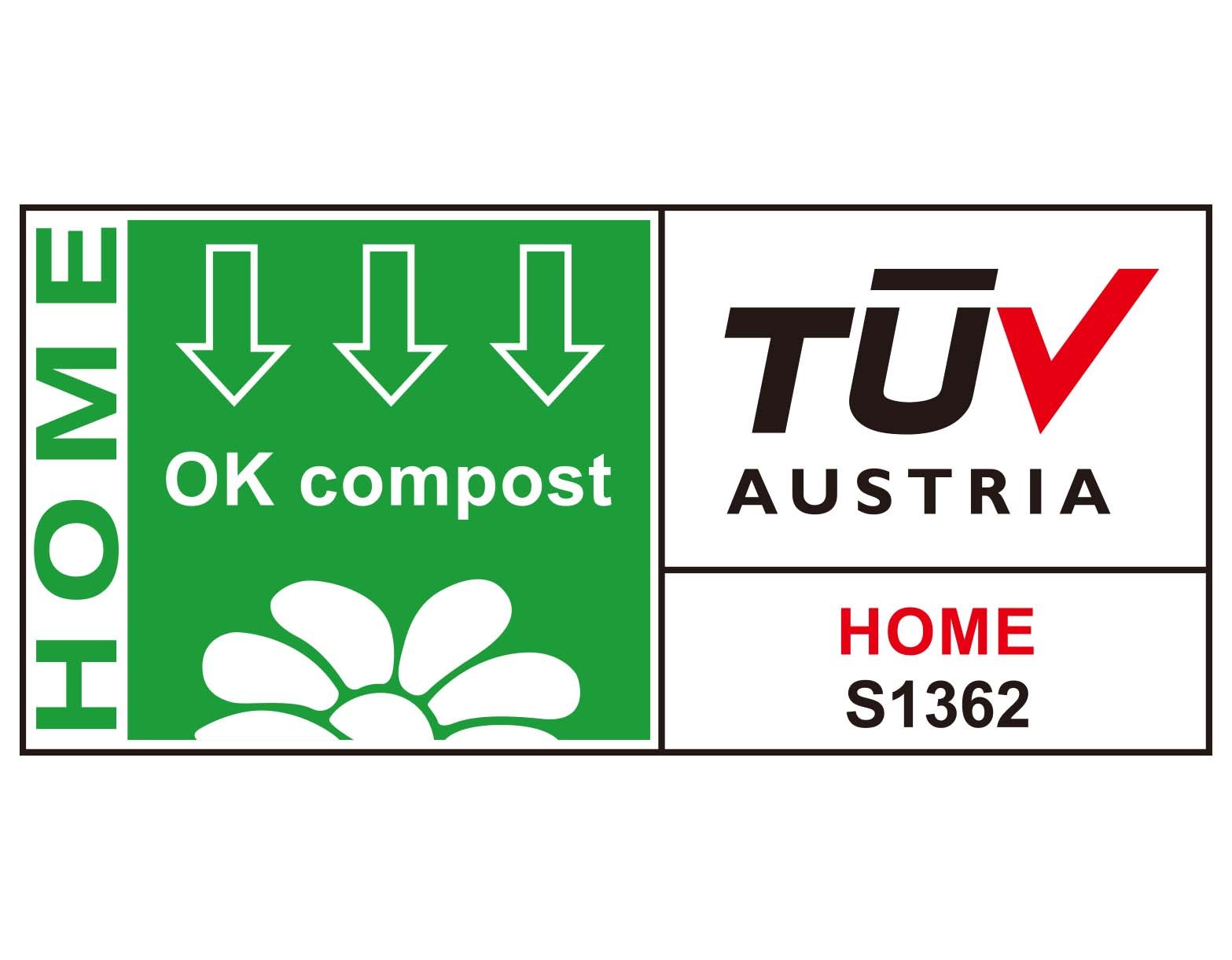
ORIZON’s current OK compost INDUSTRIAL and OK compost HOME certificates by TÜV AUSTRIA identify the certified product type as “Bags for collection of biodegradable refuse.”
Compostable garment bags, apparel polybags and other garment-packaging products shown on this page are not presented as TÜV AUSTRIA-certified products and must not be inferred to fall within ORIZON’s current OK compost certification scope.
For projects requiring EN 13432, ASTM D6400 / BPI, AS 4736, AS 5810 or other compostability documentation, applicability should be reviewed separately against the proposed finished garment-bag specification.
For current ORIZON certificate numbers, validity and certified scopes:
Compostable Garment Bags for European Apparel Projects
European apparel buyers may need to review:
- environmental claim wording;
- relevant compostability standards;
- finished-product evidence;
- labelling;
- disposal instructions; and
- target-market requirements.
EN 13432 is an important European standard for packaging recoverable through composting and biodegradation.
However, referencing EN 13432 should not be interpreted as evidence that every ORIZON garment-bag configuration is certified.
The finished-product specification and applicable supporting documentation should be reviewed first.
What Should Buyers Verify in a Compostable Garment Bag Manufacturer?
Before approving a supplier, check:
- direct manufacturing capability;
- required garment-bag structure;
- dimensional control;
- thickness control;
- printing capability;
- quality-control procedures;
- MOQ;
- production planning;
- export packaging;
- target-market requirements; and
- supporting documentation for any environmental claim.
Claims such as “certified,” “biodegradable” or “compostable” should be assessed against the actual finished-product specification.
For company, factory and certification information:
MOQ, Multi-SKU Planning & Bulk Packing
Standard custom production MOQ typically starts from approximately 500 kg per specification.
One specification normally means one combination of:
- size
- thickness
- bag structure
- film color
- artwork
Different garment bag sizes or print designs may require separate production quantities.
The equivalent number of bags changes significantly with dimensions and thickness, so MOQ should not be treated as one fixed piece count.
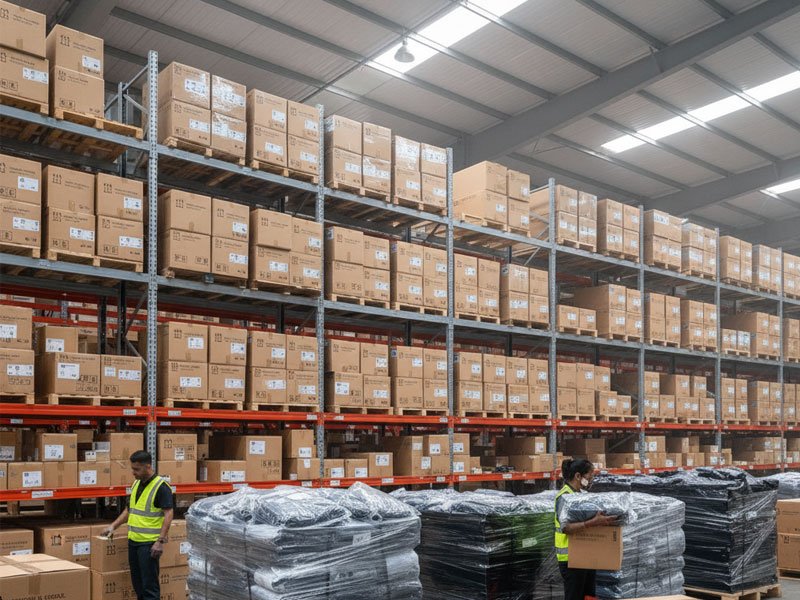
Bulk packing can be developed around:
- pieces per stack
- stacks per carton
- carton dimensions
- carton gross weight
- carton markings
- pallet configuration
Production timing depends on the final specification, printing and packing requirements.
For buyers who need deeper clarity on MOQ, multiple SKUs and production planning, our Compostable Bags MOQ & Lead Time Guide explains this in detail.
Compostable Garment Bag Manufacturing
ORIZON has manufactured compostable flexible-film bags since 2009 for international B2B buyers.
Current manufacturing information includes:
- approximately 20,000 m² production site;
- 16 automatic production lines;
- reported monthly production capacity of approximately 500 metric tons;
- film extrusion, printing, bag making and packing capabilities; and
- OEM and private-label production for custom bag specifications.
Garment-bag projects can be manufactured around an approved specification covering film formulation, dimensions, thickness, closure, printing and carton configuration.
For repeat orders, the approved specification can be used as the production reference.
Compostable Garment Bags FAQ
Standard customized production typically starts from approximately 500 kg per specification or design. The equivalent number of bags varies by dimensions, thickness and configuration.
Thickness depends on garment weight, folded dimensions, handling requirements and packing workflow. T-shirts and lightweight garments may require a different specification from hoodies, denim or heavier apparel.
They can meet many apparel packaging requirements when the correct film formulation, thickness and sealing structure are used. Finished-bag performance should be tested against the intended garment and packing workflow.
No. “Biodegradable” is a broad term and does not by itself define a composting environment, timeframe or certification requirement. Compostable garment bags should be evaluated against the applicable finished-product certification scope.
Yes. Custom logo, barcode, SKU information and artwork printing can be reviewed according to the bag specification, printing setup and applicable certification requirements.
Check manufacturing capability, bag structure, dimensional and thickness control, printing capability, certification scope, quality-control procedures, MOQ and whether certificates can be independently verified.
Request a Custom Garment Bag Quote
Send us your bag size, thickness, closure style, printing requirements, target market and estimated quantity.
Existing PE garment bag specifications or samples can also be used as a reference.
This inquiry form is intended for business buyers only. Retail and personal requests will not be processed.