Portable toilets are becoming increasingly common in camping, van life, RV travel, emergency sanitation systems, and off-grid environments.
As more outdoor brands and sanitation equipment suppliers look for lower-impact waste handling solutions, biodegradable and compostable camping toilet bags are becoming a fast-growing category.
However, many buyers still confuse:
- biodegradable toilet bags
- compostable toilet liners
- portable sanitation bags
These products may look similar, but their disposal pathways, certifications, and material structures can differ significantly.
This guide explains how biodegradable portable toilet liners are made, how they are used, what certifications matter, and what OEM buyers should evaluate before sourcing at scale.
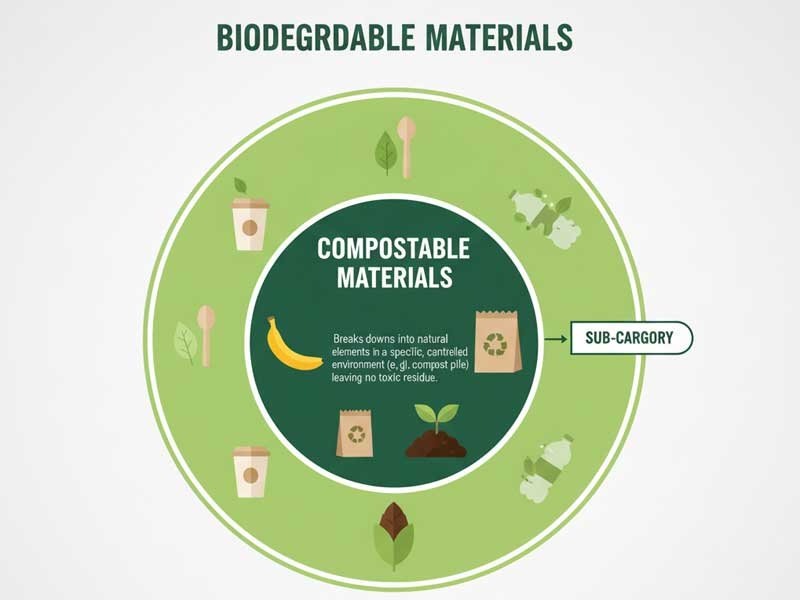
Biodegradable vs Compostable Toilet Bags: What Buyers Must Know
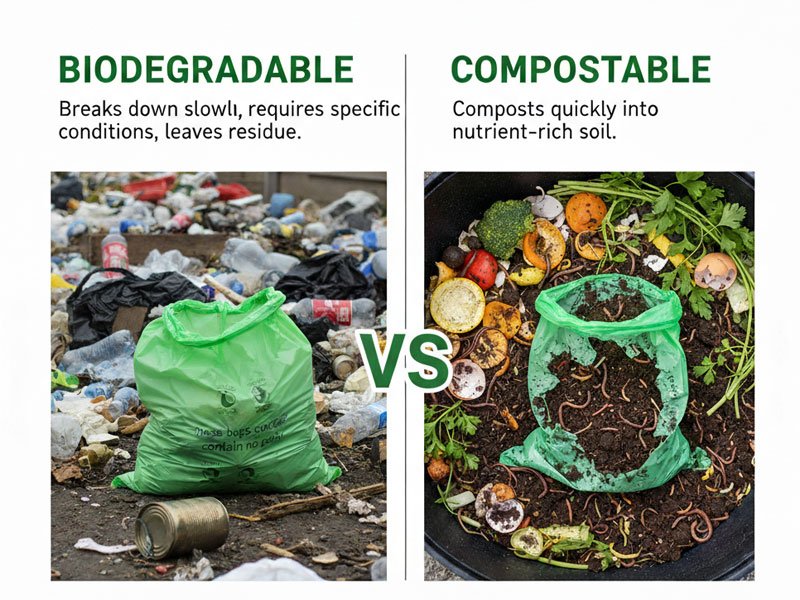
Many products on the market are labeled as “biodegradable” or “eco-friendly,” but these terms are not equal from a regulatory or environmental perspective.
Biodegradable Toilet Bags
- Can break down through microbial activity over time
- Degradation speed and completeness are not guaranteed
- Often not suitable for composting systems
- Disposal usually follows regular waste streams
Compostable Toilet Bags
- Must meet strict standards such as ASTM D6400, EN 13432, BPI, OK Compost
- Fully decompose into CO₂, water, and biomass under controlled composting conditions
- No toxic residues or microplastics
- Preferred choice for regulated markets and sustainable brands
Procurement tip:
All compostable toilet bags are biodegradable, but not all biodegradable toilet bags are compostable.
For professional buyers, certification matters more than marketing claims.
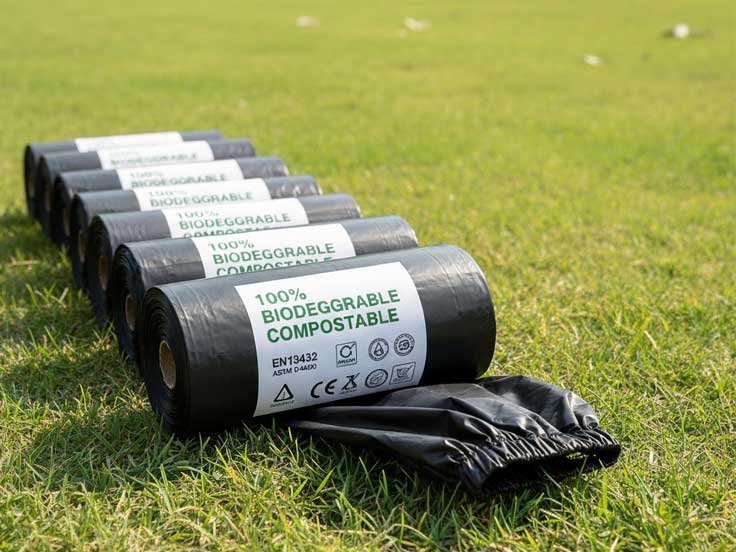
Common Materials Used in Biodegradable Camping Toilet Bags
Professional buyers should always verify both raw materials and certification documentation before sourcing portable sanitation liners.
Most biodegradable camping toilet bags use compound film structures designed to balance:
- puncture resistance
- wet-load strength
- sealing performance
- odor containment
- compostability
Typical materials include:
PLA (Polylactic Acid)
A plant-based biopolymer that provides structure and rigidity.
PBAT
A flexible biodegradable polymer commonly used to improve toughness, flexibility, and tear resistance.
Cornstarch Blends
Renewable fillers sometimes used to improve compostability and reduce fossil-based material content.
In real production, PLA + PBAT formulations are commonly used because toilet liners require better durability than ordinary compostable trash bags.
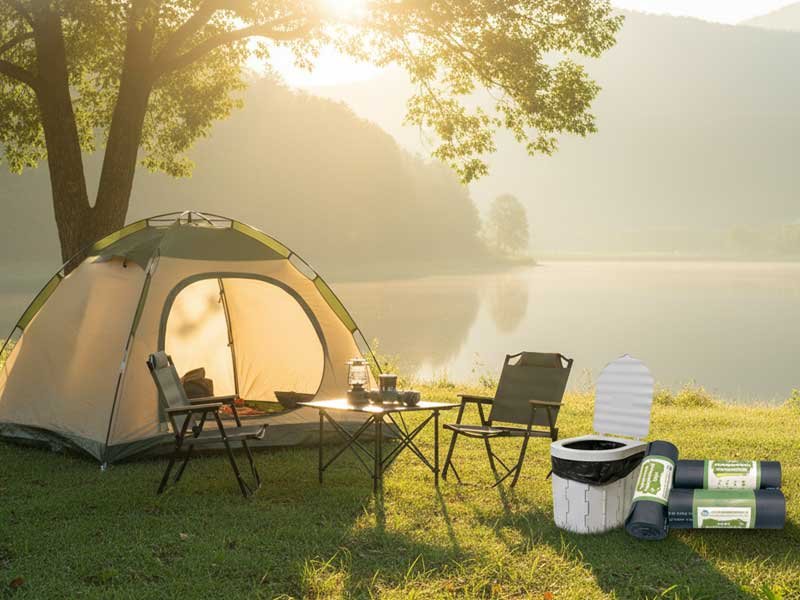
Common Portable Toilet Systems Using Biodegradable Toilet Bags
Biodegradable waste containment bags are used across many portable sanitation systems.
Common applications include:
- folding camping toilets
- RV portable toilets
- van life sanitation systems
- composting toilets
- emergency sanitation kits
- disaster relief sanitation systems
- off-grid cabins
- temporary outdoor restroom stations
- marine sanitation systems
Different toilet systems require different liner structures depending on:
- wet-load resistance
- exposure time
- transportation conditions
- waste volume
- odor containment requirements
For example, RV portable toilet systems usually require stronger liners because waste may remain stored for longer periods during travel.
Key Specifications to Consider When Sourcing Camping Toilet Bags
Choosing the correct specifications is essential for safety, hygiene, and end-user experience.
Thickness & Strength
- Typical range: 20–60 microns (0.02–0.06 mm)
- Thicker films improve puncture resistance and leak prevention
- Wet-load testing is critical for human waste containment
Size & Capacity
- Common sizes: 45×50 cm / 60×65 cm / 70×80 cm
- Capacity should match portable toilets, bucket systems, or sanitation frames
- Oversized bags reduce leakage risk and ease sealing
Sealing & Odor Control
- Drawstring, tie-top, or zip sealing options
- Multi-layer film structures improve odor containment
- Optional absorbent or deodorizing additives may be used
Recommended Specifications by Use Case
| Application | Recommended Thickness | Capacity | Notes |
|---|---|---|---|
| Camping & hiking toilets | 30–40 μm | 5–8 gal | Lightweight, easy sealing |
| RV & vanlife toilets | 40–60 μm | 8–10 gal | Higher wet-load resistance |
| Emergency sanitation | 50–60 μm | Large | Leak-proof priority |
| Portable toilet manufacturers | Custom | Custom | Frame compatibility |
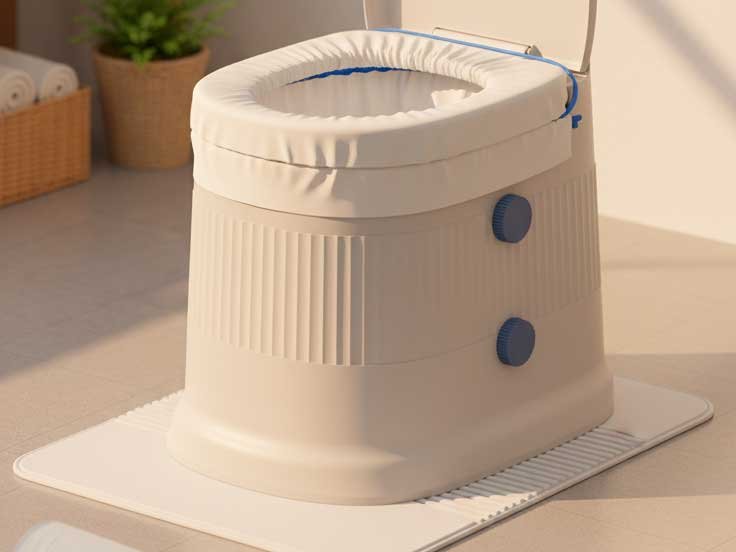
Composting Toilet Bags vs Dry Flush Toilet Bags
Portable sanitation systems do not all use the same waste handling method.
Traditional composting toilets usually rely on compostable or biodegradable liners used together with absorbent materials and controlled waste separation systems.
Dry flush toilets work differently.
These systems mechanically wrap and seal waste into liner sections, which places higher demands on:
- sealing strength
- puncture resistance
- film durability
- odor containment
For OEM buyers supplying portable toilet systems, it is important to evaluate:
- sealing compatibility
- liner thickness
- wet-load performance
- transportation stability
- disposal regulations
Different toilet systems may require very different liner structures.
Disposal Guidelines for Biodegradable & Compostable Toilet Bags
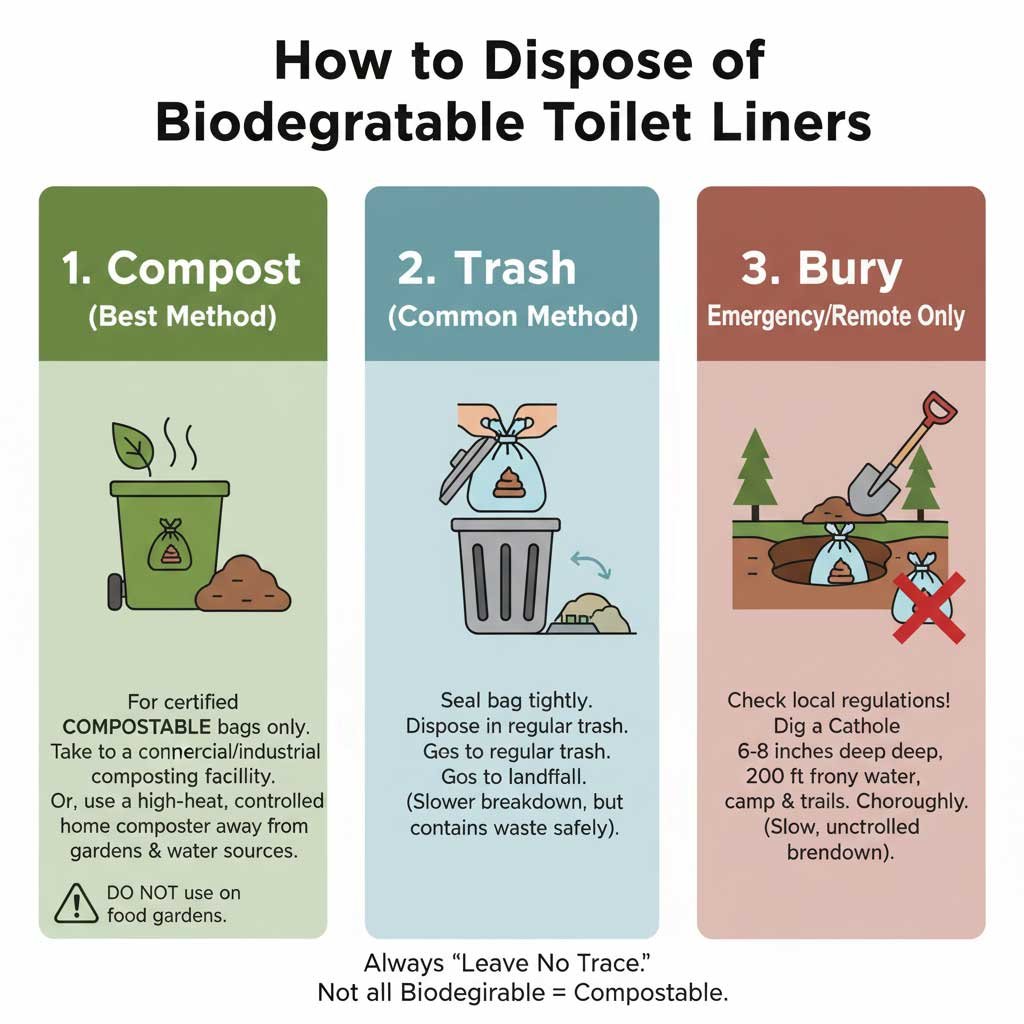
Proper disposal is essential to meet environmental and legal requirements.
Industrial Composting (Certified Compostable Bags Only)
Certified compostable toilet bags may be accepted by licensed industrial composting facilities.
These systems rely on:
- controlled heat
- airflow
- microbial activity
Availability depends on local composting infrastructure.
Home Composting (Limited & Regulated Use)
Only bags certified for OK Compost HOME should be considered for home composting.
Human waste composting requires:
- closed systems
- sustained high temperatures
- strict separation from food crops
Compost derived from human waste should never be used for edible plants.
Regular Waste Disposal
For non-certified biodegradable toilet bags, or in areas without composting infrastructure, regular waste disposal is usually the safest option.
Users should follow Leave No Trace principles during camping and outdoor activities.
Used bags should always be:
- securely sealed
- packed out properly
- disposed of through approved waste channels
Local regulations always override general disposal guidance.
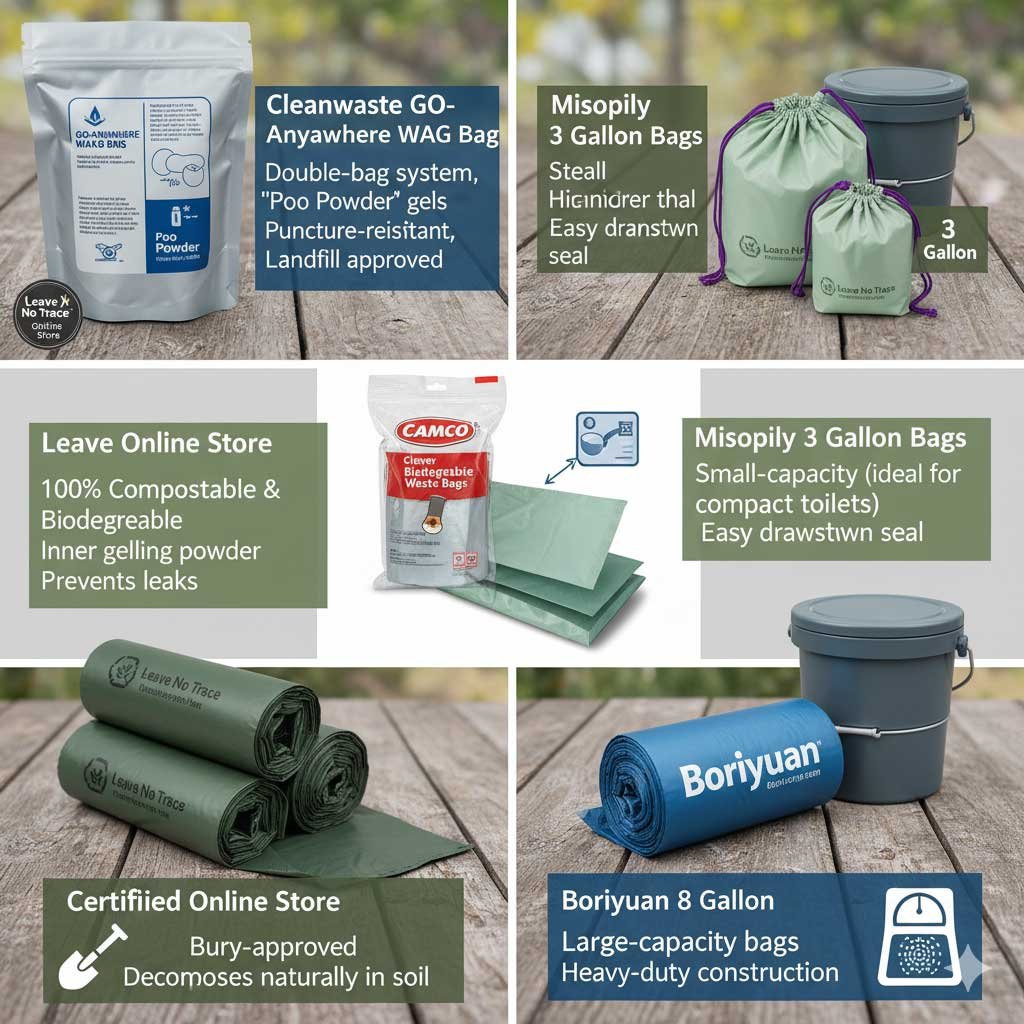
Compliance & Certifications Buyers Should Request
Professional buyers should always request documentation before importing or private labeling compostable toilet bags.
Important certifications include:
- ASTM D6400 (USA)
- EN 13432 (EU)
- BPI Certified Compostable
- OK Compost INDUSTRIAL
- OK Compost HOME
Buyers should also request:
- biodegradation test reports
- heavy metal testing
- eco-toxicity reports
- supplier compliance documentation
Certification helps reduce greenwashing risks and supports regulatory compliance.
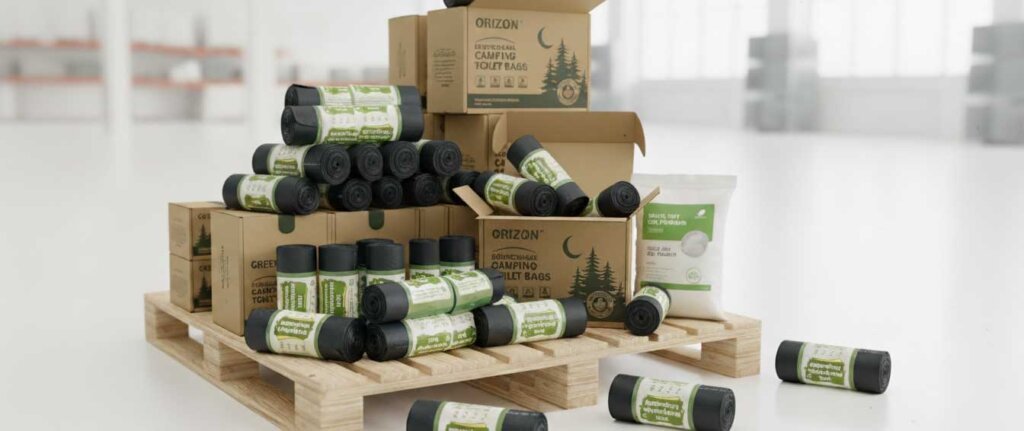
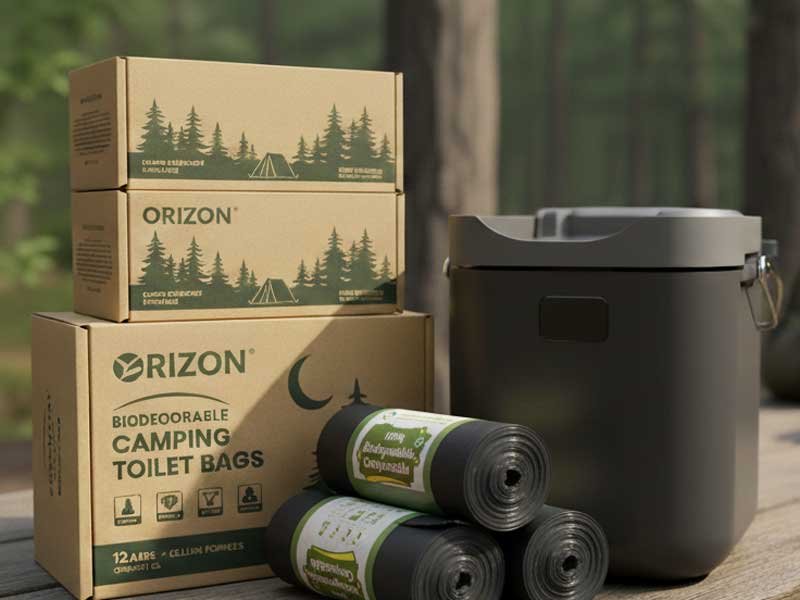
OEM & Wholesale Compostable Toilet Bags
For brands, distributors, and portable sanitation equipment suppliers, OEM and private label options are widely available.
Typical customization options include:
- custom sizes
- custom thickness
- logo printing
- retail box packaging
- bulk packaging
- roll format liners
- barcode labeling
- export carton support
Related:
- Portable hygiene packaging solutions
- Compostable toilet bags manufacturer
- Emergency sanitation bag systems
FAQ
Are biodegradable toilet bags suitable for camping?
Yes, but certified compostable toilet bags are strongly recommended for regulated markets and sustainability programs.
Are biodegradable toilet bags suitable for RV portable toilets?
Yes. RV portable toilet systems usually require stronger liners with improved wet-load resistance and odor containment.
Do compostable toilet bags control odor?
Odor control depends on:
- sealing design
- film structure
- liner thickness
- optional absorbent additives
What is the shelf life of compostable toilet bags?
Typically 12–18 months when stored in a cool, dry environment away from heat and sunlight.
Are compostable toilet bags home compostable?
Only if certified for home composting and used under proper composting conditions.
How do I choose the right size for my portable toilet?
Measure the opening diameter and depth of the toilet system first, then choose a liner slightly larger than the frame to improve sealing reliability.
Is deep burial of biodegradable toilet bags acceptable in remote areas?
Following Leave No Trace principles, packing out waste is always the preferred option.
Even biodegradable toilet bags may decompose very slowly in natural outdoor environments.
Conclusion
Biodegradable and compostable camping toilet bags play an increasingly important role in portable sanitation systems, RV travel, emergency preparedness, and outdoor hygiene management.
For professional buyers, understanding:
- material structures
- certifications
- disposal requirements
- system compatibility
- OEM manufacturing options
is essential when sourcing these products for global markets.
As outdoor sanitation systems continue evolving, certified compostable toilet liners are becoming an increasingly important part of responsible waste handling solutions.
Source:
- ASTM International (American Society for Testing and Materials): https://www.astm.org/standards/d6400
- European Bioplastics (EN 13432 standard): https://www.european-bioplastics.org/bioplastics/standards/
- Leave No Trace Center for Outdoor Ethics: “Principle 3: Dispose of Waste Properly”: https://lnt.org/why/7-principles/dispose-of-waste-properly/