Updated: 29 August 2026
Choosing the best compostable trash bags is not simply a matter of finding a bag labeled “green,” “biodegradable,” or “compostable.”
The right bag depends on where it will be composted, what type of waste it will hold, the size of the bin, the certification of the finished product, and practical specifications such as thickness, dimensions, seal design, closure type, and storage conditions.
In this guide, we compare specific compostable trash bag products using publicly available product specifications and certification information.
Rather than ranking brands from first to last, we focus on the differences that actually matter when choosing a compostable bag.
Quick Answer: Best Compostable Trash Bags in 2026
There is no single compostable trash bag that is best for every use.
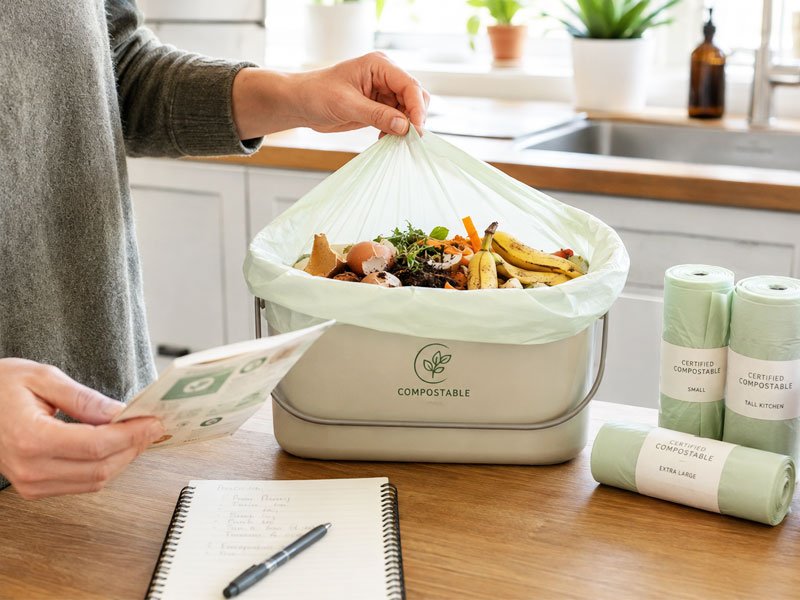
For small kitchen food-scrap bins, certified 2.6- to 3-gallon compostable liners are usually the most practical option.
For standard tall kitchen bins, 12- to 13-gallon compostable trash bags are widely available. Buyers should compare the exact product’s certification, dimensions, thickness, closure style, and intended composting environment.
For home composting, look for a finished product that is specifically certified for home composting, such as OK Compost HOME or AS 5810 where relevant.
For municipal or commercial composting, certifications such as BPI / ASTM D6400, EN 13432, OK Compost INDUSTRIAL, or AS 4736 may be more relevant depending on the market.
For wet or heavier organic waste, thickness deserves attention, but it should not be used as the only measure of strength. Film formulation, seal quality, dimensions, and load distribution also affect how a finished bag performs.
The simplest rule is:
Choose the exact certified product that matches your bin, waste stream, and composting system—not just a familiar brand name.
Best Compostable Trash Bags at a Glance
| Use Case | What to Look For |
|---|---|
| Small Food Scrap Bin | 2.6–3 gal, correct certification |
| Tall Kitchen Bin | 12–13 gal, correct dimensions & closure |
| Home Composting | Finished product with home-compost certification |
| Commercial Organics | Certification accepted by receiving facility |
| Wet / Heavy Waste | Thickness + seal + dimensions + load performance |
Our comparison below includes products from UNNI, BioBag, Glad, HoldOn and other brands, using their publicly available specifications.

How We Compared These Compostable Trash Bags
This is a document-based product comparison rather than a laboratory performance test.
We reviewed publicly available information including:
- exact product or SKU where available
- compostability certification
- home or commercial composting scope
- bag capacity and dimensions
- published film thickness
- closure and seal design
- pack quantity
- intended application
- storage guidance
- manufacturer product documentation
We did not independently conduct controlled tensile, puncture, leak, load, or household-use testing on every retail product included in this guide.
For that reason, we do not assign unsupported ratings such as “high strength,” “medium durability,” or “best tear resistance.”
Instead, we compare published specifications and explain what those specifications mean from a compostable bag manufacturing perspective.
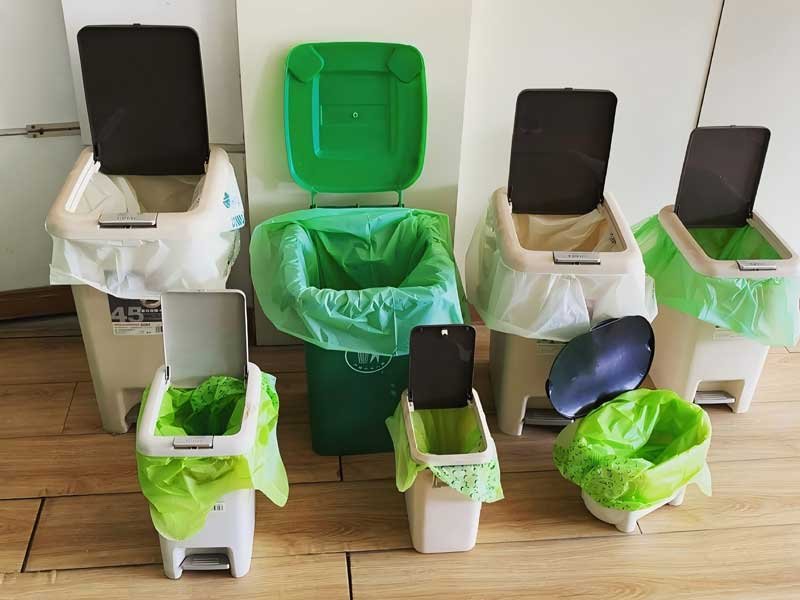
What We Check as a Compostable Bag Manufacturer
When evaluating a compostable bag, we look beyond the logo printed on the retail box.
Film thickness is useful because it tells us how much material is used in the film structure. However, thickness alone does not determine finished-bag strength.
Seal structure also matters. Star seals, flat seals, and other bottom constructions distribute loads differently. A poorly formed seal can become a weak point even when the film itself is relatively thick.
Bag dimensions are equally important. A liner that is too small may be stretched around the rim of a bin. A bag that is much larger than necessary may slip, fold excessively, or use more material than required.
Closure style also changes how the bag is used. Flat-top liners are simple and material-efficient, while handle-tie and drawstring bags can make closing and carrying easier.
Material formulation affects flexibility, transparency, sealing behavior, processing stability, and storage performance.
Storage conditions matter too. Compostable films should normally be protected from excessive heat and moisture, particularly when products will be stored for long periods.
Most importantly, certification must be checked against the finished product.
A raw-material certificate does not automatically mean every finished bag made from that material is certified.
Changes in thickness, color, printing ink, additives, structure, or other components may affect whether the finished product remains within an approved certification scope.
Publisher Disclosure
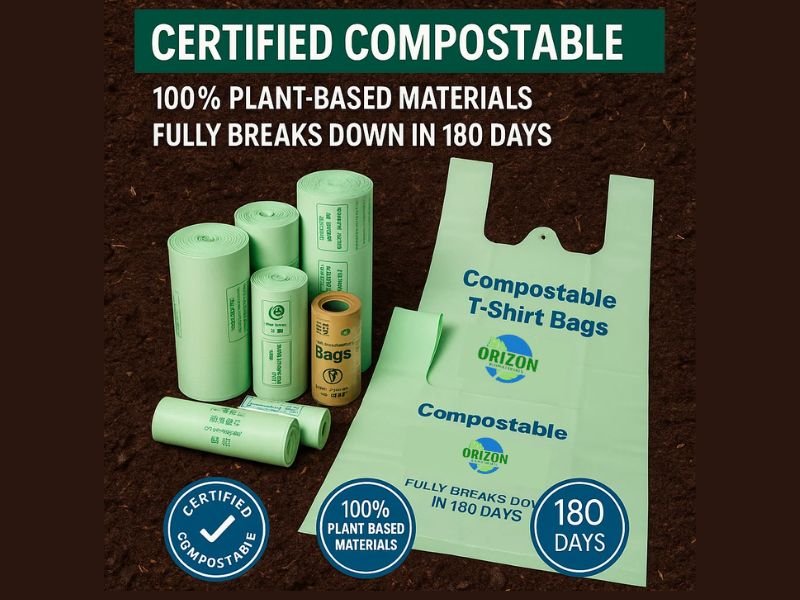
ORIZON is a B2B manufacturer of compostable bags. Buyers who want to verify production capacity and manufacturing infrastructure can review our compostable bag factory and production-line overview.
We do not receive affiliate commissions from the retail brands compared in this article.
ORIZON products are not ranked against the consumer brands below.
Our role in this guide is to explain product specifications, certification scope, and bag construction from a manufacturing perspective.
Product specifications and certification listings can change over time. Buyers should verify current information for the exact product before purchasing.
Compostable Trash Bags Compared
The table below compares specific products rather than making general claims about an entire brand.
| Product Reviewed | Capacity | Published Thickness | Composting Scope | Published Certification / Verification | Useful For |
|---|---|---|---|---|---|
| BioBag 13 Gallon Food Waste Liner, Item 13G2229 | 13 gal | 0.68 mil | Commercial | Listed in the BPI product catalog | Commercial kitchens and food-waste collection |
| UNNI Small Food Scrap Waste Bags | 2.6 gal | 0.71 mil | Home & commercial | BPI / ASTM D6400, OK compost HOME, CMA | Countertop and small kitchen food-scrap bins |
| Glad Kitchen Compostable Bags | 2.6 gal | Not clearly published on current product page | Commercial | BPI Certified Commercially Compostable | Small kitchen compost bins |
| Hippo Sak Compostable Small Food Scrap Bags | 3 gal | 12 micron | Home & commercial | ASTM D6400; manufacturer states home and commercial certification | Kitchen compost pails |
| Green Earth 13 Gallon Compostable Trash Bags | 13 gal | 1 mil | Home & commercial | BPI / ASTM D6400, OK compost HOME | Standard kitchen bins |
| Simply Bio Heavy Duty Drawstring Liners | 12–13 gal | 1 mil | Home & commercial claims published | BPI, OK COMPOST and Seedling; ASTM D6400 / EN 13432 listed | Tall kitchen bins and users who prefer drawstrings |
| HoldOn Compostable Tall Kitchen Bags | 13 gal | 0.98 mil | Commercial | BPI Certified Industrially Compostable | Standard tall kitchen bins |
Published product specifications should be treated as manufacturer information rather than independent performance-test results.
A 1 mil bag, for example, should not automatically be considered stronger than every 0.8 mil bag.
Film formulation, seal quality, width, length, closure design, and manufacturing consistency all affect the finished product.
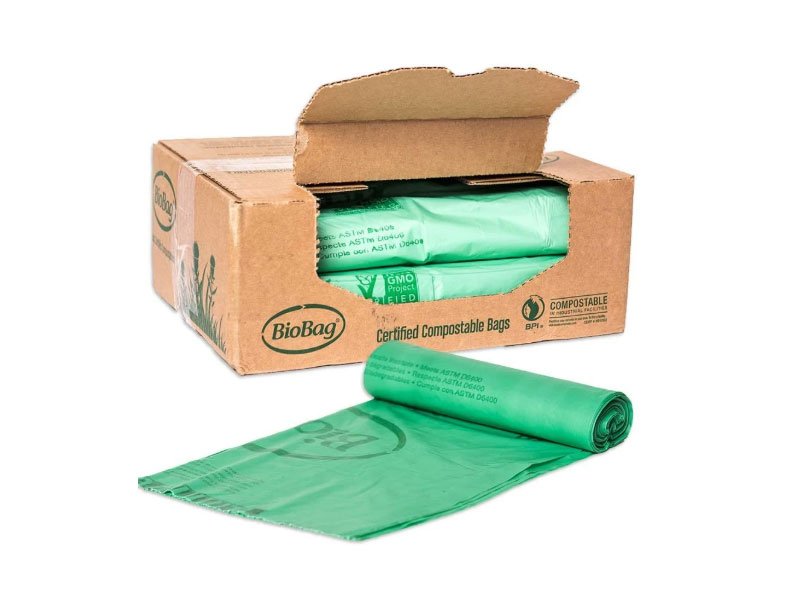
BioBag 13 Gallon Food Waste Liner — Item 13G2229
BioBag identifies its 13-gallon compostable liner under item number 13G2229.
The product uses a straight top and star-sealed bottom and is designed for environments that collect medium to large volumes of organic waste.
BioBag lists applications such as commercial kitchens, food-service operations, institutions, and other higher-volume organic waste collection systems.
This is a useful example because the product can be identified by a specific item number rather than only by brand name.
Why this matters:
A company may sell many different bag sizes, structures, and certification configurations. The certification or technical information for one product should not automatically be applied to every product sold under the same brand.
For commercial food-waste programs, buyers should verify the exact item, dimensions, certification, roll format, and acceptance requirements of the receiving composting facility.
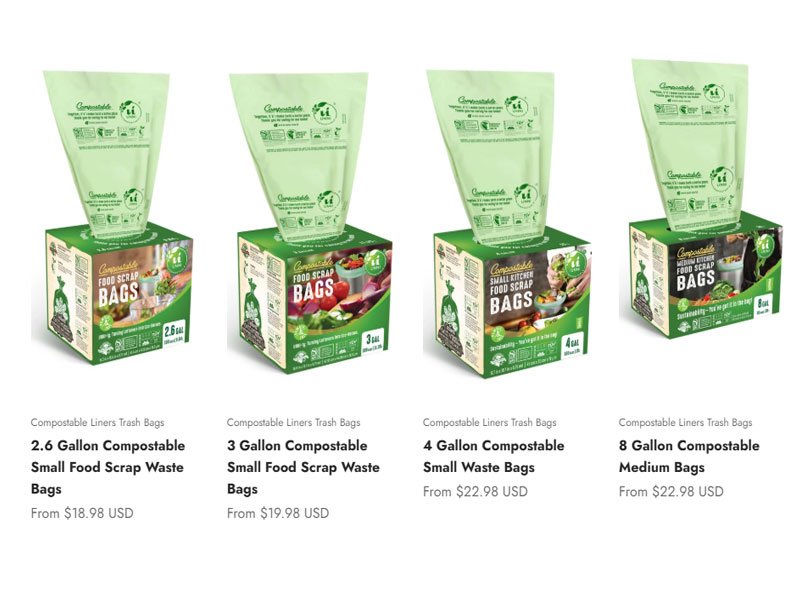
UNNI 2.6 Gallon Small Food Scrap Bags
UNNI publishes detailed specifications for its 2.6-gallon food-scrap liner.
The product is listed at 0.71 mil and is designed for small food-waste applications.
Published certification information includes BPI certification against ASTM D6400, OK Compost HOME certification, and Compost Manufacturing Alliance approval.
This makes it a useful comparison product for countertop food-scrap containers rather than standard household trash cans.
The product may suit users who need:
- a small food-scrap liner
- clearly published thickness information
- home-compost certification
- commercial compostability certification
- published storage guidance
UNNI also advises users to protect compostable bags from excessive heat and store them in a cool, dry place.
This is a useful reminder that storage conditions are part of compostable bag performance.
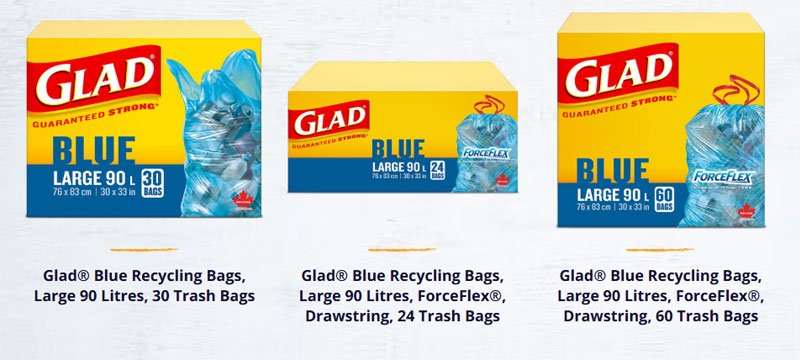
Glad 2.6 Gallon Kitchen Compostable Bags
Glad offers 2.6-gallon kitchen compostable bags for food-waste collection.
Glad states that its compost bags are BPI Certified Commercially Compostable and advises users to check whether their municipality or compost provider accepts compostable bags.
That last point is important.
A commercially compostable certification does not mean that every municipal compost program automatically accepts the product.
Facilities can set their own contamination-control and accepted-material requirements.
Glad is therefore a useful example of a mainstream household product designed around small kitchen compost bins, but it should not automatically be treated as home compostable.
Users who want to place the entire liner into a backyard compost system should look for an exact product with recognized home-compost certification.
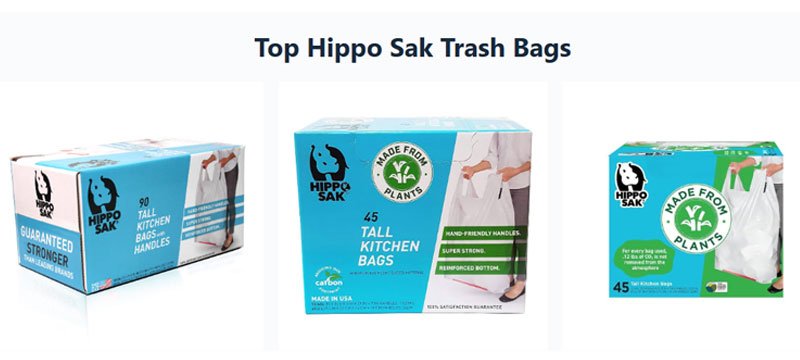
Hippo Sak 3 Gallon Compostable Small Food Scrap Bags
Hippo Sak publishes a 3-gallon compostable food-scrap bag for kitchen compost pails.
The company lists a thickness of 12 microns and states that the product meets ASTM D6400 requirements and is certified for home and commercial composting.
Available pack formats include 40- and 80-count options.
This product is better compared with other small food-scrap liners than with 13-gallon tall kitchen trash bags.
The important buying factors here are not simply brand reputation.
They include:
- fit with the user’s food-scrap container
- 3-gallon capacity
- published 12-micron thickness
- small-bin application
- composting scope
- certification information
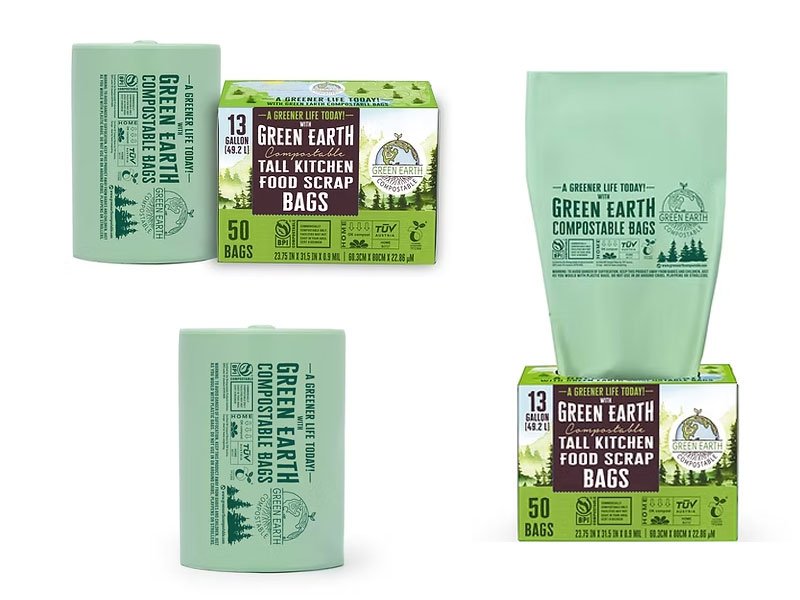
Green Earth 13 Gallon Compostable Trash Bags
Green Earth publishes a 13-gallon bag measuring 23.75 × 29.375 inches with a thickness of 1 mil and 50 bags per roll.
Its product page states BPI certification under ASTM D6400 for municipal and commercial composting together with OK compost HOME certification.
The combination of a standard 13-gallon size and published home and commercial composting information makes this product particularly useful for comparison with other tall kitchen liners.
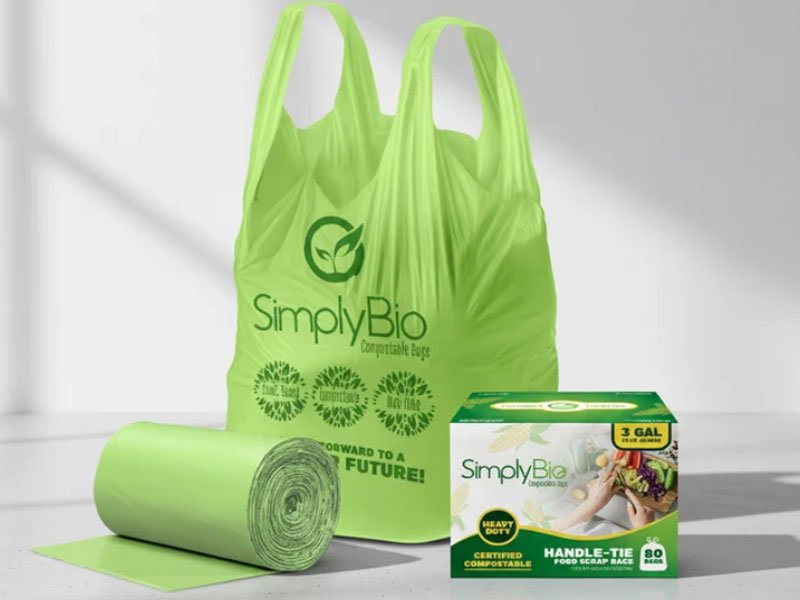
Simply Bio 12–13 Gallon Heavy Duty Drawstring Liners
Simply Bio publishes a 12- to 13-gallon compostable drawstring liner with a thickness of 1 mil.
The listed product is intended for kitchen trash applications and comes in a 30-count format.
Simply Bio publishes BPI, OK Compost, and Seedling certification claims together with references to ASTM D6400 and EN 13432.
The drawstring is also an important design difference.
Many compostable liners use a simple flat top. A drawstring makes closing, lifting, and carrying a full bag easier for some household applications.
Its published 1 mil thickness is useful for comparison, but thickness alone should not be interpreted as independent proof that it is stronger than every thinner compostable bag.
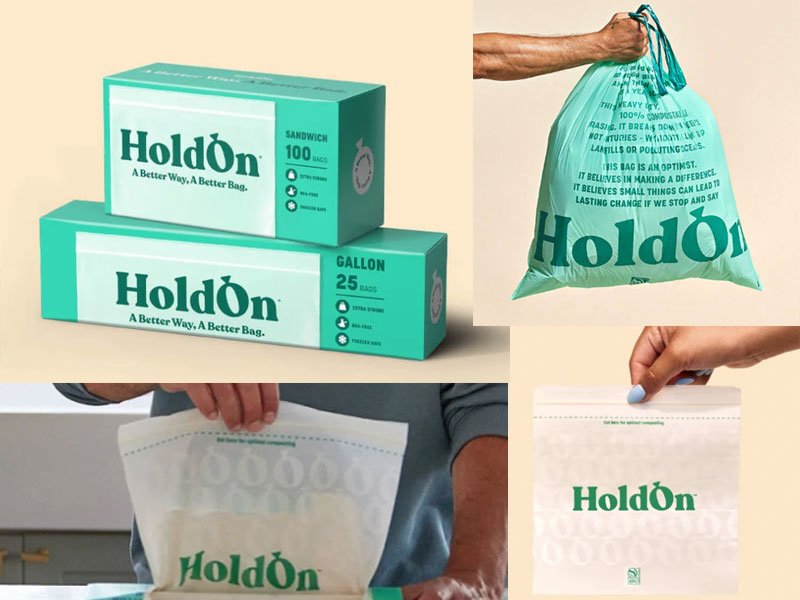
HoldOn 13 Gallon Compostable Tall Kitchen Bags
HoldOn publishes a 13-gallon compostable tall kitchen bag with a thickness of 0.98 mil.
The product measures 24 inches wide by 27 inches high and contains 40 bags per box.
It uses drawstring handles and is listed by HoldOn as BPI Certified Industrially Compostable.
One particularly useful detail is the certification distinction between HoldOn products.
The company identifies its 13-gallon tall kitchen bag as industrially compostable, while some smaller HoldOn products are separately identified as home compostable.
This demonstrates an important rule:
Compostability claims should be checked at product level, not brand level.
Best Compostable Bags by Use Case
Instead of trying to choose one universal winner, it is more useful to choose a compostable bag according to the application.
Best Type for Countertop Food-Scrap Bins
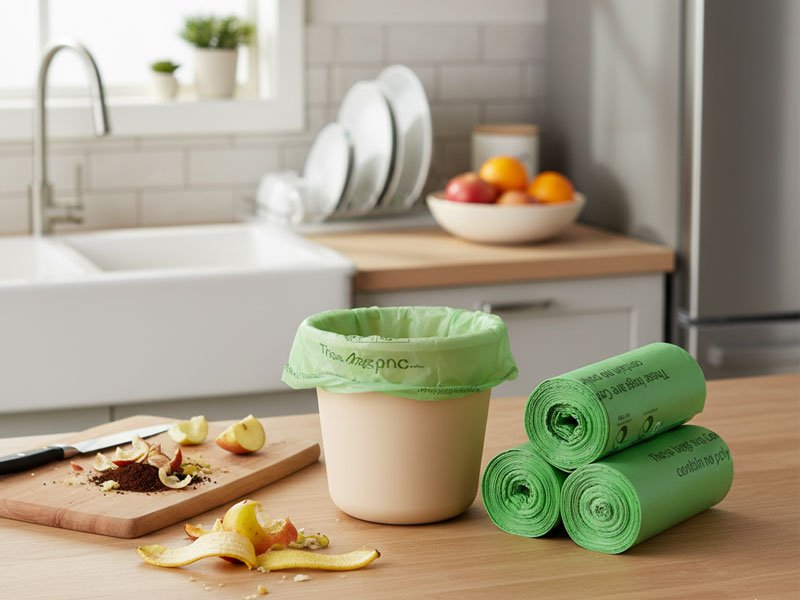
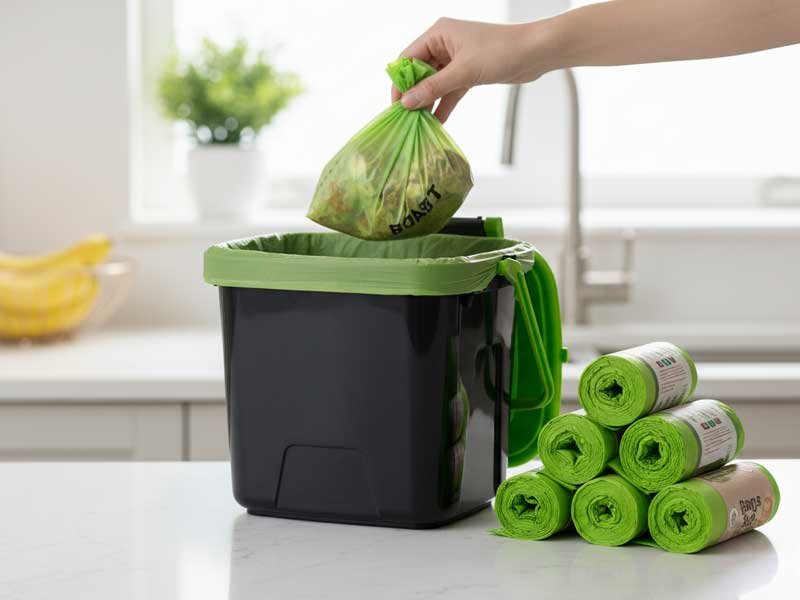
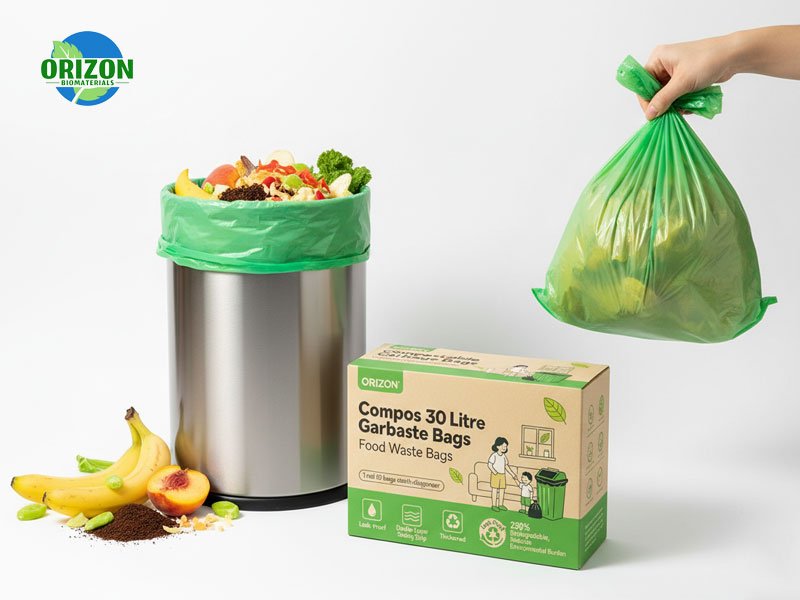
For countertop kitchen compost bins, 2.6- to 3-gallon bags are common.
Products such as UNNI 2.6-gallon, Glad 2.6-gallon, and Hippo Sak 3-gallon liners are designed around small food-waste containers.
Important factors include:
- correct bin fit
- certification
- home vs commercial composting
- storage guidance
- whether the local compost program accepts liners
A small food-scrap bag does not need the same dimensions or construction as a 13-gallon kitchen trash bag.
Best Type for 13-Gallon Kitchen Bins
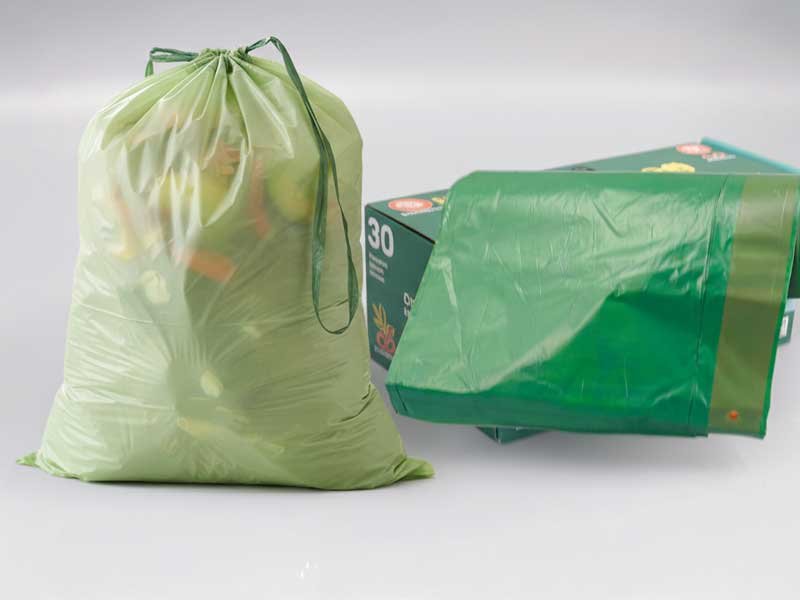
Standard tall kitchen bins commonly use 13-gallon compostable trash bags, although actual bag dimensions should always be checked against the bin.
Products such as Simply Bio and HoldOn show how products in the same general capacity can still differ in:
- thickness
- dimensions
- closure design
- certification
- composting environment
- pack quantity
For a kitchen bin, start by checking dimensions before comparing thickness.
A well-sized bag normally performs better than a liner that must be stretched heavily around the rim.
Best Type for Home Composting
Do not assume that the word “compostable” means home compostable.
Home composting normally occurs at lower and less controlled temperatures than commercial composting.
If backyard composting is the intended end-of-life route, look for an exact finished product that carries recognized home-compost certification.
Examples may include OK Compost HOME or AS 5810 depending on the target market.
Do not rely only on BPI commercial compostability certification when the intended disposal route is a home compost pile.
Best Type for Commercial Food-Waste Programs
Commercial buyers usually need to evaluate more than the consumer retail pack.
Important purchasing factors include certification required by the receiving facility, liner dimensions, film thickness, seal design, bags per roll, carton format, storage requirements, and expected annual usage.
Restaurants, hotels, institutions, food-service operators, and municipal organic-waste programs may need different specifications from ordinary household users.
This is also where exact certification scope becomes especially important.
A procurement program may specify ASTM D6400 / BPI, EN 13432, AS 4736, or another recognized standard depending on the country and composting system.
Best Type for Wet or Heavier Organic Waste
Wet food waste places different demands on a bag than dry office waste.
A thicker film may provide more material in the bag structure, but thickness is only one factor.
Also consider seal quality, bag width and length, closure design, how the load is distributed, and how long wet waste will remain inside the liner.
For demanding applications, technical specifications and physical samples are more useful than marketing terms such as “heavy duty.”
How to Verify Compostability Certification
One of the most common mistakes when buying compostable bags is checking only the brand rather than the exact product.
Certification applies to a defined certification scope, and buyers should understand the differences between major compostable certifications before approving a product for a specific market.
Before relying on a compostability claim, verify the exact product or SKU, certificate holder, certification program, composting environment, product construction, and current validity.
BPI and ASTM D6400
BPI certification is widely used in North America to verify finished compostable products intended for commercial and industrial composting systems.
The ASTM D6400 standard defines requirements for plastics designed to compost in managed municipal or industrial composting facilities.
If a product is described as BPI certified, check the exact product in the relevant certification listing rather than assuming the entire brand is covered.
Commercial compostability should also not be confused with home compostability.
EN 13432
EN 13432 certification is widely used to verify industrially compostable packaging in the European market.
For B2B sourcing, buyers should confirm that the certification applies to the actual finished product construction.
Changes to film thickness, printing, color, additives, or other components can affect certification scope.
OK Compost HOME and OK Compost INDUSTRIAL
OK Compost HOME certification and OK Compost INDUSTRIAL apply to different composting environments and should not be treated as interchangeable claims.
OK Compost HOME is designed for lower-temperature home composting conditions.
OK Compost INDUSTRIAL certification applies to controlled industrial composting environments.
One should not be used as evidence for the other.
AS 4736 and AS 5810
Australia also separates commercial and home composting.
AS 4736 certification applies to plastics intended for industrial or commercial composting systems in Australia.
AS 5810 certification applies to plastics designed for home composting conditions in Australia.
Australian buyers should confirm the certification required by the actual end-of-life pathway, council, retailer, or FOGO program.
Certification Applies to the Finished Product
This point is especially important for private-label and custom products.
A certified raw material does not automatically certify every finished bag made from it.
Depending on the certification program, factors such as these may need to remain within an approved scope:
- product type
- thickness
- film structure
- color
- printing ink
- additives
- adhesives
- other components
For this reason, professional buyers should ask suppliers for documentation relating to the finished product configuration rather than accepting a general statement that “the material is certified.”
How to Choose the Right Compostable Trash Bag
First decide where the bag will go after use.
If it will enter a municipal or commercial composting facility, check the acceptance requirements of that facility.
If it will go into a backyard compost system, look for an exact product certified for home composting.
If the waste will ultimately go to landfill, remember that compostable certification is designed around composting conditions—not landfill conditions.
2. Match the Bag to the Bin
Do not rely only on gallon or liter capacity.
Compare the actual bag width and length with the dimensions of the bin.
Common applications include:
- 2.6- to 3-gallon food-scrap bags
- small office or bathroom bin liners
- 12- to 13-gallon kitchen trash bags
- larger commercial and institutional liners
An undersized liner may need to be stretched around the rim.
An oversized liner may slip into the bin or use unnecessary material.
3. Compare Thickness Carefully
Thickness is useful when comparing products of similar dimensions and construction.
But:
Thickness does not equal finished-bag strength.
Film formulation, seal quality, manufacturing consistency, dimensions, and closure design can all affect performance.
Use thickness as one technical specification—not as a complete strength rating.
4. Check the Seal and Closure
Common compostable trash bag structures include:
- flat seals
- star seals
- flat tops
- handle ties
- drawstrings
Star-sealed bottoms can help distribute the contents across the base of the bag.
Drawstrings and handles can make closing and carrying easier.
The right structure depends on the waste stream and intended use.
5. Check Storage Guidance
Compostable bags should normally be stored away from excessive heat and moisture.
Storage is especially important for businesses purchasing large quantities.
Before ordering a long-term supply, compare expected consumption with the recommended storage period and warehouse conditions.
6. Verify Local Acceptance
A certified compostable bag can still be rejected by a local collection program.
Municipalities and composting facilities may have their own rules on accepted liners, colors, certification logos, or labeling.
Always check the end-of-life system before assuming a certified bag will be accepted.

Compostable vs Biodegradable Trash Bags
Understanding the difference between biodegradable vs compostable materials is important because the two terms should not be treated as interchangeable.
Certified compostable products are evaluated against defined requirements under specified composting conditions.
Common standards and certification programs include:
- ASTM D6400 / BPI
- EN 13432
- OK Compost HOME
- OK Compost INDUSTRIAL
- AS 4736
- AS 5810
A product described only as “biodegradable,” “plant based,” “green,” or “eco-friendly” may not provide the same level of information about where and under what conditions the product is expected to break down.
This distinction matters particularly when collecting food waste.
For food-waste liners, certification and the actual disposal infrastructure are more useful buying criteria than broad environmental marketing claims.
A certified compostable bag is also not designed to disappear in every environment.
Composting, landfill, recycling, soil, and marine environments all have different conditions.
Choose the product according to the intended end-of-life system.
FAQ
What are the best compostable trash bags?
The best compostable trash bag is one that fits the bin, matches the waste type, carries appropriate certification, and is accepted by the intended composting system.
Small 2.6- to 3-gallon liners are common for countertop food-scrap bins, while 12- to 13-gallon bags fit many tall kitchen trash cans.
What is the best compostable trash bag for kitchen waste?
For a countertop food-scrap caddy, a 2.6- to 3-gallon certified compostable liner is usually practical.
For a standard tall kitchen bin, compare specific 12- to 13-gallon products by dimensions, certification, thickness, seal structure, and closure type.
Are compostable trash bags home compostable?
Not necessarily.
Many compostable bags are certified only for commercial or industrial composting.
If you want to place the liner into a backyard compost pile, look for home-compost certification on the exact finished product.
Are BPI-certified bags home compostable?
BPI certification is associated with commercial compostability.
It should not automatically be treated as proof that a bag is suitable for home composting.
If home composting is required, verify whether the exact product also carries recognized home-compost certification.
What bags should I use for a compost bin?
Use a certified compostable liner that is accepted by the composting system receiving the organic waste.
For a small kitchen compost caddy, 2.6- to 3-gallon liners are common.
For municipal food-waste collection, check local program rules before choosing the liner.
Are compostable garbage bags the same as biodegradable garbage bags?
No.
“Biodegradable” is a broad term.
Certified compostable products are evaluated against defined composting requirements and conditions.
Look for recognized certification rather than relying only on general biodegradable claims.
Does a thicker compostable bag mean it is stronger?
Not always.
Thickness affects bag construction, but finished-bag performance also depends on film formulation, dimensions, seal design, closure structure, and production quality.
Two bags with the same thickness can perform differently.
Can compostable bags go into landfill?
Compostable bags are designed for composting environments.
Landfills generally do not provide the same controlled temperature, oxygen, moisture, and biological conditions.
Compostable certification should therefore not be interpreted as a landfill-degradation claim.
Should I choose home compostable or industrial compostable bags?
Choose according to the actual disposal system.
Home-compostable certification is relevant when the finished bag will enter a household composting system.
Industrial certification is more relevant to municipal, commercial, and centralized composting facilities.
Local acceptance should always be checked.
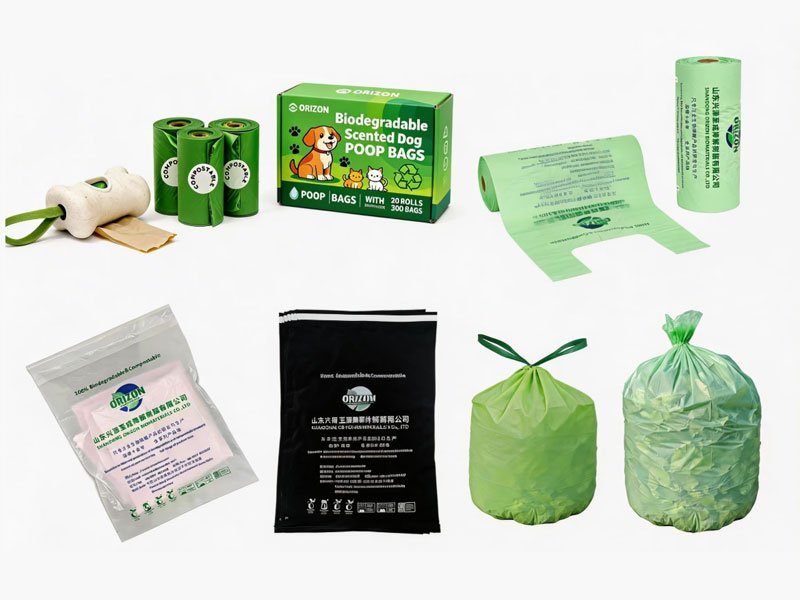
Need Compostable Trash Bags for Bulk or Private Label?
Retail product selection and B2B sourcing are different decisions.
ORIZON is a B2B compostable bags manufacturer supplying distributors, importers, private-label brands, retailers, food-waste programs, waste-management suppliers, and institutional buyers.
Available customization includes bag dimensions, film thickness, seal structure, roll configuration, colors, printing, retail packaging, carton configuration, and certification requirements.
Brands developing their own retail product lines can learn more about our private label compostable packaging program, including branded bags, retail-ready packaging, compliance labeling, and repeat-supply planning.
For projects requiring custom dimensions, thickness, colors, printing, roll configuration, or packaging, review our custom compostable bags manufacturing options before requesting a quotation.
Buyers planning long-term supply can also review our OEM compostable bags manufacturing capabilities, including project development, production workflow, and private-label cooperation.
For B2B sourcing, certification should be reviewed against the proposed finished-bag specification rather than assumed from raw-material certification alone.
For a sourcing project, send us your target bag size, thickness, quantity, application, market, packaging requirements, and required certification for specification review.