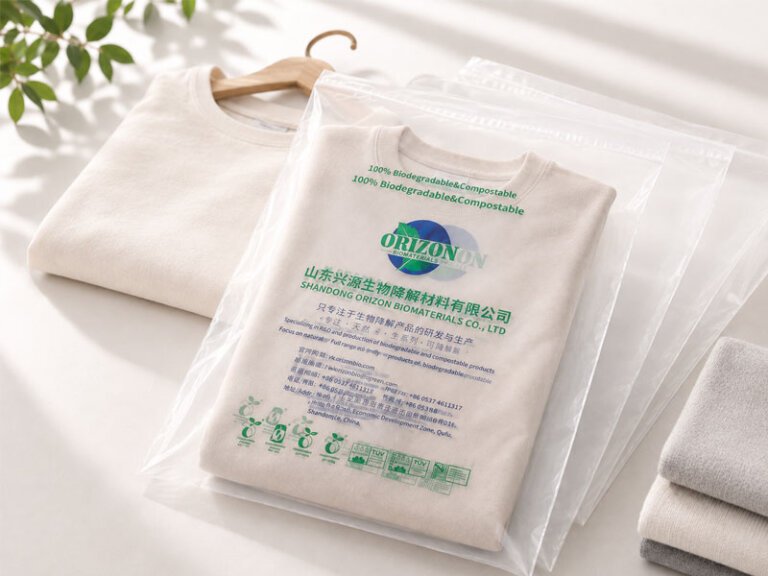
Handle Compostable Garment Bags for Apparel Packaging
Custom four-finger handle garment bags for retail apparel packaging and B2B programs.
- OEM & Wholesale Supply
- Four-Finger Handle
- Custom Size & Printing
Standard customized production typically starts from approximately 500 kg per specification or design

What Is a Handle Compostable Garment Bag?
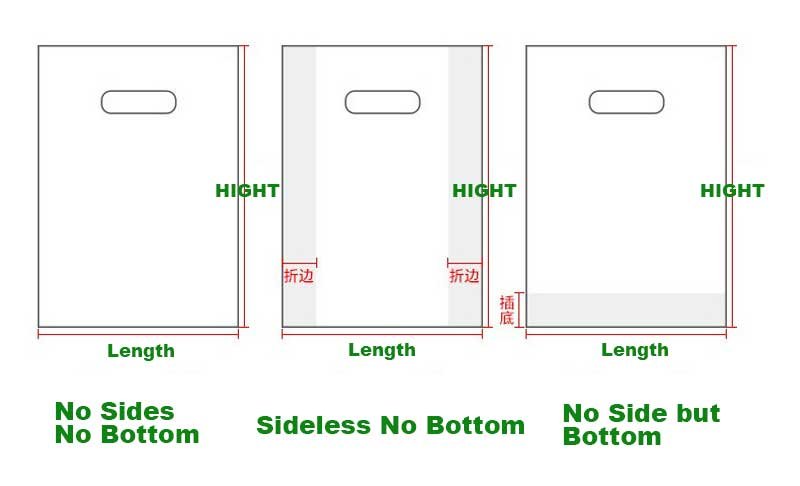
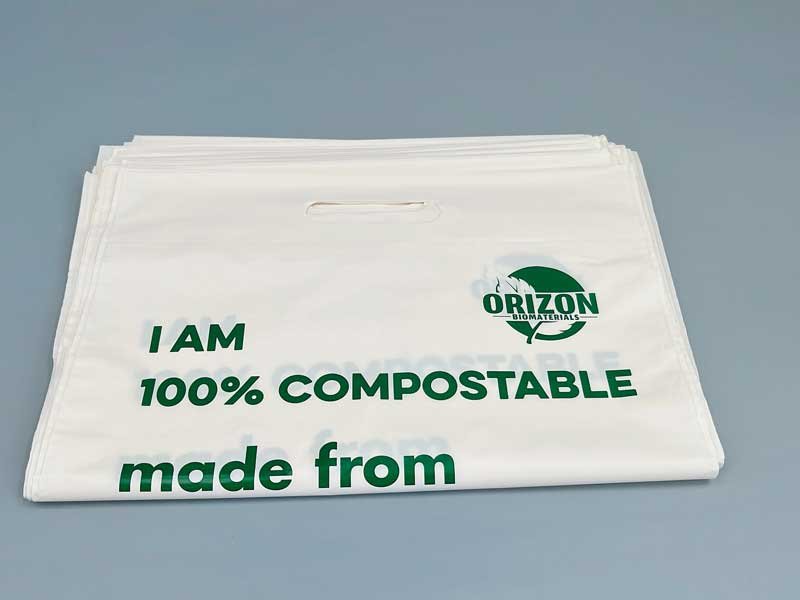
A handle compostable garment bag is a flexible clothing bag with an integrated die-cut handle formed directly into the bag structure.
The four-finger handle style provides a larger carrying opening than a simple round or oval die-cut hole and can be useful for folded garments that are handed directly to customers or moved through retail operations.
Typical applications include:
- T-shirts;
- knitwear;
- underwear;
- activewear;
- lightweight fashion products;
- retail apparel orders; and
- branded clothing packaging.
Unlike a basic flat garment bag, the handle structure is designed to provide both garment containment and carrying functionality.


Why Use a Four-Finger Handle Structure?
A four-finger handle provides an integrated carrying point without requiring a separate external handle component.
For apparel packaging projects, this can offer several practical advantages:
- easier carrying of folded garments;
- convenient handover in retail environments;
- integrated branding and product presentation;
- reduced need for a separate secondary carry bag in selected workflows;
- custom handle position and bag dimensions; and
- compatibility with printed private-label packaging.
Handle strength should always be evaluated together with the bag dimensions, film thickness, garment weight and die-cut geometry.
Handle vs Flat vs Self-Seal Garment Bags
| Garment Bag Style | Main Structure | Typical Use |
|---|---|---|
| Handle garment bag | Integrated die-cut / four-finger carrying handle | Retail carrying, branded apparel packaging |
| Flat garment bag | Non-gusseted flat body, usually open top | Factory packing, warehousing, export cartons |
| Self-seal garment bag | Adhesive flap or strip closure | E-commerce, warehouse and fulfillment |
| Gusseted garment bag | Side or bottom expansion | Bulkier or thicker folded garments |
The correct bag style should be selected according to the garment dimensions, packing workflow, required carrying function and final distribution method.
Handle Compostable Garment Bag Specifications
| Item | Custom Options |
|---|---|
| Bag Structure | Flat or custom body with integrated handle |
| Handle | Four-finger / die-cut handle |
| Dimensions | Custom width and length |
| Thickness | Selected according to garment weight and carrying requirements |
| Material | Compostable PBAT / PLA / starch-based formulations |
| Film Appearance | Clear, frosted, tinted or custom where applicable |
| Printing | Logo, barcode, SKU information or custom artwork |
| Ventilation | Optional where required |
| Packing | Bulk stacks, inner packs and export cartons |
| MOQ | Typically approx. 500 kg per specification or design |
Equivalent bag quantities vary by dimensions, thickness, handle structure and finished-bag configuration.
Handle Strength & Carrying Performance
The handle opening changes the stress distribution of the bag, so carrying performance should be reviewed on the finished bag, not assumed from film thickness alone.
Important factors include:
- handle width and shape;
- distance between the handle and top edge;
- film thickness;
- garment weight;
- bag width;
- die-cut quality;
- film formulation; and
- repeated handling during packing and transport.
For heavier garments or larger packs, additional thickness or a different bag structure may be required.
Where carrying performance is important, sample testing should be completed before mass production.
Custom Printing & Retail Branding
Handle garment bags are often used in retail-facing apparel programs, making printing and presentation important parts of the specification.
Custom options may include:
- brand logo;
- product information;
- barcode;
- SKU code;
- care or handling information;
- permitted environmental claims;
- certification marks where authorized; and
- custom film color.
Artwork should be reviewed together with handle placement so important graphics, barcodes or text do not interfere with the die-cut area.

How Apparel Brands Use Handle Garment Bags
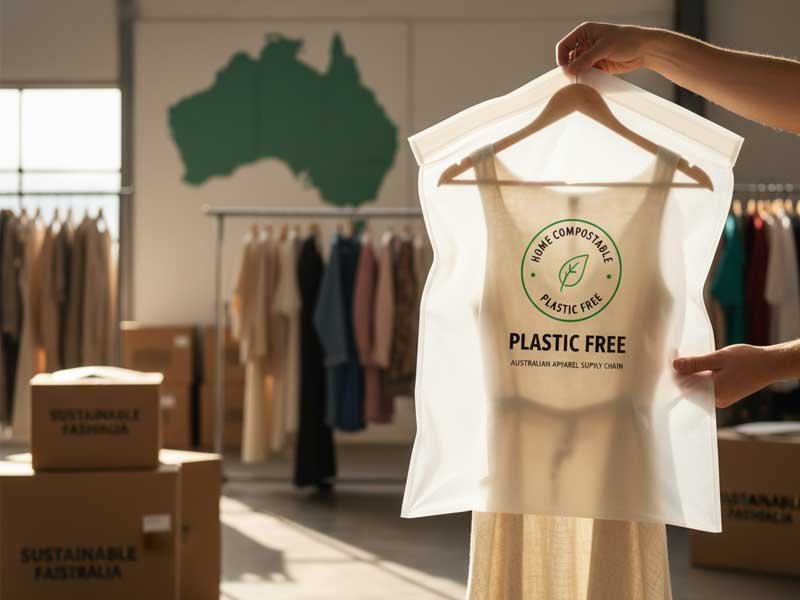
Handle garment bags are commonly used in retail apparel packaging, branded clothing programs, apparel distribution, and private-label packaging. Their integrated carrying handle makes them suitable for situations where the package needs to protect the garment while also being easy to carry during retail handover or distribution.
For branded apparel programs, the bag can be customized with logos, product information, barcodes, or promotional artwork. Bag dimensions, film thickness, handle position, and printing layout can also be adjusted according to the garment size and intended retail presentation.
Handle garment bags are most suitable when a carrying function is required. For factory inner packaging, export cartons, or warehouse packing where the garment only needs protective inner packaging, a flat garment bag may be a simpler and more practical option.
Compostable Alternative to Conventional Plastic Handle Bags
Conventional PE handle bags are widely used because they are lightweight, familiar and economical.
Compostable handle garment bags can be considered where an apparel brand requires a defined compostability specification while still needing an integrated carrying handle.
When comparing the two, buyers should evaluate:
- garment protection;
- handle strength;
- thickness;
- transparency;
- storage requirements;
- printing;
- unit cost;
- certification;
- packing efficiency; and
- the intended end-of-life route.
Compostable packaging should not automatically be treated as environmentally preferable in every situation. Its practical value depends on the finished-product specification, certification scope and available composting infrastructure.
For a broader comparison, see Compostable vs Plastic Packaging for Clothing Brands.
Compostable vs “Biodegradable” Handle Bags
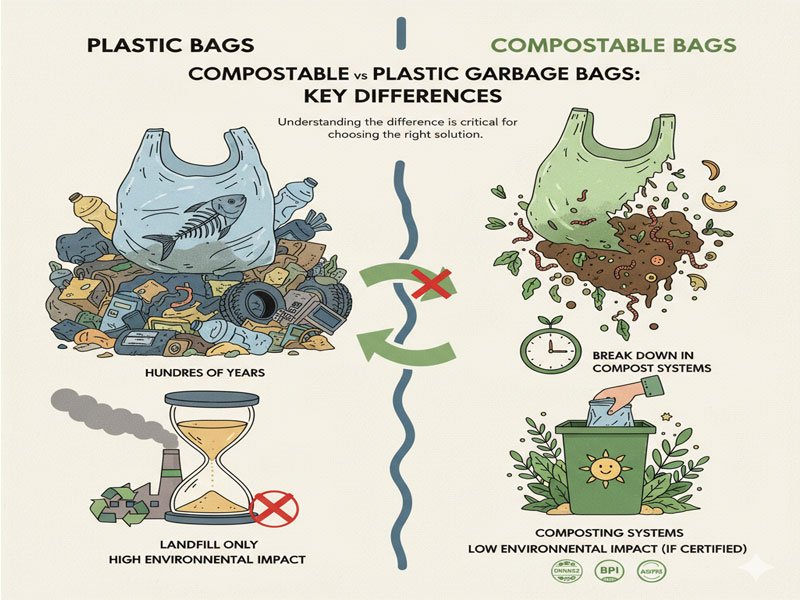
“Biodegradable” is a broad term and does not by itself define a specific composting environment, timeframe or certification requirement.
For B2B garment packaging, buyers should confirm:
- which compostability standard or certification applies;
- whether the evidence covers the finished bag;
- whether the handle structure is within scope;
- whether thickness, color and printing are covered; and
- which end-of-life environment the product is intended for.
For procurement, compostable and biodegradable should not be treated as interchangeable specifications.
Certification & Finished-Product Scope
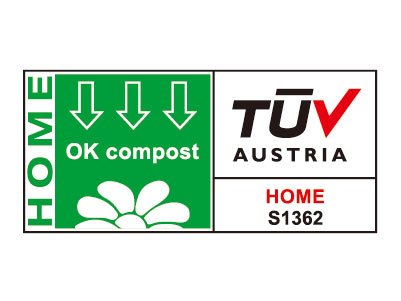
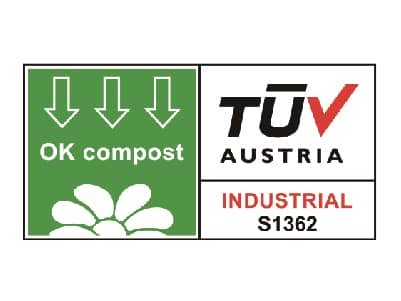
Certification requirements depend on the target market, composting environment and final handle-bag configuration.
Depending on the project, relevant standards or certification programs may include:
- EN 13432;
- ASTM D6400 / applicable BPI certification;
- OK compost INDUSTRIAL;
- OK compost HOME;
- AS 4736; and
- AS 5810.
Certification applicability may depend on:
- film formulation;
- maximum thickness;
- colorants;
- printing inks;
- handle structure;
- additives; and
- other finished-product components.
Certification marks should only be printed where their use is permitted for the finished product.
See How to Choose the Right Compostable Packaging Certification
What Should Buyers Verify in a Compostable Garment Bag Manufacturer?
Before approving an OEM supplier, apparel brands and distributors should verify more than the material description.
Important checks include:
- whether the supplier directly manufactures the bags;
- production capability for die-cut handle structures;
- dimensional and thickness control;
- printing capability;
- handle-strength testing;
- finished-product certification scope;
- certificate numbers and verification routes;
- MOQ and production planning; and
- bulk export packing capability.
Claims such as “certified,” “biodegradable” or “eco-friendly” should be supported by verifiable documentation and the actual finished-product specification.
OEM & Private Label Supply
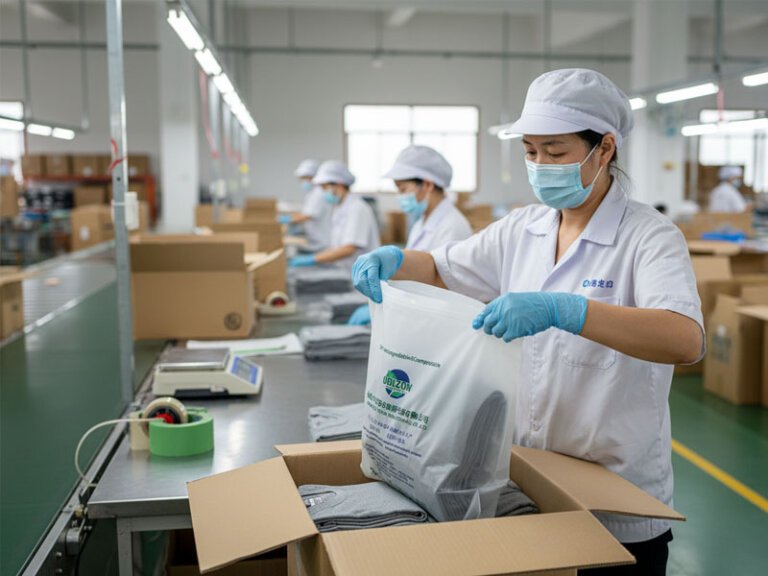
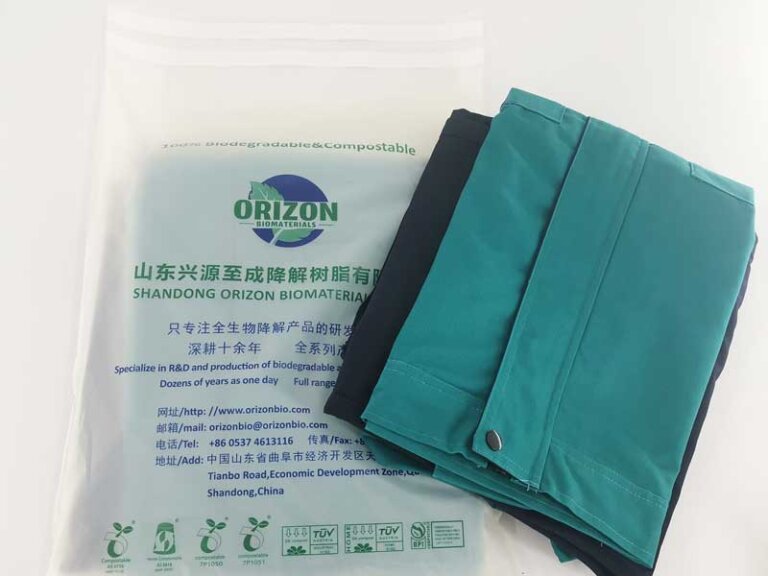
ORIZON manufactures custom handle compostable garment bags for apparel brands, garment factories, packaging distributors and private-label projects.
Customization can include:
- bag dimensions;
- film thickness;
- handle size and position;
- film appearance;
- printing;
- barcode and SKU information;
- inner packing; and
- export carton configuration.
Standard customized production typically starts from approximately 500 kg per specification or design. Product-specific trial quantities may differ.
FAQ
A four-finger garment bag uses a wide die-cut handle opening near the top of the bag so packed garments can be carried by hand.
A handle garment bag includes an integrated carrying opening. A flat garment bag has a simpler body structure and is typically used for factory or inner packaging.
Yes. Handle dimensions, position, bag size and film thickness can be reviewed according to the garment weight and packing requirements.
Yes. Custom logos, barcodes, SKU information and other artwork can be printed according to the bag specification and available print area.
No. “Biodegradable” does not by itself define a compostability standard or certification requirement. Compostable products should be reviewed against the applicable finished-product certification scope.
Standard customized production typically starts from approximately 500 kg per specification or design. Equivalent bag quantities vary according to size, thickness and configuration.
Custom Handle Compostable Garment Bags
Send us your required size, thickness, handle style, printing and quantity for a project review and quotation.